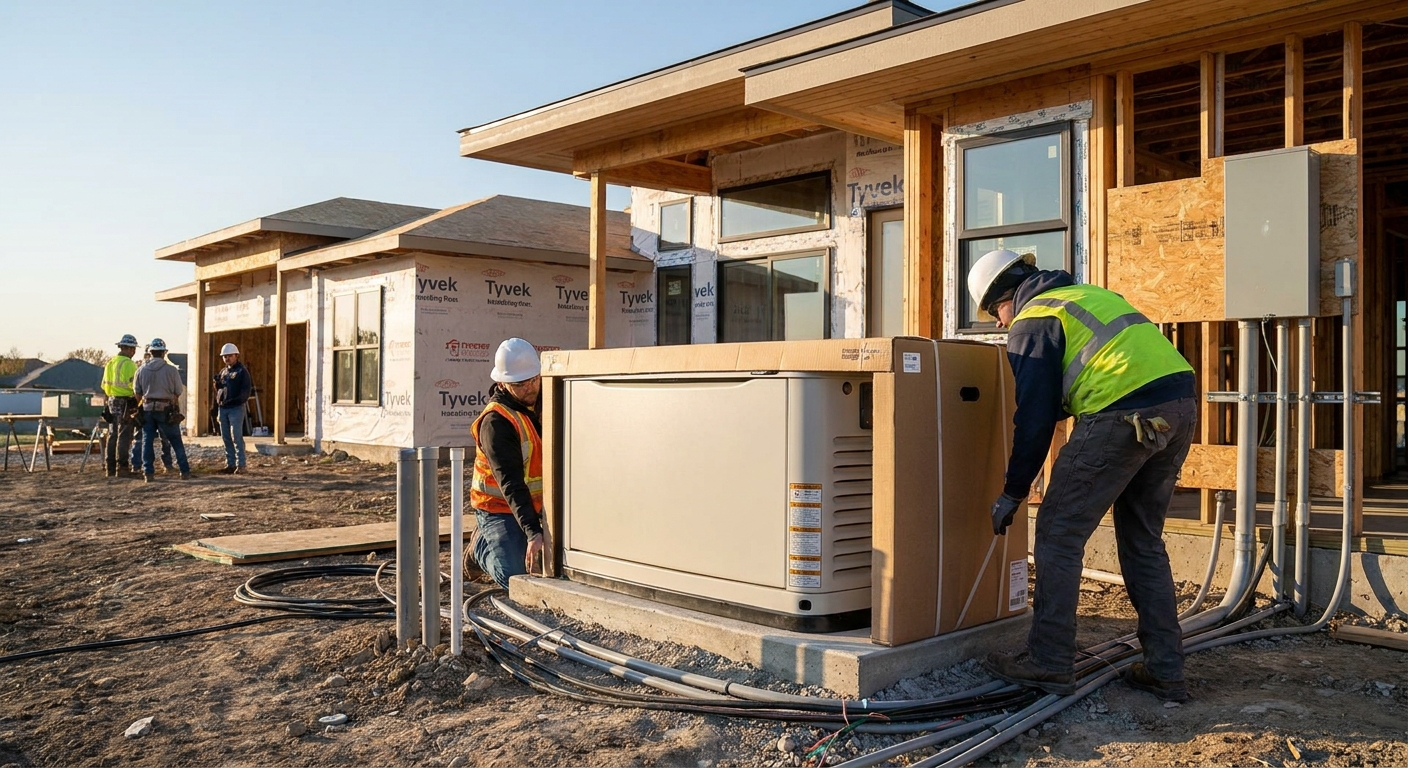
Building a new home in Daphne, Fairhope, Foley, or Gulf Shores means you get exactly one shot to wire a standby generator in correctly before the slab, rough-in, and siding lock everything down. Get the sizing, fuel line, and transfer switch placement wrong now, and you're paying to retrofit a finished house later.
TL;DR
Whole house generator installation for new construction works best when the generator is designed into the electrical plan during framing and rough-in, not bolted on after the certificate of occupancy. Baldwin County Generators recommends locking in your kW size and fuel source (natural gas or propane) before the electrician pulls permits, since Baldwin County inspectors check clearance and pad placement before final sign-off in 2026. For most new coastal Alabama builds under 3,500 square feet, a 22kW to 26kW Generac or Kohler unit is the Buy; anything sized off a guess instead of a load calculation is a Skip.
Why this matters
Coastal Alabama loses grid power every hurricane season, and 2026 is no exception. New construction gives you a narrow window - usually a two- to three-week stretch between rough electrical inspection and drywall - to run the dedicated gas line, set the concrete pad, and stub the transfer switch conduit. Miss that window and you're trenching through finished landscaping or cutting into new drywall to add what should have been a $200 line-item change order during framing.
Builders in Fairhope and Foley increasingly ask about generator readiness up front because buyers expect it, the same way they expect a tankless water heater or hurricane shutters. Treating the standby generator as an afterthought is the single most expensive mistake new-construction homeowners make on this system.
Who this is for
This guide is for homeowners actively building or under contract for a new home in Baldwin County - Daphne, Fairhope, Foley, Gulf Shores, or Spanish Fort - who want the standby generator planned into the electrical and plumbing rough-in instead of added after move-in. It's also for builders and GCs coordinating trades who need a straight answer on what to spec before the electrician pulls wire.
What to look for in generator installation for new construction
Accurate load calculation, not a guess
A licensed electrician should run a full load calculation off your actual floor plan - HVAC tonnage, well pump if applicable, appliance panel - before anyone quotes a kW size. Homes between 2,000 and 3,000 square feet on coastal Alabama's typical 200-amp service usually land between 18kW and 22kW; larger homes with dual HVAC systems push to 26kW or higher. Guessing here means you either overpay for capacity you don't use or undersize and watch the generator trip under load during a real outage.
Pre-wired transfer switch location
During rough-in, the electrician should stub conduit from the main panel to wherever the automatic transfer switch will live - ideally within 10 feet of the panel to keep wire runs short and code-compliant. Deciding this after drywall means fishing wire through finished walls or mounting the switch somewhere inconvenient just because that's where the stub already is.
Fuel source locked in before the gas line goes in
Natural gas is simpler if your lot already has a service line, but many new Baldwin County subdivisions run on propane only. Propane units need a dedicated 250- or 500-gallon tank sized to the generator's burn rate, and that tank placement affects your site plan, not just your utility bill. Decide gas vs. propane before the plumber sets lines, because moving a propane tank after the driveway is poured is its own project.
Pad placement and code clearance
Baldwin County and most municipal codes require standby generators to sit at least 5 feet from windows, doors, and combustible walls, with additional setback from property lines depending on your municipality. New construction lets you pick the ideal spot - typically the side yard near the electrical service mast - before landscaping, fencing, or a patio slab takes that space away.
Manufacturer and warranty alignment with your electrician
Kohler, Generac, Honeywell, and Briggs & Stratton all make residential standby units, but installer certification matters as much as the brand name. An authorized dealer installation keeps the manufacturer's warranty intact; a DIY or unlicensed install often voids it. Confirm your installer is a licensed, insured electrical contractor authorized to install the specific brand you're buying, not just "familiar with generators."
Coordination timeline with your builder
The generator conversation needs to happen during the pre-construction electrical walkthrough, not after the panel is set. Homes where this gets scheduled early avoid change orders; homes where it's an afterthought usually eat the cost of opening a wall or trenching a finished yard.
Top picks for new construction standby generators
The safe pick - Generac 22kW Guardian series. Standard air-cooled unit sized for most 2,000-3,500 square foot coastal homes, widely available through authorized dealers in 2026 with straightforward parts and service support across Baldwin County. Buy for typical new-build homes without heavy dual-HVAC load.
The upgrade pick - Kohler 26kW or higher. Kohler's larger residential units handle homes with two HVAC systems or a well pump without breaking a sweat, and the transfer switch options integrate cleanly during rough-in planning. Buy if your load calculation comes in above 22kW or you're building 3,500+ square feet.
The budget-conscious pick - Briggs & Stratton 20kW. A solid mid-tier option for homeowners who want whole-home backup without paying for headroom they won't use, though parts availability can lag the bigger two brands in a widespread outage. Consider if upfront cost matters more than fastest possible service turnaround.
The commercial-grade wildcard - Honeywell by Generac. Functionally similar internals to Generac's own line but sold under the Honeywell badge through certain dealer networks; good if your builder already has a relationship with a Honeywell-authorized installer. Consider only if your installer is specifically authorized for this brand.
The one to skip - Any portable or "whole-home ready" gas generator under 10kW. Marketed as whole-home solutions but they can't carry HVAC startup load on a 200-amp service and require manual hookup during an outage, which defeats the point of building it into new construction. Skip for any home over 1,500 square feet.
What to avoid
- Sizing off square footage alone. Two 2,500-square-foot homes can need different kW ratings depending on HVAC tonnage and whether there's a well pump - always get a load calculation, not a chart estimate.
- Waiting until after the electrical inspection to decide on a transfer switch location. Once the panel's wired and inspected, adding a stub means an amendment and a re-inspection.
- Choosing propane tank size based on the smallest option available. Undersized tanks mean more frequent refills during exactly the kind of extended outage - a multi-day hurricane recovery - you bought the generator for in the first place.
Verdict comparison
| Criteria | Generac 22kW | Kohler 26kW+ | Briggs & Stratton 20kW | Honeywell |
|---|---|---|---|---|
| Best for | Standard new builds | Larger homes, dual HVAC | Budget-conscious builds | Dealer-specific availability |
| Fuel flexibility | Gas or propane | Gas or propane | Gas or propane | Gas or propane |
| Parts availability (2026) | Wide | Wide | Moderate | Dealer-dependent |
| Verdict | Buy | Buy | Consider | Consider |
FAQ
What's the best time to plan a whole house generator during new construction? The best time is during the pre-construction electrical walkthrough, before rough-in wiring starts. Deciding after the panel is set and inspected means change orders and possible re-inspection.
Is a natural gas or propane generator better for new construction in coastal Alabama? Natural gas is simpler if your subdivision already has service; propane is the default for many newer Baldwin County lots without a gas main. The choice affects tank placement and site planning, so lock it in before the plumber runs lines.
How much kW do I need for a new 2,500 square foot home? Most homes in that range land between 18kW and 22kW, but the only accurate number comes from a licensed electrician's load calculation based on your actual HVAC tonnage and appliance panel.
Can I add a whole house generator after the house is already built? Yes, but it costs more - retrofitting means trenching a finished yard, fishing wire through drywall, and sometimes cutting into landscaping that's already in. Planning during new construction avoids all of that.
Does the generator brand matter more than the installer? The installer matters just as much. Kohler, Generac, Honeywell, and Briggs & Stratton are all legitimate brands, but an install from a licensed, authorized dealer is what keeps the manufacturer warranty valid.
How far does a standby generator need to be from my house? Most codes require at least 5 feet of clearance from windows, doors, and combustible walls, with additional setback from property lines depending on your municipality - confirm exact figures with your local building department before pouring the pad.
Do new construction homes need a permit for a standby generator? Yes. Baldwin County and most municipal building departments require a permit and inspection for standby generator installation, covering electrical connection, gas or propane line, and pad placement.
Is it worth building the generator into the budget upfront instead of adding it later? For coastal Alabama homes facing regular hurricane-season outages, yes - building it in during rough-in avoids the higher cost of retrofitting a finished home and gets the transfer switch, gas line, and pad done in one coordinated pass.
One last thing
The detail most new-construction homeowners miss isn't the generator size - it's the propane tank setback. A 500-gallon tank needs more clearance from the house and property line than a 250-gallon tank, and that difference can force a redesign of your side yard if it's decided after the site plan is finalized. Settle tank size before the surveyor stakes the lot, not after.