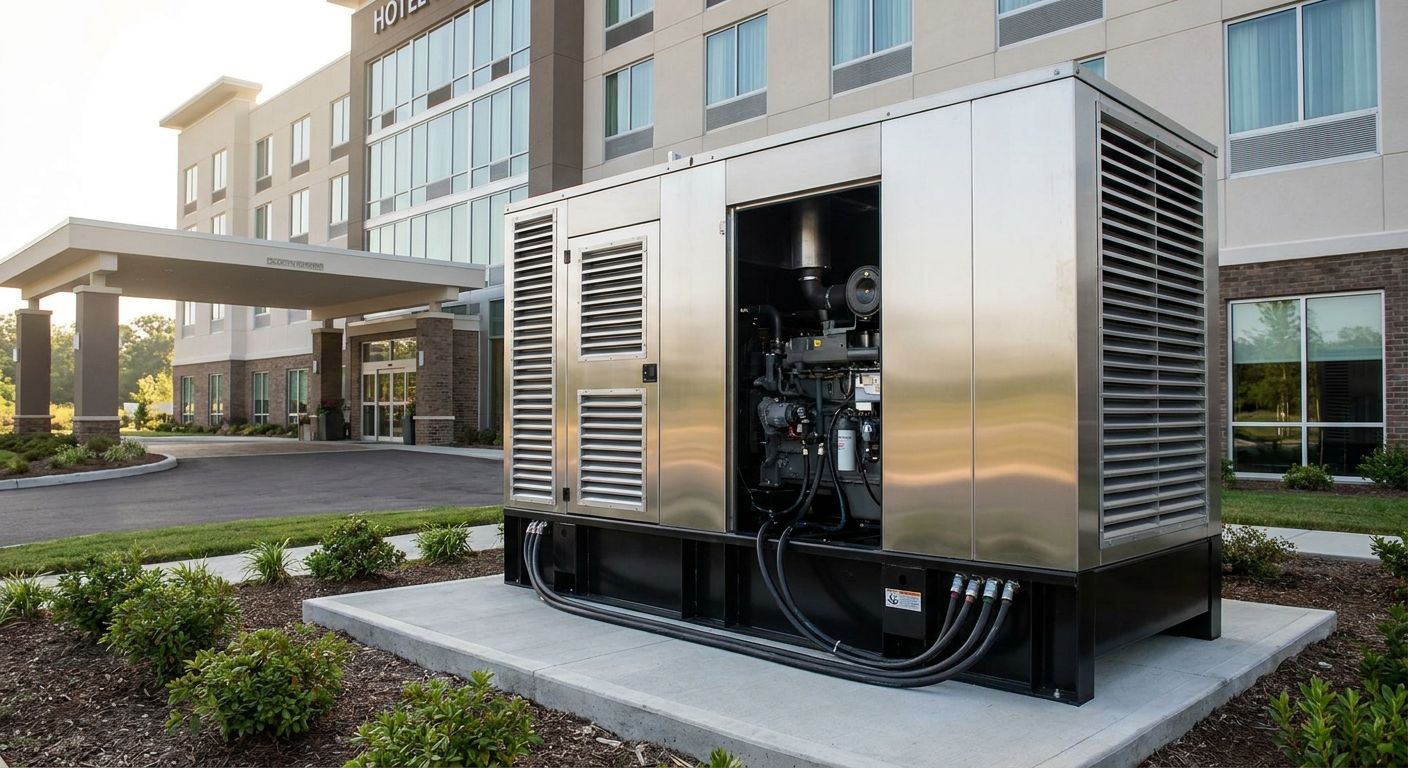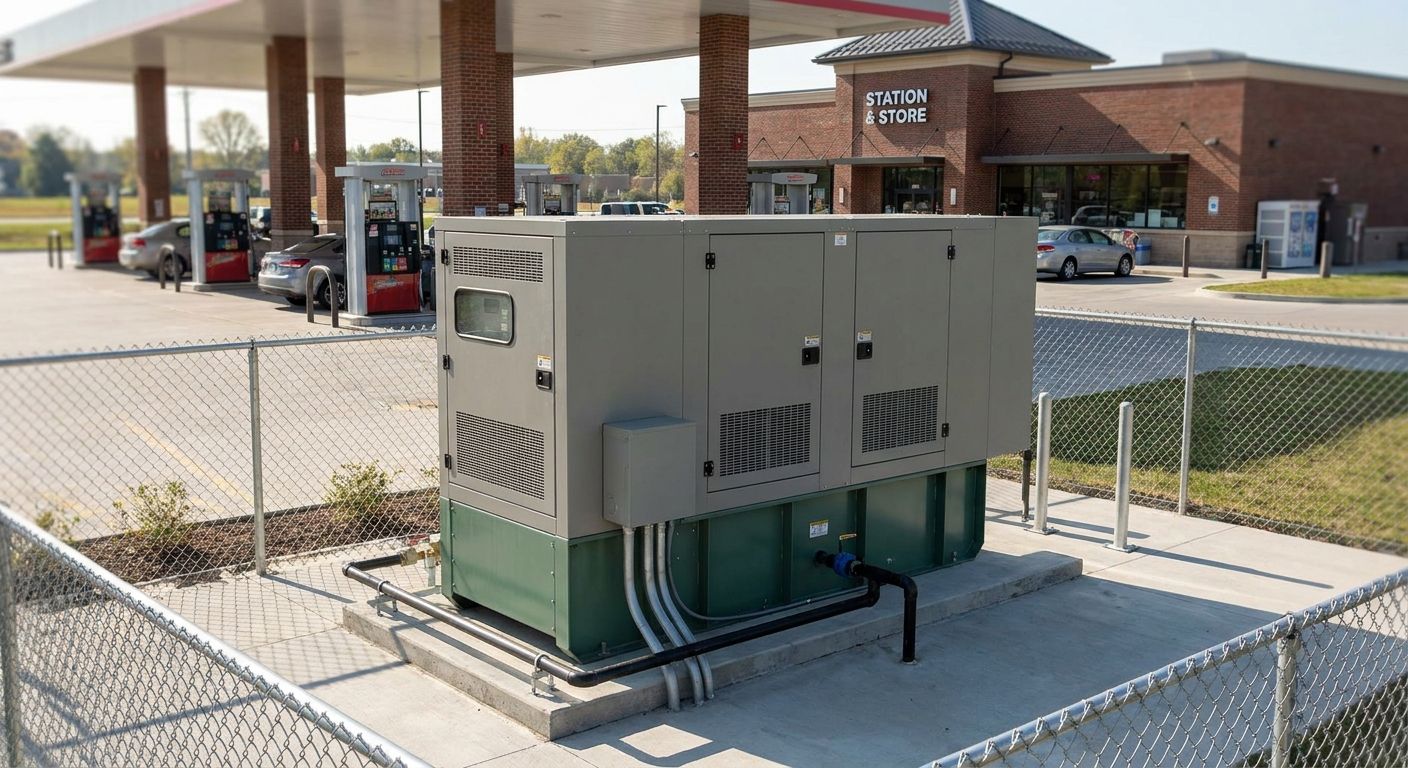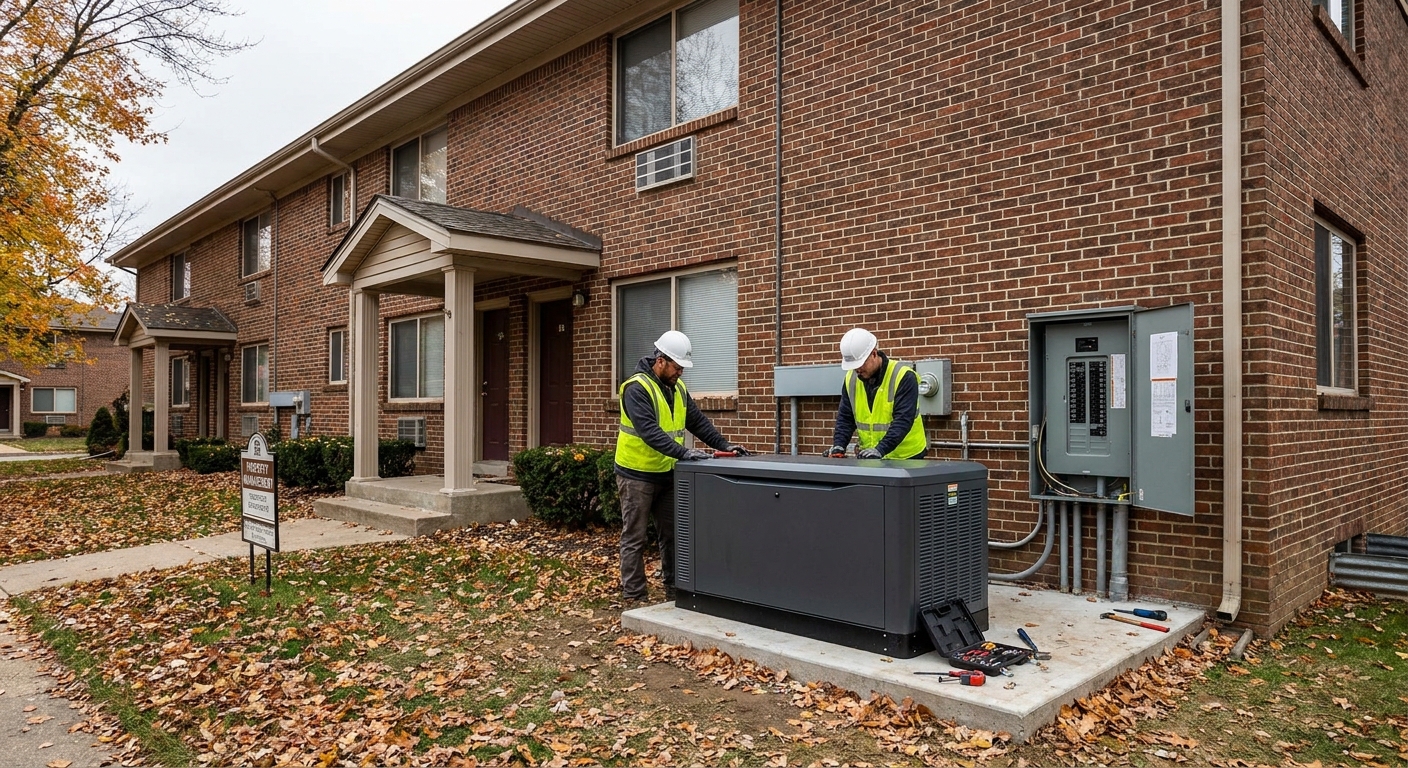
Multi-family properties don't run on a single residential generator stretched thin - a duplex, triplex, or apartment building needs one system sized for shared corridors, common-area pumps, and a maintenance plan that holds up through hurricane season on the Alabama coast.
- Whole house generator installation for multi-family properties needs units in the 48kW-plus class once a building passes 8 units - buy sized to the panel, not the unit count.
- Natural gas systems win when the property sits on a gas main in Fairhope or Daphne; propane covers everything off the grid in 2026.
- A single-family generator stretched across a triplex is a skip - it stalls on shared well pumps and corridor lighting.
- Baldwin County Generators installs Kohler, Generac, Honeywell, and Briggs and Stratton systems rated for multi-unit common loads.
Why this matters
Coastal Alabama loses grid power every hurricane season, and a multi-family property without backup power isn't an inconvenience - it's a liability event. Tenants lose refrigeration and HVAC, common-area pumps and elevators go dark, and a landlord or HOA board is the one fielding the calls.
A single-family standby unit sized for one household can't carry a duplex, let alone an eight-unit building with shared irrigation pumps and hallway lighting circuits. Getting the sizing and fuel decision right before permitting starts is what separates a clean install from a mid-project re-design.
Who this guide is for
This is written for landlords, property managers, and HOA boards overseeing duplexes, triplexes, condo associations, and small apartment complexes across Daphne, Fairhope, Foley, and Gulf Shores who need one generator system to cover shared and unit-level loads instead of installing separate units per door. Baldwin County Generators works this exact property type as a licensed electrical contractor, and the buying decisions below reflect what actually goes wrong on multi-unit installs versus single-family ones.
What to look for in whole house generator installation for multi-family properties
Total connected load across every unit and common area
Sizing a multi-family generator off one unit's panel and multiplying it by door count is the single most common mistake on these jobs. Common-area circuits - well pumps, elevator controls, corridor and exterior lighting, gate motors - draw continuously and have to be added to the load calculation separately from individual units. A property with 8 to 16 units typically lands in the 48kW to 80kW class once common loads are included, not the 20kW to 24kW range a single home would need.
Fuel source access - natural gas main vs. propane tank
Properties on a natural gas main in denser parts of Daphne and Fairhope run continuous fuel with no tank refill logistics, which matters when an outage runs past 72 hours. Properties in more rural stretches of Foley or Gulf Shores without gas main access need a propane tank sized to the generator's burn rate and the expected outage duration - undersizing the tank is as common a mistake as undersizing the generator itself.
Automatic transfer switch and panel design for shared circuits
A multi-family property usually needs a transfer switch design that separates common-area circuits from individually metered unit panels, not one blanket switch. Get this wrong and you either backfeed circuits that shouldn't share a switch or leave tenants confused about what's actually covered during an outage. This is a licensed electrical contractor decision, not a generator dealer upsell - the panel schedule has to match the property's actual metering setup.
Local permitting and setback rules for dense, multi-unit properties
Multi-unit properties sit closer to setback and noise ordinance limits than a single-family lot, and Baldwin County municipalities enforce those distances at inspection. A generator placement that would clear easily on a quarter-acre residential lot can trigger a variance request on a shared-wall condo site. Confirm setback distance and sound rating before ordering equipment, not after it arrives on site.
Maintenance contract built for higher run hours
A generator serving eight or more units runs its exercise cycles and outage hours at a higher rate than a single-home unit, and warranty terms on commercial-grade equipment are written around that usage. A maintenance contract that checks oil, battery, and transfer switch function on a schedule matched to actual run hours - not a generic annual visit - is what keeps a multi-family system compliant with its manufacturer warranty into 2027 and beyond.
Top picks for multi-family standby power
The natural gas workhorse - Buy for properties on a gas main. Commercial-grade natural gas units in the 48kW to 80kW range cover common-area loads for an 8- to 16-unit building without tank logistics. This is the default recommendation for anything inside city gas service in Daphne or Fairhope in 2026.
The propane backup - Buy for off-grid sites. Properties in Foley and Gulf Shores without a gas main need a propane-fed unit sized to a tank that covers the expected outage window, commonly 48 to 72 hours of continuous run time during storm season. Skip a tank that's sized for convenience rather than run-time math.
The commercial-tier paralleling system - Consider for complexes above 24 units. Larger apartment complexes sometimes need two units running in parallel through switchgear rather than one oversized generator, which adds redundancy if one unit needs service mid-outage. This is a bigger install with more engineering upfront - worth the conversation before committing to one large unit.
The single-family unit stretched across a triplex - Skip. A 20kW to 24kW residential-class generator sized for one household stalls when asked to carry a triplex's shared well pump plus three units' worth of HVAC start-up load simultaneously. It looks like a cost-saver on paper and turns into a callback within the first outage of 2026.
What to avoid
- Sizing by door count instead of load calculation. Multiplying one unit's kW need by the number of doors ignores common-area draw entirely.
- Skipping the licensed electrical contractor step on the transfer switch design. A generator installer who isn't also handling the panel schedule as a licensed electrician is a liability risk on a shared-meter property.
- Assuming residential setback rules apply on a multi-unit lot. Shared-wall and multi-building sites often fall under tighter noise and distance ordinances than a single-family lot.
Verdict comparison
| Pick | Fuel | Typical Sizing | Best For | Verdict |
|---|---|---|---|---|
| Natural gas workhorse | Natural gas main | 48kW-80kW | 8-16 unit buildings on gas service | Buy |
| Propane backup | Propane tank | 48kW-80kW | Off-grid sites in Foley, Gulf Shores | Buy |
| Commercial paralleling system | Natural gas or propane | Two units, 60kW+ each | Complexes above 24 units | Consider |
| Residential unit stretched thin | Natural gas or propane | 20kW-24kW | Single-family homes only | Skip |
FAQ
What size generator do I need for a multi-family property?
An 8- to 16-unit building typically needs a generator in the 48kW to 80kW class once common-area loads like well pumps and corridor lighting are included, not a per-unit multiple of residential sizing. A licensed electrical contractor should run the full load calculation before ordering equipment.
Is natural gas or propane better for an apartment complex generator?
Natural gas is better when the property sits on a city gas main, since it runs continuously with no refill logistics during a long outage. Propane is the fallback for properties off the gas grid, common in parts of Foley and Gulf Shores, but the tank has to be sized to the generator's burn rate.
Do HOAs need permits for standby generator installation in Baldwin County?
Yes, multi-unit properties in Baldwin County need permitting and often face tighter setback and noise ordinance checks than single-family lots. Confirm placement distance before ordering equipment to avoid a mid-project variance request.
Can one generator power an entire apartment building?
One generator can power an entire building's common areas and unit panels if it's sized correctly and paired with a transfer switch design that matches the property's metering setup. Larger complexes above roughly 24 units sometimes need two units running in parallel instead of one oversized system.
How often does a multi-family standby generator need maintenance?
Multi-family generators run more exercise cycles and outage hours than single-home units, so they need a maintenance schedule matched to actual run hours rather than one generic annual visit. Skipping this can void the manufacturer warranty.
Is Generac or Kohler better for commercial multi-unit properties?
Both Generac and Kohler make commercial-grade units suited to multi-family loads, and the right choice depends on local dealer support and the property's specific fuel and sizing needs rather than brand alone. Honeywell and Briggs and Stratton also cover this class of installation.
How long does installation take for a multi-family generator system?
Multi-family installs take longer than single-home jobs because of the added panel design work and permitting review on shared or multi-metered properties. Site work, permitting, and equipment delivery timelines all factor into the total schedule for 2026 installs.
One last thing
The detail HOA boards miss most often: a single automatic transfer switch usually can't legally split power between individually metered units without a multi-point transfer design, and that's the change order that turns a straightforward 2026 install into a re-permit halfway through the job. Confirm the panel and metering setup with a licensed electrical contractor before the generator gets ordered, not after.