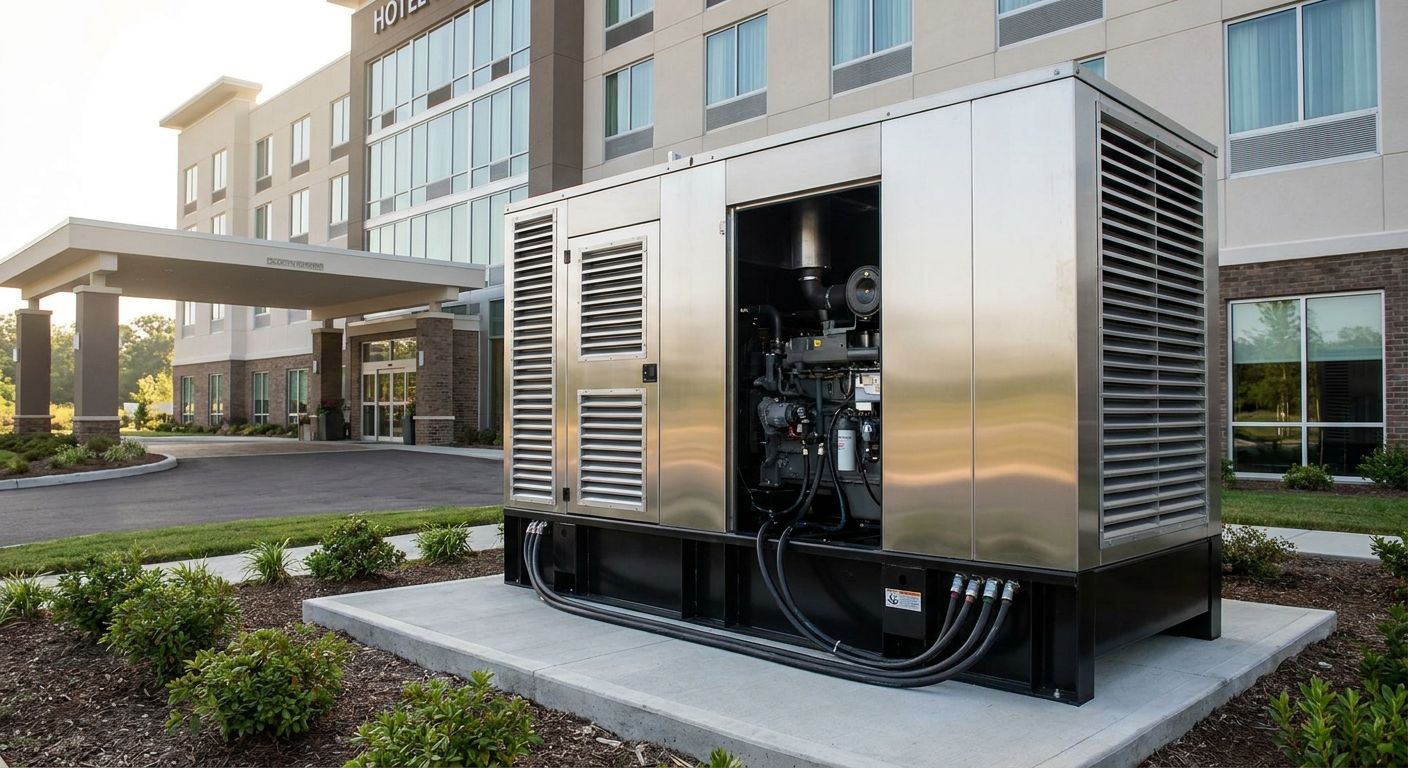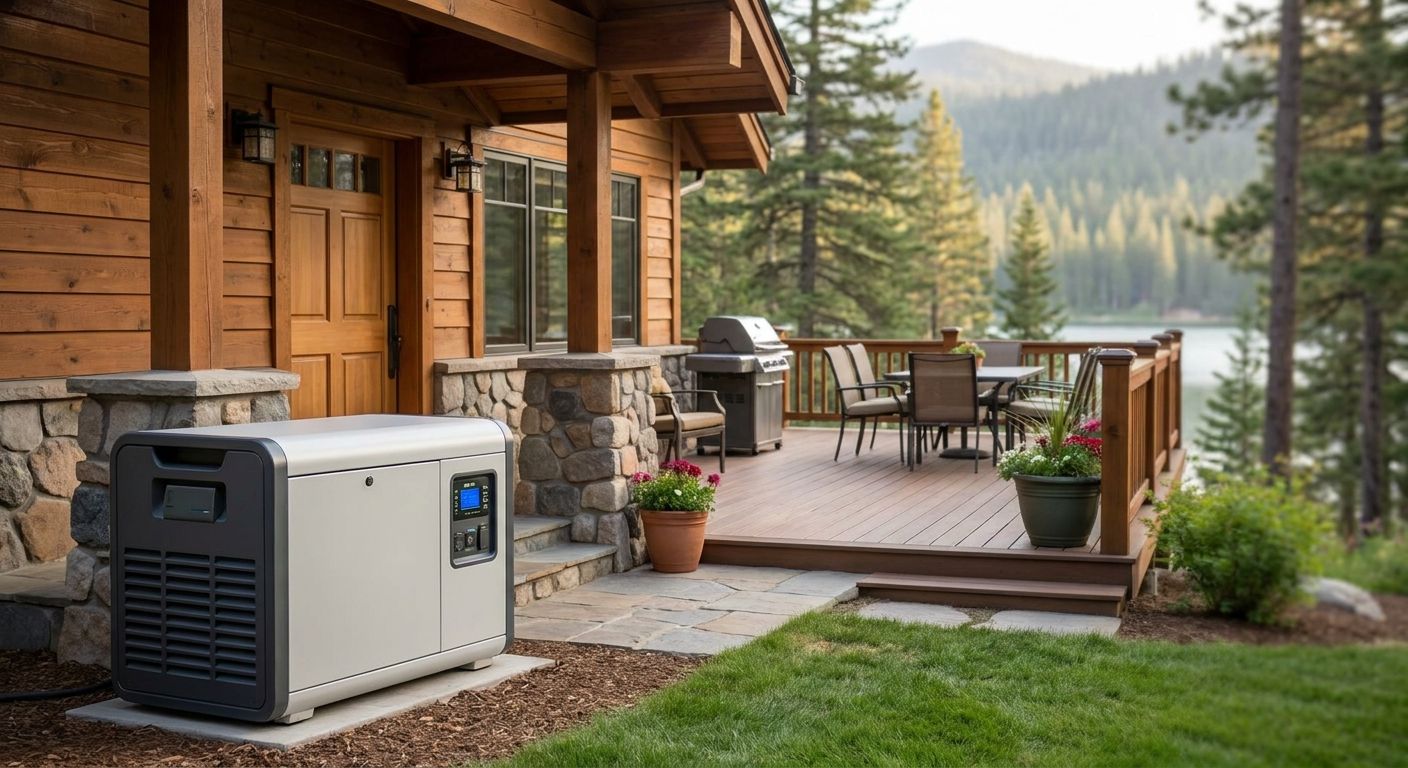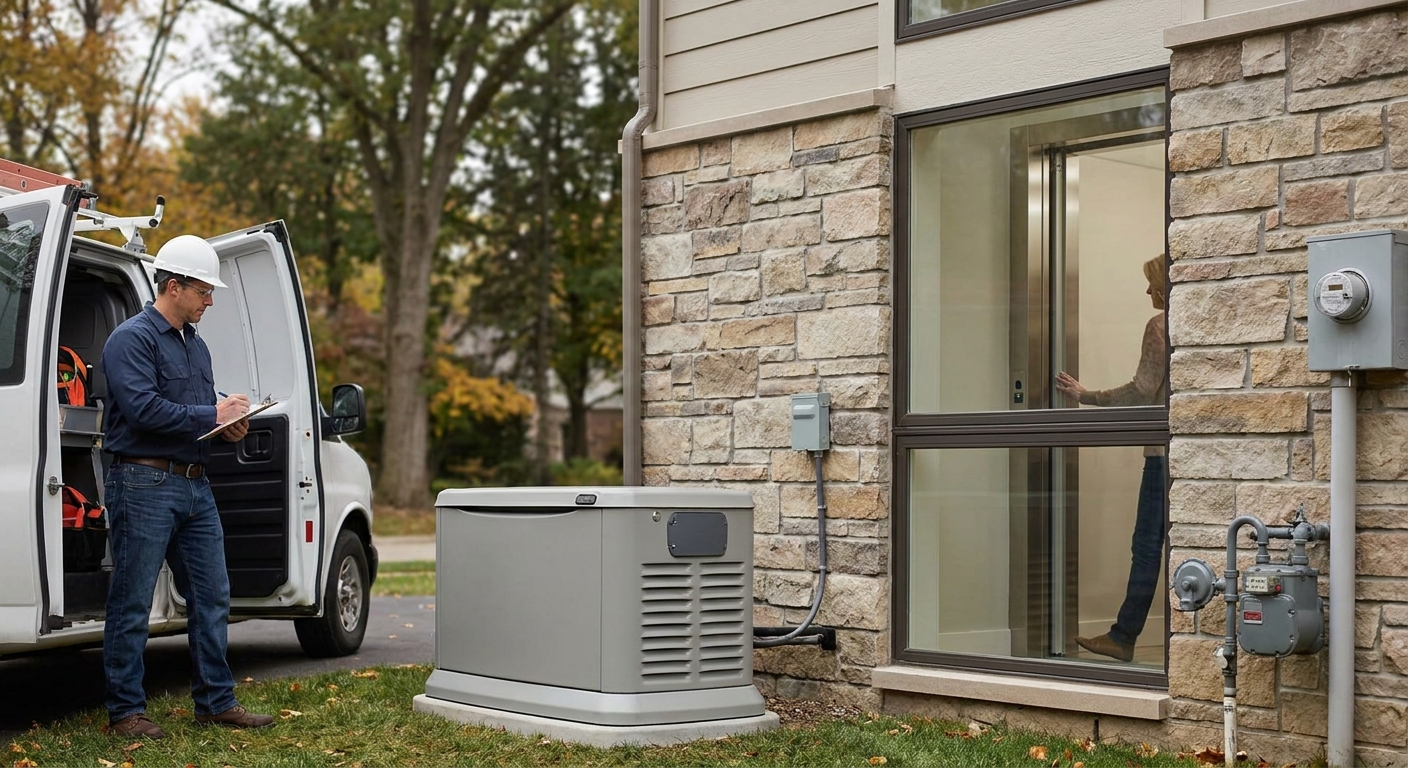
A home elevator turns a power outage from an inconvenience into a safety problem, and coastal Alabama's hurricane season makes that risk real every year from June through November. This guide breaks down what a whole-home standby generator setup needs to look like when your house has an elevator, and which sizing and installation choices actually matter.
- Homes with elevators need generator installation sized for continuous elevator motor load plus HVAC and well pump, not just lights and a fridge.
- A 22kW unit undersizes most elevator-equipped homes; 26kW to 48kW standby generators are the realistic range for Baldwin County homes.
- Kohler and Generac both make units that handle elevator startup surge; Honeywell and Briggs & Stratton fit smaller secondary applications, not primary elevator circuits.
- Automatic transfer switches with load management are mandatory for elevator homes, not optional add-ons.
- Skip any generator sized under 22kW for a home with an elevator: Skip verdict.
Why this matters
A stalled elevator during a power outage is not a minor annoyance if anyone in the household has mobility limitations, uses a wheelchair, or simply can't manage stairs during a storm evacuation. Hydraulic and traction elevators both need continuous power to complete a cycle and return to a floor safely when the grid drops.
Baldwin County sees extended outages after tropical storms and hurricanes, sometimes lasting days rather than hours. A whole-home generator setup built for a house with an elevator has to account for that motor's startup surge on top of everything else running in the house - HVAC, well pump, refrigeration, medical equipment if applicable.
Who this is for
This guide is for homeowners in Daphne, Fairhope, Foley, and Gulf Shores who have a home elevator installed - whether for accessibility, aging-in-place planning, or multi-story waterfront properties where an elevator is a convenience feature. It's also relevant to anyone building new construction with an elevator already specified, since sizing the generator during the design phase avoids a retrofit headache later.
What to look for in generator installation for homes with elevators
Continuous wattage rated for elevator startup surge
Elevator motors draw a startup surge well above their running wattage - often 2 to 3 times the running load for the first few seconds of a cycle. A generator that only covers running wattage will trip or stall the moment the elevator starts moving, which is the exact failure mode you're trying to avoid. Confirm the surge rating specifically, not just the continuous kW number on the spec sheet.
Automatic transfer switch with load management
A standard transfer switch flips everything back on at once when the generator kicks in, and that simultaneous load can overwhelm even a properly sized unit. Load management modules sequence high-draw circuits - elevator, HVAC compressor, well pump - so they don't all start together. For elevator homes this isn't a nice-to-have, it's the difference between a generator that works and one that trips its own breaker.
Fuel type and run time for extended outages
Propane and natural gas units run as long as fuel supply lasts, which matters when outages stretch past 48 or 72 hours after a hurricane. Diesel units need refueling logistics that get harder when roads are blocked. For coastal Alabama's outage patterns, a fixed propane tank sized for multi-day runtime is the more reliable choice than relying on portable fuel delivery.
Licensed electrical contractor with elevator wiring experience
2026 code requirements around elevator emergency power circuits are specific, and a contractor who hasn't wired an elevator-equipped home before can miss a required disconnect or interlock. Ask directly whether the installer has handled elevator homes, not just standard whole-house jobs.
Noise and placement near living space
A generator sized to run an elevator continuously is going to be loud, and placement matters more in homes where an elevator sits near a primary suite or main living area. Sound-dampening enclosures and distance from windows reduce the impact, but this has to be planned at the site survey, not after installation.
Maintenance contract availability
A generator that hasn't run a self-test in six months is a generator you can't trust when the storm actually hits. Confirm the installer offers ongoing maintenance, not just a one-time install and walk-away.
Top picks for elevator-equipped homes
Kohler 26kW/38kW residential standby - the safe pick. Kohler's residential line handles elevator startup surge cleanly when paired with proper load management, and the 38kW variant covers larger homes running HVAC plus elevator plus well pump simultaneously. Verdict: Buy for most single-elevator homes in the 3,000 to 5,000 square foot range.
Generac 22kW Guardian series - the budget-conscious pick, but with a caveat. The 22kW model can technically start most residential elevator motors, but it leaves almost no headroom for simultaneous HVAC and well pump draw during a Gulf Coast summer outage. Verdict: Consider only as a secondary or backup unit, not the primary system for an elevator home.
Generac 48kW commercial-grade unit - the overkill pick for large or multi-elevator waterfront properties. This size handles elevator surge with margin to spare even with full HVAC zones and pool equipment running. Verdict: Buy for larger properties (5,500+ sq ft) or homes with two elevators.
Honeywell 20kW air-cooled unit - looks like a reasonable mid-tier option on paper. It's built for standard whole-house backup, not for the surge demands of an elevator motor combined with central air. Verdict: Skip for primary elevator circuit duty; fine as a secondary generator for outbuildings or guest quarters.
Briggs & Stratton 20kW standby - similar story to the Honeywell. Solid for a standard home without an elevator, but undersized once you add an elevator's surge draw to the load calculation. Verdict: Skip for elevator-equipped primary residences.
What to avoid
- Portable generators wired through a manual transfer switch. They can't handle elevator surge loads and require someone home to switch them on - useless if the outage happens while the homeowner is evacuated or at work.
- Undersized units marketed as "whole house" without a load calculation. A generator advertised as whole-home coverage for a standard 2,500 sq ft house without an elevator is not sized for one with an elevator added.
- Skipping the load management module to save on install cost. This is the single most common mistake - it looks like a minor upgrade fee but it's what prevents the generator from tripping when the elevator and HVAC start together.
Get your elevator home sized right
Free on-site load calculation for Baldwin County homes with elevators.
Verdict comparison
| Model | Surge handling | Best for | Verdict |
|---|---|---|---|
| Kohler 26kW/38kW | Strong | 3,000-5,000 sq ft, single elevator | Buy |
| Generac 22kW Guardian | Marginal | Secondary/backup only | Consider |
| Generac 48kW commercial | Excellent | 5,500+ sq ft, multi-elevator | Buy |
| Honeywell 20kW | Weak for elevator surge | Non-elevator circuits only | Skip |
| Briggs & Stratton 20kW | Weak for elevator surge | Non-elevator circuits only | Skip |
FAQ
What size generator do I need for a house with an elevator?
Most single-elevator homes between 3,000 and 5,000 square feet need at least a 26kW standby generator to cover elevator startup surge plus HVAC and well pump. Homes over 5,500 square feet or with two elevators typically need 38kW to 48kW units.
Can a portable generator run a home elevator?
No, a portable generator paired with a manual transfer switch can't reliably handle elevator startup surge and requires someone present to switch it on during an outage. Whole-home standby units with automatic transfer switches are the standard for elevator homes.
Is Kohler or Generac better for a home with an elevator?
Both Kohler and Generac make units capable of handling elevator surge loads when sized correctly and paired with load management. Kohler's 26kW/38kW line is a strong single-elevator fit, while Generac's 48kW commercial-grade unit suits larger or multi-elevator properties.
Do I need a load management module for an elevator generator setup?
Yes, load management is close to mandatory for elevator homes because it sequences high-draw circuits like the elevator motor, HVAC compressor, and well pump instead of starting them simultaneously. Skipping it is the most common reason a properly sized generator still trips during use.
How long can a standby generator run an elevator during a hurricane outage?
A propane or natural gas standby generator with adequate fuel supply can run continuously for as long as fuel lasts, often days during extended 2026 hurricane season outages. Diesel units require refueling logistics that get harder when local roads are impassable.
How much does whole house generator installation cost for a home with an elevator?
Cost varies by generator size, transfer switch configuration, and site-specific wiring needs for the elevator circuit, so a direct load calculation and quote is the only reliable way to get an accurate number. Larger units and load management modules add to the base installation cost.
Does a home elevator need its own dedicated generator circuit?
Yes, most licensed electrical contractors wire the elevator on a dedicated circuit through the transfer switch with its own disconnect, separate from general household circuits. This isolates the elevator's surge draw and makes troubleshooting easier if something trips.
What's the biggest mistake homeowners make sizing a generator for an elevator home?
Sizing the generator for the house alone and treating the elevator as an afterthought is the most common mistake, which leads to units that stall the moment the elevator motor starts. A proper load calculation that includes elevator surge wattage upfront avoids the problem entirely.
One last thing
The detail most homeowners miss: an elevator's startup surge happens every single time the cabin moves, not just once at power-on, so a generator sized without surge headroom will fight that draw dozens of times a day during an extended 2026 outage. Get the load calculation done before you pick a kW number off a brochure.