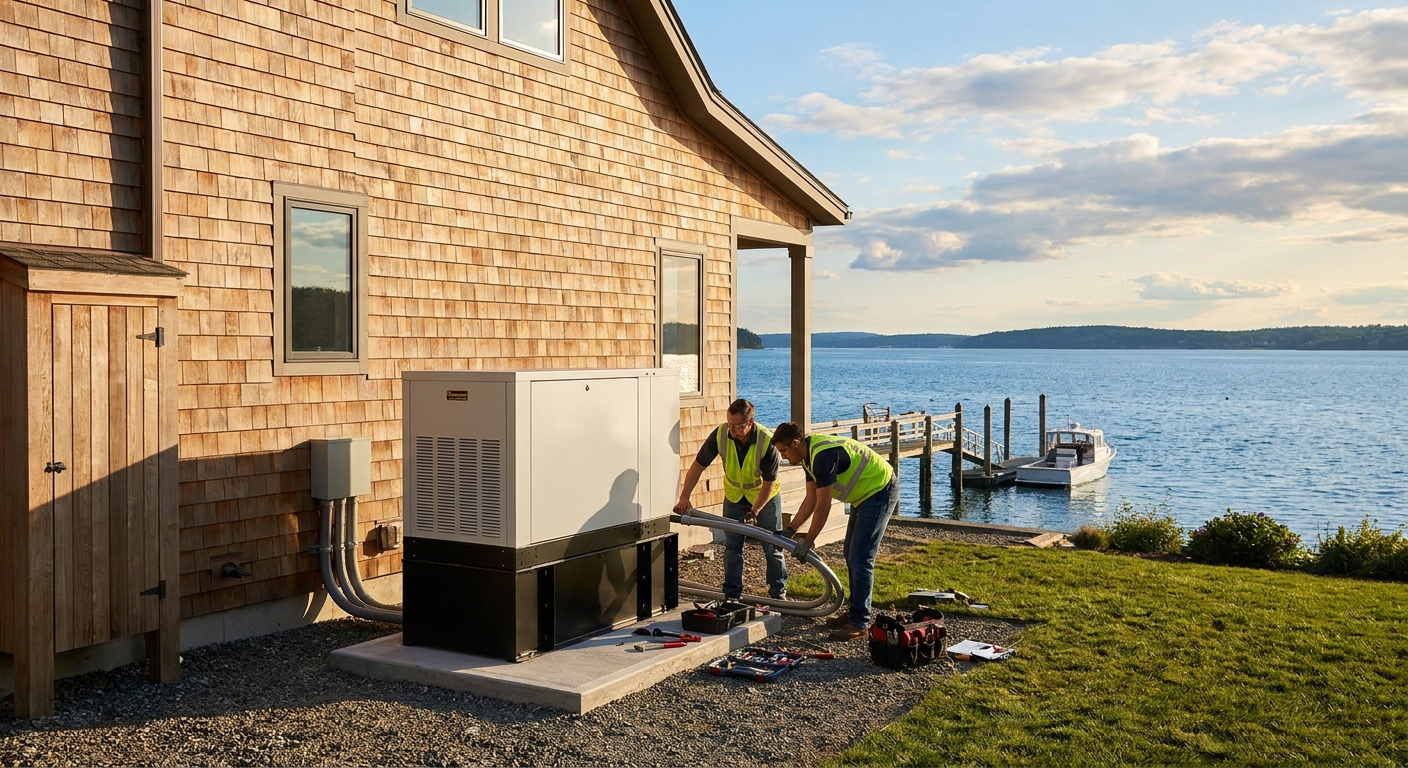
Waterfront homes in Daphne, Fairhope, Foley, and Gulf Shores face a power reliability problem that inland Baldwin County properties don't: saltwater corrosion, flood elevation requirements, and wind exposure that can void a standard generator installation before the first named storm ever forms.
TL;DR: For coastal Alabama waterfront properties, a properly installed standby generator installation means an aluminum or marine-grade enclosure, elevation above the base flood elevation line, and a transfer switch rated for the exposure category of your lot. Baldwin County Generators sizes and installs Kohler, Generac, Honeywell, and Briggs & Stratton units for this exact exposure profile. Verdict: standard residential installs are a Skip on waterfront lots - you need flood-rated mounting and marine-grade housing, full stop.
Why this matters
Hurricane season runs June 1 through November 30, and waterfront lots in coastal Alabama lose grid power faster and longer than inland neighborhoods during named storms and even routine summer squalls. A generator that isn't elevated, corrosion-protected, and properly transfer-switched can fail exactly when you need it, or worse, fail an inspection after a claim.
Salt air corrodes steel enclosures in a fraction of the time it takes inland, and flood zones common along Mobile Bay and the Gulf shoreline carry elevation rules under NEC Article 700 and local floodplain ordinances that a generic installer may not account for. Get this wrong in 2026 and you're either replacing a rusted-out unit in three years or fighting a permit denial after the fact.
Who this is for
This guide is for homeowners and business owners on or near the water in Baldwin County - canal-front lots in Orange Beach, bay-front homes in Fairhope and Daphne, and beach-adjacent properties in Gulf Shores and Foley - where flood zone designation, wind exposure, and saltwater proximity change what "standard" generator installation looks like.
If your property sits in a mapped flood zone (AE, VE, or similar) or within a half-mile of open water, treat every recommendation below as non-negotiable, not optional upgrade.
What to look for in generator installation for waterfront properties
Flood elevation and platform height
Every waterfront generator needs to sit above the base flood elevation (BFE) for its zone, not just above grade. A generator mounted on a standard 4-inch concrete pad in a VE zone can be underwater during a moderate storm surge, even if the house itself stays dry. Elevated platforms - sometimes 18 to 36 inches above grade depending on the FEMA flood map for the parcel - are the difference between a generator that runs through the outage and one that shorts out on day one.
Corrosion-resistant enclosure
Saltwater air degrades a standard painted steel enclosure in as little as 2 to 4 years on a direct waterfront lot. Aluminum enclosures, or steel with marine-grade powder coating, hold up for a decade or more in the same exposure. This single spec decision affects the entire lifespan of the install more than any other single factor.
Wind rating and anchoring
Coastal Alabama building code requires anchoring rated for the wind exposure category of the lot - often Exposure D for direct waterfront. A generator that isn't bolted to a rated pad with hurricane-tie hardware can shift or tip in sustained winds above 90 mph, which is common during even a Category 1 landfall.
Fuel supply reliability
Propane and natural gas lines on waterfront lots need backflow and shutoff protections that account for surge and flooding, not just standard residential code minimums. A fuel line compromised by storm surge turns a working generator into a liability.
Transfer switch placement
The automatic transfer switch has to sit above flood elevation too, in a location protected from wind-driven rain intrusion. Installers who mount the transfer switch at standard inland height on a waterfront lot are setting up a failure point that has nothing to do with the generator itself.
Permitting and setback compliance
Waterfront lots often carry additional setback rules from the water line and from wetlands buffers. A generator installation that skips this step can pass initial inspection and still get flagged during a future permit review or insurance audit.
Top picks for waterfront installation
Kohler - the storm-tested pick. Kohler's residential standby line runs from 20kW to 48kW and pairs with aluminum enclosure options suited to direct salt exposure. The RXT transfer switch line integrates with elevated platform mounts common on Baldwin County waterfront installs. Verdict: Buy for larger waterfront homes needing whole-house coverage above 20kW.
Generac - the volume pick. Generac's Guardian series covers the 16kW to 26kW range most common on mid-size waterfront homes, with a steel enclosure option that needs marine-grade coating add-ons for direct coastal exposure. It's a strong value pick when paired with the right protective upgrades. Verdict: Consider - solid unit, but confirm enclosure coating before install on a direct waterfront lot.
Honeywell - the value pick. Honeywell's residential standby units, built on shared platforms with other major manufacturers, hit a lower price point in the 14kW to 20kW range. For smaller waterfront cottages and secondary properties this is a reasonable fit. Verdict: Consider for lots outside the highest wind exposure category.
Briggs & Stratton - the compact pick. Briggs & Stratton's standby units in the 12kW to 20kW range work well for smaller waterfront footprints where space for an elevated platform is limited. Verdict: Consider for secondary or guest structures rather than primary whole-home coverage.
Generic big-box "whole-home" bundle - the wildcard to skip. Big-box retail bundles rarely include flood-elevation platform kits or marine-grade enclosure upgrades, and the included transfer switch is almost never rated for waterfront wind exposure. Verdict: Skip on any lot within flood zone boundaries.
What to avoid
- Standard steel enclosures without coating upgrades - they look identical to marine-grade units in a showroom but corrode within a few storm seasons on direct waterfront exposure.
- Ground-level mounting on any mapped flood zone lot - even a few inches of surge disables a unit that isn't elevated to BFE plus freeboard.
- Undersized transfer switches installed at standard inland height - the switch fails from moisture intrusion long before the generator itself does.
Verdict comparison
| Criteria | Kohler | Generac | Honeywell | Briggs & Stratton |
|---|---|---|---|---|
| kW range | 20-48 | 16-26 | 14-20 | 12-20 |
| Best fit | Large waterfront homes | Mid-size homes | Cottages/secondary | Small structures |
| Enclosure upgrade needed | Standard aluminum available | Yes, add coating | Yes, add coating | Yes, add coating |
| Verdict | Buy | Consider | Consider | Consider |
FAQ
What size generator do I need for a waterfront home in coastal Alabama? Most waterfront homes in Baldwin County run 20kW to 24kW for whole-house coverage, though larger homes with pool pumps and multiple HVAC zones can need up to 48kW. Sizing depends on square footage, HVAC load, and well pump if applicable.
Is a standard generator installation enough for a waterfront property? No - standard installs skip the flood elevation platform and marine-grade enclosure coating that waterfront exposure requires. A generic install on a coastal lot is a Skip unless it's been specifically upgraded for the flood zone and wind exposure category.
How much does standby generator installation cost on a waterfront lot? Costs vary by generator size, enclosure upgrade, platform elevation work, and permitting requirements specific to the parcel's flood zone. Get an on-site quote rather than relying on a national average, since waterfront-specific work adds line items a standard inland quote won't include.
Does hurricane season change installation timing? Yes - installers book up fast heading into June 1, the start of hurricane season, so scheduling in the spring beats waiting until a storm is already in the forecast for 2026.
Is Kohler or Generac better for a waterfront property? Kohler's aluminum enclosure options are a closer match to direct salt exposure out of the box, while Generac's Guardian line needs an added marine-grade coating to reach the same corrosion resistance. Both are workable; the enclosure spec is what decides it.
Do waterfront generators need special permits? Most coastal Alabama municipalities require floodplain compliance review in addition to standard electrical permitting for any generator installed in a mapped flood zone. Skipping this step risks a failed inspection or insurance complication later.
How often should a waterfront standby generator be serviced? Salt air exposure means more frequent inspection of enclosure seals and connection points than an inland unit needs, typically checked at every scheduled maintenance visit rather than annually. Corrosion starts at connection points first, not the engine.
Can I install a standby generator myself on a waterfront lot? No - waterfront installs require licensed electrical work tied to flood elevation code and permitting that a DIY install can't satisfy. A licensed, insured installer is required to pull the permits waterfront jurisdictions demand.
One last thing
The detail most homeowners miss isn't the generator brand - it's the platform height. A $6,000 corrosion-resistant enclosure mounted six inches too low on a VE-zone lot still floods in a moderate surge event, while a properly elevated standard enclosure often survives. Elevation is the cheapest insurance policy in the entire installation, and it's the first thing worth confirming before signing off on any 2026 waterfront generator installation.