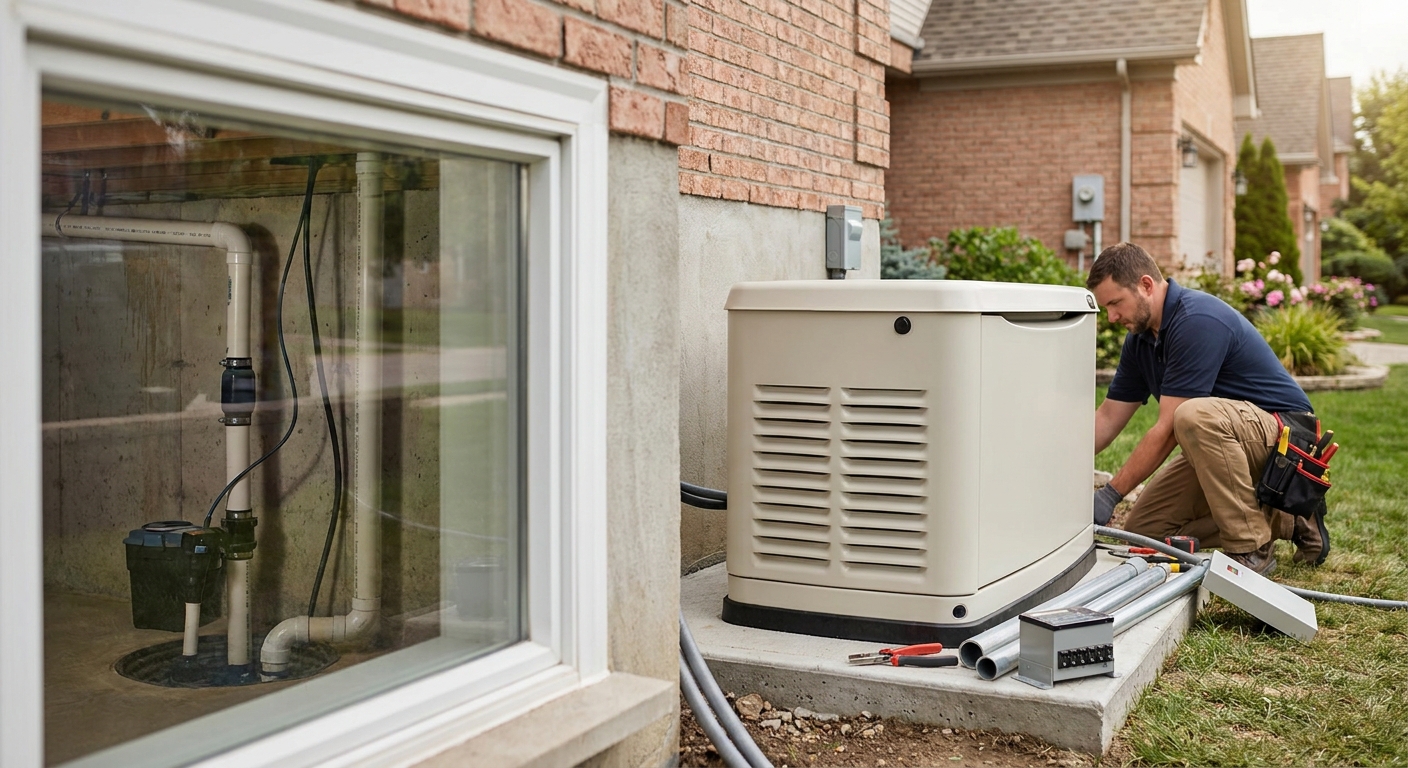
Homes with a working sump pump can flood in under two hours once the pump loses power during a storm surge or heavy Gulf Coast rain - a standby generator that starts automatically is the only fix that doesn't depend on you being home to plug in a portable unit.
- A 20-24kW standby generator covers a sump pump plus HVAC and refrigeration for most Baldwin County homes - buy this size, not smaller.
- Automatic transfer switches restore power in 10-17 seconds, fast enough that most sump pumps never lose prime.
- Portable generators fail sump pump homes because nobody restarts them at 3am during a hurricane - skip this option entirely.
- Generator installation for homes with sump pumps in 2026 runs on propane or natural gas, not gasoline, for unattended runtime.
- Baldwin County Generators sizes and installs standby systems built around the sump pump's starting watts, not just its running watts.
Why this matters
A sump pump motor pulls a short, high surge of power the instant it kicks on - often 2 to 3 times its running wattage. A generator sized only for the pump's steady draw stalls exactly when the pump needs it most, which is the middle of a downpour.
Coastal Alabama homes in Daphne, Fairhope, Foley, and Gulf Shores sit on water tables that rise fast during tropical systems. When the grid drops and the sump pump goes quiet, water finds the basement or crawlspace within hours, not days.
Standby generator installation built for a sump pump home isn't a bigger version of a whole-home system - it's sized and wired so the pump gets priority power the second the automatic transfer switch senses an outage.
Who this is for
This guide is for homeowners in flood-prone or high-water-table areas of Baldwin County who already have a sump pump installed, or are installing one alongside a new crawlspace or basement system, and want the pump protected during every power outage - not just the ones they happen to be home for. If your sump pump only runs a few times a year during heavy rain, you still need continuous protection, because the outage that matters is the one during a named storm, not a Tuesday afternoon shower.
What to look for in a generator for sump pump homes
Starting wattage headroom, not just running wattage
A typical sump pump draws 800 to 1,050 running watts but can spike to 1,300 to 2,900 starting watts depending on horsepower. Size the generator against the surge number, and add headroom for the well pump, refrigerator, and HVAC starting simultaneously during a storm.
Automatic transfer switch speed
The transfer switch is what actually saves the basement - it senses the outage and starts the generator without a human involved. Look for a 10 to 17 second transfer window; anything slower gives floodwater a longer head start before the pump restarts.
Fuel source that runs unattended for days
Gasoline portable units need refueling every 8 to 12 hours, which means someone has to be home and awake. Propane and natural gas standby systems run continuously for the length of the outage, which is the entire point during a multi-day hurricane recovery.
Dedicated circuit wiring for the sump pump
The sump pump circuit needs to be wired into the transfer switch's essential loads panel, not shared with lighting or outlets that might trip a shared breaker. A licensed electrical contractor separates this out during installation so the pump never competes with other loads for capacity.
Sizing that covers the whole essential load, not just the pump
A generator sized only for the sump pump leaves you without refrigeration, well water, or HVAC during a multi-day outage. Most Baldwin County homes with a sump pump land in the 20kW to 24kW range once the pump, refrigerator, well pump, and one HVAC zone are accounted for.
Maintenance access in a coastal climate
Salt air and humidity accelerate corrosion on outdoor equipment faster than inland installations. A generator that's easy to service on an annual schedule keeps the unit ready when hurricane season actually arrives, instead of failing on the one day it's needed.
Get your sump pump home sized correctly
Baldwin County Generators quotes standby systems built around your sump pump's starting watts.
Top picks by generator class
The safe pick: 22kW whole-home standby. Covers a sump pump, well pump, refrigerator, and one HVAC zone with room to spare - 22kW handles roughly 2,900 starting watts on the pump circuit alone without derating other loads. Verdict: Buy for most three- to four-bedroom homes with a single sump pump.
The minimum-viable pick: 14kW standby unit. Handles the sump pump and refrigeration but forces load-shedding on HVAC during peak draw - acceptable for smaller homes or secondary/vacation properties where comfort cooling can wait out a storm. Verdict: Consider only if budget is the deciding factor and the home is under 1,800 square feet.
The wildcard: dual sump pump homes with a battery backup pump. Homes with both a primary and a battery-backup sump pump still need standby power, because the battery backup only buys hours, not days. Size up to 24kW and wire both circuits into the essential loads panel. Verdict: Buy if the home has flooded before or sits below the street grade.
The one to skip: portable generator with a manual transfer switch. Requires someone to be present, start the unit, and flip the switch - the exact scenario that fails during overnight storms or when homeowners evacuate. Verdict: Skip for any home relying on a sump pump for flood protection.
The commercial-adjacent pick: 30kW+ standby for homes with a finished basement. Finished basements add sump pump load plus dehumidifiers, sometimes a second pump, and full HVAC coverage. Verdict: Buy when the basement represents significant square footage or has been renovated as living space.
What to avoid
- Undersized "whole-home" units marketed at 10-12kW - they look like a whole-home solution on paper but stall the sump pump's starting surge when refrigeration and HVAC are also drawing power.
- Gasoline portables sold as "backup power" - they require refueling and manual operation, which defeats the purpose for a sump pump that needs to run unattended for 48 to 72 hours during hurricane recovery.
- DIY transfer switch installs - miswiring the essential loads panel can leave the sump pump circuit unprotected even though the rest of the house has power, which is the single most common failure point in improperly installed systems.
Verdict comparison
| Generator class | Starting watts covered | Runtime | Verdict |
|---|---|---|---|
| 14kW standby | ~1,800 | Continuous (propane/gas) | Consider |
| 22kW standby | ~2,900 | Continuous (propane/gas) | Buy |
| 24kW standby (dual pump) | ~2,900+ | Continuous (propane/gas) | Buy |
| 30kW+ standby | 3,500+ | Continuous (propane/gas) | Buy |
| Portable + manual switch | Varies, unreliable | 8-12 hrs per tank | Skip |
FAQ
What size generator do I need for a sump pump?
Most homes need a 20kW to 24kW standby generator to cover the sump pump's starting surge alongside a refrigerator, well pump, and HVAC. A sump pump alone only needs 1,300 to 2,900 starting watts, but the pump is rarely the only load during an outage.
Can a portable generator run a sump pump?
A portable generator can technically run a sump pump, but it requires someone home to start it and refuel it every 8 to 12 hours. That makes it unreliable for overnight storms or evacuations, which is exactly when sump pumps matter most.
How fast does a standby generator restore power to a sump pump?
An automatic transfer switch typically restores power in 10 to 17 seconds after an outage is detected. That gap is short enough that most sump pumps never fully lose prime during the switchover.
Is propane or natural gas better for a sump pump backup generator?
Natural gas offers unlimited runtime if the home is already connected to a gas line, while propane requires a stored tank but works anywhere. Both outperform gasoline for sump pump protection because neither requires manual refueling during a multi-day outage.
Do I need a dedicated circuit for my sump pump generator setup?
Yes, the sump pump should be wired directly into the essential loads panel on the transfer switch, separate from general lighting or outlet circuits. This prevents the pump from being deprioritized if the panel needs to shed load during peak demand.
How much does standby generator installation cost for a sump pump home?
Costs vary by generator size, fuel line work, and panel upgrades needed for the essential loads circuit. Homes with existing gas service and simple panel access installation faster and at lower cost than homes needing new gas lines or panel upgrades.
Will a standby generator protect my basement from flooding during a hurricane?
A properly sized and installed standby generator keeps the sump pump running continuously through a multi-day outage, which is the main flood risk during hurricane season. It won't stop water from entering during structural failures, but it eliminates the power-loss failure mode entirely.
How often should a sump pump generator be serviced in coastal Alabama?
Annual servicing is standard, but coastal salt air accelerates corrosion faster than inland installations, so a mid-year check before hurricane season is worth adding. Skipping maintenance is the most common reason a generator fails on the one day it's actually needed.
One last thing
The failure point in most sump pump flooding stories isn't the generator - it's a shared circuit that let the sump pump's breaker trip along with something unrelated, silently, hours before anyone noticed water in the basement. Ask whoever installs your system to confirm the sump pump sits on its own dedicated leg of the essential loads panel, in writing, before the job is signed off. That single detail matters more than the kW rating on the generator's nameplate.