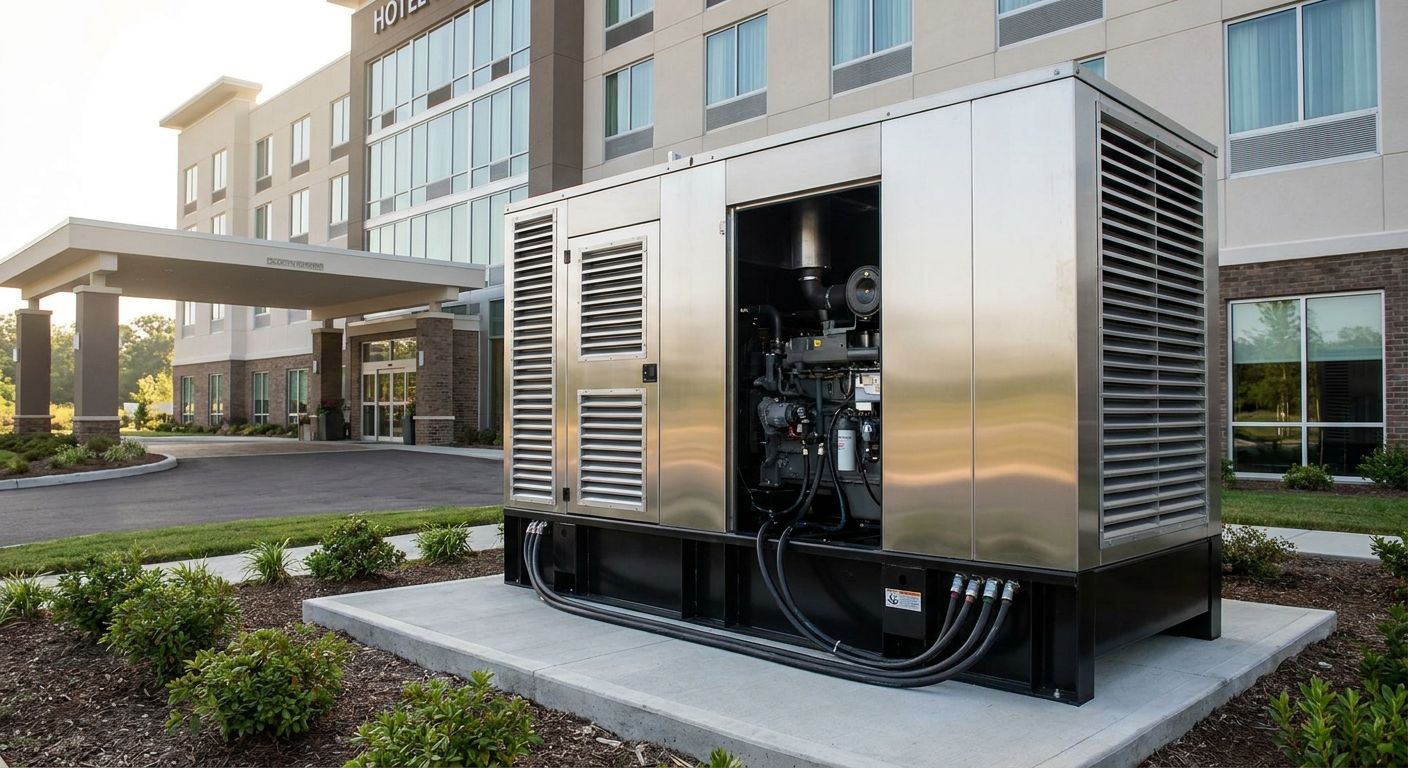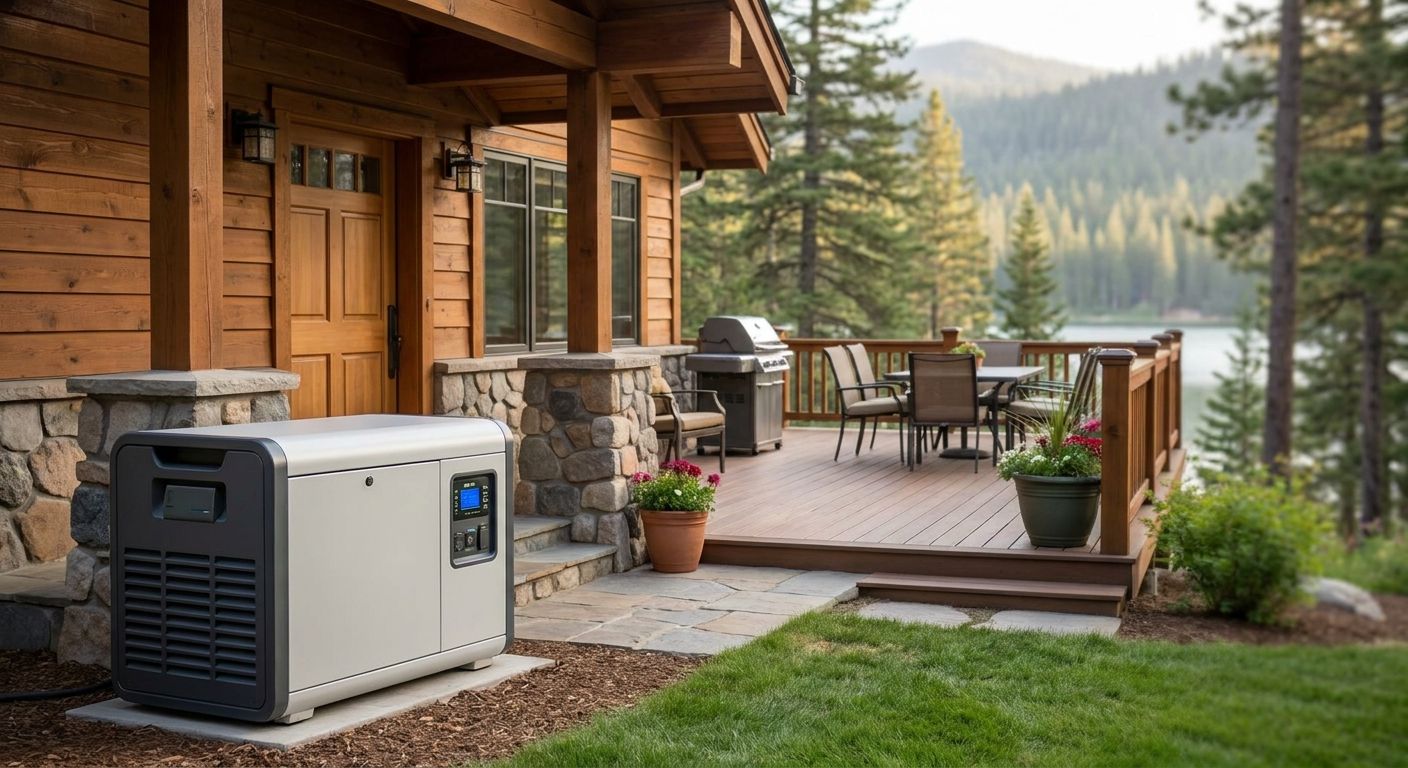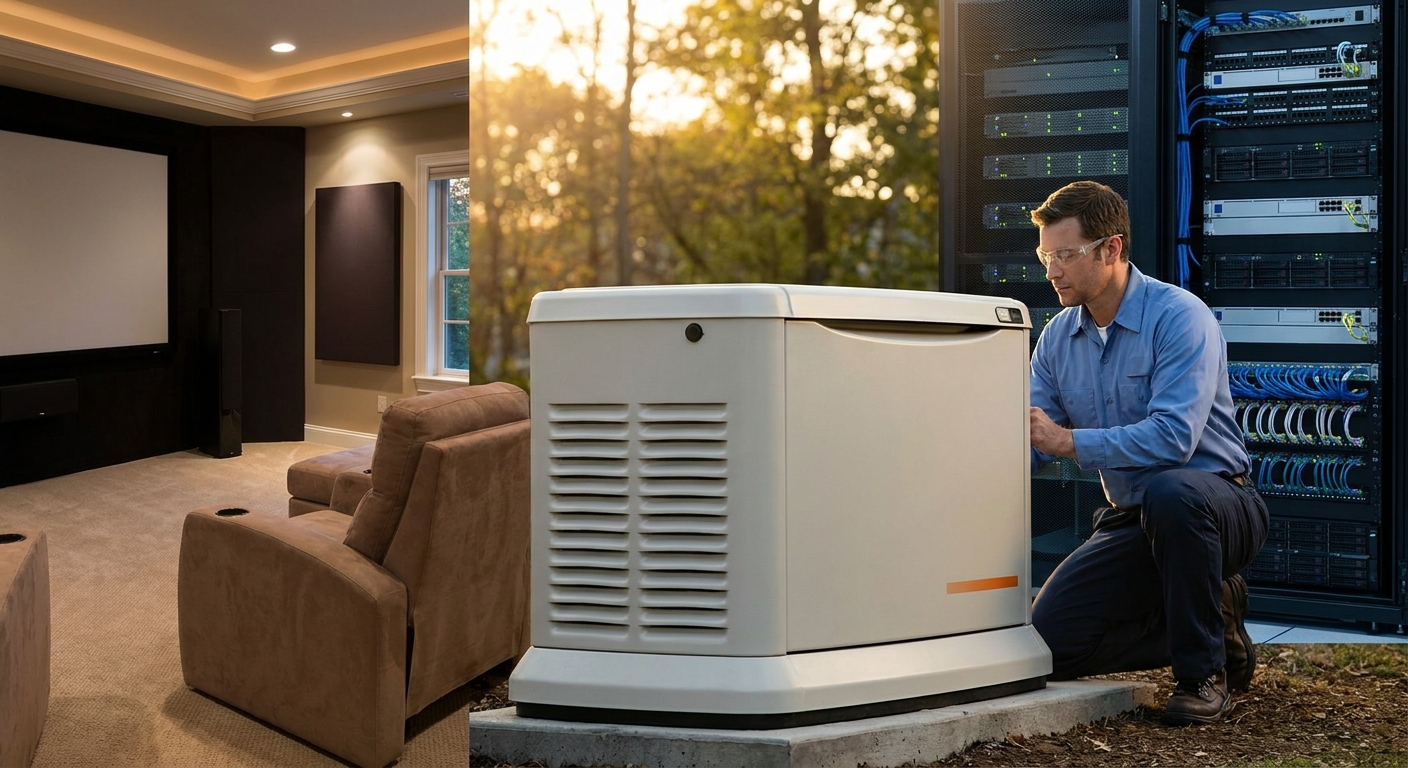
Home theaters and server rooms fail loud and expensive when the power blinks - screens go black mid-movie, RAID arrays crash, and NAS backups corrupt mid-write. Standby generator installation for a home theater or server room in coastal Alabama isn't the same job as sizing a whole-house unit for the kitchen and HVAC; it's a power-quality problem first and a sizing problem second.
- Kohler 26RCLB holds under 5% THD, the clean-power spec server racks in Daphne and Fairhope actually need. Buy.
- Generac Guardian 22kW covers a home theater circuit plus a home office rack. Consider for mixed loads.
- Briggs & Stratton's smaller residential units skip formal THD certification. Skip for server rooms.
- A 10-second automatic transfer switch keeps UPS batteries from draining before generator power engages.
- Standby generator installation for home theater and server room setups starts with load calculation, not brand loyalty.
Why this matters
Hurricane season along the Gulf Shores and Foley coastline means multi-day outages are not hypothetical - they're an annual planning problem. A whole-house generator that keeps the refrigerator running does nothing for a projector bulb that needs a clean sine wave or a server rack that browns out and corrupts a drive.
Sensitive electronics don't just need power, they need power quality. Voltage sag, harmonic distortion, and switch-over delay damage AV receivers and storage arrays in ways a light bulb never notices. That's the gap most standby generator installs miss when the buyer only asked "how many kW do I need."
Who this is for
This guide is for homeowners in Daphne, Fairhope, Foley, and Gulf Shores who've built a dedicated home theater room, a server closet, or a home office rack running a NAS, switches, and a UPS - and who need standby generator installation that protects the equipment, not just the lights. If your critical load is a projector, an AV receiver stack, or a rack of drives instead of a refrigerator, the criteria below change.
What to look for in a generator for home theaters and server rooms
Automatic transfer switch speed
Most automatic transfer switches (ATS) engage the generator within 10 seconds of an outage. That gap matters because a UPS battery bridging a projector or server rack only has a few minutes of runtime - a slow or manual transfer switch can drain it before the generator ever takes the load.
Total harmonic distortion (clean power)
Generators built for sensitive electronics publish a THD rating, typically under 5% on units designed for computer and AV loads. Anything higher shows up as flickering displays, buzzing speakers, or premature failure in switching power supplies - the exact hardware inside a server rack and an AV receiver.
Correct kW sizing for the continuous load
A home theater with a projector, receiver, subwoofer amp, and cooling fan rarely exceeds 3-4 kW continuous. A server room with a rack, switches, and cooling can run higher depending on equipment count. Undersizing means the generator surges and sags every time compressors or amps cycle; oversizing wastes fuel and money on a unit that never runs efficiently.
Fuel source reliability
Propane and natural gas both run standby units, but propane tanks on-site give you fuel security when the natural gas grid itself is disrupted during a storm. For a server room that can't tolerate any gap, on-site propane removes one point of failure.
Sound attenuation near living spaces
A home theater is built around acoustic isolation - the last thing you want is a generator enclosure rated at 68-70 dB running 10 feet from the room. Look for sound-attenuated enclosures in the low 60s dB or lower, and place the unit as far from theater walls as the property allows.
Remote monitoring for unattended rooms
Server rooms often sit unattended for days. Generators with cellular or Wi-Fi monitoring alert you to low fuel, maintenance codes, or a failed start attempt before you're relying on it during an actual outage - critical when nobody's checking the closet daily.
Top picks for home theater and server room protection
Kohler 26RCLB - the clean-power pick. This unit holds under 5% THD and pairs with Kohler's RXT automatic transfer switch, engaging in roughly 10 seconds. For a server rack or a theater room full of switching power supplies, that distortion number is the whole reason to pick it over a cheaper unit. Buy.
Generac Guardian 22kW - the widely available pick. It covers a home theater circuit plus a modest server closet on one unit, and Generac's dealer network across coastal Alabama makes parts and service turnaround faster than niche brands. It's a workable middle-ground when you're protecting mixed loads, not a dedicated server room only. Consider.
Honeywell - the value pick. Honeywell-branded standby units (built on Generac platforms) run lower upfront cost with similar core specs, but published THD and enclosure sound data is thinner than what Kohler documents. Fine for a home theater alone; less certain for a server room with zero tolerance for dirty power. Consider.
Briggs & Stratton residential standby units - the pick to be careful with. Entry-level models in this line are built for refrigerators and HVAC, not for formally certified low-THD output. For a home theater with basic AV gear it can work; for a server rack running drives and switches, it's the wrong tool. Skip for server rooms.
What to avoid
- Portable generators wired through an inlet box. They look like a cheaper fix, but manual start and no automatic transfer switch means a server room goes dark for however long it takes someone to physically start the unit - unacceptable for unattended equipment.
- Single-fuel setups with no on-site reserve in flood-prone areas. Natural gas lines can be disrupted in the same storm that knocked out grid power; propane on-site removes that dependency.
- Oversized units bought "to be safe." A generator sized for a whole house running a 3-4 kW theater load cycles inefficiently and burns more fuel per hour of actual runtime than a correctly sized unit.
“If the generator's THD spec isn't published, assume it's not built for a server rack.”
Verdict comparison
| Brand/Model | Typical kW range | THD | Sound rating | Best for | Verdict |
|---|---|---|---|---|---|
| Kohler 26RCLB | 26 kW | <5% | ~64 dB | Server rooms | Buy |
| Generac Guardian | 22-26 kW | Varies by model | ~65-67 dB | Mixed theater + office | Consider |
| Honeywell | 20-22 kW | Not widely published | ~66 dB | Home theater only | Consider |
| Briggs & Stratton | 17-20 kW | Not certified for sensitive loads | ~68 dB | Basic AV loads | Skip for server rooms |
FAQ
What size generator do I need for a home theater room?
Most dedicated home theater rooms draw 3-4 kW continuous between the projector, receiver, subwoofer amp, and cooling fan. A 22 kW whole-property unit typically covers the theater circuit with room to spare for other essential loads during a 2026 storm outage.
Is a standby generator better than a UPS alone for a server room?
A UPS alone only bridges a few minutes of runtime, not a multi-day outage. Standby generator installation for a server room pairs with the existing UPS so the battery covers the 10-second transfer switch gap while the generator carries the load for the rest of the outage.
What THD rating is safe for computer equipment?
Under 5% total harmonic distortion is the general threshold for switching power supplies found in servers, NAS units, and AV receivers. Generators above that range risk flickering displays, buzzing audio, or shortened equipment lifespan.
How fast does an automatic transfer switch engage?
Most automatic transfer switches engage within about 10 seconds of a detected outage. That speed matters most for equipment without a UPS bridging the gap, since anything longer risks a hard reboot on sensitive drives.
Can one generator power both a home theater and a server room?
Yes, if the combined continuous load is calculated correctly and the unit is sized above that total with headroom for startup surge. A 22-26 kW unit commonly covers both a theater circuit and a small server closet in a coastal Alabama home.
Does hurricane season change how a generator should be installed for a server room?
Yes - on-site propane reserves matter more in hurricane season because natural gas lines can be disrupted in the same event that knocks out grid power. A server room with zero downtime tolerance should not depend on a single fuel source during 2026 storm months.
Are portable generators enough for AV or server equipment?
No. Portable generators require manual start and manual transfer, which means unattended equipment stays down until someone physically starts the unit. Automatic transfer switch systems are the standard for any room running sensitive electronics.
How loud is a standby generator near a home theater?
Sound-attenuated enclosures typically run in the low 60s dB, compared to 68-70 dB on standard enclosures. Placement away from theater walls and a lower-dB enclosure both matter for a room built around acoustic isolation.
One last thing
The THD spec is the number most homeowners skip past when comparing quotes in 2026, and it's the one that actually predicts whether a server rack survives an outage cycle undamaged. A generator that's "big enough" on paper can still be the wrong pick if nobody checked what it does to the sine wave.
Get the load calculated for the specific room - theater or server closet - before comparing brands, and get standby generator installation quoted against that number instead of a general whole-house estimate.