Sizing and placing a propane tank wrong is the single most common reason a whole-home standby generator underperforms during a real outage. This guide breaks down tank sizing, code clearance, and installation cost for homeowners across coastal Alabama planning ahead of the 2026 hurricane season.
- A 500-gallon propane tank runs a 22kW standby generator roughly 100 hours at half load - buy it for whole-home coverage.
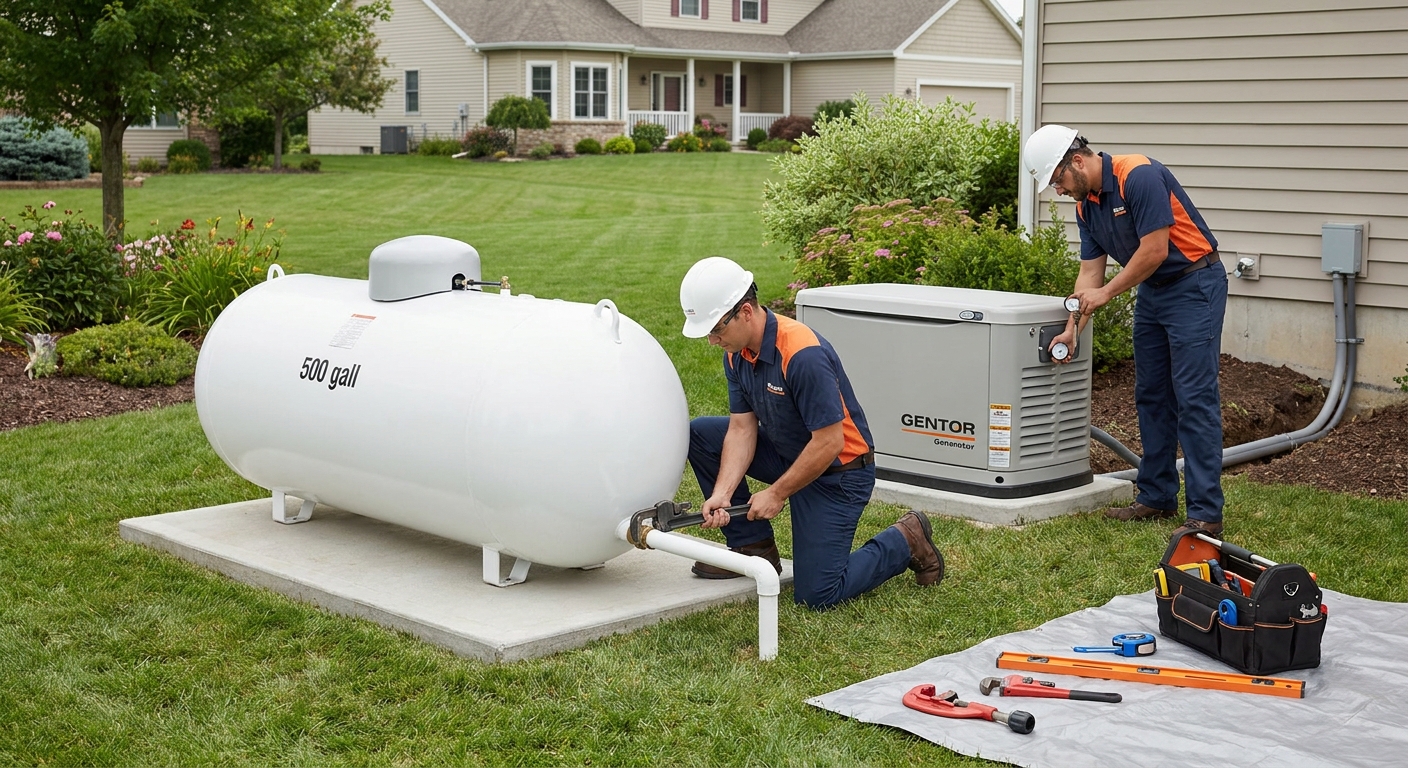
- NFPA 58 requires 10 feet of clearance between a propane tank over 125 gallons and your home's foundation - skipping this delays your permit.
- Propane tank installation for a standby generator costs $1,500 to $4,500 installed in 2026, driven by tank size and whether it's buried.
- Leased tanks from a propane supplier skip the upfront tank cost but lock you into one fuel provider for refills.
- A 20-pound grill tank is not a standby generator fuel source - it runs a 22kW unit for under an hour.
Why this matters
Daphne, Fairhope, Foley, and Gulf Shores lose grid power multiple times a year, and a named storm can knock out power for four to seven days. A standby generator is only as good as the fuel behind it, and an undersized or improperly placed propane tank turns a $15,000 generator into a machine that quits on day two.
Code enforcement in Baldwin County has gotten stricter since 2023, and inspectors now check tank setback distances before signing off on a generator install. Get the tank wrong and you're rescheduling a permit inspection during storm season, which is exactly when you can't afford the delay.
Who this is for
This guide is built for homeowners in Baldwin County who already have a standby generator quoted, or a Baldwin County Generators installer on the calendar, and now need to figure out what fuel tank goes with it. If you're running a 14kW unit for a three-bedroom house or a 48kW unit for a commercial building on Highway 98, the tank decision changes the whole project cost.
What to look for in propane tank installation for standby generators
Tank size matched to your generator's kW draw
A 14kW generator burns roughly 2 to 3 gallons of propane per hour at full load. A 500-gallon tank (about 400 gallons usable, since tanks fill to 80% capacity by design) gives you well over 100 hours of runtime even during a multi-day outage. Undersizing the tank means running out of fuel on day three of a storm recovery, which defeats the entire point of the system.
NFPA 58 clearance and setback distance
Any propane tank over 125 gallons needs 10 feet of clearance from your home's foundation, property line, and any ignition source under the 2026 code cycle most Alabama jurisdictions follow. Tanks under 125 gallons only need 5 feet in most cases. This isn't optional guidance - it's what your local inspector checks before signing off, and it determines where on your lot the tank can physically sit.
Aboveground vs underground placement
Aboveground tanks cost less to install and are easier to service, but they sit visibly in your yard and need a concrete pad or gravel bed. Underground tanks disappear from view and hold up better in high-wind events, but burial adds $800 to $1,500 to the job and requires a deeper site excavation. Coastal properties with high water tables sometimes can't bury a tank at all without extra drainage work.
Fuel supply contract terms
Owning your tank means you can shop propane suppliers for the best per-gallon rate. Leasing a tank locks you into one supplier's pricing, but it eliminates the $1,200 to $3,000 upfront tank cost. Read the lease terms before signing - some suppliers charge a tank removal fee if you switch providers later.
Site prep and permitting timeline
Most Baldwin County jurisdictions require a permit for any propane tank over 125 gallons, and inspection scheduling runs 5 to 10 business days out in 2026, longer during the June-through-November storm season rush. Site prep - grading, the concrete pad, gas line trenching - typically takes a single day once the permit clears.
Gas line sizing matched to BTU demand
A generator's fuel line has to be sized to its BTU draw, not just its kW rating. A 48kW commercial unit needs a larger regulator and feed line than a 14kW residential unit, and undersizing the line causes the generator to derate output or stall under load. This is a job for a licensed installer, not a DIY gas fitting.
Top picks by tank size
100-gallon aboveground tank - the starter option. Holds about 80 gallons usable and runs a 14kW generator for roughly 25-30 hours at full load. Fine for short outages, thin for a hurricane-season multi-day event. Consider it only if you're pairing it with a smaller portable-grade standby unit, not a whole-home system.
250-gallon underground tank - the safe pick. Usable capacity lands around 200 gallons, enough to run a 20kW generator for 60-plus hours. Buries cleanly on most Baldwin County lots and clears the 10-foot setback without eating your whole side yard. Buy it for a standard 3-4 bedroom home running a 20-22kW unit.
500-gallon tank - the whole-home workhorse. About 400 gallons usable, and it's the size most licensed installers spec for a 22kW whole-home system, giving you around 100 hours of runtime at half load. This is the tank that gets a house through a week-long outage without a refill. Buy it if you're serious about riding out hurricane season without a generator running dry.
1,000-gallon tank - the commercial-scale option. Overkill for a residential 22kW system, but the right call for a 48kW commercial generator running a restaurant or medical office through an extended outage. Installation runs longer and needs more excavation. Skip it for residential use, buy it for commercial standby setups.
Leased tank from a propane supplier - the wildcard. No upfront tank cost, and the supplier handles maintenance and inspection. You're locked into their delivery pricing and sometimes face a removal fee if you switch. Consider it if you'd rather not tie up $1,200-$3,000 in tank ownership upfront.
What to avoid
- A 20-pound grill tank. It looks like a fuel source but runs a 22kW generator for under an hour - not a standby fuel plan, a punchline.
- Placing the tank near a window, vent, or dryer exhaust. Code violations here are the most common reason inspections fail on the first visit.
- Skipping the permit because "it's just a tank swap." Inspectors in Baldwin County check tank setbacks independently of the generator permit, and an unpermitted tank can hold up your final generator sign-off.
Verdict comparison
| Tank size | Usable gallons | Runtime (half load) | Installed cost (2026) | Verdict |
|---|---|---|---|---|
| 100-gal aboveground | ~80 gal | 25-30 hrs | $1,500-$2,000 | Consider |
| 250-gal underground | ~200 gal | 60-70 hrs | $2,500-$3,500 | Buy |
| 500-gal | ~400 gal | ~100 hrs | $3,000-$4,500 | Buy |
| 1,000-gal | ~800 gal | 200+ hrs | $5,500-$8,000 | Buy (commercial only) |
| Leased tank | Varies | Varies | $0 upfront | Consider |
FAQ
What size propane tank do I need for a standby generator?
Most whole-home 20-22kW standby generators pair with a 250- to 500-gallon propane tank, giving 60 to 100 hours of runtime at half load. Smaller 14kW units can run on a 100-gallon tank for shorter outages.
How much does propane tank installation cost for a standby generator?
Propane tank installation for a standby generator costs $1,500 to $4,500 installed in 2026, depending on tank size and whether it's buried or aboveground. Underground burial adds $800 to $1,500 to the job.
How far does a propane tank need to be from my house?
Tanks over 125 gallons need 10 feet of clearance from your home's foundation under NFPA 58. Tanks under 125 gallons generally need 5 feet, though local jurisdictions can require more.
Is it better to lease or buy a propane tank?
Buying gives you the freedom to shop propane suppliers for the best rate, while leasing eliminates the $1,200 to $3,000 upfront tank cost. Leasing locks you into one supplier's delivery pricing.
Can I bury a propane tank in coastal Alabama?
Yes, but high water tables on some Gulf Shores and Foley properties can complicate underground installation and require extra drainage work. A site evaluation before the permit application catches this early.
How long does a 500-gallon propane tank run a generator?
A 500-gallon tank holds about 400 usable gallons and runs a 22kW standby generator for roughly 100 hours at half load. Full-load runtime drops to closer to 60-70 hours.
Do I need a permit for a propane tank installation?
Yes, most Baldwin County jurisdictions require a permit for any propane tank over 125 gallons. Inspection scheduling in 2026 runs 5 to 10 business days, longer during storm season.
What size gas line does a standby generator need?
Gas line size depends on the generator's BTU draw, not just its kW rating, and a 48kW commercial unit needs a larger regulator and feed line than a 14kW residential unit. Undersizing the line causes output derating under load.
One last thing
Propane tanks are only ever filled to 80% capacity by design - it's a safety margin for expansion, not a supplier shorting you. That means a "500-gallon" tank actually holds about 400 gallons of usable fuel, and every runtime estimate you get from a supplier or installer should already account for that. Ask for the usable-gallon number, not the tank's stamped size, before you commit to a tank for your 2026 storm season generator plan.