Running a natural gas line to a standby generator is not a weekend job you tack onto the electrical hookup - pipe sizing, meter capacity, and code clearances decide whether your 22kW Generac actually starts when the grid drops during a 2026 storm.
- A 22kW standby generator needs roughly 215,000 BTU/hr - most residential meters handle it with a 3/4-inch branch line. Buy.
- Units 26kW and larger often require a utility meter upgrade with 2-4 weeks lead time before 2026 hurricane season. Consider early.
- CSST tubing beats black iron for tight crawl spaces under older Fairhope and Daphne homes. Consider.
- No gas main within 100 feet of the property means propane conversion is the only real option. Buy if natural gas isn't reachable.
- Undersized 3/4-inch pipe on runs over 150 feet starves the generator under load. Skip that shortcut.
Why this matters
A standby generator sized right on paper still fails in the field if the gas supply can't keep up. Low pressure at the regulator trips a fault code, and the unit shuts down mid-outage - exactly when Baldwin County homeowners in Foley, Gulf Shores, Fairhope, and Daphne need it running. Getting the gas line sized and routed correctly before the generator ever gets set is what separates a system that starts every time from one that nuisance-trips during the first real test.
Coastal Alabama's older housing stock adds another wrinkle: pier-and-beam foundations, crawl spaces, and meters that were sized for a stove and a water heater, not a 22kW load. Sizing this correctly before installation day avoids a mid-project surprise when the inspector or the gas utility flags the run.
Who this is for
This guide is for homeowners in Baldwin County who already picked a Kohler, Generac, Honeywell, or Briggs & Stratton standby unit - or are close to it - and need to know what the gas side of the install actually requires. If you're still comparing generator sizes, get that number locked first; the gas line spec flows entirely from the unit's BTU demand.
What to look for in a gas line setup for your generator
BTU demand versus generator size
Every standby generator has a published fuel consumption rate in BTU/hr or cubic feet per hour (CFH) at full load. A 22kW unit typically pulls around 215,000 BTU/hr on natural gas - that number, not the kW rating, is what your gas fitter sizes the pipe against. Undersize this and the generator runs fine at idle, then falters the moment the AC compressor and well pump kick on together.
Pipe material and diameter
Black iron pipe is the standard for exposed runs and handles higher pressure drops over distance. CSST (corrugated stainless steel tubing) flexes around joists and crawl space obstructions, which matters in a lot of pre-1990 Fairhope and Daphne construction. Diameter - usually 3/4-inch or 1-inch for residential standby units - is calculated off total BTU load and pipe length, not guessed.
Existing meter capacity
Most residential gas meters are rated for household appliances, not a 22-48kW generator layered on top. Anything above roughly 250,000 BTU/hr combined demand often forces a meter upgrade through the utility, and that process runs on the utility's schedule, not yours.
Distance and routing
Longer runs mean more pressure drop, which means larger pipe diameter to compensate. Alabama code generally requires gas lines buried at least 18 inches below grade, and NFPA 37 sets a minimum 5-foot clearance from the generator's fuel connection to windows, doors, and other openings. Routing around a pool, deck, or septic field adds distance fast.
Permits and inspection
Gas line work on a standby generator install requires a permit in every Baldwin County municipality and a passed pressure test before the line gets buried or closed up. Skipping this step isn't just a code violation - it can void a homeowner's insurance claim if the generator or the gas line ever causes damage.
Installer coordination
The electrical hookup (transfer switch, generator pad, control wiring) and the gas hookup are two separate trades that have to land on the same schedule. A generator sitting on its pad with no gas supply - or a gas line capped off with no transfer switch wired - both mean an extra week of coordination you didn't budget for.
Top picks for gas supply configuration
The straightforward pick - direct branch off the existing meter. For a 22kW Generac or Kohler unit at roughly 215,000 BTU/hr, a 3/4-inch black iron branch line tapped off the main meter usually covers it, assuming the run stays under 100-150 feet. This is the fastest path to a working system and the one most Baldwin County homes qualify for without utility involvement. Buy - this is the default for most single-family standby installs going into 2026.
The upsize - meter capacity upgrade. Commercial-grade or whole-home units in the 26kW-48kW range can demand 300,000+ BTU/hr, which frequently exceeds what a standard residential meter delivers. The utility has to swap the meter or the regulator, and that step alone can add 2-4 weeks to a project timeline. Consider - start this conversation the moment you sign off on a larger unit, especially if you're targeting a fall 2026 install ahead of storm season.
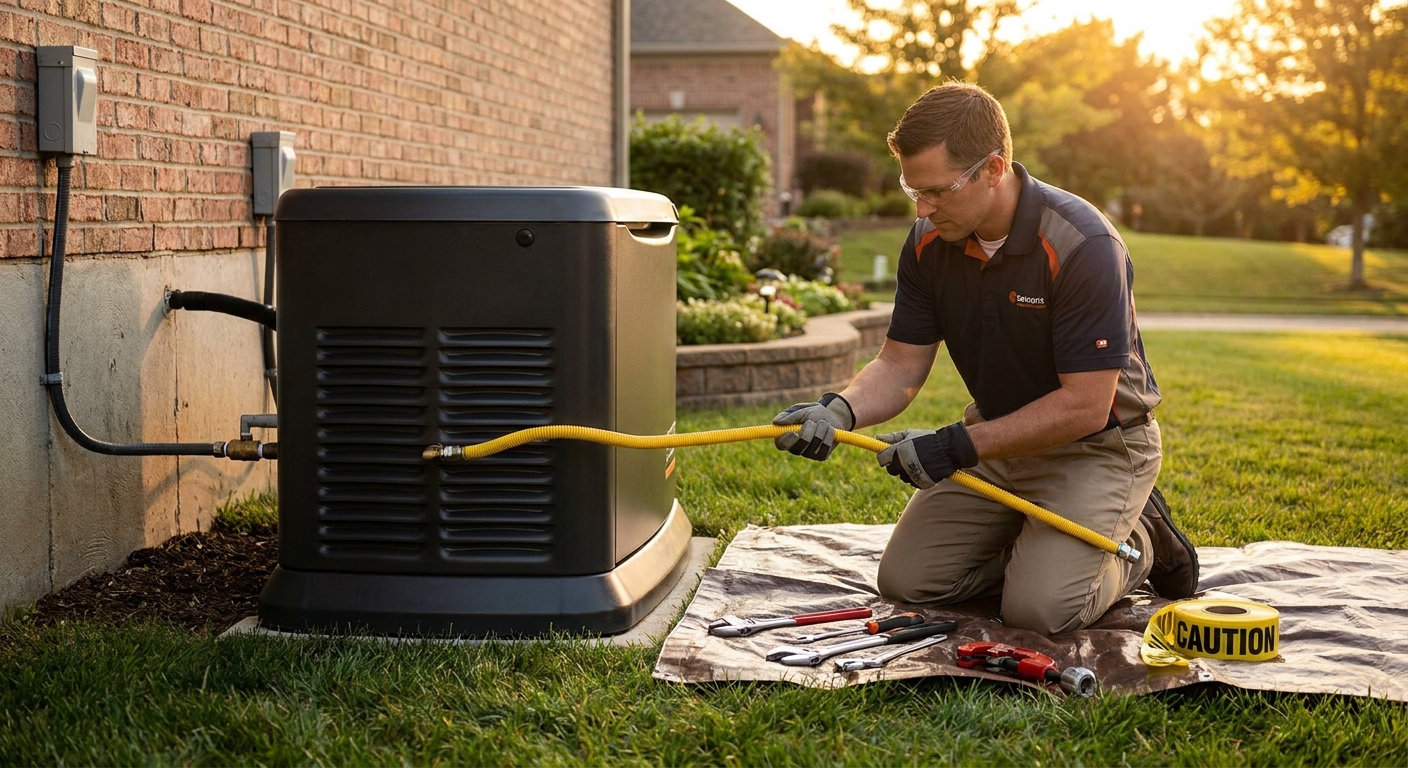
The tight-space fix - CSST tubing. Older pier-and-beam homes around Fairhope and Daphne often have crawl spaces too tight or obstructed for rigid black iron. CSST flexes around joists and existing plumbing, cutting install labor time noticeably versus cutting and threading iron pipe in a confined space. It does require proper bonding to meet code. Consider for retrofit installs on pre-1990 construction.
The rural workaround - propane conversion. Parts of Foley and outlying Gulf Shores don't have a natural gas main within reach of the property line. When there's no main within roughly 100 feet, running a new natural gas service line usually costs more and takes longer than switching the generator to run on propane with a properly sized tank. Buy if there's no gas main nearby; Skip propane conversion if natural gas already reaches the meter - sticking with natural gas avoids tank refill logistics entirely.
What to avoid
- Undersized pipe on long runs. A 3/4-inch line that works fine at 50 feet can starve the same generator at 150 feet. Pressure drop is a function of both diameter and distance - a longer run almost always needs a bigger pipe, not the same size.
- Skipping the permit to save time. An unpermitted gas line install is a liability problem waiting to surface, usually at the worst moment - during an insurance claim after storm damage.
- Letting the electrical and gas trades work in isolation. A generator pad poured before the gas line route is finalized often means moving the pad, the line, or both.
Verdict comparison
| Configuration | Typical pipe size | Added lead time | Verdict |
|---|---|---|---|
| Direct meter branch (22kW) | 3/4-inch black iron | None | Buy |
| Meter upgrade (26-48kW) | 1-inch or larger | 2-4 weeks | Consider |
| CSST retrofit (tight crawl space) | 3/4-inch CSST | Minimal | Consider |
| Propane conversion (no gas main) | Tank + regulator | Varies by supplier | Buy if no main nearby |
| Undersized long run (150ft+ on 3/4-inch) | 3/4-inch | N/A | Skip |
FAQ
How big does the gas line need to be for a home generator?
Most 22kW standby generators run on a 3/4-inch black iron or CSST line for runs under 150 feet. Larger units or longer distances require 1-inch pipe or bigger, sized against the generator's published BTU/hr demand.
Do I need a permit for gas line installation for a home generator?
Yes, every Baldwin County municipality requires a permit and a pressure test before the gas line is buried or enclosed. Skipping the permit can also void insurance coverage if the line or generator later causes damage.
Can my existing gas meter handle a whole-home generator?
A standard residential meter usually handles a 22kW unit at roughly 215,000 BTU/hr without changes. Units in the 26kW-48kW range often exceed the meter's rated capacity and require a utility upgrade first.
Is natural gas or propane better for a standby generator?
Natural gas is simpler when the home already has a gas main within about 100 feet, since it skips tank refills entirely. Propane makes more sense in rural parts of Foley and Gulf Shores where no gas main reaches the property.
How deep does a gas line need to be buried?
Alabama code generally requires gas lines buried at least 18 inches below grade for residential installs. Depth requirements can vary slightly by municipality, so check with the local permitting office before trenching.
How long does gas line installation take for a generator?
A straightforward branch line off an existing meter can be trenched, run, and pressure-tested in a single day. Add 2-4 weeks if the project requires a utility meter upgrade for a larger unit.
What happens if the gas line is undersized?
An undersized line causes a pressure drop under full load, which trips the generator's fuel fault and shuts it down mid-run. This usually shows up during the first real outage, not during a routine test start.
Can the electrician handle the gas line too?
Gas line work and electrical hookup are separate trades that need to coordinate on the same install schedule. Confirm before signing a contract whether gas line coordination is included or handled as a separate step.
One last thing
The detail that trips up more Baldwin County installs than any other isn't the pipe size - it's meter lead time. If a 26kW or larger unit needs a utility meter swap, that request can sit in the utility's queue for weeks, and that clock doesn't start until someone actually submits it. Get the gas demand number confirmed and the meter upgrade request filed before hurricane season 2026 gets close, not after the forecast turns ugly.