Upgrading an automatic transfer switch means swapping in a unit rated for higher amperage so it can run a bigger standby generator, and getting the change inspected before the 2026 hurricane season starts. Done wrong, the upgrade trips breakers, fails inspection, or leaves half your house dark during the next outage.
- Upgrading an automatic transfer switch from 200A to 400A lets a Generac or Kohler whole-home unit carry a full electrical panel instead of shedding circuits.
- Most Baldwin County municipalities require a permit and inspection for a transfer switch swap in 2026 - skip it and the job gets red-tagged.
- A licensed electrician, not a homeowner, should pull the meter can cover and reconnect utility service during the changeover.
- Loose neutral lugs, not failed electronics, cause most transfer switch chatter and nuisance trips reported in 2026 service calls.
Why this matters
A transfer switch installed for a 22kW generator in 2015 won't safely carry a 48kW unit bought in 2026 - the amperage rating has to match the new generator's output, not just the panel size. Undersized switches shed circuits under load, which means your AC or well pump cuts out mid-storm even though the generator is running fine.
Code enforcement across coastal Alabama has tightened since the 2023 NEC cycle rolled into local adoption, and most Baldwin County and Mobile County jurisdictions now require a permit for any transfer switch work tied to a standby generator. A licensed electrician at Baldwin County Generators can size the new switch to your generator's output and pull the permit in the same visit, which saves a second trip when the inspector shows up.
Waiting until a named storm is forecast is the wrong time to start this project - permit offices in Daphne, Fairhope, and Foley slow down when everyone's calling at once. Handle the upgrade in the spring shoulder season, well before June 1.
What you'll need
- Generator nameplate data - output in kW and amps, single-phase or three-phase
- Current transfer switch rating (usually stamped on the enclosure door, commonly 100A, 150A, 200A, or 400A)
- New transfer switch rated to match or exceed the generator's max continuous output
- Local electrical permit (pulled by your contractor in most cases)
- Torque screwdriver and a digital multimeter for post-install checks
- A licensed electrician - this is not a homeowner DIY swap once utility service disconnection is involved
The steps
1. Confirm your generator's actual output
Read the nameplate on the generator, not the sales brochure - continuous kW output, not surge rating, determines the switch size you need. A 22kW unit typically pairs with a 200A switch; a 48kW commercial unit usually needs 400A. Getting this wrong means the new switch either can't carry full load or is oversized and wastes money.
2. Size the switch to the panel, not just the generator
Count the total amperage of your main service panel - a 200A service with a 22kW generator still needs a switch rated for the full 200A service, since the switch also carries utility power when the generator is off. Undersizing here is the most common mistake homeowners and even some contractors make in 2026.
3. Pull the permit before scheduling the swap
Most coastal Alabama jurisdictions require an electrical permit for transfer switch replacement tied to a standby generator, and inspections typically happen within 5-10 business days of the request. Skipping this step risks a stop-work order mid-install and a failed final inspection when you go to sell the house.
4. Shut down and de-energize before touching anything
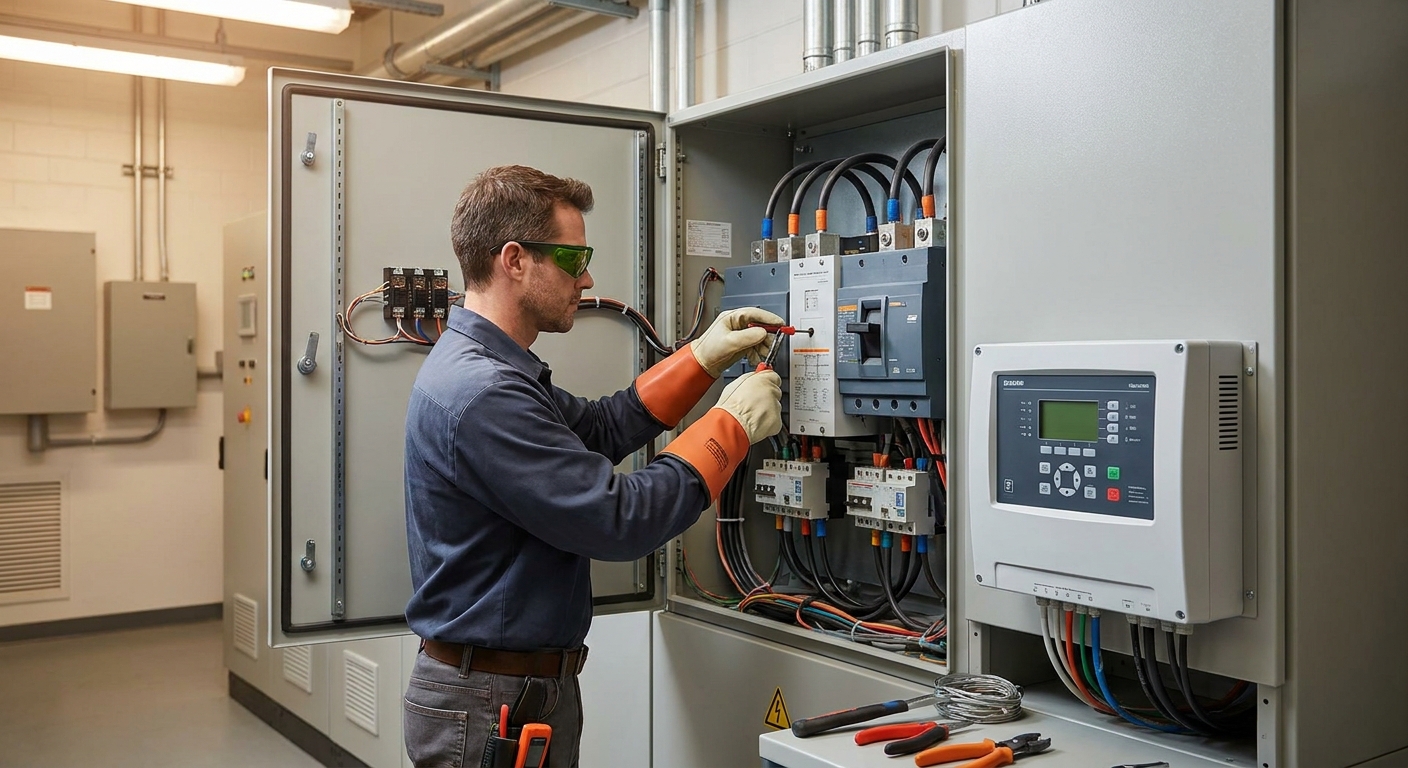
The electrician kills power at the main breaker and confirms zero voltage with a multimeter before opening the transfer switch enclosure - utility-side lugs stay energized even with the main off, which is why this step is not a homeowner task. Expect the whole house to go dark for 2-4 hours during a same-day swap.
5. Remove the old switch and label every circuit
Each load and line wire gets labeled before disconnection so the new switch gets wired to match, especially on panels with more than 20 circuits. Skipping labels here is the single biggest cause of callback visits - a mislabeled circuit means a bedroom outlet doesn't transfer when the generator kicks on.
6. Mount, wire, and torque the new switch
The new switch gets mounted to the same stud or backing board when possible, wired per the manufacturer's torque spec (usually 35-50 in-lbs on neutral and ground lugs, tighter on service-entrance conductors). Under-torqued lugs are the top cause of transfer switch failure reported in post-storm service calls - a loose neutral connection causes voltage drop and chattering relays within the first year.
7. Test transfer under real load, not just a dry run
Run the generator, kill utility power at the meter (with utility coordination if needed), and confirm the switch transfers within 10-20 seconds and holds a real household load - HVAC compressor kicking on is the best stress test. A switch that transfers clean with nothing running but stutters once the AC compressor engages has an undersized rating or a wiring fault.
Get your transfer switch sized right
A licensed electrician quotes the correct amperage before permit day.
Troubleshooting
- Switch won't transfer to generator power - check the generator's start signal wire to the switch controller; a loose or corroded connector is more common than a bad relay.
- Relay chatters or clicks repeatedly - almost always a loose neutral lug; re-torque to spec before replacing any part.
- Breaker trips the moment AC compressor starts - the switch or generator is undersized for inrush current; verify the compressor's locked-rotor amps against the generator's surge rating.
- Inspection fails on bonding - a transfer switch used as service equipment needs a bonded neutral; a downstream switch should not be bonded, and this mix-up is the most common 2026 inspection failure in the region.
- Generator runs but house stays dark - confirm the switch actually received a transfer signal; a blown fuse on the control circuit will let the generator run indefinitely without ever transferring load.
- Nuisance transfers during brief utility flickers - the switch's transfer delay timer may be set too short; most units allow adjustment to 5-10 seconds to ride through momentary blips.
Tools and resources
- Digital multimeter rated for panel-level voltage checks
- Torque screwdriver matched to the switch manufacturer's lug spec
- Local electrical permit portal for Baldwin County or Mobile County
- A licensed electrical contractor familiar with Generac, Kohler, Honeywell, and Briggs & Stratton switch platforms
- Generator nameplate and existing switch spec sheet for reference during sizing
What to do next
If your current switch is more than 10 years old or rated below your generator's actual output, get it evaluated before hurricane season peaks in 2026. A same-visit sizing check and permit filing beats finding out the hard way during a week-long outage.
FAQ
How much does it cost to upgrade an automatic transfer switch in 2026?
Cost depends on the new switch's amperage rating and panel complexity - get a site-specific quote rather than relying on a national average, since permit fees and labor vary by jurisdiction. Larger 400A commercial switches cost more in parts and labor than a residential 200A swap.
Can I upgrade a transfer switch myself?
No - the swap involves de-energizing service-entrance conductors that stay live even with the main breaker off, and most jurisdictions require a licensed electrician and a permit. DIY transfer switch work also voids most generator manufacturer warranties.
Do I need a permit to replace a transfer switch?
Most coastal Alabama municipalities require an electrical permit for transfer switch replacement tied to a standby generator, with inspection scheduled within 5-10 business days. Skipping the permit risks a stop-work order and complications when selling the property.
What size transfer switch do I need for a 22kW generator?
A 22kW standby generator typically pairs with a 200A transfer switch, matched to the home's main service size rather than just the generator's output. Always confirm against the actual service panel amperage, not just the generator nameplate.
How long does a transfer switch upgrade take?
A same-day swap typically takes 2-4 hours of power-down time, plus permit lead time of 5-10 business days before the work can be scheduled in most jurisdictions. Complex commercial panels with more circuits take longer to label and rewire.
Why does my transfer switch chatter or click repeatedly?
Chattering almost always traces to a loose neutral lug rather than a failed relay, and re-torquing to the manufacturer's spec resolves most cases. Left unfixed, a loose connection causes voltage drop and eventual switch failure.
Is a 400A transfer switch overkill for a residential home?
Not if your service panel is rated 400A - the switch has to match the full service size, not just the generator's output, since it also carries utility power when the generator is idle. Oversizing beyond your service rating wastes money without adding capacity.
What happens if a transfer switch fails inspection?
A failed inspection most often comes down to improper neutral bonding on a switch used as service equipment, which requires correction before final sign-off. The inspector will issue a specific correction notice rather than a blanket rejection.
One last thing
Most transfer switch failures that show up as a service call in 2026 trace back to a loose neutral lug from the original install, not a defective part - a five-minute torque check during annual generator maintenance catches this before it strands you mid-storm.