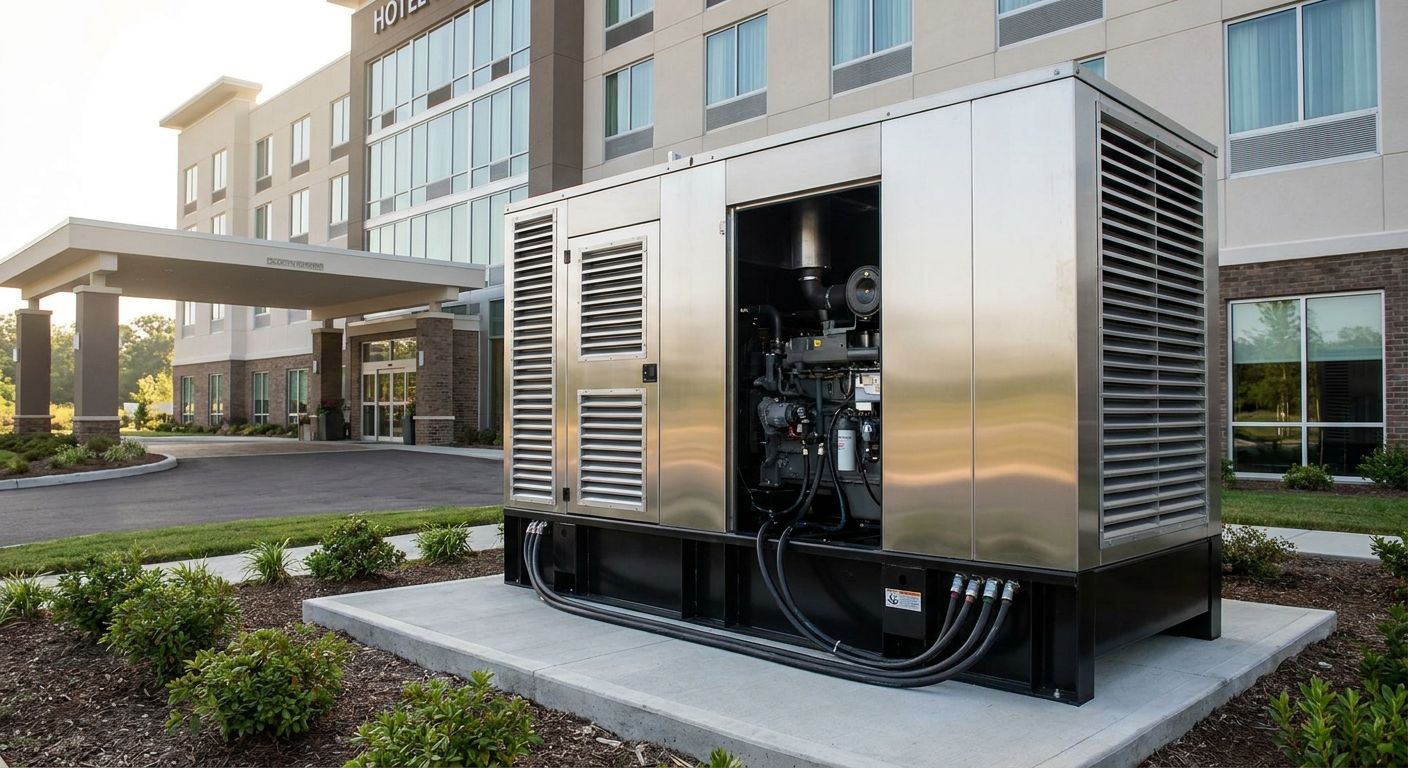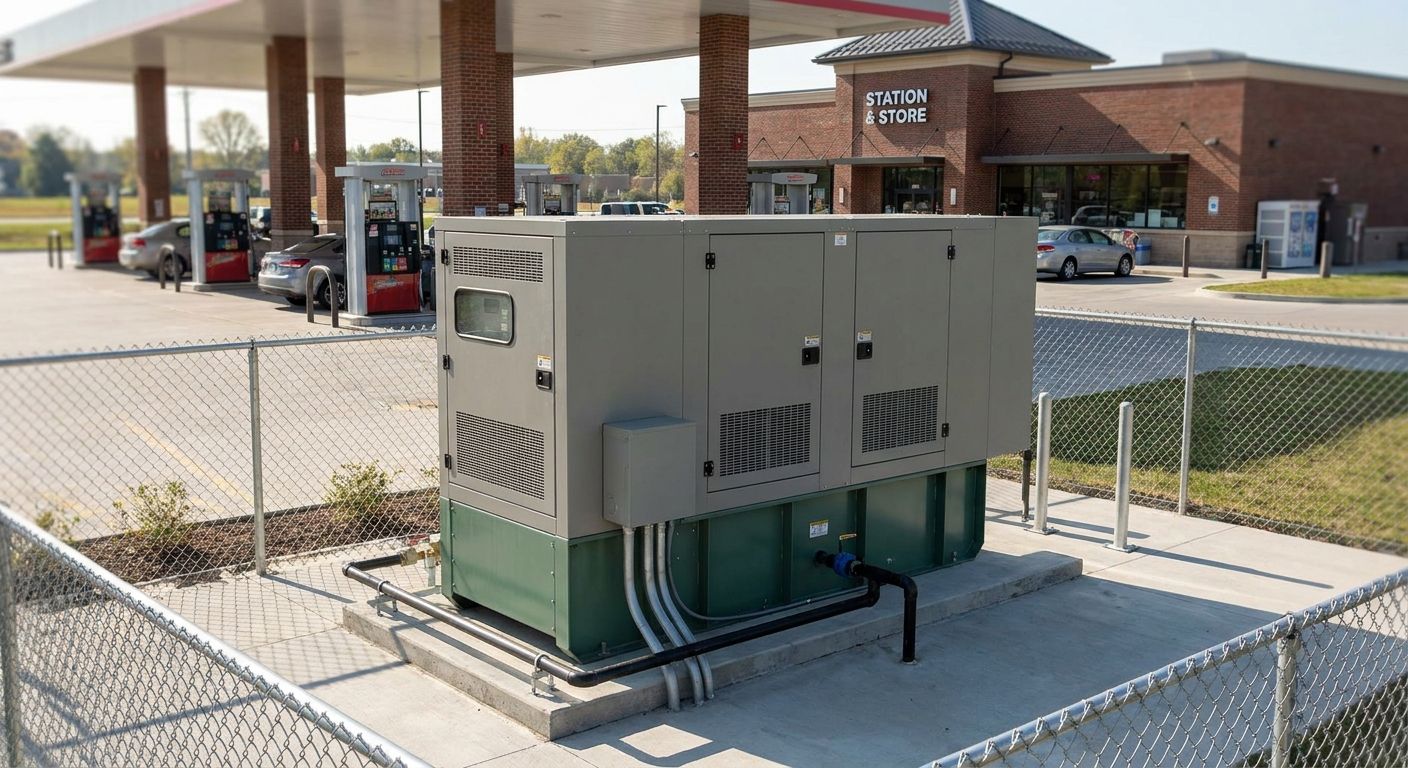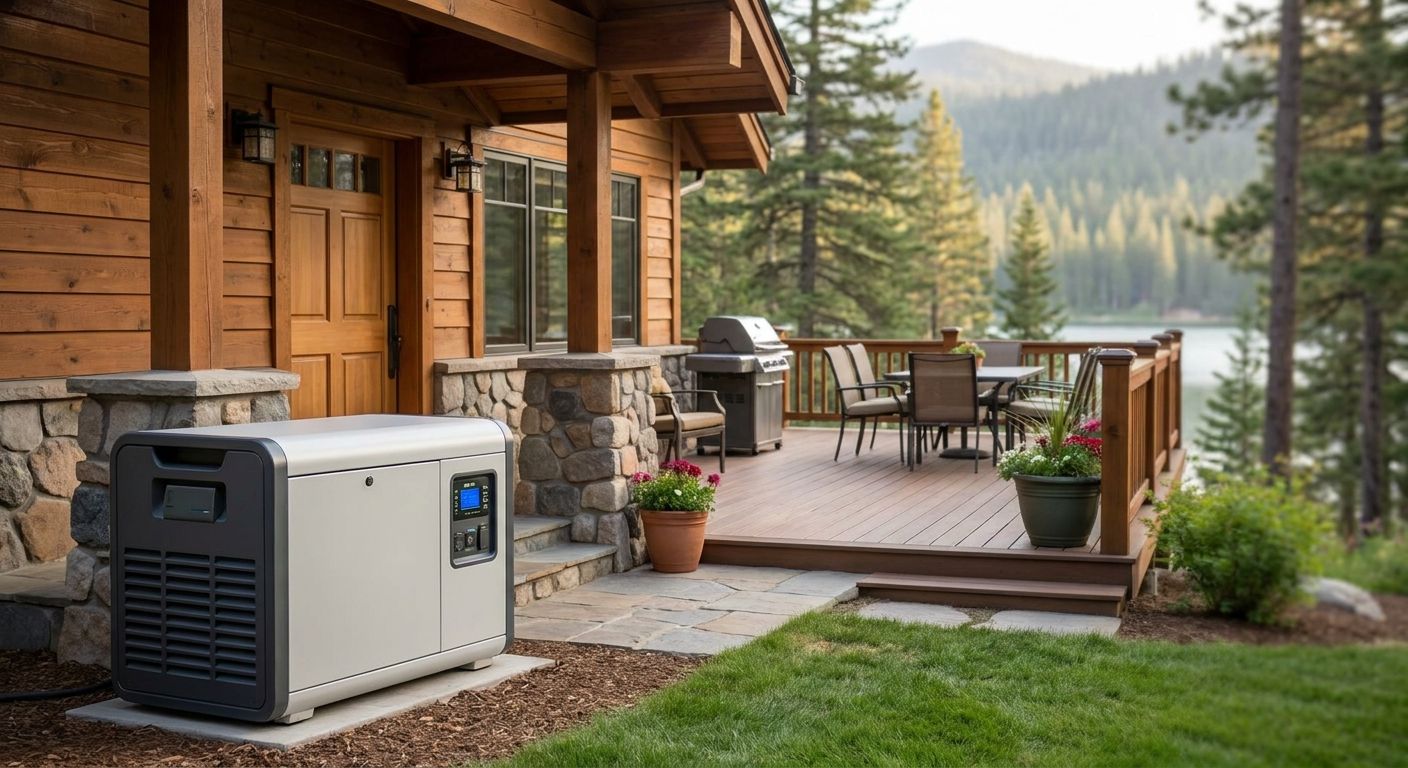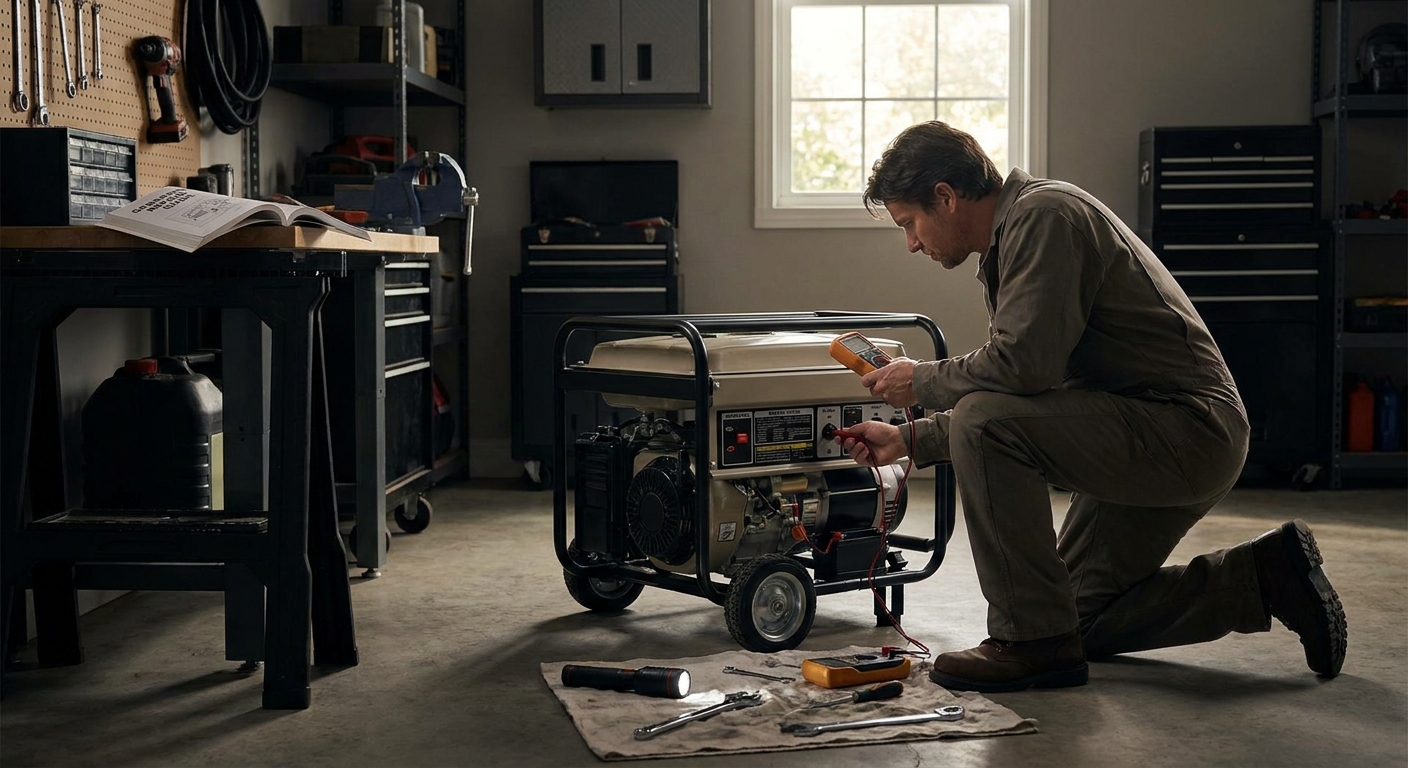
A generator that won't crank leaves you guessing between a dead battery, a stuck switch, and a real engine problem - this guide walks through the diagnostic order that finds the actual cause fastest, whether you're running a portable unit or a whole-home standby system from Kohler, Generac, Honeywell, or Briggs & Stratton.
TL;DR: Most no-start calls trace back to three things - a weak battery, a closed fuel valve or fuel shutoff solenoid, or a low-oil safety switch tripping before ignition. Work through battery voltage first, then fuel and air, then the control panel fault codes, before you assume the engine itself is bad. A standby generator serviced by Baldwin County Generators on a regular schedule rarely reaches a full no-start situation, because weekly self-test cycles catch weak batteries before hurricane season does. Verdict: troubleshoot in this order, and most units restart within 30 minutes.
Why this matters
A generator that won't start during a storm isn't an inconvenience - it's the exact moment the unit was bought for, and the exact moment it's failing. Coastal Alabama sees power outages tied to tropical systems every year, and a standby unit that sat idle for eleven months without a proper exercise cycle is the most common reason it won't fire on demand in 2026.
Most no-start issues aren't engine failures. They're battery, fuel, or sensor issues that take minutes to find once you know the order to check them in. Skipping steps and guessing at parts wastes time you don't have when the power's already out.
What you'll need
- A multimeter (12V battery testing)
- Fresh gasoline or verified propane/natural gas supply, depending on fuel type
- Owner's manual for your specific model (Kohler, Generac, Honeywell, or Briggs & Stratton control panels all read fault codes differently)
- A flashlight and a rag
- 15-20 minutes of uninterrupted time
- A phone number for a licensed technician if steps 1-6 don't resolve it
The steps
1. Check the battery voltage first
A standby generator's engine starter draws heavily on a small 12-volt battery, and a battery under 12.4 volts often won't turn the engine fast enough to catch. Set your multimeter to DC volts and read across the terminals - a healthy resting battery reads 12.6V or higher.
If the reading is under 12V, that's your answer. Batteries in coastal Alabama's heat and humidity typically last 2-3 years, shorter than the 4-5 years quoted in cooler climates. Common mistake: replacing the battery without cleaning corroded terminals first - corrosion alone can drop voltage enough to prevent a start even with a good battery underneath.
2. Confirm the transfer switch is in auto
If the automatic transfer switch is set to "manual" or "off," the generator has no signal to start even during an outage. This step gets skipped constantly because homeowners assume the switch is always in auto after installation.
Flip it to "auto" and wait 10 seconds for the control board to recognize the position. Expected outcome: the unit should attempt a start cycle within 10-20 seconds of the switch confirming auto mode.
3. Verify fuel supply and shutoff valves
For propane and natural gas units, check that the fuel supply valve at the tank or meter is fully open - not partially, fully. A valve that's 90% open can starve the engine enough to prevent ignition even though gas is technically flowing.
For gasoline-fueled portables, old fuel (anything sitting more than 30 days) gums up carburetors and is one of the top reasons small engines won't start. Drain and replace it. Common mistake: assuming a "full" propane tank means adequate flow - a tank under 20% can drop pressure below what the regulator needs.
4. Check the oil level and low-oil shutoff sensor
Every standby generator has a low-oil safety sensor that prevents the engine from starting or running if oil is below the minimum mark, protecting the engine from damage. This is a safety feature, not a malfunction, and it's one of the most common reasons a unit refuses to crank.
Pull the dipstick, check the level against the manufacturer's fill line, and top off with the oil weight specified in the manual. Expected outcome: if low oil was the cause, the unit should attempt to start within seconds of adding oil and cycling the switch.
5. Read the control panel for fault codes
Modern standby units from Kohler and Generac display a fault code on the control panel screen when a start attempt fails - codes like "overcrank," "low battery," or "RPM sense loss" point directly at the cause. Write the code down before clearing it.
Overcrank codes usually mean the engine tried and failed to catch multiple times, often tracing back to fuel delivery. RPM sense loss often points to a sensor or wiring issue that needs a technician. Common mistake: clearing the fault code before writing it down, which erases the diagnostic trail for whoever services it next.
6. Inspect the air filter and intake
A clogged air filter starves the engine of the air it needs for combustion, and units stored outdoors near coastal vegetation accumulate debris faster than inland units. Pull the filter and check for visible blockage or moisture damage.
A filter that's damp, torn, or packed with debris should be replaced, not cleaned and reused. Expected outcome: clearing the intake restores normal cranking sound within one start attempt.
7. Listen for the starter engaging
If the engine cranks but doesn't fire, that's a fuel or spark issue, not an electrical one - different diagnosis path entirely. If nothing happens at all when the transfer switch signals a start, that points back to battery or wiring, not fuel.
This distinction saves time: cranking-but-not-firing means don't touch the battery again, look at fuel and spark instead.
Troubleshooting specific problems
- Engine cranks slowly, then stops: Almost always a weak battery even if it reads close to 12V under no load - test under load if possible, or swap in a known-good battery to confirm.
- Unit starts, then shuts down after a few seconds: Points to the low-oil sensor or a loose oil pressure switch wire, not a fuel problem - recheck oil level and sensor connections.
- No response at all when the switch signals a start: Check the 15-amp control board fuse, often located near the battery, before assuming a bigger electrical fault.
- Unit runs rough or surges before stalling: Usually old fuel or a clogged fuel filter, more common in gasoline units that sat unused for more than a season.
- Fault code repeats after clearing: Stop troubleshooting and call a licensed technician - a repeating code after a clear usually means a sensor or board issue beyond basic maintenance.
- Generator worked during last month's test but won't start now: Check the fuel supply first since that's the variable most likely to have changed since the last successful cycle.
Tools and resources
- Multimeter for battery voltage checks
- Owner's manual specific to your model's fault code list
- Fresh oil rated to manufacturer spec
- A maintenance log noting the last exercise cycle date and any fault codes
- A licensed electrical contractor for anything beyond battery, fuel, and oil-level checks
Coastal Alabama homeowners running standby units from Kohler, Generac, Honeywell, or Briggs & Stratton get the most reliable results when a weekly exercise cycle (5-12 minutes, per most manufacturer defaults) is confirmed rather than assumed. A generator that hasn't run its self-test in months is far more likely to fail when a storm actually knocks out power in 2026.
FAQ
What's the most common reason a generator won't start? A weak or dead 12-volt battery causes the majority of no-start calls, more often than fuel or engine problems. Testing voltage first before touching anything else saves the most diagnostic time.
Is a fault code on the control panel serious? Not always - codes like "low battery" or "low oil" point to routine maintenance issues, not engine failure. A repeating overcrank or RPM sense loss code after a fix attempt usually means it's time to call a technician.
How much does it cost to fix a generator that won't start? Battery replacements and basic maintenance fixes typically run far less than an engine repair, and most no-start issues in 2026 are the cheaper category - battery, fuel, or sensor related rather than mechanical engine failure.
Can a generator sit too long without running? Yes - fuel degrades within about 30 days in gasoline units, and batteries lose charge over months of inactivity. Weekly exercise cycles exist specifically to prevent this.
Should I try to start a generator myself during a storm if it won't fire? Check battery, transfer switch position, fuel valve, and oil level first - these four checks resolve most no-start situations without tools beyond a flashlight and a multimeter.
Does cold weather affect why a generator won't start? Colder temperatures slow chemical reactions in batteries and thicken oil, both of which make starting harder, though this is less of a factor in coastal Alabama's climate than heat-related battery degradation.
How often should a standby generator be tested? Most manufacturers set a default weekly self-test cycle of 5-12 minutes, and skipping this is the single biggest reason a unit fails to start when it's actually needed.
Is it normal for a generator to crank but not start? Cranking without firing points to fuel delivery or ignition, not the battery or electrical system - a different diagnostic path than a unit that won't crank at all.
One last thing
The engine itself is rarely the actual problem. Across most standby generator service calls, the root cause sits in the battery, the fuel supply, or a tripped safety sensor - not the engine block. Skipping the exercise cycle for even a few months is what turns a five-minute fix into a no-start emergency in the middle of a storm, which is exactly why Baldwin County Generators structures maintenance visits around weekly test confirmation rather than annual-only checkups.