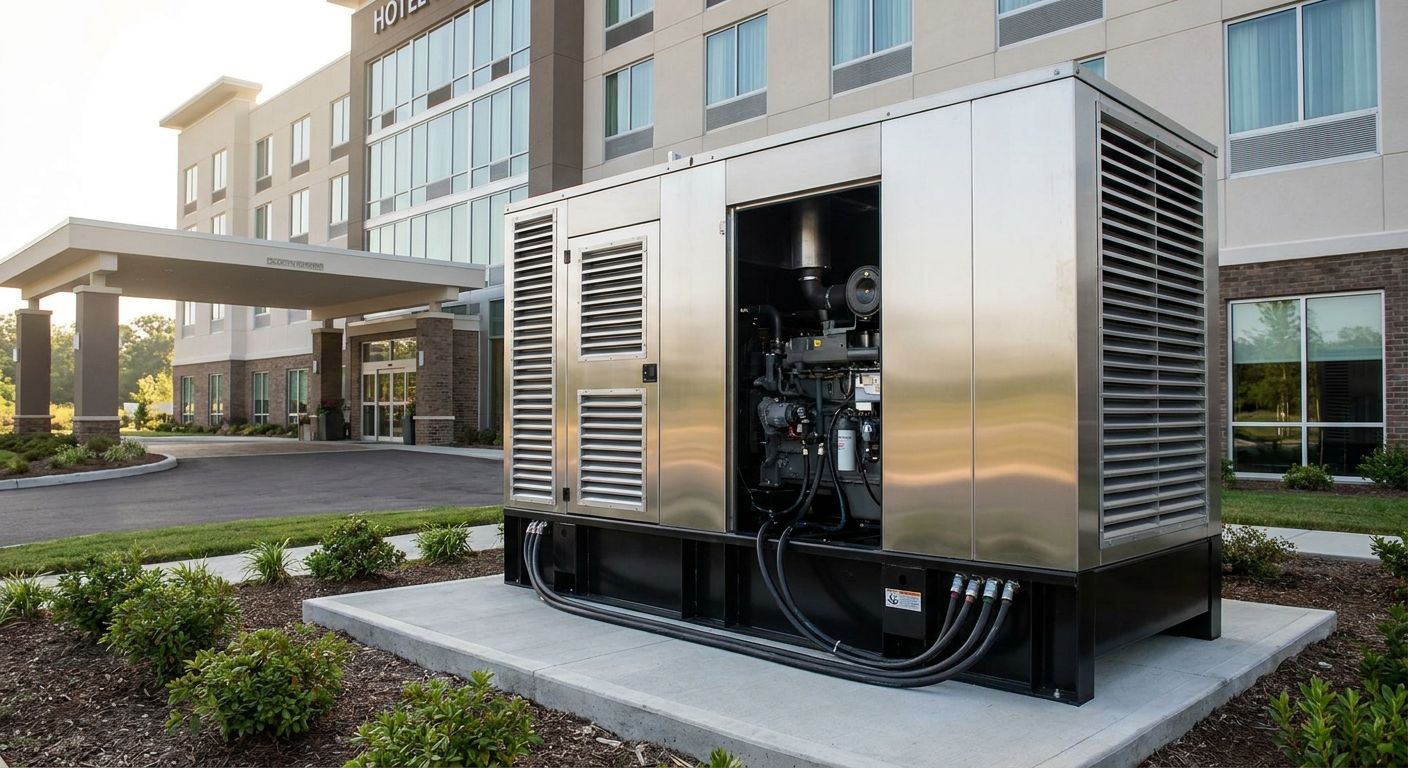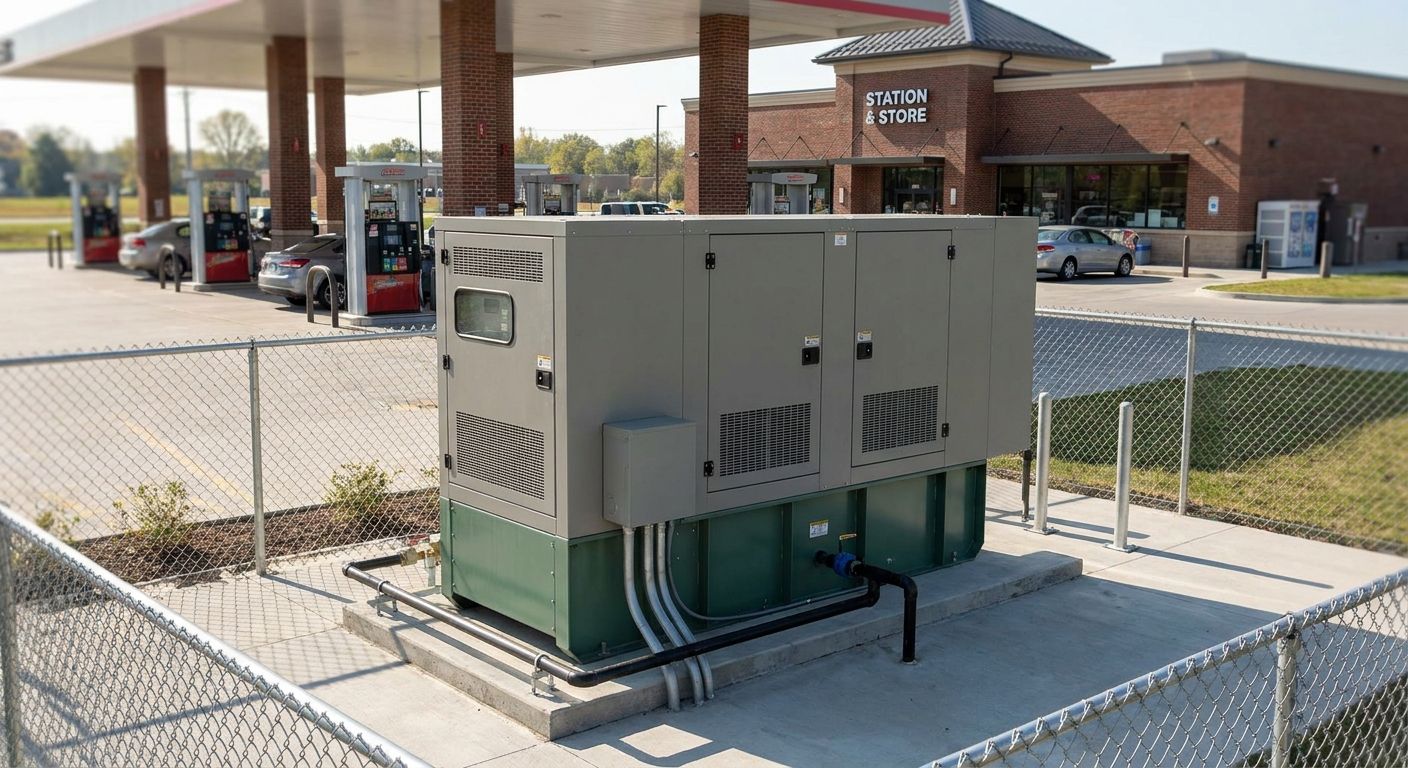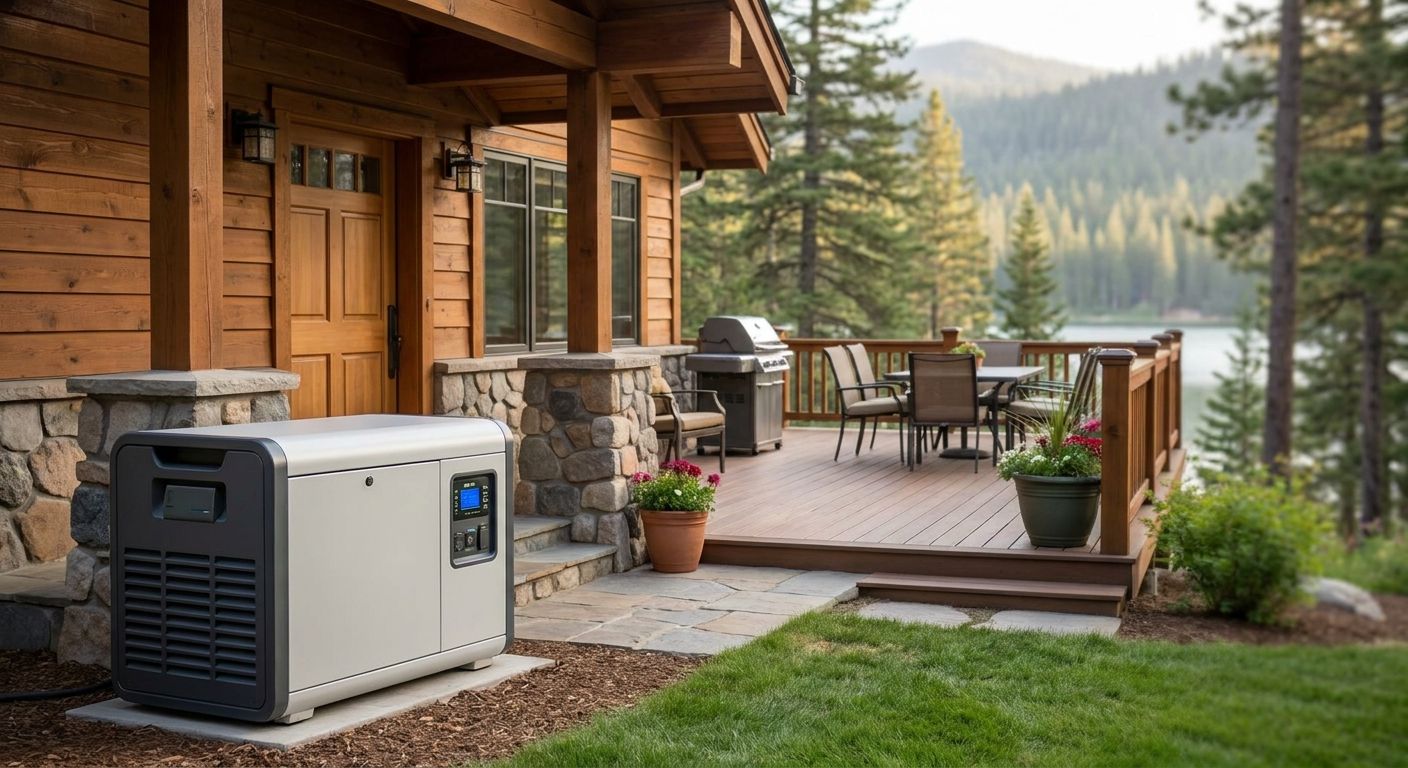
A standby generator that runs at 65-70 decibels next to your bedroom window will wake you up every time the grid blinks. This guide covers the specific steps that lower generator noise without voiding your warranty or violating local codes in Daphne, Fairhope, Foley, or Gulf Shores.
TL;DR
Reducing generator noise in 2026 comes down to five levers: placement distance, a sound-attenuated enclosure, exhaust routing, a vibration-isolating pad, and routine maintenance on the muffler and air intake. A Generac or Kohler unit installed at code-minimum clearance and left in its stock enclosure will run 65-72 dB at 23 feet - loud enough to trigger a noise complaint in some Baldwin County subdivisions. Add a sound blanket kit or acoustic enclosure and you can cut that to 55-60 dB, roughly the volume of a running dishwasher. Verdict: proper placement plus an enclosure upgrade is the fix, not a smaller generator. Baldwin County Generators handles the placement and enclosure work as part of standard installs.
Why this matters
Coastal Alabama runs standby generators harder than most of the country. Hurricane season stretches from June through November, and a generator that sits 15-25 feet from a neighbor's porch needs to be quiet enough that nobody's calling code enforcement during a week-long outage.
Some HOAs in Fairhope and Daphne have decibel limits written into their covenants - often 60 dB measured at the property line. Ignore that during installation in 2026 and you're looking at a retrofit later, which costs more than doing it right the first time.
Noise also signals wear. A generator that gets louder over a season usually has a failing muffler, a clogged air filter, or a loose mounting bolt - not just "generators are loud."
What you'll need
- A tape measure and your local setback ordinance (varies by city - Foley and Gulf Shores differ from Fairhope)
- Sound-attenuated enclosure or acoustic blanket kit rated for your generator's kW size
- Rubber or composite vibration-isolation pads (not bare concrete)
- Flexible exhaust extension or redirect elbow
- Basic hand tools: socket set, screwdriver, silicone sealant
- 30-60 minutes for a placement check, 2-4 hours for enclosure or exhaust modifications
- A licensed electrician if the fix involves moving the unit or altering the transfer switch wiring
The steps
1. Measure your current clearance and dB level
Start with a phone decibel meter app or a basic sound level meter standing 23 feet from the unit, the standard distance manufacturers use for published ratings. A Generac 22kW rated at 67 dB should read close to that number at that distance; if you're reading 75+ dB, something else is wrong before you even touch soundproofing.
Common mistake: measuring right next to the unit and assuming that's the real-world noise level. Distance matters more than any single fix.
2. Reposition within code, not just for convenience
Most manufacturers require 18-60 inches of clearance from structures depending on the model, but code minimums are not the same as "quietest." Moving a generator from 20 feet to 35 feet from a bedroom window can drop perceived volume by roughly 4-5 dB, since sound intensity falls off with the square of distance.
Check fence lines and hardscaping too - a solid privacy fence between the unit and the house can knock off another 3-5 dB by blocking direct sound path.
Common mistake: repositioning without rechecking exhaust clearance and combustible-material setbacks, which turns a noise fix into a safety violation.
3. Install a vibration-isolating pad
Generators bolted directly to a bare concrete slab transmit low-frequency rumble into the ground and nearby structures. A composite or rubber isolation pad under the mounting feet absorbs that vibration before it becomes audible hum.
Expect this step to take under an hour and cost far less than an enclosure retrofit. It won't touch the engine noise itself, but it eliminates the droning resonance that makes generators sound louder than their dB rating suggests.
Common mistake: skipping the pad because the slab "looks fine" - vibration transfer is felt more than seen.
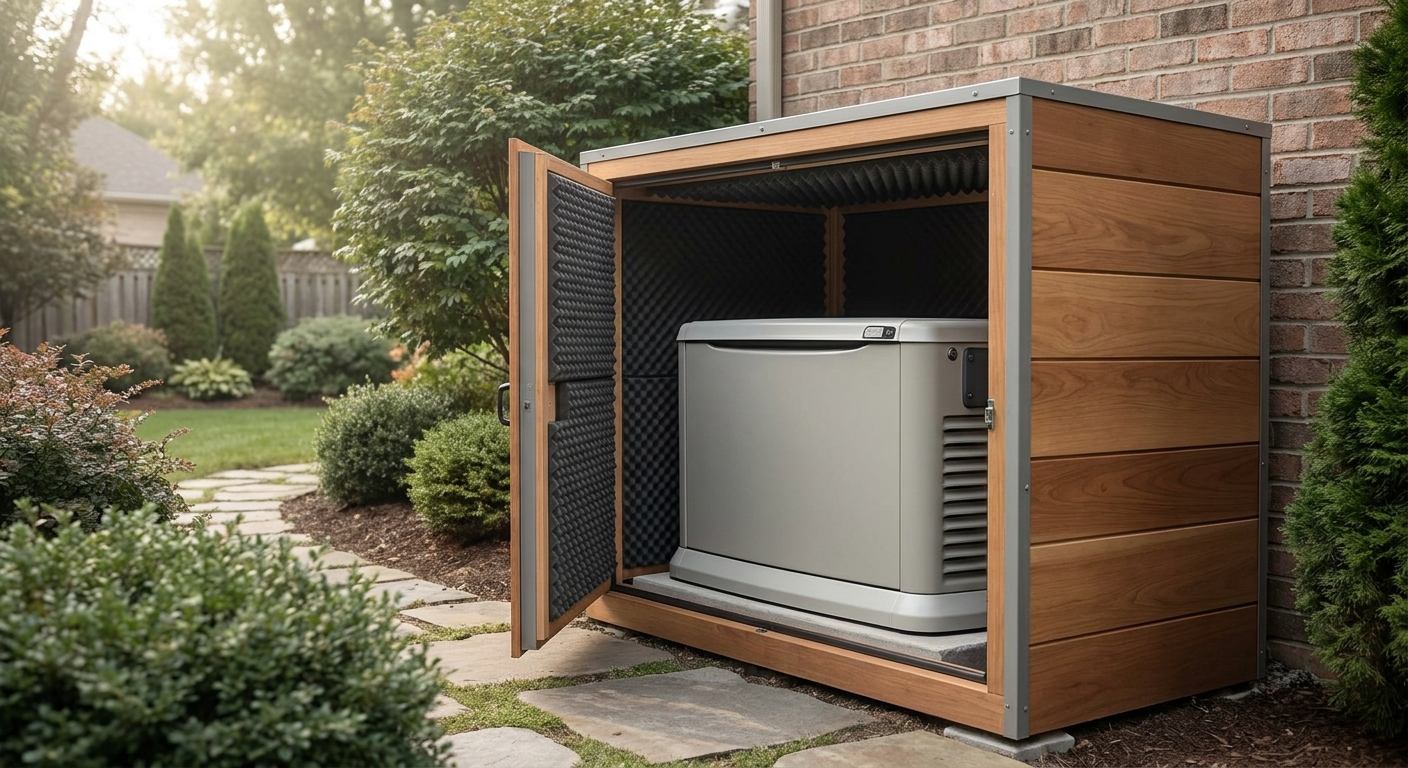
4. Add a sound-attenuated enclosure or acoustic blanket
This is the single biggest lever. A dedicated sound enclosure with internal baffling and acoustic foam can bring a 68 dB unit down to 55-58 dB - roughly a 40-50% reduction in perceived loudness, since every 10 dB drop is perceived as roughly half the volume.
Aftermarket acoustic blanket kits wrap around the existing housing and run cheaper than a full enclosure swap, but they trap heat, so check your generator's ventilation specs before installing one - overheating a Kohler or Briggs & Stratton unit to save 5 dB isn't a trade worth making.
Common mistake: sealing intake and exhaust vents completely for "maximum quiet." This causes overheating shutdowns within the first hour of extended run time.
5. Redirect or extend the exhaust
Exhaust noise accounts for a meaningful share of total generator sound, especially the low-frequency chug most people find most annoying. A redirect elbow or extended flexible exhaust pipe pointed away from windows and patios, combined with a residential-grade muffler upgrade, can cut perceived noise by another 3-6 dB.
Make sure any extension still terminates at least 5 feet from any window or door per most manufacturer specs, and never point exhaust toward a neighbor's property.
Common mistake: routing exhaust toward a fence or wall, which bounces sound back and makes the unit seem louder, not quieter.
6. Keep the air filter and muffler in working order
A clogged air filter forces the engine to work harder, which raises both noise and fuel consumption. Replace or clean the air filter per the manufacturer's maintenance schedule - typically every 200 hours of run time or once a year, whichever comes first in 2026's maintenance cycle.
Inspect the muffler for rust holes or loose mounting brackets during annual service. A muffler with even a small leak can add 5-8 dB to the exhaust note.
Common mistake: waiting for an annual service visit to catch a muffler leak that's been getting louder for months. Check it any time you notice a change in tone.
Troubleshooting
- Generator got louder overnight with no changes made - check for a loose exhaust bracket or muffler bolt; vibration loosens hardware over time.
- Neighbors complaining despite an enclosure - the issue is usually exhaust direction, not the enclosure itself; redirect the exhaust away from their property line.
- New rattling or buzzing sound - inspect the vibration-isolation pad for cracking or the mounting bolts for looseness; this is rarely an engine problem.
- Enclosure installed but unit is overheating - ventilation is blocked; acoustic material should never fully seal intake or exhaust airflow paths.
- Noise complaint from HOA despite meeting manufacturer clearance - HOA covenants can be stricter than manufacturer specs; check the covenant's dB limit specifically, not just the setback distance.
- Sound level fine at idle, spikes under load - this is normal; full-load noise readings run 5-10 dB higher than no-load specs, so test under a real load before judging placement.
Tools and resources
- Decibel meter app or handheld sound level meter
- Local city ordinance or HOA covenant document for your address
- Manufacturer install manual for exact clearance and enclosure ventilation specs
- Composite vibration-isolation pad rated for your generator's weight
- Annual maintenance service from a licensed electrical contractor familiar with Kohler, Generac, Honeywell, and Briggs & Stratton units
What to do next
If the noise issue traces back to placement, get a licensed installer to evaluate whether relocating the unit is realistic given your property's electrical panel and gas or propane line routing before you invest in an enclosure. A $1,500 enclosure won't solve a problem that a 10-foot repositioning would fix for less.
FAQ
What's the quietest way to reduce generator noise? A sound-attenuated enclosure combined with proper placement distance is the most effective combination, typically dropping a 65-70 dB unit to 55-58 dB. Vibration pads and exhaust redirection add incremental gains on top of that.
Is a bigger generator always louder than a smaller one? Not necessarily. A well-maintained 22kW unit with a quality enclosure can run quieter than a poorly maintained 14kW unit with a leaking muffler. Maintenance and enclosure quality matter more than raw kW size.
How much does a sound enclosure cost to add in 2026? Aftermarket acoustic enclosures and blanket kits vary by generator size and brand, so get a quote specific to your Kohler, Generac, or Briggs & Stratton model rather than assuming a flat price.
Can I soundproof a generator myself? Basic steps like adding a vibration pad or repositioning within code are DIY-friendly. Exhaust modifications and enclosure installs that affect ventilation or clearance should go through a licensed electrician to avoid overheating risk or code violations.
Does noise ordinance apply to standby generators during a storm? Most coastal Alabama municipalities have emergency-use exceptions, but check your specific city's ordinance - Daphne, Fairhope, Foley, and Gulf Shores each set their own rules, and covenant restrictions from an HOA can still apply even during a declared emergency.
Will a muffler upgrade actually make a difference? Yes - a worn or leaking muffler can add 5-8 dB to the exhaust note, and swapping to a residential-grade muffler is one of the cheaper fixes on this list relative to the noise reduction it delivers.
Does generator placement affect performance, not just noise? Yes. Placement too close to a structure can restrict airflow and cause overheating, while placement too far from the transfer switch adds wiring cost. Balancing noise, airflow, and wiring distance is why professional placement review matters.
How often should I service a generator to keep noise levels stable? Annual service, or every 200 run-hours, keeps the air filter and muffler in spec so noise doesn't creep up over the year. Storm-heavy years with more run time in 2026 may call for a mid-season check.
One last thing
Most noise complaints in Baldwin County trace back to exhaust direction, not the generator itself - pointing the exhaust toward a fence or a neighbor's yard bounces the sound and makes a properly enclosed unit sound louder than an unenclosed one aimed away from structures. Check exhaust direction before spending money on a bigger enclosure.