Coastal Alabama's salt air will eat a standby generator alive in five years if you skip the maintenance most homeowners never think about. This guide walks through the exact steps to stop corrosion before it reaches the control board.
- Rinse the unit with fresh water every 30 days to strip salt film before it oxidizes aluminum housings.
- Aluminum enclosures with marine-grade powder coat outlast bare steel by years near Mobile Bay and the Gulf.
- Battery terminals corrode fastest - apply dielectric grease and a terminal protector spray twice a year.
- Professional generator maintenance twice a year catches control-board corrosion before it causes a no-start in hurricane season.
- Skip units without a sealed, gasketed control panel if you're within 10 miles of the coastline.
Why this matters
Salt air doesn't just tarnish metal - it conducts electricity across corroded connections, which is how a $6,000 standby generator turns into a no-start unit during the exact storm it was bought for. Homes in Fairhope, Gulf Shores, and Foley sit inside what electricians call a heavy salt-fog zone, where airborne chloride settles on exposed metal every single day, rain or not.
Baldwin County Generators sees this pattern constantly on service calls: generators installed without corrosion protection start failing self-tests within 18 to 24 months, while properly protected units run past the 10-year mark without a control-board replacement. The difference isn't the brand - Kohler, Generac, Honeywell, and Briggs & Stratton all use similar aluminum housings - it's whether the installation and upkeep account for salt exposure from day one.
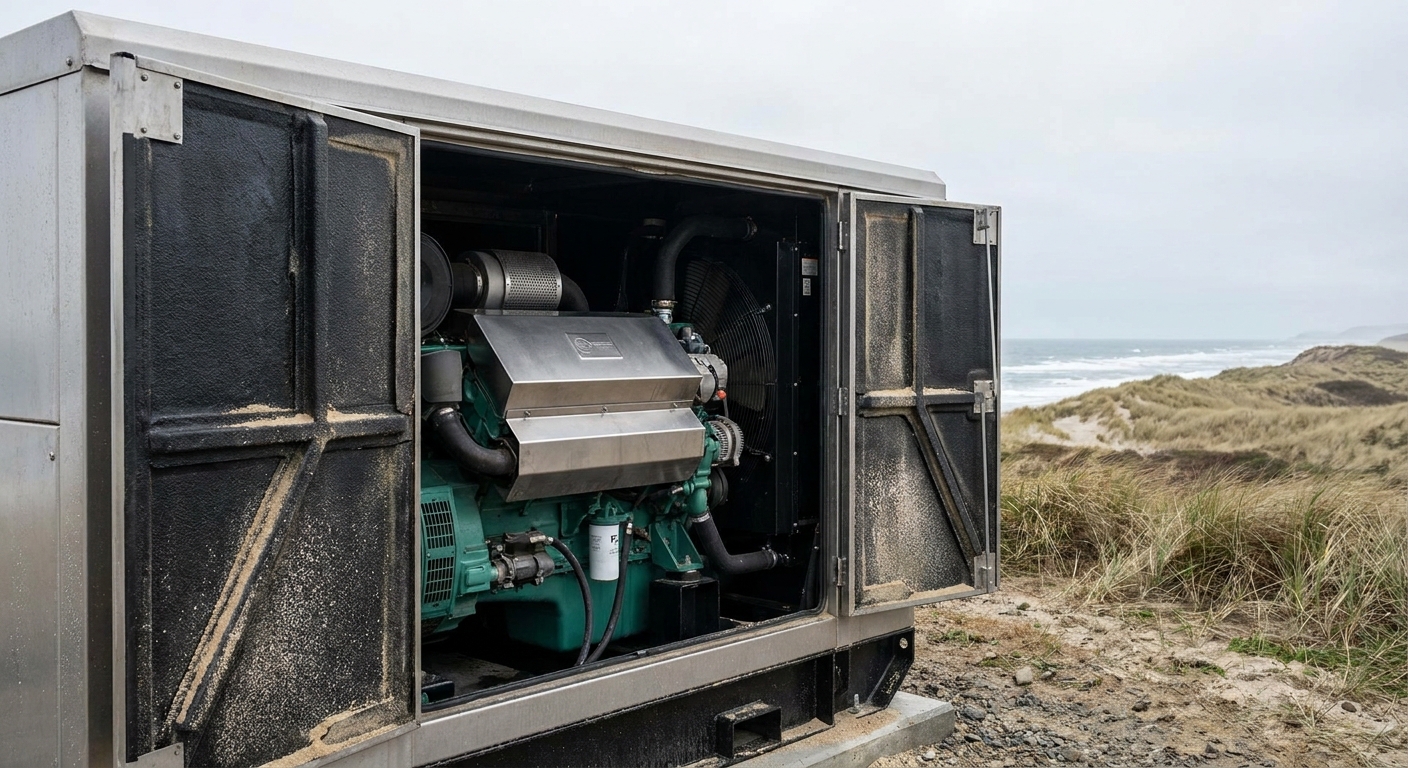
Ignore this and the failure mode is predictable: white oxidation forms on aluminum within the first year, steel fasteners rust through by year two, and by year three the transfer switch contacts corrode enough to cause intermittent power drops. None of that shows up until the generator is asked to run - usually mid-storm.
What you'll need
- Marine-grade anti-corrosion spray (a corrosion inhibitor rated for outdoor electrical, not general WD-40)
- Dielectric grease for battery terminals and control connections
- Soft-bristle brush and distilled water for rinsing
- Terminal protector felt pads or anti-corrosion spray for the starting battery
- A garden hose with a low-pressure nozzle
- 30 minutes per month, plus two professional service visits a year
- A generator with a sealed, gasketed control panel - not every base model has one
The steps
1. Rinse the unit down every 30 days
Salt fog settles on every exposed surface daily, and it takes a fresh-water rinse to strip it before it bonds to metal. Use a garden hose on low pressure - never a pressure washer, which forces water past seals and into the control panel. Aim for the housing exterior only, avoid the exhaust and intake louvers, and let it air-dry for at least an hour before closing panels. Skipping this step is the single biggest reason generators near Gulf Shores and Orange Beach corrode faster than the same model 20 miles inland.
Common mistake: spraying directly into the louvers, which pushes salt-laden water onto internal wiring instead of washing it away.
2. Treat any white oxidation the day you see it
White, chalky spots on aluminum housing are oxidation starting, and they spread fast in humid coastal air. Scrub the spot with a soft brush and distilled water, dry it completely, then apply a marine-grade anti-corrosion spray to the treated area. Left alone for even a month, that same spot pits the aluminum and becomes a permanent weak point where future corrosion restarts.
3. Grease the battery terminals twice a year
The starting battery terminals corrode faster than almost any other component because they combine constant low-voltage current with metal-on-metal contact points exposed to air. Disconnect the negative terminal first, clean any visible corrosion with a baking-soda solution, and coat both terminals with dielectric grease before reconnecting. Do this every spring and fall - skipping it is how a generator that tested fine in April fails to crank in September.
4. Seal and inspect gaskets around the control panel
Water intrusion through a worn door gasket is how salt air reaches the circuit board directly, which is the most expensive failure point on any standby unit. Check the rubber gasket around the control panel door for cracking or gaps at least once a year, and replace it immediately if it's compressed or torn. A $15 gasket replacement beats a $1,200 control board.
5. Wax the aluminum housing annually
A coat of marine-grade wax on the exterior housing adds a sacrificial barrier between salt air and bare metal, similar to waxing a boat hull. Apply it once a year, ideally in early spring before the humidity spikes, and buff it into seams and rivets where corrosion tends to start first.
6. Elevate and orient the unit away from prevailing wind
Generators mounted low to the ground or facing directly into onshore wind take the heaviest, most constant salt exposure. If you're installing new, position the unit on a pad at least 12 inches off grade with the control panel facing away from the prevailing Gulf breeze. This single placement decision can cut annual salt exposure noticeably compared to a unit facing straight at the water.
7. Schedule professional maintenance twice a year
A licensed technician checks things a homeowner can't from the outside - internal wiring corrosion, transfer switch contact wear, and control board moisture. Book service before hurricane season starts each spring and again in the fall, so the unit is tested and cleared before the two highest-risk windows of the year. Buy into this schedule now - waiting until 2026's storm season is already underway means a multi-week wait for a technician.
Troubleshooting
White powder on the housing exterior. That's aluminum oxidation starting. Clean it within 48 hours with distilled water and a soft brush, then treat the spot with anti-corrosion spray before it pits.
Green or white crust on battery terminals. Corrosion is already conducting current unevenly, which causes intermittent starting failures. Clean with a baking-soda-and-water paste, rinse with distilled water, dry fully, then apply dielectric grease.
Rust bleeding from screw heads or hinges. Steel fasteners corrode faster than the aluminum housing around them. Replace with stainless-steel hardware where possible - it costs a few dollars more per fastener and lasts years longer near the coast.
Musty smell from the control panel. That's trapped moisture, usually from a failed door gasket. Have a technician check the gasket seal and dry out the panel before running the unit again.
Generator fails its weekly self-test after a storm. Salt fog from storm surge conditions accelerates corrosion in a single event more than months of normal exposure. Get it inspected within a week of any named storm passing through Baldwin County.
Tools and resources
- Marine-grade anti-corrosion spray (available at most marine supply stores in Fairhope and Gulf Shores)
- Dielectric grease and terminal protector pads
- Distilled water and a soft-bristle brush
- A biannual maintenance plan through Baldwin County Generators for the internal inspection a homeowner can't do alone
- Stainless-steel replacement hardware for housing screws and hinges
Protect your generator before storm season
Schedule a coastal corrosion inspection ahead of hurricane season 2026.
What to do next
Once the rinse-and-inspect routine is in place, the next move is confirming your specific model has the coastal-rated housing and gasket package rather than the standard inland configuration - not every Kohler, Generac, Honeywell, or Briggs & Stratton unit ships that way by default. A technician can confirm this on the same visit that handles your spring or fall maintenance check.
FAQ
How do I protect a generator from salt air corrosion?
Rinse the housing with fresh water every 30 days, grease battery terminals twice a year, and seal any door gaskets that show cracking. Professional inspection twice a year catches internal corrosion a homeowner can't see from outside.
How often should I rinse a coastal standby generator?
Rinse the exterior housing every 30 days using low-pressure fresh water. Salt fog settles daily near the Gulf coast, and monthly rinsing prevents it from bonding to aluminum and oxidizing.
Do aluminum generator housings resist salt corrosion better than steel?
Yes, marine-grade aluminum with powder coat resists salt-air corrosion far longer than bare or painted steel enclosures. Steel fasteners and hinges still corrode first even on aluminum-bodied units, so stainless hardware matters.
What causes a standby generator to fail after a hurricane?
Storm surge and heavy salt fog accelerate corrosion on battery terminals and control panel connections in a single event. Get the unit inspected within a week of any named storm passing through the area.
How much does salt air corrosion maintenance cost per year?
Basic supplies like anti-corrosion spray, dielectric grease, and marine wax run under $100 a year for DIY upkeep. Professional biannual maintenance visits add the labor cost of catching internal corrosion early, which is far cheaper than a control board replacement.
Can I pressure wash a standby generator to remove salt buildup?
No, pressure washing forces water past seals and gaskets into the control panel and internal wiring. Use a garden hose on low pressure instead, and avoid spraying directly into intake and exhaust louvers.
Which generator brands hold up best to coastal salt air?
Kohler, Generac, Honeywell, and Briggs & Stratton all offer coastal-rated housing options with marine-grade coatings and sealed control panels. The standard inland configuration on any of these brands corrodes faster near the Gulf, so confirm the coastal package before installation.
How long does a generator last near the Gulf Coast without corrosion protection?
Unprotected units often show control-board issues within 18 to 24 months near heavy salt-fog zones like Gulf Shores and Orange Beach. Properly protected and maintained units routinely run past the 10-year mark.
One last thing
The transfer switch, not the generator itself, is usually where coastal corrosion causes the first real failure - homeowners inspect the outdoor unit and skip the switch entirely because it's mounted indoors or in the garage. Check its contacts during every biannual service visit, because a corroded transfer switch means the generator can run perfectly and still never send power to the house.