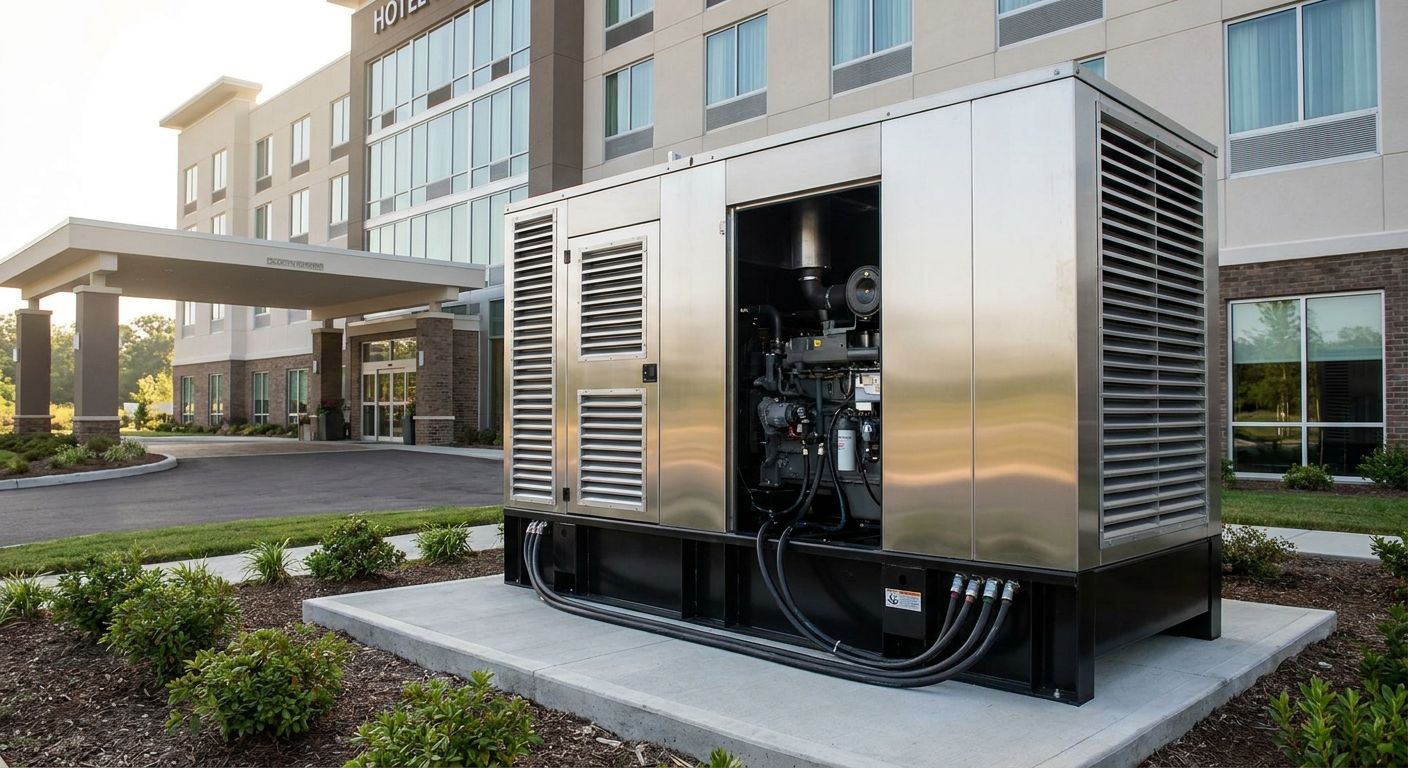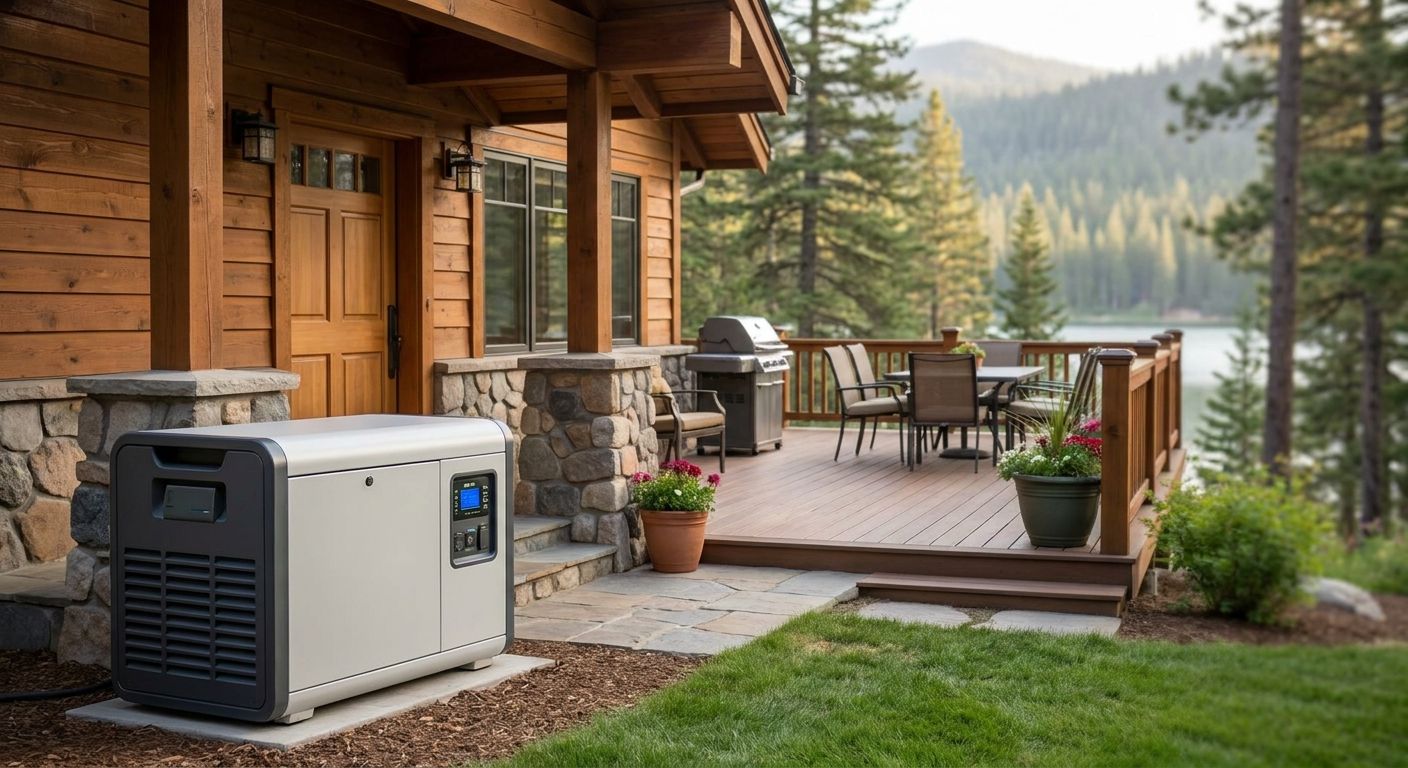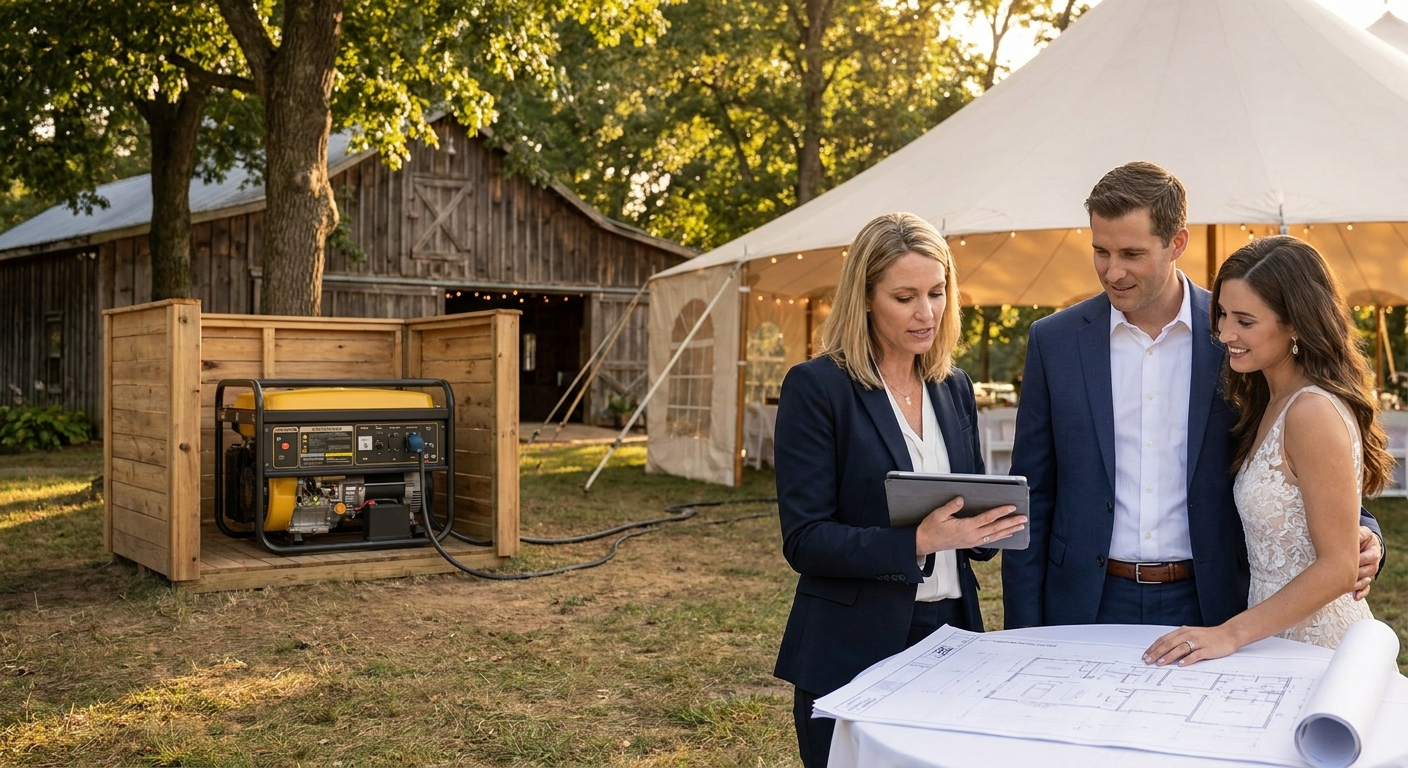
A wedding venue can't tell a bride her ceremony is canceled because Baldwin County lost grid power for six hours. Planning generator backup for a wedding venue business means sizing the unit correctly, wiring it into an automatic transfer switch, and testing it before the first Saturday booking of the season.
- Wedding venues need 48kW to 150kW standby generators depending on square footage, kitchen load, and lighting rigs.
- An automatic transfer switch is non-negotiable for a wedding venue - manual switches fail during live events.
- Coastal Alabama venues should have backup power installed before hurricane season starts June 1, 2026.
- Load calculation, not guesswork, determines generator size - undersized units stall under wedding-day peak draw.
Why this matters
A power outage during a $15,000 wedding weekend isn't a minor inconvenience - it's a refund, a bad review, and a canceled future booking. Coastal Alabama venues in Fairhope, Daphne, Foley, and Gulf Shores sit in a hurricane corridor where grid outages spike between June and November every year. A venue running receptions, string lights, catering equipment, HVAC, and sound systems simultaneously has a much heavier and more unpredictable load than a typical home. Planning generator backup power isn't a one-time purchase decision - it's a sequence of steps that starts with a load audit and ends with a maintenance schedule that survives 2026's storm season and every season after it.
What you'll need
- A full electrical load list: HVAC tonnage, kitchen equipment wattage, lighting circuits, sound and AV gear, well pump or septic pump if applicable
- A site walk from a licensed electrical contractor to confirm panel capacity and gas or propane line access
- A standby generator sized to peak load, not average load - commercial venues typically land between 48kW and 150kW
- An automatic transfer switch rated to the generator's output
- A fuel plan: natural gas hookup, or a propane tank sized for at least 48-72 hours of run time
- A written maintenance contract covering quarterly inspection and annual load-bank testing
The steps
1. Audit every circuit that runs during a live event
Walk the venue during an actual booking, not an empty building. Reception halls draw far more current with a live band, a full kitchen, string lighting, and a packed dance floor than an empty room ever will. List every circuit: walk-in coolers, ovens, warmers, HVAC units, uplighting, DJ booths, and any outdoor pavilion lighting. Missing even one high-draw circuit - a commercial ice machine, for instance - means the backup system stalls exactly when 150 guests are watching. Common mistake: using the building's average monthly usage instead of peak simultaneous draw during a reception.
2. Convert the load list into kilowatts
Every appliance and circuit has a wattage rating on its nameplate or spec sheet. Add them up, divide by 1,000 to get kilowatts, then add a 20-25% buffer for startup surge - motors and compressors draw more power the instant they kick on than they do running steady. A mid-size venue with a full commercial kitchen, central HVAC, and event lighting commonly lands in the 60kW-100kW range. A large venue hosting multiple simultaneous events on the property can require 150kW or more. Common mistake: sizing off square footage alone instead of actual equipment load - two venues the same size can need very different generators.
3. Choose the fuel source before choosing the generator
Natural gas gives unlimited run time as long as the utility line stays intact, which matters for multi-day power outages after a hurricane. Propane requires a tank sized for your expected outage window - 48 to 72 hours is the standard planning target for coastal Alabama properties. Diesel offers strong runtime density but needs regular fuel rotation and on-site storage planning. Common mistake: picking a fuel type based on what's cheapest per gallon instead of what's actually reliable during a regional outage when fuel delivery trucks are backed up.
4. Install an automatic transfer switch, not a manual one
A wedding doesn't pause while someone runs to a breaker panel. An automatic transfer switch (ATS) detects the outage, starts the generator, and switches the load over in 10 to 30 seconds - fast enough that most guests never notice. Manual switches require someone on-site who knows exactly what to do under stress, during an event, in the dark. Common mistake: installing a residential-grade ATS on a commercial-scale load - it's undersized and trips under the surge from a full kitchen restart.
5. Wire critical and non-critical loads onto separate circuits
Not every circuit needs backup power. Separate the ceremony and reception essentials - lighting, sound, HVAC, kitchen refrigeration - from non-critical loads like decorative outdoor fountains or unused storage room outlets. This lets a smaller, more affordable generator carry the load that actually matters during an event, and it reduces strain during extended outages when fuel conservation counts. Common mistake: wiring the entire building as one load, which forces you into an oversized, more expensive generator than the venue actually needs.
6. Test under load, not just on start-up
A generator that starts fine on a quiet Tuesday morning can still fail under an actual reception-night load. Schedule a load-bank test that simulates real event conditions - kitchen equipment running, HVAC cycling, lighting on - at least once a year, ideally before peak wedding season begins in spring. Common mistake: relying on the generator's weekly self-exercise cycle as proof it will handle full load; a no-load test proves almost nothing about performance under real draw.
7. Build a maintenance calendar tied to booking season
Wedding venues in coastal Alabama tend to book heaviest from March through November, overlapping directly with hurricane season, which runs June 1 through November 30. Schedule generator inspections and oil changes in the off-season windows - typically December through February - so the unit is fully serviced before the year's heaviest run of Saturday events. Common mistake: treating generator maintenance as a reactive call instead of a calendar item tied to the booking schedule.
Get your venue storm-ready for 2026
Licensed electrical contractors size and install standby generators across coastal Alabama.
Troubleshooting
- Generator starts but the transfer switch doesn't engage: Check the ATS control wiring and battery voltage - a weak control battery is the most common cause of a delayed or failed transfer.
- Lights flicker or dim during kitchen equipment startup: The generator is undersized for surge load. This usually means the original load calculation missed motor startup wattage on refrigeration or HVAC compressors.
- Generator won't start after sitting idle for months: Stale fuel or a dead exerciser battery is the usual culprit. This is exactly why quarterly inspection contracts exist - a venue that only checks its generator once a year finds out it's dead during an actual outage.
- Propane tank runs dry mid-outage: The tank was sized for a 24-hour outage instead of the 48-72 hour planning window coastal properties need during hurricane season.
- Generator runs but venue still loses partial power: A circuit wasn't wired into the transfer switch's covered panel. This happens when a venue adds equipment - a new walk-in cooler, added lighting rig - after the original installation without updating the load plan.
Tools and resources
- A licensed electrical contractor's load calculation worksheet, not a generic online sizing calculator
- Nameplate wattage ratings for every major appliance and HVAC unit on the property
- A fuel supplier contract for propane delivery or a confirmed natural gas hookup
- An annual load-bank testing service, scheduled outside peak booking months
- Baldwin County Generators for site walks, sizing, installation, and maintenance contracts across Daphne, Fairhope, Foley, and Gulf Shores
What to do next
Get a site walk scheduled before your 2026 wedding season books up - venues that wait until hurricane watches start hunting for a generator find installers booked out for weeks. A proper load calculation takes one visit; a botched sizing decision costs a canceled event.
FAQ
What size generator does a wedding venue need?
Most wedding venues need a standby generator between 48kW and 150kW depending on kitchen equipment, HVAC tonnage, and lighting load. A full load calculation from an electrical contractor determines the exact size, since square footage alone doesn't account for peak simultaneous draw during a live event.
How much does a commercial standby generator cost for a venue?
Cost depends heavily on kW size, fuel type, and installation complexity, since venue loads range widely between small properties and large multi-event campuses. A site walk and load calculation gives an accurate number for a specific venue rather than a generic estimate.
Is propane or natural gas better for a wedding venue generator?
Natural gas gives unlimited run time as long as the utility line is intact, which matters most during multi-day outages after storms. Propane works well too but needs a tank sized for 48-72 hours of continuous run time to cover a full outage window.
Do I need an automatic transfer switch for a venue generator?
Yes - a manual transfer switch is not practical for a live event where a delay of even a few minutes disrupts a ceremony or reception. An automatic transfer switch shifts the load over in 10 to 30 seconds without anyone needing to act.
When should a wedding venue install backup power before hurricane season?
Installation and testing should be complete well before June 1, when Atlantic hurricane season officially begins. Booking installation in the off-season, December through February, avoids the scramble that hits contractors every spring.
How often should a venue test its standby generator?
A load-bank test simulating real event conditions should happen at least once a year, ideally before the busiest booking months start. Weekly self-exercise cycles only confirm the unit starts - they don't prove it can carry full reception-night load.
What happens if a wedding venue generator is undersized?
An undersized generator stalls or trips under surge load, typically when kitchen equipment or HVAC compressors kick on simultaneously with lighting and sound systems. This is the single most common failure point in venues that sized off square footage instead of an actual load audit.
Can a venue add more circuits to an existing generator setup later?
Yes, but the transfer switch and generator capacity need to be re-evaluated whenever new equipment is added, like a walk-in cooler or expanded lighting rig. Skipping that step is why some venues discover partial power loss during an actual outage.
One last thing
The detail most venue owners miss isn't generator size - it's the transfer switch delay. A 20-30 second gap between grid failure and generator power feels instant to a venue owner checking a panel, but it's an eternity to 150 guests standing in the dark during a first dance. Test that transfer time specifically, not just whether the generator starts, before booking season 2026 gets underway.