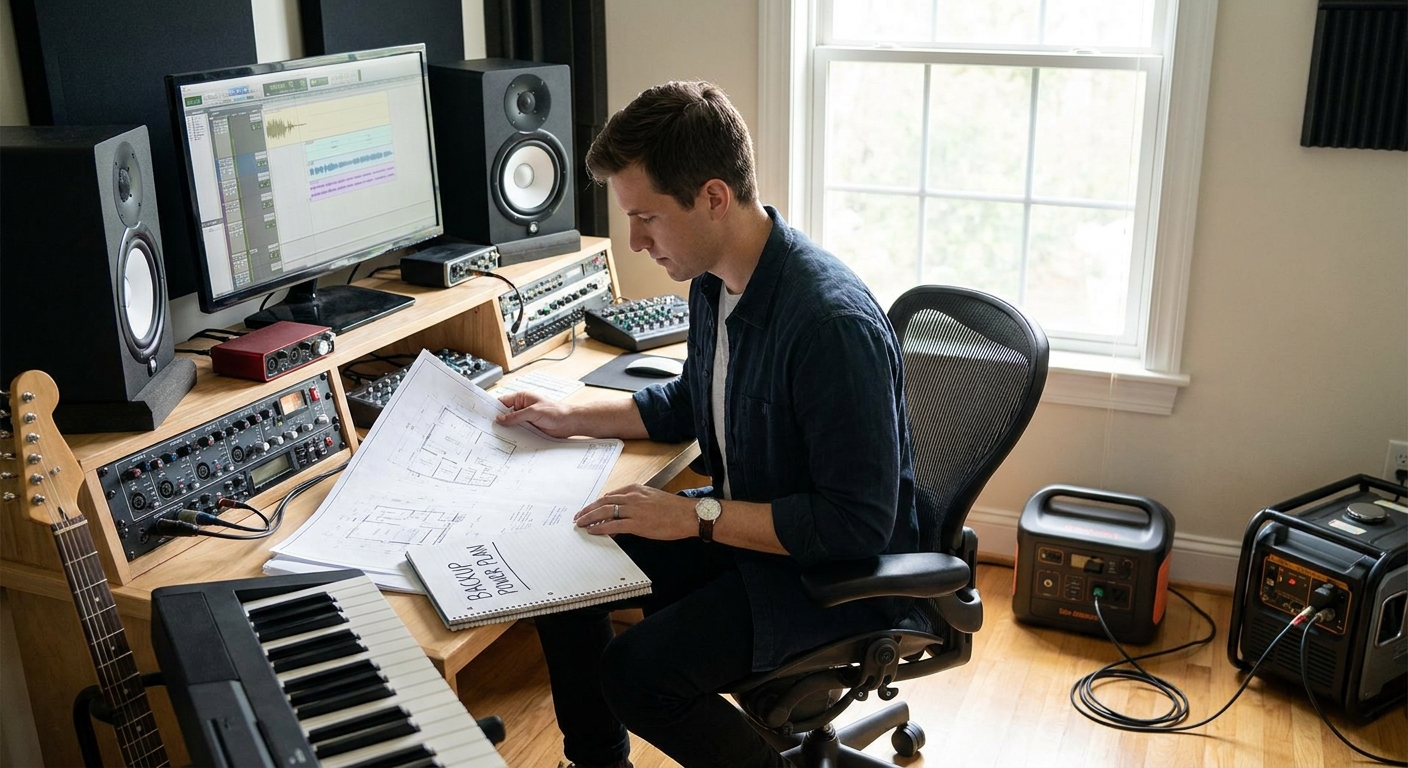
A home recording studio runs on clean, uninterrupted power the moment a hurricane knocks out the grid - mid-session voltage sags can corrupt a session file or fry a preamp, and that's the real reason to plan generator backup for a recording studio before storm season, not during it.
- Size a standby generator at 1.25x your studio's peak running watts, not just the sum of nameplate ratings.
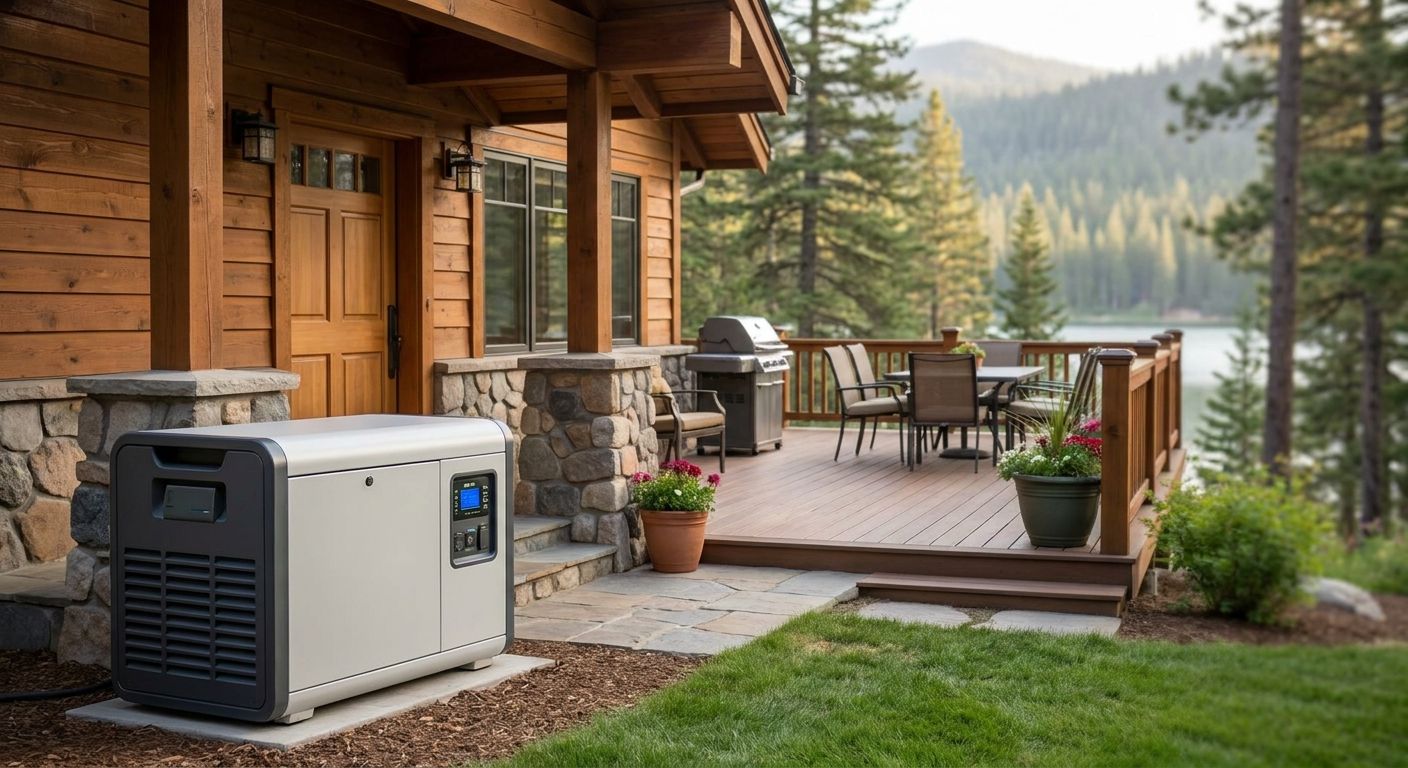
- A 20kW to 26kW whole-home standby unit covers most home studios plus HVAC and refrigeration in coastal Alabama.
- Automatic transfer switches with a 0.5-second or faster transfer window protect DAW sessions from data loss.
- Baldwin County Generators recommends a dedicated sub-panel for studio gear so audio circuits never share load with A/C compressors.
- Skip portable generators for daily studio use - voltage fluctuation damages interfaces and monitors over time.
Why this matters
A studio isn't a normal household load. Interfaces, preamps, monitors, outboard gear, and a workstation all draw continuous power, and any of them can be damaged by the kind of voltage spikes a cheap portable generator throws off. Utility outages in coastal Alabama routinely run 3 to 10 days after a named storm, and a studio that goes dark loses more than comfort - it loses billable sessions and half-finished mixes.
Standby generator backup for a recording studio solves two problems at once: it keeps the power on, and if sized and wired correctly, it keeps that power clean enough for sensitive audio electronics. Get either piece wrong and you've spent money protecting a mix session with a generator that can still cause the exact damage you were trying to avoid.
What you'll need
- A load list of every piece of studio gear with wattage (interfaces, monitors, outboard preamps, computer, lighting, HVAC serving the room)
- A licensed electrical contractor to run a load calculation - not a rule-of-thumb guess
- A standby generator sized to studio plus household critical loads, not studio alone
- An automatic transfer switch (ATS) rated for the generator's output amperage
- A dedicated sub-panel or dedicated circuits for studio equipment, separate from A/C and kitchen loads
- A fuel source decision - natural gas or propane, sized for at least 3 to 5 days of runtime during a 2026 hurricane season outage
- A surge protection device (SPD) installed at the panel, in addition to any power conditioners at the gear itself
The steps
1. Inventory every watt your studio draws
Write down the running watts for every device that stays on during a session: audio interface, monitors, computer and display, outboard gear, patch bay, lighting, and any window unit or mini-split cooling the room. Add HVAC, refrigerator, and a few household circuits you'd want live during a multi-day outage. Most home studios draw 800 to 2,000 running watts for gear alone - the number that actually drives generator sizing is the household total plus studio total plus starting-watt surge from HVAC compressors.
Common mistake: people size the generator to studio gear only and forget the air handler, well pump, or refrigerator compressor, which can spike 2 to 3 times their running wattage on startup.
2. Get a professional load calculation, not a nameplate add-up
Adding up nameplate wattage on a spec sheet almost always oversizes or undersizes the system, because it ignores startup surge and diversity - not everything runs at once. A licensed electrician runs an actual load calculation against your panel and gives you a kW number backed by NEC methodology, not a sales estimate.
For most Baldwin County homes with a studio addition, that number lands between 20kW and 26kW for a whole-home standby generator. Businesses running a commercial studio or podcast facility often need 30kW or higher once server racks and multiple HVAC zones enter the calculation.
3. Choose fuel type and confirm runtime
Natural gas gives you unlimited runtime as long as the utility line stays pressurized, which is the deciding factor for most Fairhope and Daphne homes on existing gas service. Propane requires a tank sized for your expected outage - plan for 5 to 7 days of continuous runtime during hurricane season 2026, since restoration crews have taken that long after major coastal landfalls in recent years.
Diesel is rare in residential installs but shows up in commercial studio and production facility builds where a standalone tank already exists on-site.
4. Install a dedicated sub-panel for studio circuits
Run studio power through its own sub-panel, isolated from the circuits feeding the A/C compressor, well pump, or kitchen appliances. This does two things: it protects sensitive audio gear from the electrical noise those motor loads generate, and it lets you prioritize studio circuits on the transfer switch's load-shed schedule if you ever need to manage total generator capacity during an extended outage.
Common mistake: running studio gear off the same 20-amp circuit as a window A/C unit. The compressor's inrush current shows up as an audible hum or ground loop in your monitors.
5. Size and install the automatic transfer switch
The ATS is what decides how fast the generator picks up the load after a grid outage. Look for a transfer window under 10 seconds for whole-home standby units - most units run in the 10 to 20 second range for engine start plus transfer, which is enough time for your DAW to lose an unsaved buffer if you're mid-take. Save-state habits matter here as much as the hardware.
Match the ATS amperage to your main panel size, typically 200 amps for a home with an attached or converted studio space, and confirm it's rated for the generator model your installer specs.
6. Add surge protection at the panel and at the rack
A whole-panel surge protection device stops utility-side spikes from reaching your studio wiring, but it won't catch every transient a generator produces during transfer. Add a rack-mount power conditioner or UPS on the studio's own circuit for a second layer, specifically to bridge the transfer gap so your interface and computer don't hard-cut during the switchover.
7. Test the system on a real load, twice a year
Most standby generators run a self-test weekly, but that's an idle test, not a load test. Schedule a full load test - generator running, transfer switch engaged, studio gear powered - at the start and midpoint of hurricane season each year. This catches battery weakness, fuel delivery issues, or a miscalibrated transfer switch before you're relying on it during an actual outage.
Get your studio power plan sized right
Licensed load calculations and standby generator installs across coastal Alabama.
Troubleshooting
- Monitors hum or buzz only when the A/C kicks on: studio circuits are sharing a panel leg with a motor load. Move studio gear to its own dedicated sub-panel.
- DAW session freezes for a few seconds during outages: the transfer switch window is too slow, or you're running gear without a UPS bridging the gap. Add a rack UPS rated for at least 5 minutes of runtime.
- Generator runs but studio gear still cuts out: the studio circuit may not be wired into the transfer switch's covered panel. Confirm which circuits the ATS actually covers before an outage happens, not during one.
- Propane tank runs low mid-outage: you undersized fuel capacity for your area's typical restoration timeline. Plan tank size for 5 to 7 days, not 2 to 3.
- Generator won't start during a self-test: battery or fuel delivery issue, usually caught by the twice-a-year load test in step 7. Skipping load tests is the single most common reason a standby generator fails when it's actually needed.
Tools and resources
- Licensed electrical contractor for load calculation and sub-panel wiring
- Baldwin County Generators for standby generator sizing, installation, and annual maintenance across Daphne, Fairhope, Foley, and Gulf Shores
- A kill-a-watt meter or clamp ammeter to verify actual studio gear draw against nameplate ratings
- Rack-mount UPS with pure sine wave output for bridging the transfer gap
- A written maintenance log noting load test dates, fuel level checks, and battery replacement schedule
What to do next
Once the generator, transfer switch, and sub-panel are in place, put a recurring calendar reminder for load testing at the start and midpoint of each hurricane season, and keep a written record of fuel deliveries if you're on propane. The system only protects your studio if it's tested under real load, not just running its weekly idle cycle.
FAQ
What size generator does a home recording studio need?
Most home studios need a 20kW to 26kW whole-home standby generator once HVAC, refrigeration, and household circuits are added to the studio's own load. A licensed load calculation, not a nameplate add-up, gives you the exact number.
Is a portable generator good enough for a recording studio?
No. Portable generators produce enough voltage fluctuation to damage interfaces, preamps, and monitors over repeated use. Standby generators with a clean sine wave output and proper transfer switch protect sensitive audio gear far better.
How fast does a transfer switch need to be for studio equipment?
Look for a transfer window under 10 seconds, though most whole-home automatic transfer switches run 10 to 20 seconds including engine start. A rack UPS bridges that gap so a DAW session doesn't lose an unsaved buffer.
Should studio circuits share a panel with air conditioning?
No. Run studio gear on a dedicated sub-panel separate from A/C compressors and other motor loads. Shared circuits introduce audible hum and ground loops from compressor inrush current.
How much fuel does a standby generator need for hurricane season 2026?
Plan for 5 to 7 days of continuous runtime on propane, since coastal Alabama restoration timelines after major storms have run that long in recent seasons. Natural gas hookups avoid the runtime question entirely as long as utility gas pressure holds.
How often should a home standby generator be load tested?
Twice a year, at the start and midpoint of hurricane season, under actual studio load rather than the generator's weekly idle self-test. This catches battery, fuel, and transfer switch problems before an outage exposes them.
Does a whole-home generator protect studio gear from power surges?
A whole-panel surge protection device stops most utility-side spikes, but add a rack-mount power conditioner or UPS at the studio circuit for a second layer during generator transfer events.
What's the biggest mistake people make planning generator backup for a studio?
Sizing the generator to studio gear alone and skipping a professional load calculation. HVAC startup surge and household circuits routinely double the actual kW needed.
One last thing
The detail most studio owners miss isn't sizing - it's the sub-panel. A studio wired into the same panel legs as the A/C compressor will hum and buzz through every summer afternoon, generator or no generator, and most people chase that noise for months before tracing it back to shared wiring instead of gear quality.