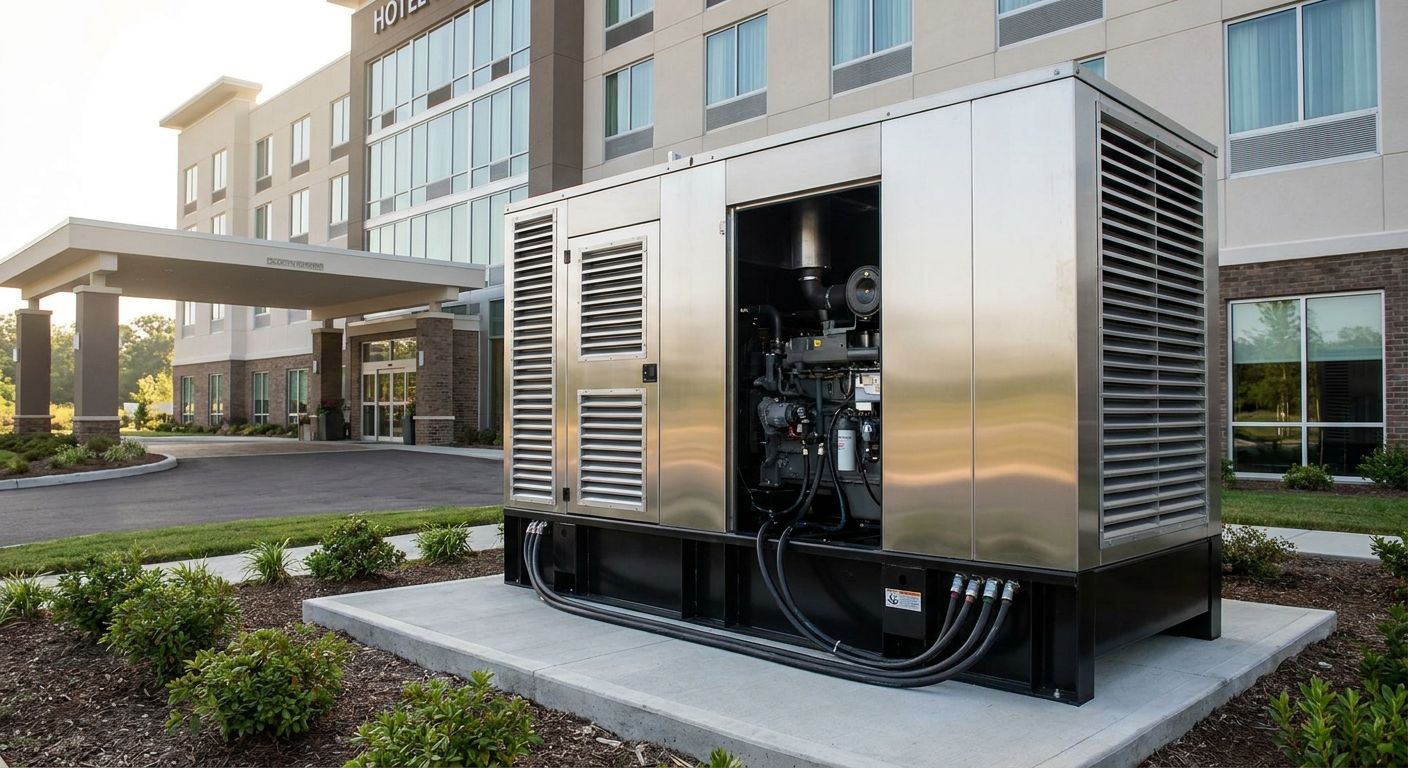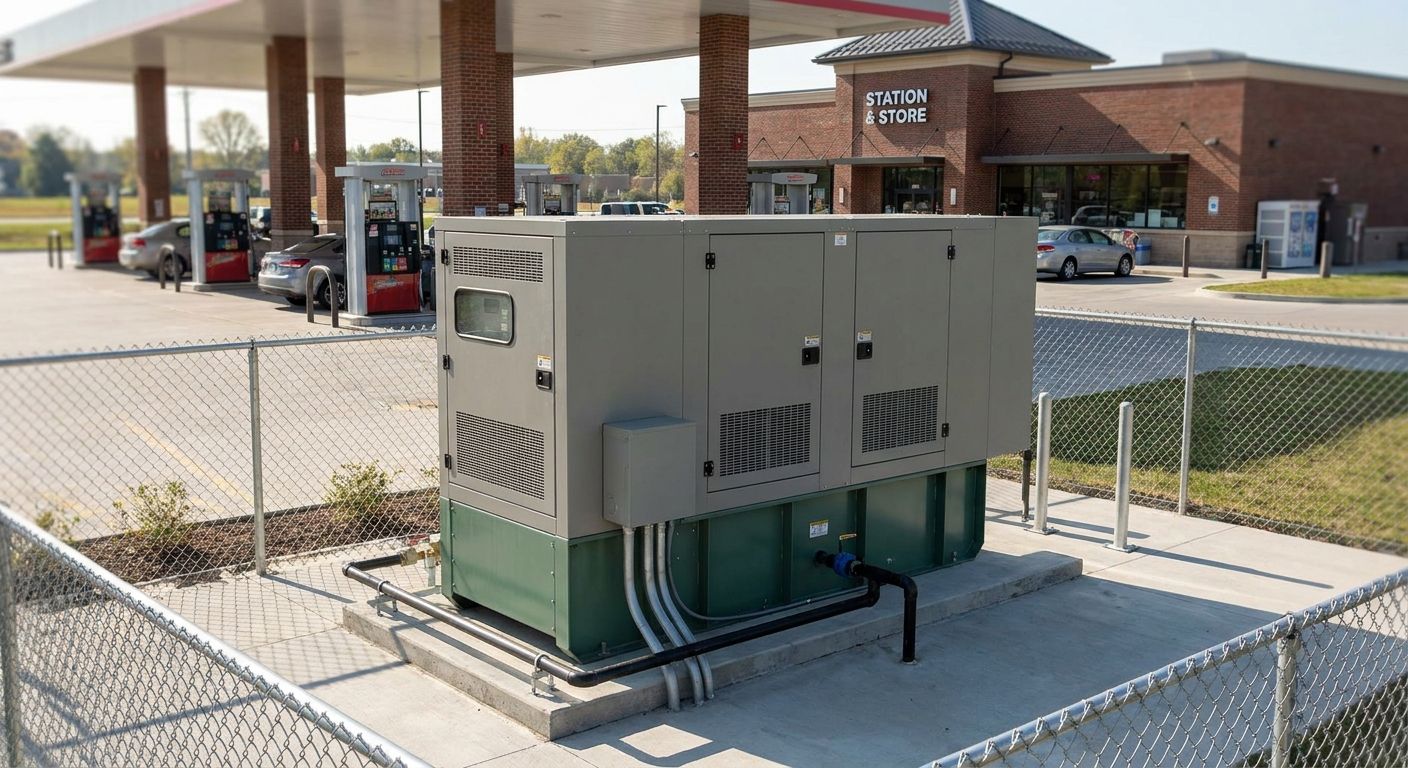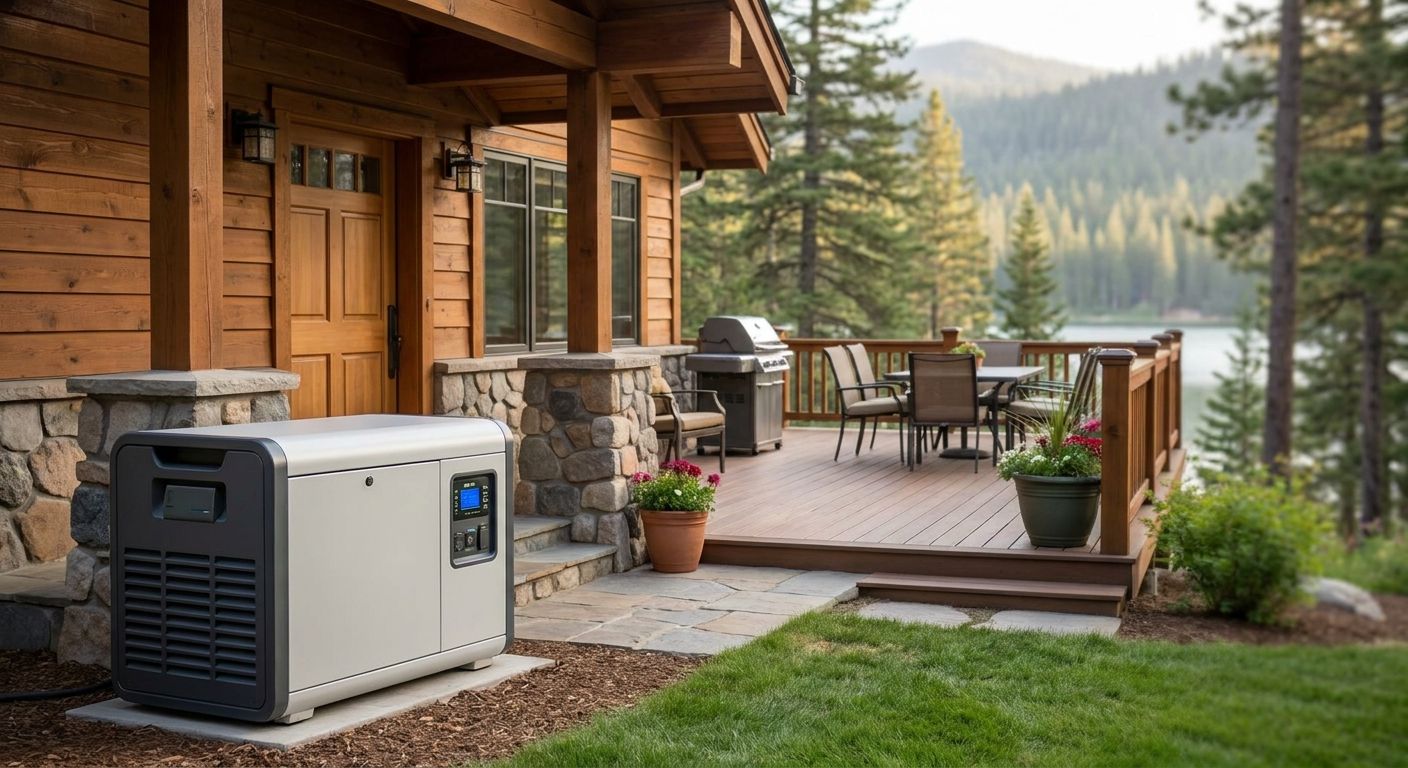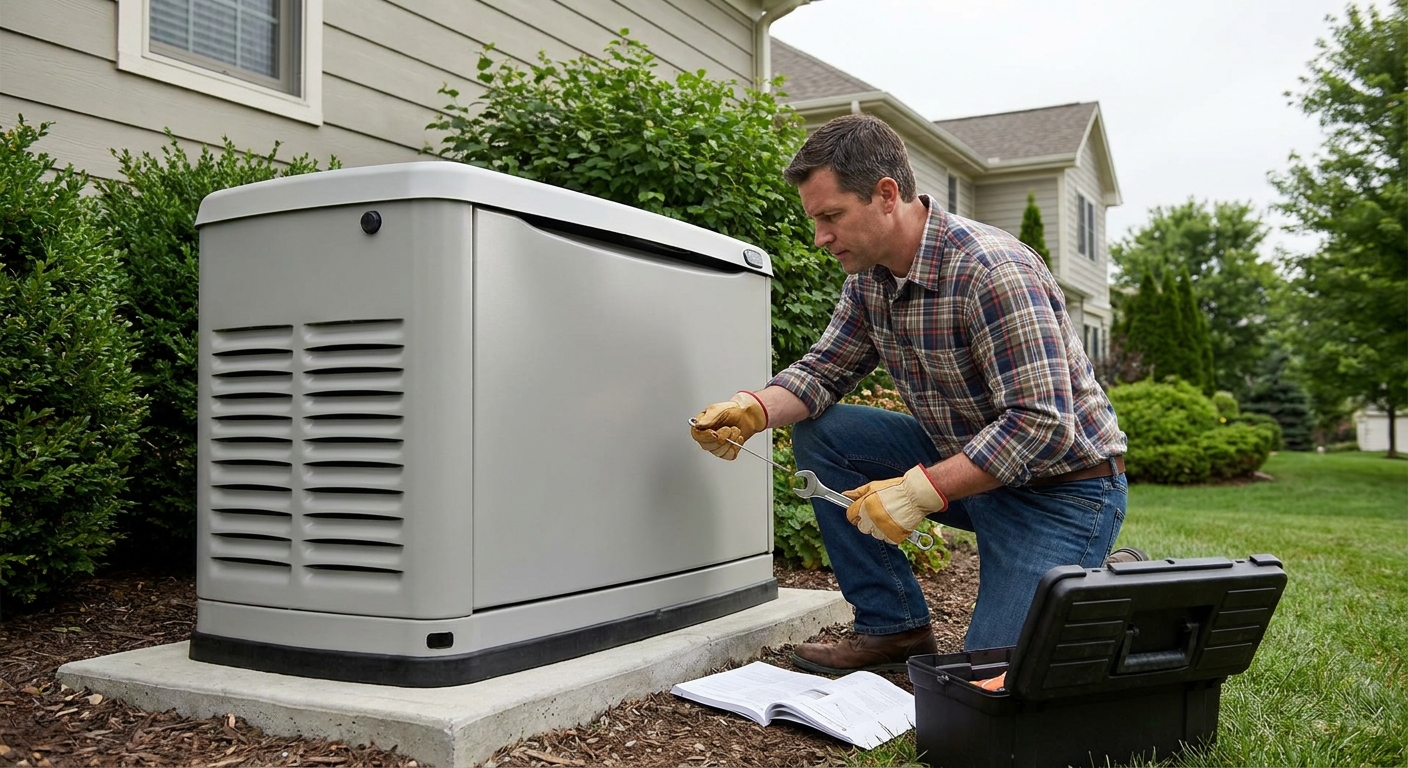
Standby generators fail most often not during a hurricane, but in the six quiet months before one - when nobody's checking the oil, the battery, or the exercise cycle. This guide covers the maintenance schedule that keeps a Kohler, Generac, Honeywell, or Briggs & Stratton unit ready to start on the first crank when Baldwin County loses grid power.
TL;DR: Maintaining a standby generator between storms means running the self-test weekly, checking oil and coolant monthly, changing oil annually (or every 100-200 hours), and having a licensed technician do a full inspection each spring before hurricane season starts June 1. Skip any of these and you risk a no-start during an actual outage - the exact failure mode Baldwin County Generators sees most in coastal Alabama homes with units older than three years. Verdict: do the maintenance yourself monthly, but book a professional service visit at least once a year.
Why this matters
A generator that sits unused for months develops problems that only show up when you need it most - stale fuel, corroded battery terminals, a fouled spark plug, or salt-air corrosion on the enclosure. Coastal Alabama's humidity and proximity to the Gulf accelerate all of it faster than inland installations. In 2026, most manufacturer warranties on Kohler and Generac units already require documented annual maintenance to stay valid, so skipping service isn't just risky - it can void coverage. The good news: standby units built since the mid-2010s run a weekly self-exercise cycle automatically, which handles a chunk of the work for you. The rest takes maybe 20 minutes a month.
What you'll need
- Generator owner's manual (specific to Kohler, Generac, Honeywell, or Briggs & Stratton model)
- Manufacturer-approved oil (usually synthetic 5W-30, check your model)
- Replacement air filter and spark plug (keep one spare set on hand)
- A soft brush and battery terminal cleaner
- A flashlight and basic socket set
- 15-20 minutes, once a month, plus one annual service appointment
- A licensed electrical contractor on call for the annual inspection - Baldwin County Generators handles this for Daphne, Fairhope, Foley, and Gulf Shores homeowners
The steps
1. Confirm the weekly self-test is actually running
Most standby units are programmed to run a short self-exercise cycle every 7 days, cycling the engine for 12-20 minutes without transferring load. This burns off condensation in the fuel system and keeps the battery charged. Check the control panel log or app (Kohler's RDC3 controller and Generac's Mobile Link both show this) to confirm the last test actually completed rather than throwing an error. Common mistake: homeowners assume the self-test is running because the unit is plugged in - controllers can silently fail a cycle without an alert if the transfer switch has an issue.
2. Check the oil level and color monthly
Pull the dipstick with the engine cold and look for a level between the fill lines and a color no darker than light amber. Dark, gritty oil signals it's overdue even if you haven't hit the hour interval yet. This matters because standby generators run air-cooled engines under load conditions that stress oil faster than a car engine idling. Expected outcome: clean amber oil at the correct level, no metal flakes on the dipstick.
3. Inspect the battery and terminals
A dead battery is the single most common reason a generator fails to crank during an actual outage. Check terminals for white or greenish corrosion, clean them with a wire brush and terminal cleaner, and confirm the battery holds 12.6 volts or higher at rest. Salt air along the Gulf Shores and Fairhope corridor corrodes terminals noticeably faster than inland Alabama installations, so this check deserves more attention here than a generic manual suggests. Common mistake: replacing the battery reactively after a failed start instead of testing voltage proactively every few months.
4. Change the oil and filter annually, or every 100-200 hours
Most manufacturers spec an oil change at 100 hours of run time or once a year, whichever comes first - check your specific Kohler, Generac, or Briggs & Stratton manual since intervals vary by model and displacement. Warm the engine for a few minutes first so the oil drains cleanly, then replace the filter at the same time. This is the step homeowners skip most because it requires shutting the unit down, and it's also the one that causes engine wear if ignored for multiple seasons.
5. Replace the air filter and check the spark plug
A clogged air filter chokes the engine under load, which shows up as surging or stalling right when you need full power during an outage. Pull the filter, hold it up to a light source, and replace it if you can't see light through it clearly - usually annually for units in dusty or humid environments. Check the spark plug gap against your manual's spec and replace it if the electrode looks worn or fouled. Expected outcome: the engine idles smoothly and picks up load without hesitation during the next self-test.
6. Inspect the enclosure and mounting pad
Walk around the unit and check for rust starting on bolts or seams, standing water around the base, and any nesting material from insects or small animals inside the vents. Coastal humidity in 2026's storm season pushes corrosion faster on units without regular rinsing, so a quick hose-down of the exterior (never the internals) every couple of months helps. Common mistake: letting grass clippings or mulch pile up against the enclosure, which traps moisture against the housing.
7. Test under actual load once a year
The automatic self-test cycles the engine but often runs unloaded or with minimal load depending on the controller settings. Once a year, ideally in spring before hurricane season, force a transfer test that actually shifts your home's circuits onto generator power for 15-20 minutes. This is the only way to catch a transfer switch problem before an actual storm outage does it for you. Common mistake: assuming the weekly exercise cycle is equivalent to a real load test - it isn't.
8. Schedule a professional inspection annually
A licensed technician checks things a homeowner typically can't: coolant condition on liquid-cooled units, transfer switch contacts, fuel line integrity on propane and natural gas hookups, and control board diagnostics. Booking this before June each year gives you time to fix anything found before hurricane season peaks. Common mistake: waiting until a storm is forecast to call for service, when technicians across coastal Alabama are booked solid.
Troubleshooting
Generator won't crank at all. Check battery voltage first - anything under 12.4V at rest usually means a charging issue or a battery near end of life, typically 3-5 years for standby units.
Engine cranks but won't start. Stale fuel is the usual cause on gasoline units left unused over a season; propane and natural gas units rarely have this problem, which is one reason most Gulf Shores and Foley installations run on propane.
Self-test runs but the unit throws an error code afterward. Check the manual for the specific code - low oil pressure and low coolant (on liquid-cooled models) are the two most common triggers, and both are simple checks before calling for service.
Generator runs but doesn't transfer power during an outage. This points to the automatic transfer switch, not the generator itself - a failed transfer switch means the engine runs fine but your house never sees the power. This needs a licensed electrician, not a DIY fix.
Unusual vibration or noise during the self-test. Often a loose mounting bolt or a failing engine mount - catch this early before it stresses the crankshaft or exhaust connections.
Visible rust or corrosion on the enclosure. Address it immediately with touch-up paint rated for the enclosure material; left alone, coastal salt air turns surface rust into structural corrosion within a couple of seasons.
Tools and resources
- Your model's owner's manual (Kohler, Generac, Honeywell, Briggs & Stratton all publish these online)
- A basic multimeter for battery voltage checks
- Manufacturer app or web portal for remote monitoring (Kohler RDC3, Generac Mobile Link)
- A logbook or spreadsheet tracking oil changes, run hours, and service dates
- A licensed local contractor for annual inspections and repairs - Baldwin County Generators services standby units across Daphne, Fairhope, Foley, and Gulf Shores
FAQ
How often should a standby generator be serviced? A standby generator needs monthly homeowner checks (oil level, battery, self-test log) and one full professional service annually, ideally scheduled before hurricane season starts June 1.
How much does standby generator maintenance cost per year? Annual professional maintenance typically runs a few hundred dollars depending on unit size and whether coolant, filters, and spark plugs need replacing that visit - costs vary by kW size and model, so get a specific quote for your unit.
Is it bad to let a generator sit unused for months? Yes - fuel degrades, batteries lose charge, and seals can dry out, which is exactly why the built-in weekly self-test exists on most 2026-era standby units to prevent this.
What's the biggest cause of generator failure during a storm? A dead or corroded battery causes more no-start failures than any mechanical issue, especially on coastal Alabama installations where salt air speeds up terminal corrosion.
Can I do generator maintenance myself, or do I need a licensed technician? Monthly checks (oil level, battery, filters) are homeowner-friendly, but annual service involving coolant systems, transfer switches, and gas line connections should go to a licensed electrical contractor.
How long do standby generator batteries last? Most standby generator batteries last 3-5 years before needing replacement, shorter in humid coastal climates where corrosion accelerates wear on terminals and connections.
What's the difference between the automatic self-test and a real load test? The automatic self-test runs the engine briefly without necessarily transferring full home load, while a real load test shifts your actual circuits onto generator power to confirm the transfer switch and engine perform together under real conditions.
Should I run my generator manually if I haven't heard the self-test cycle? Yes - if you can't confirm the automatic cycle ran in the last two weeks, start the unit manually per your manual's instructions rather than waiting for the next scheduled outage to find out it doesn't work.
One last thing
The detail most homeowners miss: a generator's automatic self-test cycle can complete successfully every week for a year while the transfer switch quietly fails, because the self-test often doesn't force a real transfer. The only way to know your whole system - engine and switch together - actually works is the annual load test in step 7. Skip everything else on this list if you have to, but don't skip that one before hurricane season 2026 arrives.