A walk-in cooler starts climbing past safe temperature within 4 to 6 hours of losing power, and every degree above 40°F on food product is a liability you can't unwind with ice alone. Here's the exact sequence to keep a walk-in cooler running during a power outage, from the first five minutes to the permanent fix.
- A closed, unopened walk-in cooler holds safe temperature for 4-6 hours without power in 2026 - after that, product risk climbs fast.
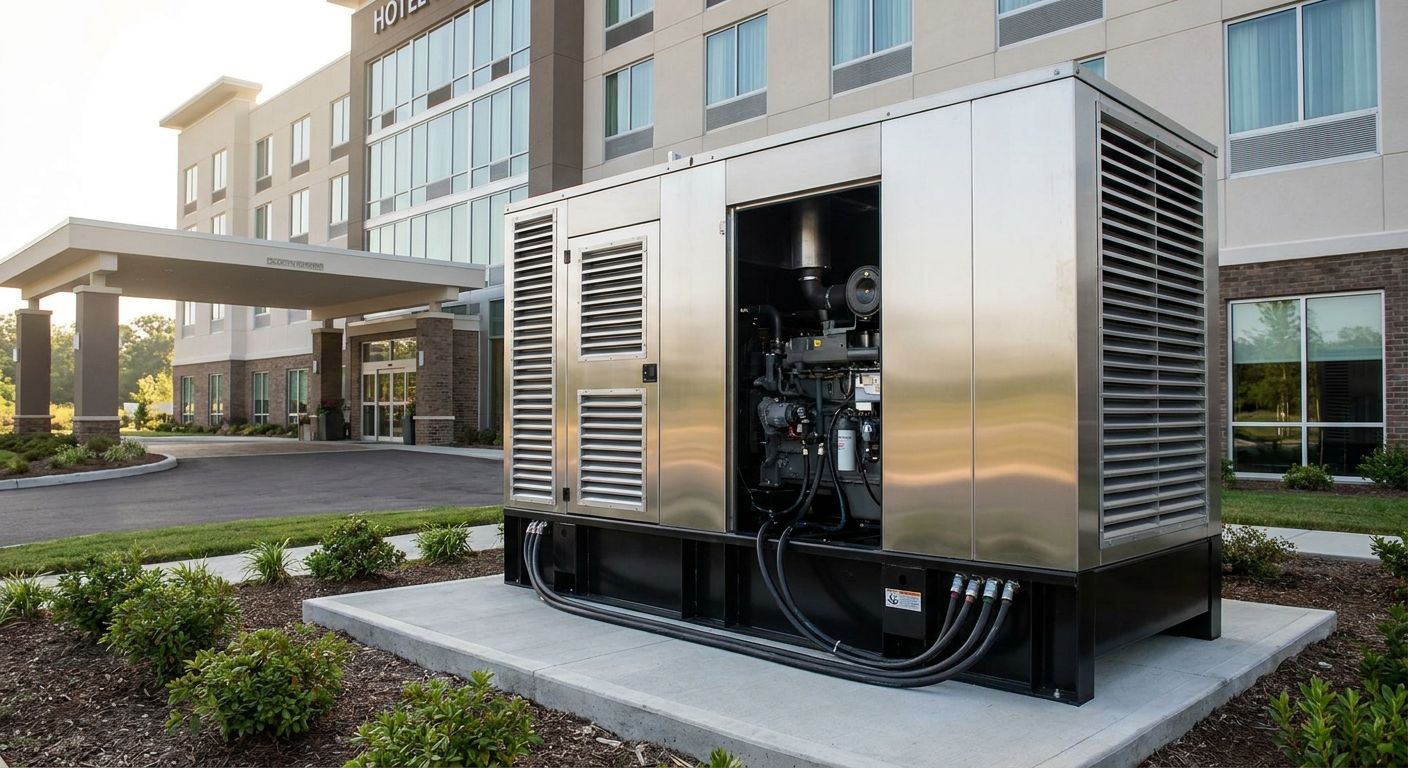
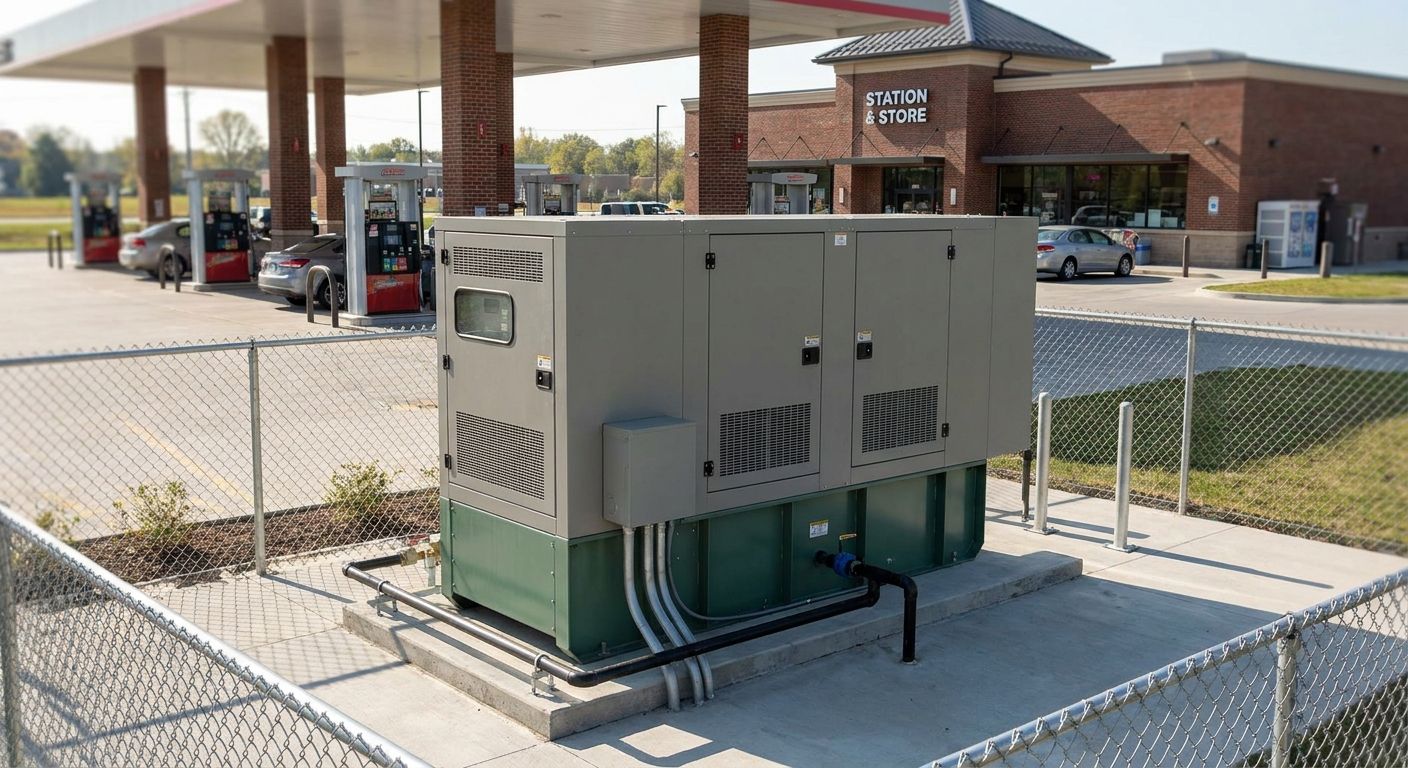
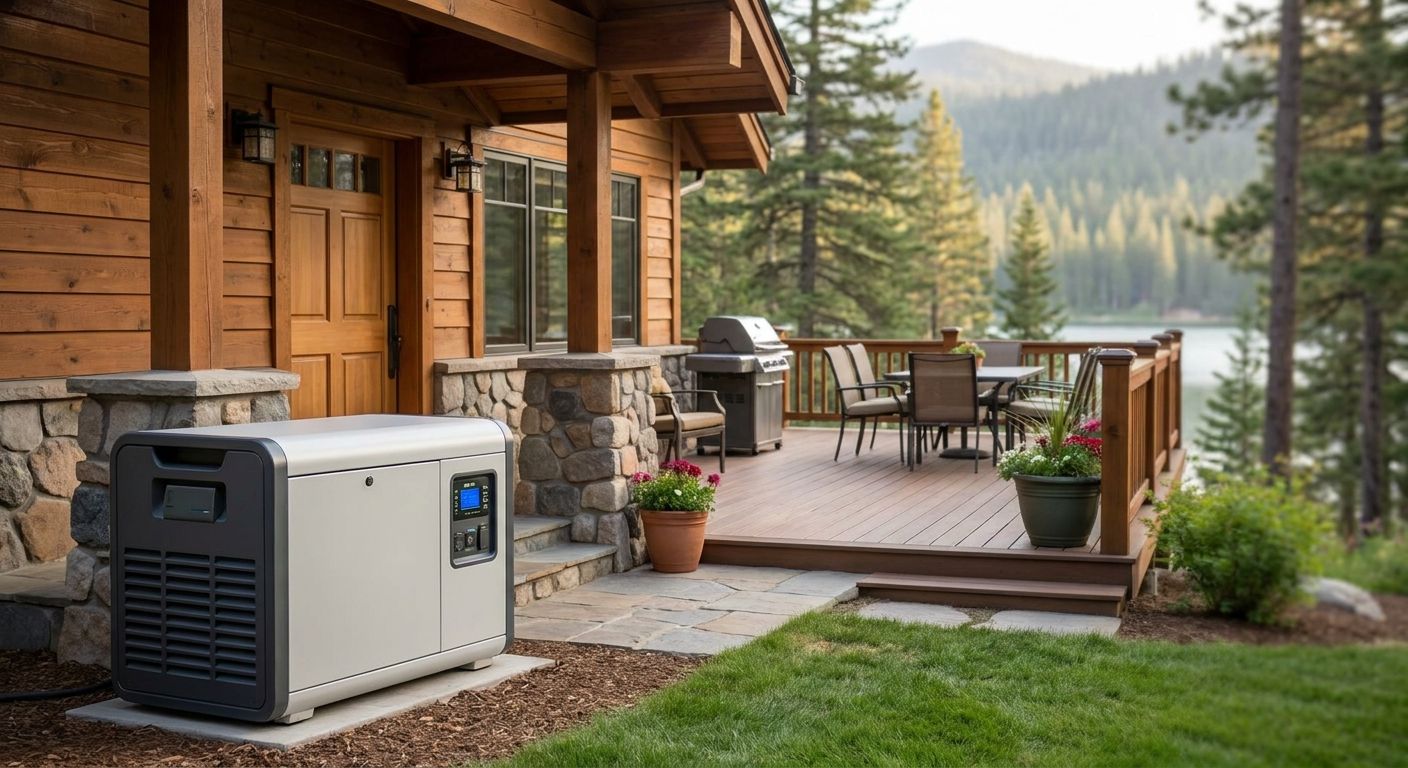
- A properly sized standby generator (typically 20kW-48kW for commercial coolers) restores power automatically within 10-30 seconds of an outage.
- Dry ice buys roughly 24 hours per 50 lbs in a sealed unit - a stopgap, not a plan for hurricane season in coastal Alabama.
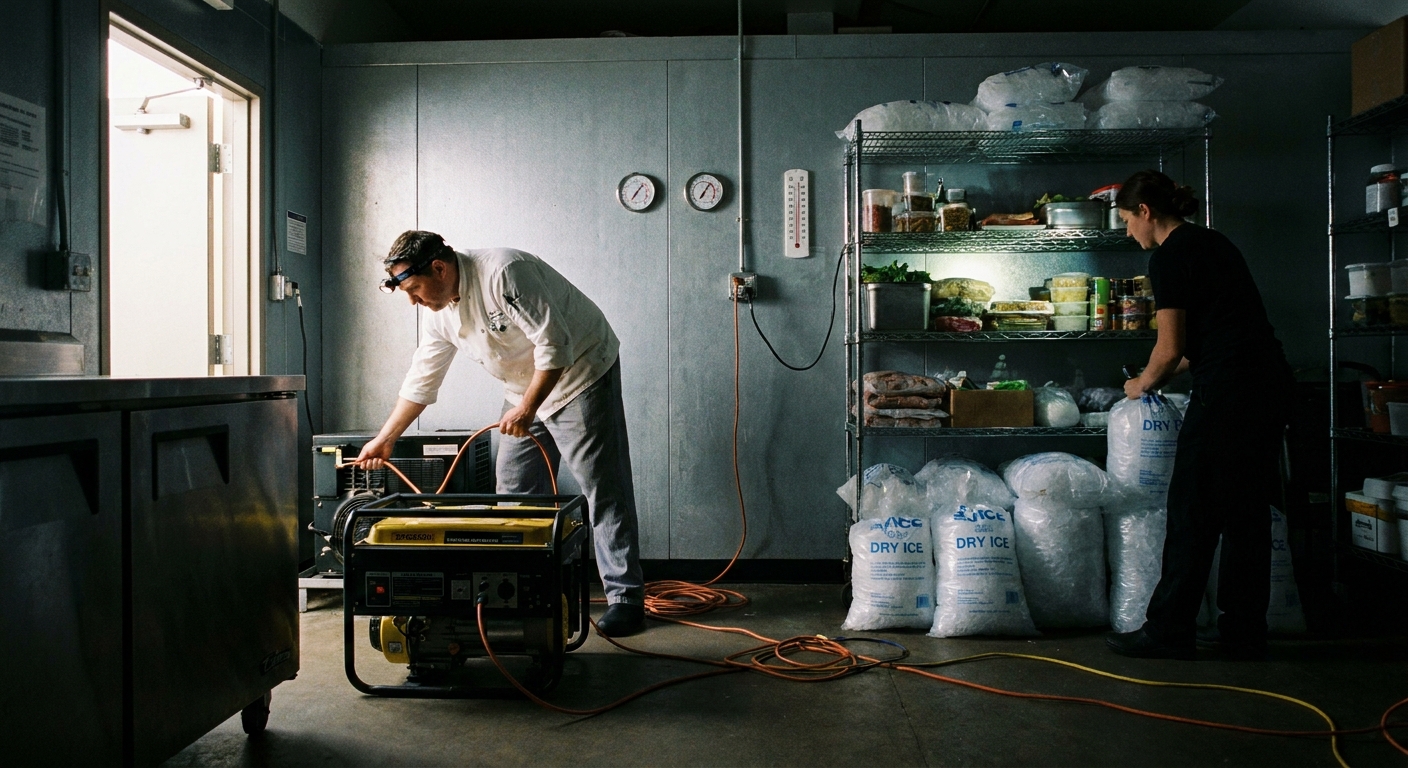
- Manual portable generators require correct amperage, a transfer switch, and constant monitoring - skip a straight extension cord into the compressor.
- Buy: a licensed-installed automatic standby generator sized to your compressor's startup load is the only fix that survives a multi-day outage.
Why this matters
A walk-in cooler running warm isn't a maintenance issue - it's a health-code and insurance issue. Restaurants, grocers, and butcher shops across Fairhope, Foley, Daphne, and Gulf Shores lose entire inventories every hurricane season when Gulf Coast storms knock out grid power for 2 to 5 days at a stretch. The Alabama Department of Public Health treats any perishable stock held above 41°F for more than 4 hours as a discard risk, and most commercial insurance policies won't cover spoilage caused by a preventable power failure. In 2026, the fix isn't a bigger cooler or a better thermometer - it's power that never actually stops.
What you'll need
- A working digital thermometer inside the cooler (not the built-in gauge alone)
- Dry ice or block ice as an immediate bridge (50 lbs of dry ice per 100 sq ft of cooler space, roughly)
- A portable generator rated for your compressor's running plus startup amps, or better, an automatic standby generator sized for the full unit
- A manual or automatic transfer switch - never a direct extension cord into a hardwired compressor
- A fuel plan: propane, diesel, or natural gas depending on generator type, with at least 48-72 hours of supply on hand
- A written outage log (time power dropped, time restored, internal temp readings every 2 hours)
The steps
1. Stop opening the door
Every door opening lets in warm, humid coastal air and knocks 3-5 degrees off your buffer. The moment power drops, tape a sign on the door and route staff around it. A sealed walk-in with good door gaskets holds temperature far longer than an open one - this single habit buys you the most time for free.
2. Log the start time and current temp
Write down the exact minute power failed and the reading on your digital thermometer. Health inspectors and insurance adjusters both ask for this timeline after a claim, and guessing costs you credibility and coverage. Check again every 2 hours if you have no backup power running yet.
3. Deploy dry ice or block ice immediately
Place dry ice on cardboard or a tray, never directly on food, spaced evenly rather than piled in one corner. Roughly 50 lbs of dry ice holds a mid-size walk-in near 35-38°F for about 24 hours if the door stays shut. This is a bridge, not a solution - it buys time to get a generator running or product moved, nothing more.
4. Connect a properly sized portable generator through a transfer switch
If you're running a portable unit, it needs to clear both the running watts and the startup surge of your compressor motor - startup draw can run 2-3 times higher than running draw for a split second. Connect through an installed transfer switch, never a cord fed through a cracked door or window; carbon monoxide from a generator inside or near an enclosed space kills faster than spoiled inventory costs. Confirm the generator is rated at least 20% above your calculated peak load before you flip it on.
5. Watch the compressor cycle for the first 15 minutes
A generator that's undersized will cause the compressor to short-cycle, stall, or trip a breaker within the first quarter hour. If you hear repeated clicking or the unit fails to hold a steady hum, shut it down and reassess load before you burn out the compressor itself, which turns a power problem into a $3,000-$8,000 repair problem.
6. Track internal temperature every 2 hours until power is stable
Don't trust that the generator is "handling it" - verify with the same digital thermometer you started with. If temps climb past 41°F for more than 4 cumulative hours, you're in discard territory per Alabama food-safety guidance, regardless of how the unit sounds.
7. Once grid power returns, hold the door shut for 30 more minutes
Compressors need a stabilization window before you start pulling product in and out again. Opening the door the second the lights come back on just reintroduces the same warm-air problem you spent hours fighting.
8. Debrief and size a permanent solution
If this is the second or third time you've run this playbook, a portable generator and a prayer isn't a plan - it's a recurring six-figure risk. An automatic standby generator sized correctly for your compressor's startup load switches on in 10-30 seconds, before spoilage clocks even start.
Get your walk-in cooler storm-ready
Free quote on a standby generator sized for your compressor load.
Troubleshooting
Compressor won't start on the generator. Your generator is undersized for the startup surge - recalculate at 2.5x running watts, not just running watts, before trying again.
Temperature climbs even with the generator running. Check the door seal first; a torn gasket lets warm air in faster than the compressor can compensate, generator or not.
Dry ice is gone in under 12 hours. The unit is being opened too often, or the space is larger than the dry ice quantity accounts for - recalculate at 50 lbs per 100 sq ft and stop door traffic.
Breaker trips repeatedly on a portable generator. You're running the cooler plus other loads (lights, freezers) on one circuit - isolate the cooler on its own line or upgrade generator capacity.
Power returns but the compressor won't restart. Many commercial units have a built-in delay (3-5 minutes) to protect the compressor from immediate re-strike - this is normal, not a fault.
You've lost track of how long you've been without power. This is exactly why the outage log in step 2 matters - without it, you can't defend a spoilage claim to your insurer or health inspector.
Tools and resources
- Digital thermometer with min/max memory, checked twice daily even outside outages
- Manual or automatic transfer switch, sized to your electrical panel
- A licensed electrical contractor's load calculation for your specific compressor model
- Baldwin County Generators for sizing, installation, and repair of Kohler and Generac standby units across Daphne, Fairhope, Foley, and Gulf Shores
- A written hurricane-season checklist reviewed before June 1 each year
What to do next
A generator sized off a guess is almost as risky as no generator at all - undersized units stall compressors, oversized units waste fuel and money. Get an actual load calculation done by a licensed electrical contractor before the next named storm reaches the Gulf, not during it.
FAQ
How long can a walk-in cooler stay cold without power?
A sealed, unopened walk-in cooler typically holds safe temperature for 4 to 6 hours without power. Opening the door repeatedly cuts that window significantly, and humid coastal air accelerates the temperature climb.
What size generator do I need to run a walk-in cooler?
Most commercial walk-in coolers need a generator sized 20% above the compressor's peak startup load, which often lands in the 15kW-30kW range for a single unit and higher for combined refrigeration systems. A licensed electrician should calculate this from your specific compressor's nameplate data.
Is dry ice better than block ice for a walk-in cooler outage?
Dry ice holds colder temperatures longer, roughly 24 hours per 50 lbs in a sealed space, compared to block ice which melts faster and adds moisture. Dry ice requires ventilation and should never touch food directly.
Can I plug a portable generator directly into my walk-in cooler?
No - always run power through an installed transfer switch, never a direct cord into a hardwired compressor. Direct connections risk backfeeding the grid and can damage the compressor or start a fire.
How much does a standby generator for a commercial cooler cost in 2026?
Commercial standby generator installations vary widely based on kW size, fuel type, and electrical work required, so get a site-specific quote rather than relying on a national average. Sizing correctly for your compressor's startup load matters more than chasing the lowest price.
What temperature is unsafe for a walk-in cooler during an outage?
Product held above 41°F for more than 4 cumulative hours is considered a discard risk under Alabama food-safety guidance. Track internal temperature every 2 hours during any outage to document whether that threshold was crossed.
Do automatic standby generators turn on by themselves?
Yes - an automatic standby generator detects a grid outage and switches on within 10 to 30 seconds, before a walk-in cooler's internal temperature has time to climb. Portable generators require someone on-site to start and connect them manually.
How often should I test my backup generator for the cooler?
Test monthly under load, not just a quick start-and-stop, and always before hurricane season begins each year. A generator that starts but can't handle the compressor's startup surge will fail exactly when you need it.
One last thing
Most spoilage claims in coastal Alabama don't come from generators failing to start - they come from generators that start but were never load-tested against the compressor's actual startup surge, so they stall or trip within the first hour of the outage that mattered most.