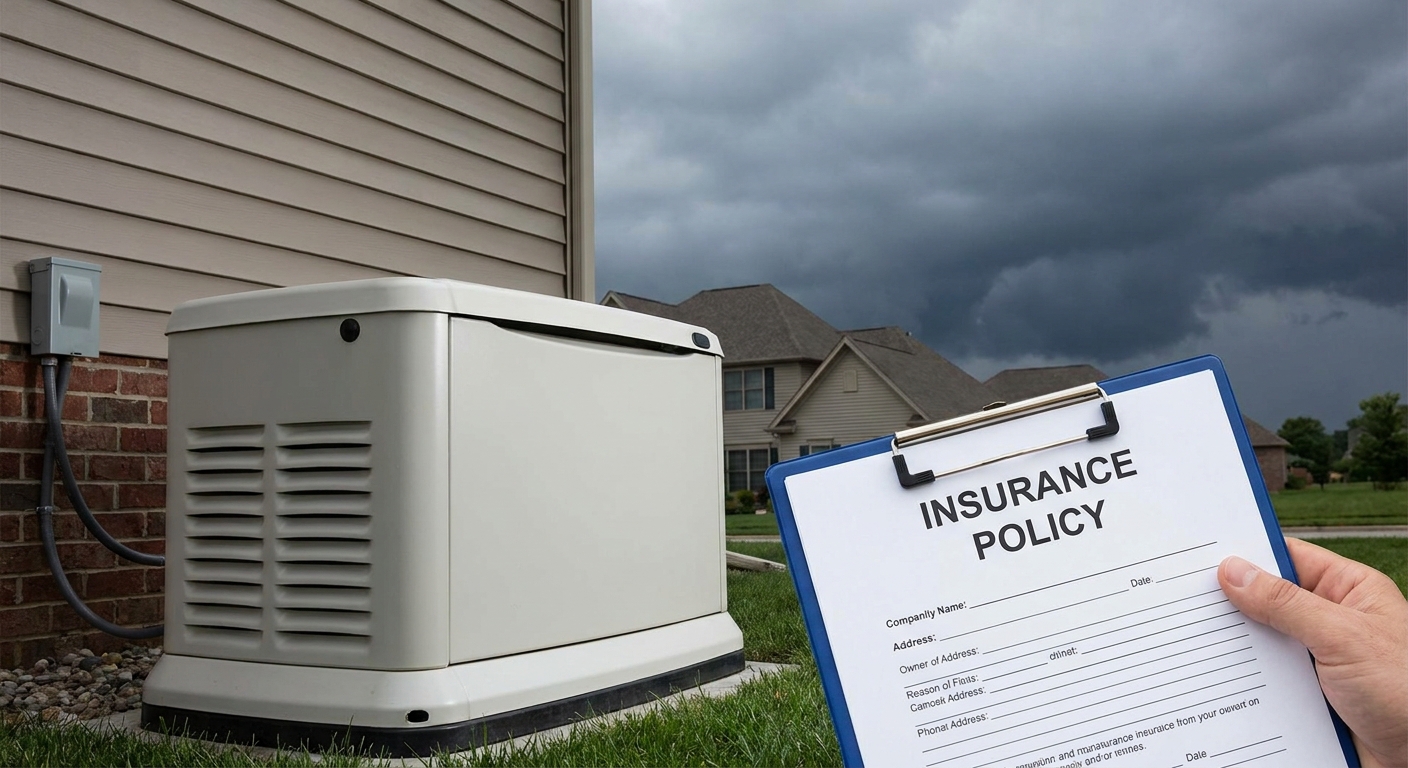
Standby generators cost $9,000 to $20,000 installed on the Alabama coast, and most homeowners policies won't fully cover one unless you tell the insurer it exists. This guide walks through exactly how to document, schedule, and insure a standby generator so a named storm doesn't leave you paying out of pocket twice.
- Standard homeowners policies often cap unscheduled equipment at $2,500 to $5,000 - well under a generator's replacement cost.
- Add a scheduled personal property endorsement listing the generator's make, model, and installed value to close the gap.
- Named-storm and hurricane deductibles run separately from your standard deductible in coastal Alabama counties - check both.
- Keep permit, installation, and annual maintenance records on file; adjusters deny claims without them.
- Verdict: get the generator professionally installed, scheduled on your policy, and serviced annually before hurricane season 2026 hits.
Why this matters
A standby generator sits outside on a concrete pad, wired into your electrical panel, exposed to the same wind and water that knocks out your grid power in the first place. Insurers classify it as fixed equipment, not a typical appliance, and that classification changes how a claim gets paid.
File the wrong paperwork, or none at all, and a $15,000 Kohler or Generac unit gets valued at depreciated scrap after a storm. Baldwin County Generators sees this every hurricane season: homeowners in Fairhope and Gulf Shores who installed a generator years ago but never told their carrier it existed as scheduled property.
What you'll need
- Your current homeowners or commercial property insurance policy documents
- The generator's make, model, and serial number (Kohler, Generac, Honeywell, or Briggs & Stratton unit details)
- An itemized invoice showing the installed replacement cost, not just the unit price
- Copies of the electrical permit pulled for the install
- A dated maintenance log or service contract, updated at least once a year
- Photos of the installed unit, pad, and disconnect switch, dated and stored digitally
- 20 to 30 minutes on the phone with your insurance agent
The steps
1. Confirm what your current policy actually covers
Most homeowners policies bundle "other structures" or "personal property" coverage with a low sub-limit, often $2,500 to $5,000, that applies to unscheduled equipment. A standby generator installed for $9,000 or more will not be made whole under that cap.
Call your agent and ask directly: "Is my standby generator covered as scheduled property, or is it lumped into my general personal property limit?" Get the answer in writing. This single question determines whether you need step 2.
Common mistake: assuming a generator is automatically covered because it's "attached to the house." Attachment doesn't equal adequate coverage.
2. Get an itemized replacement-cost estimate from your installer
Insurers schedule property based on documented value, not guesswork. Request an itemized invoice from your installer breaking out the generator unit, the transfer switch, the concrete pad, and labor separately.
A licensed electrical contractor's invoice carries more weight with an adjuster than a receipt scribbled on a napkin. This is also the number you'll use to set your endorsement limit in step 3.
3. File a scheduled personal property endorsement
Ask your agent to add a scheduled endorsement (sometimes called a rider) naming the generator specifically, with make, model, serial number, and the replacement-cost figure from step 2. This moves the unit out of the low sub-limit and into its own coverage line.
Expect a modest premium increase, typically a small percentage of the added coverage amount annually. That's the cost of making sure a named storm doesn't cost you the full replacement price out of pocket.
Common mistake: scheduling the generator once and never updating the endorsement after a maintenance upgrade or a full unit replacement.
4. Keep installation and permit records on file
Adjusters in coastal Alabama counties routinely ask for the electrical permit issued at install. Without it, a claim can get flagged as unpermitted work, which some carriers use to deny or reduce a payout.
Store a digital copy of the permit alongside the installer's invoice. If Baldwin County Generators or another licensed electrical contractor handled your install, request the permit copy directly from them if you don't have it.
5. Document the unit with dated photos and a maintenance log
Take photos of the generator, the transfer switch, and the mounting pad at installation, then again every 12 months. Pair the photos with a maintenance log showing oil changes, battery checks, and load tests.
A documented maintenance history proves the unit was in working, well-kept condition before the storm - which matters when an adjuster is deciding between full replacement and a depreciated payout.
6. Review your windstorm and named-storm deductible separately
Coastal Alabama policies frequently carry a separate named-storm or hurricane deductible, often a percentage of your dwelling coverage rather than a flat dollar amount. This deductible applies to storm-related generator damage the same way it applies to roof damage.
Ask your agent for the exact named-storm deductible in dollars, not just the percentage, so you know your out-of-pocket number before hurricane season 2026 arrives.
7. Schedule annual maintenance to protect both warranty and coverage
Manufacturer warranties on Kohler and Generac standby units typically require annual professional service to stay valid, and some insurers ask for proof of maintenance before honoring a claim on equipment that failed rather than storm-damaged equipment.
Book annual service before summer storm season each year and keep the invoice. This single habit protects the warranty, the insurance claim, and the generator's actual reliability during an outage.
8. Update your policy after any upgrade, move, or unit swap
If you upgrade from a 14kW unit to a 22kW unit, or move the generator to a new property, the scheduled endorsement from step 3 needs updating immediately. An outdated endorsement listing the wrong model or value can slow down or reduce a claim payout.
Get your generator storm-ready
Licensed installation and maintenance records that hold up with insurers.
Troubleshooting
- Claim denied for lack of maintenance records - Insurers can deny or reduce payouts when there's no service history. Fix: start a maintenance log today, even if you're years into ownership; a partial record beats none.
- Adjuster undervalues the unit - Depreciated or generic valuations happen when there's no itemized invoice on file. Fix: submit the original installer invoice and the scheduled endorsement figure together.
- Policy excludes named-storm damage outright - Some older or bare-bones policies exclude wind damage from named storms entirely. Fix: ask your agent directly whether named-storm exclusions apply, and add a rider if they do.
- Generator isn't listed as scheduled property - Coverage defaults to the low personal-property sub-limit. Fix: complete step 3 before hurricane season, not after a storm warning is issued.
- Flood damage isn't covered by homeowners insurance - Standard homeowners policies exclude flood damage regardless of scheduling. Fix: carry a separate flood policy (NFIP or private) if your generator pad sits in a flood-prone zone in Daphne, Fairhope, Foley, or Gulf Shores.
- Permit records went missing after installation - Missing permits slow claims processing. Fix: request a duplicate permit copy from your local building department or your installer.
Tools and resources
- Itemized installer invoice with generator make, model, and serial number
- Electrical permit copy from your county building department
- Annual maintenance log or service contract
- Dated photos of the installed unit, pad, and transfer switch
- Direct line to your insurance agent for the scheduled endorsement paperwork
- A licensed electrical contractor for installation, service, and permit documentation - Baldwin County Generators handles all three for standby generator owners across coastal Alabama
What to do next
Once your generator is scheduled on your policy and your maintenance log is current, the next move is making sure the unit itself is sized and installed correctly for your home's actual load. An undersized generator that trips under load during a storm creates a different kind of claim headache than a storm-damaged one.
FAQ
Does homeowners insurance cover a standby generator?
Homeowners insurance covers a standby generator only up to the policy's personal-property sub-limit, often $2,500 to $5,000, unless you add a scheduled endorsement. Without scheduling, a storm-damaged $12,000 unit won't be fully reimbursed.
How much does it cost to insure a standby generator against storm damage?
Scheduling a standby generator typically adds a small percentage of the unit's replacement value to your annual premium. The exact figure depends on your carrier and the generator's documented installed cost.
What documentation do I need to insure a standby generator?
You need the itemized installer invoice, the electrical permit, the make/model/serial number, and an updated maintenance log. Insurers use these to set the scheduled coverage amount and to process claims after storm damage.
Is hurricane damage to a generator covered under a named-storm deductible?
Yes, coastal Alabama policies typically apply the named-storm deductible to wind-related generator damage, separate from your standard deductible. Ask your agent for the dollar amount, since it's often calculated as a percentage of dwelling coverage.
Does homeowners insurance cover flood damage to a standby generator?
No, standard homeowners insurance excludes flood damage regardless of whether the generator is scheduled. You need a separate flood policy through NFIP or a private flood insurer for that coverage.
Will my insurance claim be denied if I skip annual generator maintenance?
A denied claim is common when there's no maintenance record showing the unit was in working condition before storm damage occurred. Keep a dated service log every year to avoid this.
Do I need a permit for my standby generator to file an insurance claim?
Most insurers ask for the electrical permit when processing a storm-damage claim on installed equipment. Unpermitted installs can get flagged and delay or reduce your payout.
What size standby generator needs the most insurance attention?
Any unit above the standard personal-property sub-limit, generally 14kW to 22kW whole-home units costing $9,000 or more installed, needs a scheduled endorsement. Smaller portable units rarely require this step.
One last thing
The insurance step most homeowners skip isn't the endorsement paperwork - it's updating that paperwork after a maintenance upgrade or a unit swap. A scheduled endorsement listing a generator you replaced three years ago is functionally the same as having no coverage at all when the claim comes in.