A 22kW Kohler or Generac standby generator burns roughly 2-3 gallons of propane per hour at full load, which means the tank size and the fittings between it and the generator matter as much as the generator itself. This guide walks through the full install sequence, from sizing the tank to the final leak test, so you know what a licensed contractor should be doing on your property.
- A 500-gallon propane tank runs a 22kW standby generator for roughly 5-7 days at half load.
- Alabama and NFPA 58 code require at least 10 feet of clearance between an aboveground tank and any building opening.
- Underground 500-gallon tanks cost $1,500-$3,500 installed before the generator hookup in coastal Alabama.
- Never connect the regulator yourself if you smell gas during the pressure test - call a licensed installer immediately.
Why this matters
Hurricane season along the Alabama coast runs June through November, and a standby generator without a properly sized and code-compliant propane supply is just an expensive lawn ornament. Baldwin County inspectors check tank setback distances, regulator placement, and shutoff valve access before they sign off on a generator install in Daphne, Fairhope, Foley, or Gulf Shores. Get any of those wrong and you're re-digging a trench or moving a 500-gallon tank after the fact, which costs more than doing it right the first time in 2026.
Propane installation isn't a weekend DIY project the way mounting a generator pad can be. Gas line sizing, regulator selection, and tank placement all fall under Alabama's licensed contractor requirements, and most propane suppliers won't fill a tank that hasn't passed a leak test from a certified installer.
What you'll need
- Propane tank sized to your generator's hourly burn rate (100, 250, 500, or 1,000 gallons)
- First-stage and second-stage regulators rated for your generator's BTU draw
- Buried or above-ground copper or polyethylene gas line, sized per your run length
- Shutoff valve installed within reach of the generator
- Concrete or gravel pad for the tank base
- Manometer for the final pressure test
- Local permit paperwork (Baldwin County requires a permit for any fixed propane installation over 125 gallons)
The steps
1. Calculate your generator's propane demand
Check the generator's spec plate for BTU/hour at full load, then convert to gallons per hour (1 gallon of propane equals roughly 91,500 BTU). A 22kW unit typically draws 2.4 gallons per hour at full load and closer to 1.6 gallons per hour at half load, which is the more realistic outage scenario. Skipping this step is the single most common mistake homeowners make - they buy a 250-gallon tank for a 22kW unit and run dry three days into a prolonged outage.
Expected outcome: a target runtime in days, based on tank size divided by hourly burn at typical load.
2. Choose tank size and placement
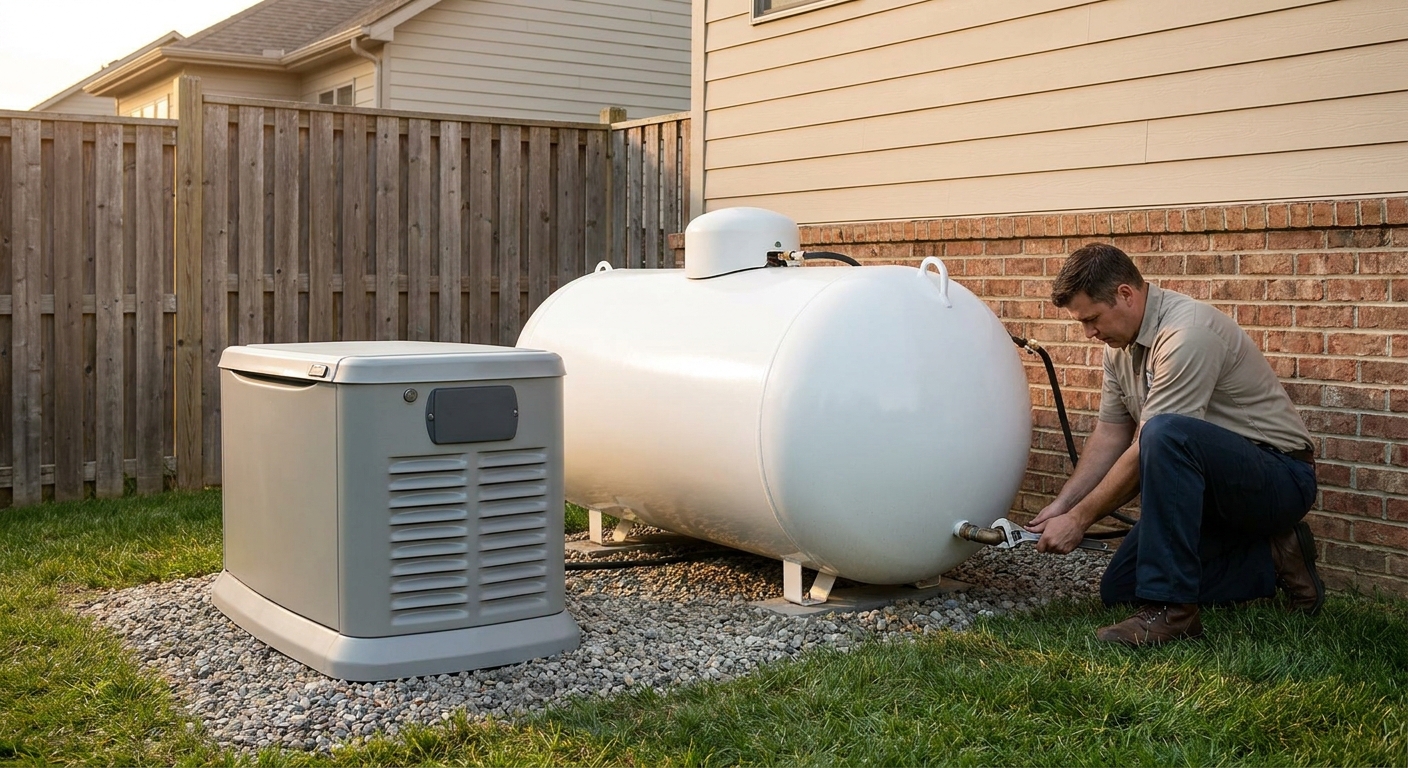
Match tank size to how long you want to run unattended: a 250-gallon tank covers roughly 3 days at half load, a 500-gallon tank covers 5-7 days, and a 1,000-gallon tank stretches past two weeks. NFPA 58 and most Alabama municipalities require at least 10 feet of clearance between an aboveground tank and any building opening, and 10 feet from an ignition source like an AC condenser. Underground tanks reduce the visible footprint but need a minimum 10-foot separation from the foundation and a locate call before any digging starts.
Common mistake: placing the tank uphill or downhill from the generator without accounting for line pressure drop over distance.
3. Pour the pad or dig the trench
Aboveground tanks sit on a poured concrete pad or a compacted gravel bed at least 4 inches thick, leveled so the tank doesn't settle unevenly over its lifespan. Underground tanks require a trench dug to the manufacturer's burial depth spec, usually 6-24 inches depending on tank size and local frost line - not a concern in coastal Alabama, but soil drainage is. Call 811 before any digging to get utility lines marked; this is free and required by law regardless of tank size.
Expected outcome: a stable, code-compliant base ready for the tank to be set.
4. Set the tank and connect the first-stage regulator
Once the tank is placed, the first-stage regulator mounts directly on the tank's service valve and steps pressure down from tank pressure (which varies with temperature, roughly 100-200 psi in Alabama summers) to about 10 psi for the line run. This connection has to be torqued to the regulator manufacturer's spec - overtightening cracks the fitting, undertightening leaks under pressure.
Why it matters: the first-stage regulator is the point most propane leaks originate from when installers skip the torque spec.
5. Run and bury the gas line
Size the line based on total run length and BTU load - a 22kW generator 50 feet from the tank typically needs 3/4-inch line, while runs over 100 feet may need to step up to 1-inch to avoid pressure drop. Bury lines at least 12 inches deep per most Alabama county codes, with tracer wire run alongside for future locates. Copper and polyethylene are both approved materials; polyethylene needs a rated transition fitting anywhere it comes above grade.
Common mistake: undersizing the line on long runs, which starves the generator under full load and trips it into a fault code mid-outage.
6. Install the second-stage regulator and shutoff valve
The second-stage regulator mounts near the generator and drops line pressure from 10 psi down to the 11-14 inches of water column most residential standby units require. A manual shutoff valve goes between the regulator and the generator's gas inlet, positioned where a homeowner can reach it without tools during an emergency.
Expected outcome: correct working pressure delivered right at the generator's gas inlet fitting.
7. Pressure test every connection
Use a manometer to confirm working pressure matches the generator manufacturer's spec, typically 11 inches water column for natural gas-converted units and up to 14 inches for straight propane setups. Apply a soap-water solution to every threaded joint and watch for bubbles under full tank pressure before the system ever sees a flame. This is the step licensed installers won't skip, and it's the reason a professional install includes documentation you can hand to your insurance company.
Common mistake: testing only at low pressure and missing a leak that only shows up once the tank is filled and pressurized.
8. Schedule the propane fill and final inspection
Most Alabama propane suppliers require a signed installer certification before they'll do the first fill on a tank over 125 gallons. Book the Baldwin County inspection before the fill if your permit requires it - inspectors want to see the tank setback, buried line depth, and shutoff valve access before propane goes in.
Expected outcome: a filled, inspected, code-compliant propane system ready to power the generator on the next test run.
Get your propane and generator install quoted
Licensed installers sizing tanks and generators across coastal Alabama.
Troubleshooting
- Generator won't start on propane but runs on the test switch: check that the shutoff valve is fully open - a partially closed valve mimics an empty tank.
- Low power output under load: usually an undersized gas line choking flow at peak BTU demand; measure line pressure under load, not just at idle.
- Regulator freezes in cold snaps: rare on the Gulf Coast, but a first-stage regulator without a vent cover can ice over during a hard freeze; install a regulator with a built-in vent screen.
- Propane smell near the tank: shut the service valve immediately and call a licensed technician - do not attempt to tighten fittings under pressure yourself.
- Tank reads full but generator runs out fast: propane tanks are only filled to 80% of capacity by design (this is normal, not a leak) - a "500-gallon" tank holds 400 usable gallons.
- Inspection fails on setback distance: measure from the tank's relief valve outlet, not the tank body - this is the measurement most homeowners get wrong the first time.
Tools and resources
- Manometer (pressure test)
- Torque wrench rated for regulator fittings
- Soap-water leak test solution
- Baldwin County permit application for propane installations over 125 gallons
- A licensed installer contact for the final sign-off - Baldwin County Generators handles sizing, installation, and the propane hookup as part of the generator install
What to do next
Once the propane system passes inspection, the next step is scheduling your generator's first load-bank test - this confirms the unit can actually pull full rated power through the new gas line before hurricane season arrives. Don't wait until a storm warning to find out the regulator was undersized.
FAQ
How do I install a propane tank for a standby generator?
Installing a propane tank for a standby generator means sizing the tank to your generator's BTU draw, setting it at the required 10-foot clearance from your home, running and burying a properly sized gas line, and pressure-testing every fitting before the first fill. Alabama code requires a licensed installer to sign off on tanks over 125 gallons before a propane company will fill it.
What size propane tank do I need for a 22kW generator?
A 22kW generator burns roughly 2.4 gallons of propane per hour at full load, so a 500-gallon tank covers about 5-7 days of half-load runtime during an extended outage. Homes wanting two weeks of backup power typically go with a 1,000-gallon tank.
How far does a propane tank need to be from the house?
NFPA 58 and most Alabama municipalities require at least 10 feet of clearance between an aboveground propane tank and any building opening or ignition source. Underground tanks need the same 10-foot separation from the foundation.
Can I install my own propane tank in Alabama?
You can dig the trench and pour the pad yourself, but connecting regulators, running gas lines, and the final pressure test require a licensed installer under Alabama code. Propane suppliers generally won't fill a tank over 125 gallons without installer certification.
How much does it cost to install a propane tank for a generator?
An underground 500-gallon propane tank installation runs $1,500-$3,500 in coastal Alabama before the generator hookup itself, depending on trench length and soil conditions. Aboveground tanks cost less to install but need more visible clearance space.
How long does a 500-gallon propane tank last with a standby generator?
A 500-gallon tank holds about 400 usable gallons (tanks fill to 80% capacity by design) and runs a 22kW generator for roughly 5-7 days at half load. Full-load operation burns through it in under 3 days.
Do I need a permit to install a propane tank in Baldwin County?
Yes, Baldwin County requires a permit for any fixed propane installation over 125 gallons, and an inspector checks tank setback, buried line depth, and shutoff valve access before final approval. Get the permit before digging, not after.
What's the difference between underground and aboveground propane tanks?
Underground tanks bury the tank body below grade with only the dome and valve visible, keeping the yard clear but requiring a deeper trench and utility locate. Aboveground tanks cost less to install and are easier to service, but need more visible clearance space around the home.
One last thing
Most homeowners size the generator first and the propane tank as an afterthought - it should be the other way around. A 1,000-gallon tank paired with a 22kW Generac or Kohler unit means you're not calling for a propane refill mid-storm when every truck in Baldwin County is backed up three days deep with emergency deliveries.