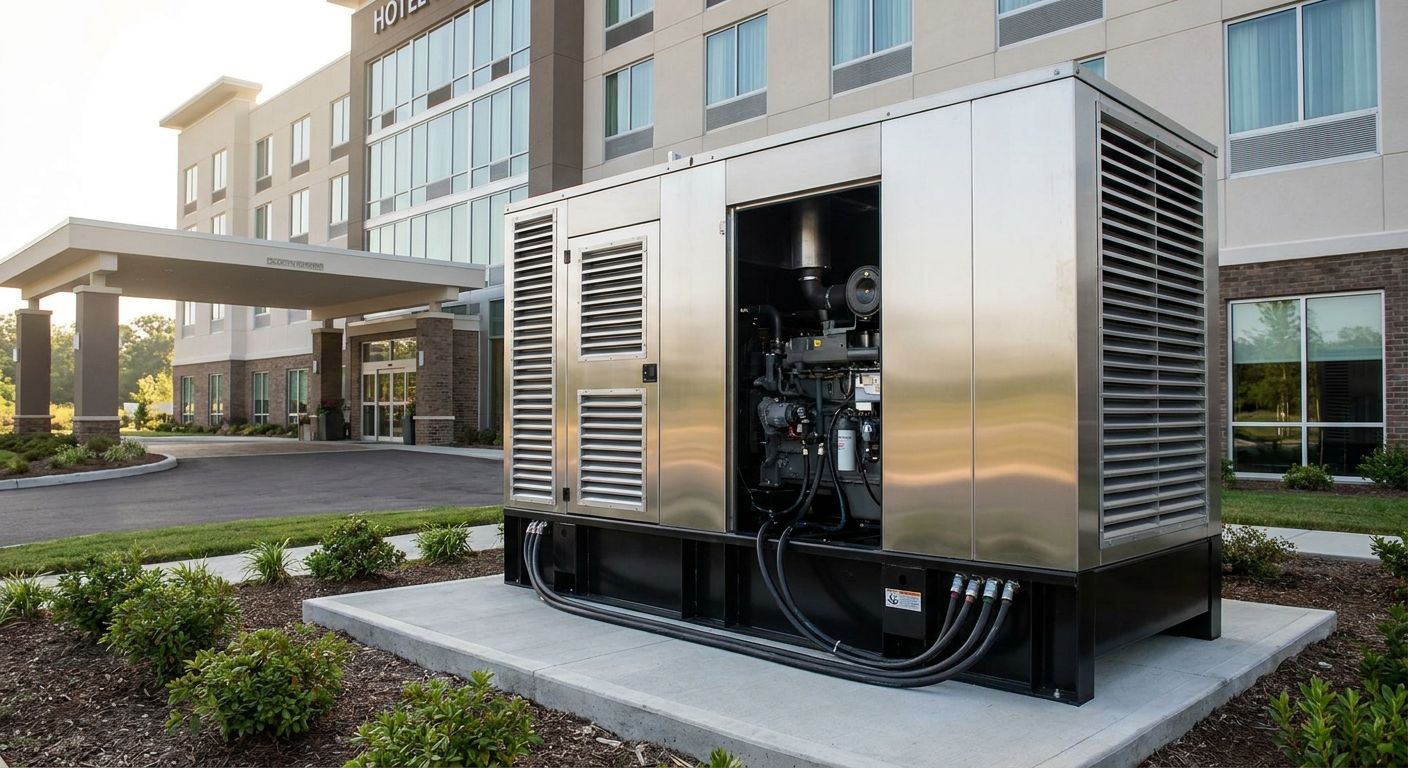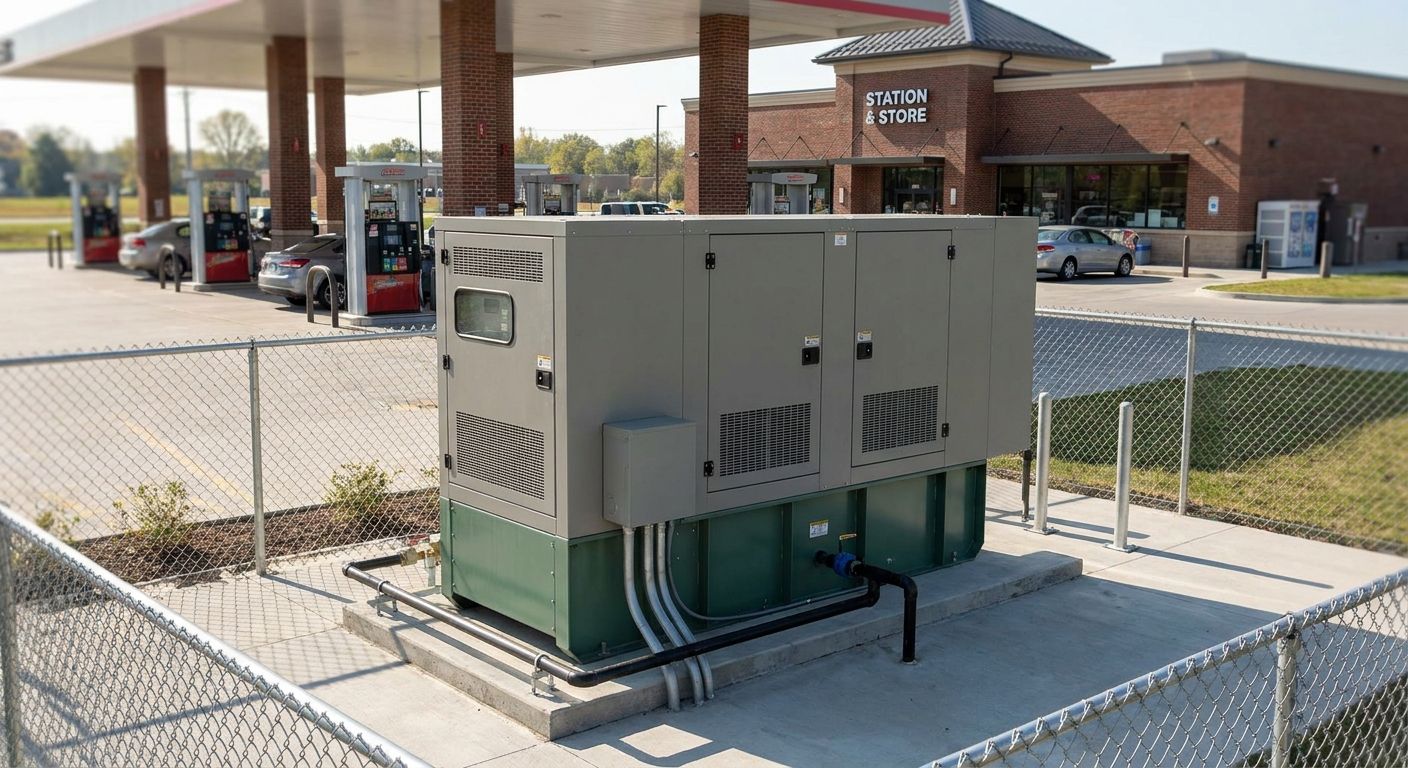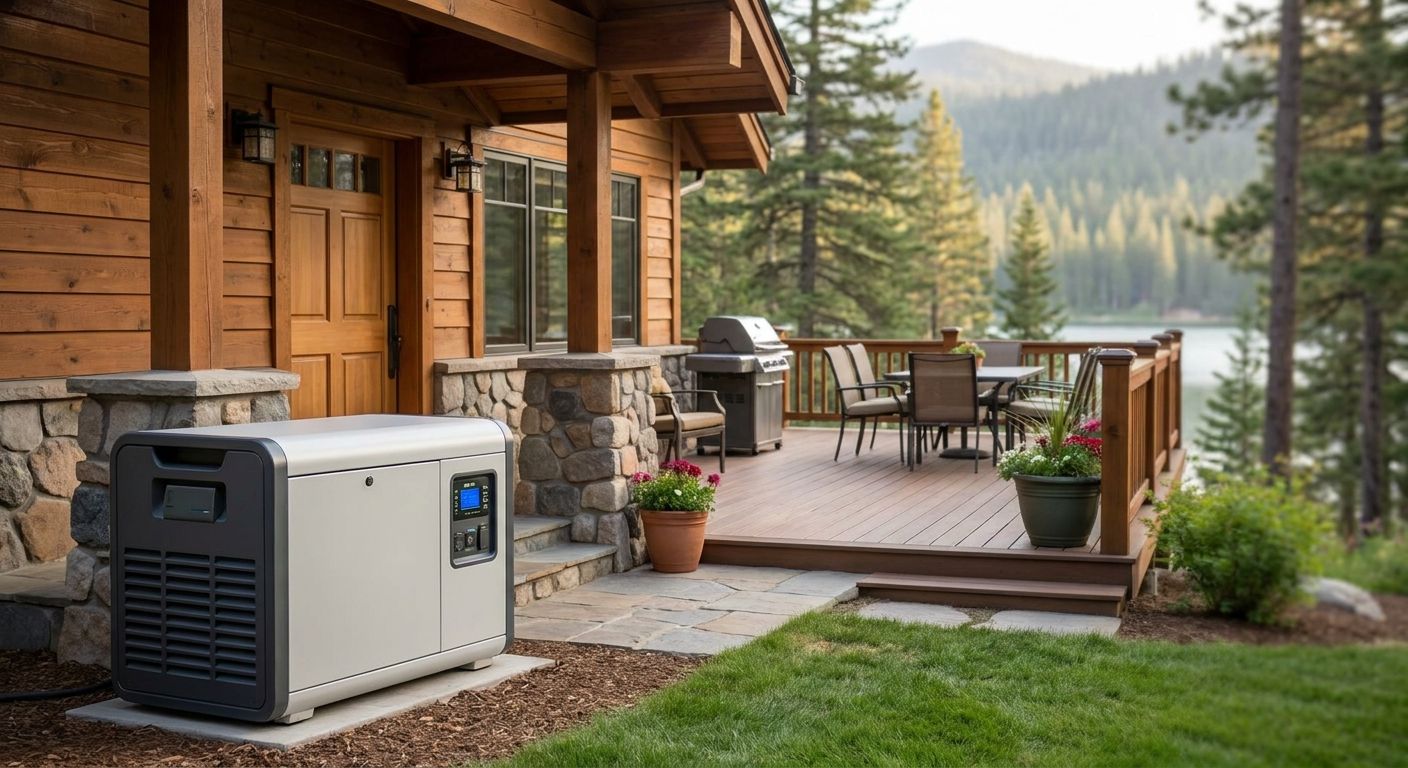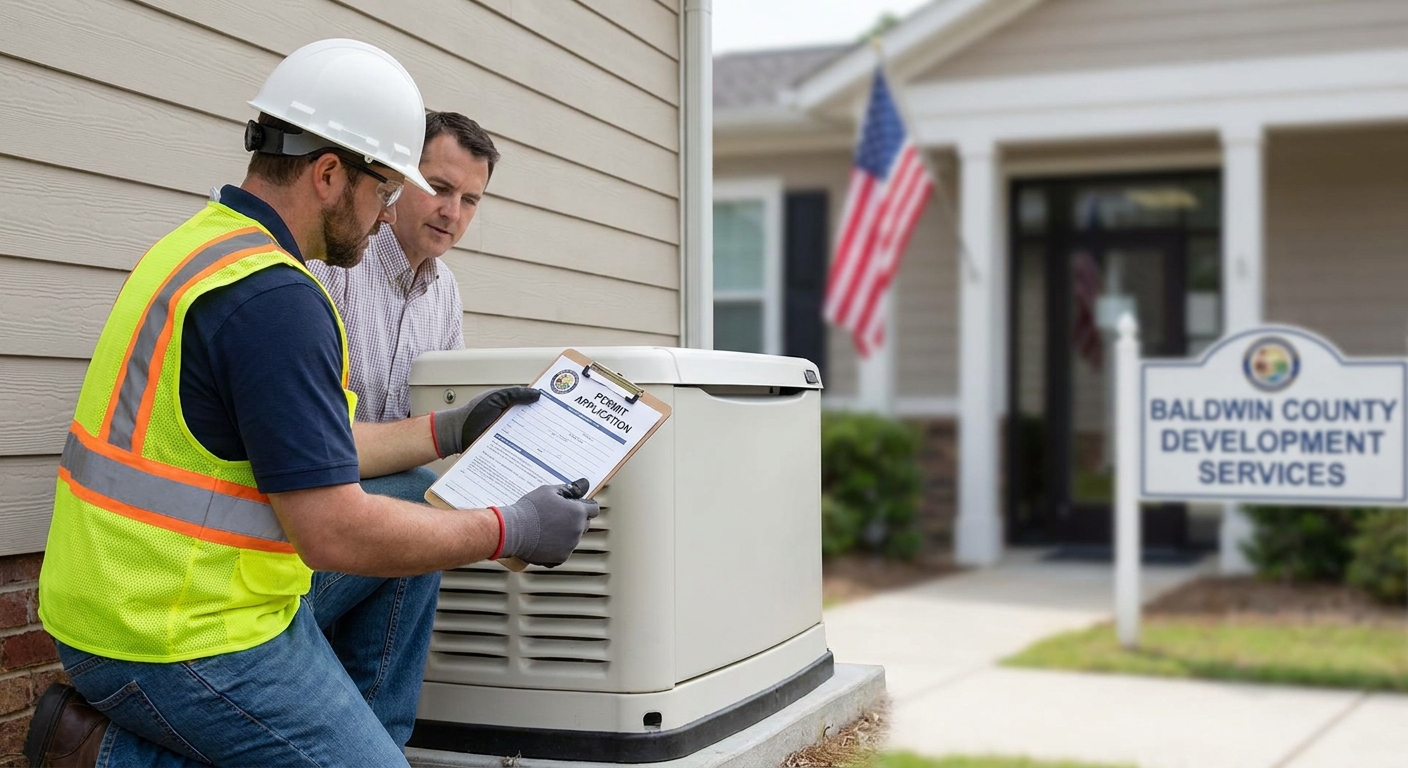
Installing a standby generator in Baldwin County means pulling permits before the crew shows up with equipment - skip that step and you risk a red tag, a failed inspection, or a homeowner's insurance headache down the road.
TL;DR
Getting a generator installation permit in Baldwin County requires an electrical permit (and sometimes a building or gas permit) from either the Baldwin County Building Department or the city where you live - Fairhope, Daphne, Foley, and Gulf Shores each run their own permitting desk. Expect fees in the $75-$250 range, a site plan showing setback distances, and one or two inspections before the generator gets turned on. Verdict: hire a licensed electrical contractor to pull the permit for you - most standby generator installers in coastal Alabama, including Baldwin County Generators, handle this as part of the install in 2026, and doing it yourself as a homeowner adds weeks to the timeline without saving meaningful money.
Why this matters
A standby generator isn't a plug-in appliance. It's a permanent electrical and often gas-fired system tied into your home's main panel, and every municipality in Baldwin County treats it that way.
Skip the permit and you're not just risking a fine. Unpermitted electrical work can void manufacturer warranties on Kohler, Generac, and Briggs & Stratton units, and it can complicate a home sale later when a buyer's inspector flags a generator with no paper trail. Insurance adjusters ask about permits too, especially after storm damage claims tied to backup power systems.
Hurricane season runs June through November on the Gulf Coast, and permit offices in Fairhope and Foley get backed up every spring as homeowners rush to get storm-ready before the first named system. Starting the permit process in January or February beats waiting until a tropical depression is already in the forecast.
What you'll need
- Site address and a copy of your property survey or plot plan
- Generator specs: brand, model, kW rating (most residential units in coastal Alabama run 14kW to 26kW)
- Fuel source confirmation - natural gas, propane, or liquid propane tank size
- Manufacturer installation manual or spec sheet (many building departments require this for setback and clearance verification)
- Electrical load calculation or transfer switch documentation
- A licensed electrical contractor's information, since most Baldwin County jurisdictions require a licensed contractor to pull the permit, not the homeowner
- Permit fee payment, typically $75-$250 depending on the municipality and system size
- Two to four weeks of lead time before your target install date
The steps
1. Confirm your jurisdiction
Baldwin County has a patchwork of permitting authorities, and the wrong office means a rejected application. If your property sits inside Fairhope, Daphne, Foley, or Gulf Shores city limits, that city's building or planning department handles the permit. If you're in an unincorporated area, the Baldwin County Building Department is your point of contact. Call ahead in 2026 - city limits shift as annexations happen, and a property that was unincorporated in 2020 might now sit inside Foley's boundary.
Common mistake: applying through the county when the property was annexed into a city years ago. This gets caught at review and adds a week to the timeline.
2. Get a site plan with setback distances
Every jurisdiction wants to see where the generator sits relative to property lines, windows, doors, and the gas meter. Most codes in coastal Alabama require at least 18 inches from combustible walls and 5 feet from windows or fresh air intakes, though exact numbers vary by manufacturer and local amendment.
A rough hand-drawn site plan with measured distances is usually enough - you don't need a surveyor. This step exists because carbon monoxide exhaust placement is the single most common reason generator permits get bounced back for revision.
3. Submit the electrical permit application
This is the core permit and covers the transfer switch, wiring to the main panel, and the generator's electrical connection. Applications typically ask for the contractor's license number, the generator's amperage draw, and a diagram of the transfer switch location.
Most Baldwin County municipalities process electrical permits within 5-10 business days in 2026, faster if the contractor submitting it has a track record with that office. First-time applicants without a licensed contractor on file often see longer review times.
Common mistake: submitting without the contractor's active license number attached. Applications get rejected outright, not flagged for correction, so double-check this before you submit.
4. Submit a gas permit if applicable
If the generator runs on natural gas or a propane line rather than a standalone tank, a separate gas permit usually applies. This covers the gas line sizing and connection to the generator's fuel intake.
Some jurisdictions bundle this with the electrical permit; others require it as a stand-alone application with its own fee, often $50-$100. Ask the permit office directly which structure applies to your address - this is the detail that trips up the most homeowners doing this without a contractor.
5. Schedule the rough-in inspection
Once wiring and gas lines are in place but before the generator is fully enclosed or covered, most jurisdictions require a rough-in inspection. An inspector checks conduit runs, panel connections, and gas line pressure testing before anything gets buttoned up.
This step catches problems while they're still cheap to fix. An inspector who finds an issue after drywall or siding is closed up turns a same-day fix into a multi-day one.
Common mistake: scheduling the inspection too early, before the transfer switch wiring is complete. Inspectors will reschedule, and that adds another week to the queue during peak spring demand.
6. Complete the final inspection and close the permit
After the generator is installed, tested, and running, a final inspection confirms the system matches the approved plans - correct clearances, proper grounding, and a functioning transfer switch that isolates the home from the utility grid during an outage.
Once the inspector signs off, the permit closes and the jurisdiction issues a certificate of completion or equivalent record. Keep this document. It's what an insurance adjuster or a home buyer's inspector will ask to see.
Troubleshooting
The permit application got rejected for missing setback documentation. Resubmit with a measured site plan showing distances from the unit to property lines, windows, and the gas meter - most offices want this in writing, not just verbal confirmation.
The inspector flagged the generator too close to a window or door. Relocation is usually required rather than a variance approval, since carbon monoxide clearance rules are strict along the Gulf Coast. Confirm the new location before rescheduling the inspection.
The gas permit is taking longer than the electrical permit. These often run on separate timelines through separate reviewers even within the same office. Ask if they can be expedited together, or plan the install date around the slower of the two.
Property is in an HOA with additional rules. Some neighborhoods around Fairhope and Gulf Shores have covenants requiring generator screening, setback from shared property lines, or noise restrictions. Check HOA documents before the permit application, not after installation.
Permit expired before the install finished. Most jurisdictions issue permits with a 6-12 month active window. If storm season delays parts or scheduling, ask about an extension before the expiration date rather than after.
Homeowner tried to pull the permit without a licensed contractor. Several Baldwin County jurisdictions restrict electrical permits to licensed contractors only, not property owners doing the work themselves. Confirm this rule with your specific city or county office before assuming you can self-permit.
Tools and resources
- Property survey or plot plan (usually available through your county's tax assessor records)
- Manufacturer installation manual (Kohler, Generac, Briggs & Stratton all publish these online)
- Contractor license verification, checkable through the Alabama Electrical Contractors Board
- A licensed installer who already has a working relationship with local permit offices - Baldwin County Generators handles this step as part of standard installs across Daphne, Fairhope, Foley, and Gulf Shores
What to do next
Once the permit is approved and the site plan is set, the next decision is sizing - a 14kW unit covers essential circuits, while a 22kW-26kW whole-home system covers central air and major appliances during a multi-day outage. Get the generator sized correctly before you finalize the permit application, since the kW rating affects the electrical load calculation the inspector reviews.
FAQ
Do I need a permit to install a generator in Baldwin County? Yes. Standby generators require an electrical permit at minimum, and often a gas permit, from either the Baldwin County Building Department or the city building office if your property sits inside Fairhope, Daphne, Foley, or Gulf Shores city limits.
How much does a generator installation permit cost in Baldwin County? Electrical permit fees typically run $75-$250 depending on the jurisdiction and system size, with a separate gas permit fee of roughly $50-$100 if a gas line connection applies.
How long does it take to get a generator permit approved? Most electrical permits process in 5-10 business days in 2026, though spring months before hurricane season see longer queues at busy offices like Fairhope and Foley.
Can a homeowner pull their own generator permit? In most Baldwin County jurisdictions, no - electrical permits require a licensed contractor's information on the application, not just a homeowner's name.
What inspections are required for a standby generator? A rough-in inspection before the wiring and gas lines are closed up, and a final inspection after the system is running and tested. Both must pass before the permit closes.
Is a gas permit always required for a standby generator? Only if the unit runs on natural gas or a connected propane line rather than a standalone portable tank. Confirm with your local permit office since some bundle this into the electrical permit.
What happens if I install a generator without a permit? Unpermitted work can void manufacturer warranties, complicate a home sale, and create problems with insurance claims after storm damage. Some jurisdictions also issue fines and require retroactive permitting with an added inspection.
Does the permit expire before installation is finished? Most permits stay active for 6-12 months. If delays push past that window, contact the permit office about an extension before the expiration date.
One last thing
The detail most homeowners overlook: permit offices in Baldwin County start seeing application backlogs by April every year as hurricane season approaches, and by August the wait for inspection scheduling can stretch past two weeks. Pulling the permit in the off-season - January through March - is the single easiest way to have a working standby generator installed and inspected before the first storm watch of 2026.