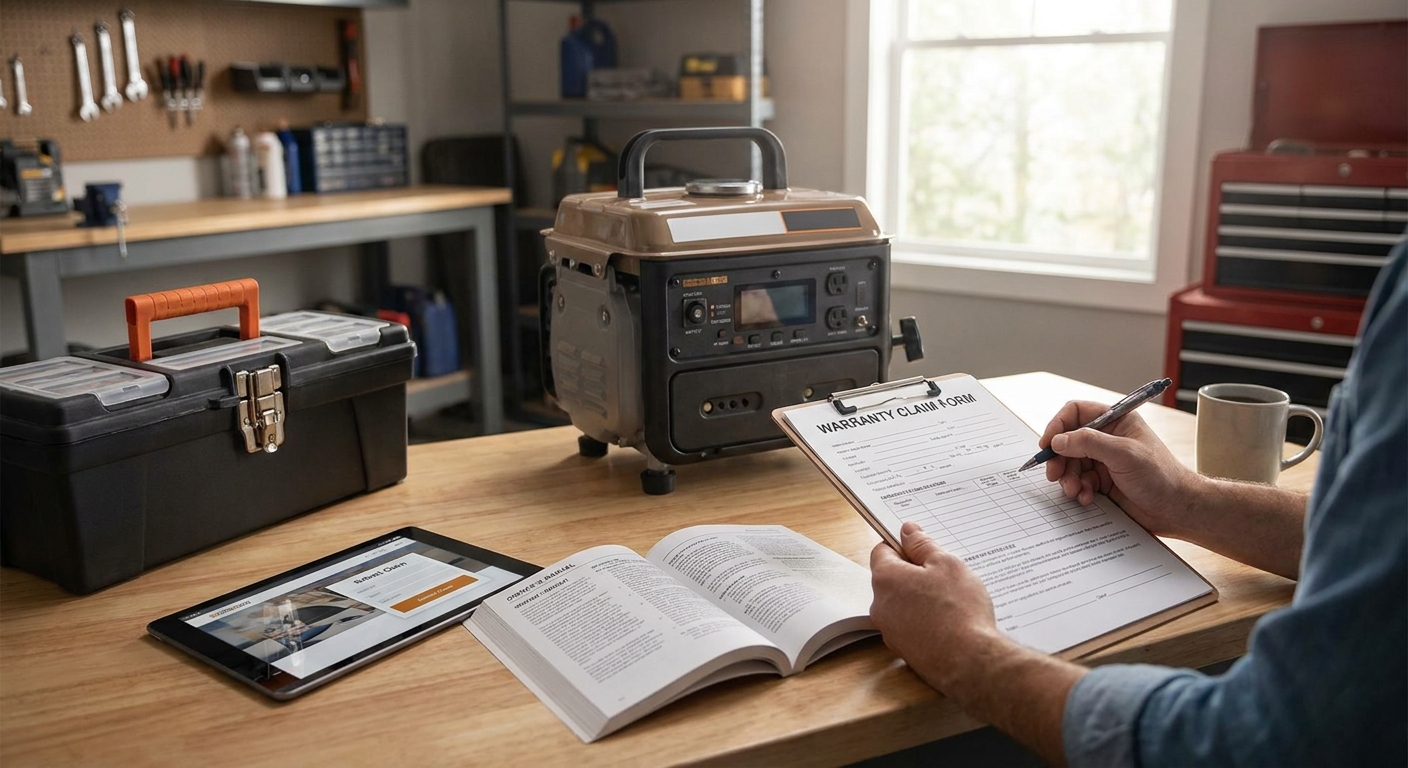
Filing a generator warranty claim is mostly a paperwork problem, not a mechanical one - most denials trace back to missing maintenance records or a unit that was never registered, not the actual failure. This guide walks through the exact sequence that gets a claim approved instead of stalled for weeks.
TL;DR
How to file a generator warranty claim in 2026: confirm registration status, document the fault with photos and run-hour readings, pull your service records, then route the claim through your installing dealer before going straight to the manufacturer. A Kohler or Generac standby unit typically carries a 5-year or 10-year limited warranty, but coverage evaporates fast if annual maintenance wasn't logged. Verdict: file through your licensed installer first - Buy this approach over a DIY manufacturer call, every time.
Why this matters
A standby generator sitting outside in Baldwin County salt air and summer humidity works harder than one in a dry inland garage. When something fails - a bad transfer switch, a cracked block, a control board that won't sync - the warranty is supposed to cover parts and often labor. But manufacturers like Kohler, Generac, Honeywell, and Briggs & Stratton all require proof of proper installation and documented maintenance before they'll pay a claim.
Miss that paperwork step and a legitimate mechanical failure turns into an out-of-pocket repair. That's the gap this guide closes.
What you'll need
- Model and serial number off the generator's data tag
- Original installation date and the name of the installing electrical contractor
- Proof of warranty registration (confirmation email or portal screenshot)
- Maintenance records - oil changes, filter swaps, annual inspections
- Photos or video of the fault, plus the fault code on the control panel display
- Original purchase invoice or install contract
- Current run-hour reading from the generator's display
If any of these are missing, don't file yet - gather them first. A claim submitted without documentation gets kicked back, and that delay costs more time than tracking down an old invoice.
The steps
1. Confirm your warranty is still active and registered
Most residential standby units carry a 5-year limited warranty from the factory, with some Kohler and Generac models extending to 10 years if registered within 90 days of install. Log into the manufacturer's owner portal and check the registration status tied to your serial number.
An unregistered unit is the single most common reason claims get denied outright in 2026 - manufacturers treat registration as proof of install date. If you're not sure it was registered, call your installer before doing anything else.
Common mistake: assuming the dealer registered it automatically. Confirm it yourself.
2. Document the failure and gather evidence
Take photos of the unit, the control panel fault code, and anything visibly wrong - oil leaks, corrosion, a tripped breaker. Write down the exact date and time the failure started and whether it happened during a power outage or a routine exercise cycle.
This evidence is what a warranty adjuster reviews before approving labor coverage, not just parts. A vague description like "it stopped working" gets slower processing than "unit failed to start during weekly self-test on [date], displaying fault code 1300."
Common mistake: waiting days to document, by which point the fault code has cleared from the display.
3. Pull your maintenance and service records
Manufacturers require proof of maintenance at intervals of roughly 200 hours of run time or once annually, whichever comes first. If a licensed contractor performed your annual service, request the invoice or service report showing oil changes and inspection dates.
No maintenance records is the second-biggest reason claims get denied. If you've been doing DIY oil changes without saving receipts, start saving them now - even a handwritten log with dates helps.
Common mistake: relying on memory instead of paper. Adjusters want dated documentation, not a verbal timeline.
4. Contact your installing dealer first
Before calling the manufacturer directly, contact the electrical contractor who installed the unit. Authorized dealers like Baldwin County Generators file claims directly through the manufacturer's dealer portal, which moves faster than a homeowner submitting through the general customer service line.
Dealers also know which fault codes typically qualify for warranty coverage versus which ones point to a maintenance issue that won't be covered. That knowledge alone can save a rejected claim from being resubmitted twice.
Common mistake: calling the manufacturer's 800-number first and getting routed back to the same dealer anyway, losing a few days in the process.
5. Submit the claim with full documentation
Once your dealer has the serial number, fault code, photos, and maintenance history, the claim gets submitted through the manufacturer's warranty system. Most manufacturers require this within 30 days of the failure being identified, so don't sit on it.
Expect an initial response - approval, denial, or request for more information - within 5 to 10 business days in 2026, though hurricane season backlogs can push that closer to three weeks.
Common mistake: submitting an incomplete claim just to "get it in the system." Incomplete claims often restart the review clock instead of pausing it.
6. Schedule the technician inspection
Most warranty claims require an in-person inspection before parts get approved, especially for anything involving the engine, alternator, or transfer switch. Your dealer schedules this once the manufacturer greenlights the claim for review.
Be home or reachable during the inspection window - a missed appointment can push the repair back another 1 to 2 weeks, which matters if a storm system is building in the Gulf.
Common mistake: assuming the claim is approved once the inspection is scheduled. It isn't final until the technician's findings match the reported fault.
7. Track the claim and follow up
Ask your dealer for a claim or ticket number and check in every 5 to 7 days if you haven't heard anything. Manufacturers process thousands of claims during peak storm months, and squeaky wheels move faster.
Once approved, ask for a written estimate of what's covered - parts only, or parts and labor - so there's no surprise invoice after the repair.
Common mistake: not asking whether labor is fully covered. Some warranties cover parts at 100% but prorate labor after year 3.
Troubleshooting
Claim denied for lack of maintenance records - Request a retroactive service visit and full inspection report from a licensed contractor; some manufacturers accept a current inspection as partial documentation if the unit is otherwise sound.
Unit was never registered - Contact the manufacturer directly with your original invoice showing the purchase date. Late registration is sometimes accepted within the first year, but coverage terms may be reduced.
Wrong fuel type used - Running a natural gas unit on propane (or vice versa) without a documented conversion kit installed by a licensed technician voids most warranties immediately. There's no workaround here - this is on the homeowner or whoever performed the conversion.
DIY installation - Warranties from Kohler, Generac, and Honeywell all require installation by a licensed electrical contractor. A DIY or unlicensed install typically voids coverage entirely, regardless of the actual fault.
Missed the annual service window - If you're a few months late on the 12-month service mark, get an inspection scheduled immediately and be upfront about the gap. Full denial isn't automatic, but expect closer scrutiny of the claim.
Claim stuck in review with no updates - Escalate through your dealer rather than the manufacturer's general call center. Dealers have direct contacts with warranty departments that move stalled tickets.
Tools and resources
- Manufacturer owner portals (Kohler, Generac, Honeywell, Briggs & Stratton) for registration status and warranty terms
- Your original install invoice and any annual service invoices
- A phone camera for fault code photos and run-hour readings
- A licensed, authorized dealer to submit and manage the claim on your behalf
What to do next
If your generator hasn't had an annual service in the last 12 months, get that scheduled before you need to file anything - a documented inspection today is worth more than a warranty argument during a claim next year. Coastal Alabama's humidity and salt exposure age components faster than inland climates, and manufacturers know it. Staying current on maintenance is the cheapest insurance you have against a denied claim in 2026.
FAQ
How do I file a generator warranty claim? Confirm your unit is registered, document the fault with photos and the fault code, gather maintenance records, and contact your installing dealer to submit the claim through the manufacturer's portal rather than calling the manufacturer directly.
What voids a generator warranty? DIY installation by an unlicensed person, missed annual maintenance, and running the wrong fuel type without a documented conversion all void coverage on most Kohler, Generac, Honeywell, and Briggs & Stratton units.
How long does a warranty claim take to process in 2026? Initial review typically takes 5 to 10 business days, though hurricane season volume can extend that to around three weeks before an inspection gets scheduled.
Does the generator warranty cover labor? It depends on the manufacturer and year of purchase - many cover labor fully for the first 2 years and prorate it after that, so ask your dealer for the written coverage breakdown once a claim is approved.
Is a Generac warranty better than a Kohler warranty? Both typically offer 5-year standard coverage with extended options up to 10 years if registered promptly; the difference usually comes down to which brand your local authorized dealer services fastest.
What if I never registered my generator? Contact the manufacturer with your original purchase invoice - some allow late registration within the first year, though terms may be reduced compared to timely registration.
Can I file a warranty claim myself without a dealer? You can call the manufacturer directly, but claims routed through an authorized installing dealer typically move faster because the dealer has direct access to the warranty department and knows what documentation gets approved.
How much maintenance does a standby generator need to keep the warranty valid? Most manufacturers require service roughly every 200 hours of run time or once a year, whichever comes first - skipping this is the top reason claims get denied.
One last thing
The detail most homeowners miss: the warranty clock often starts at the install date, not the purchase date, and those two dates can be weeks apart if the unit sat waiting for permits or a favorable weather window. Check your registration confirmation against your actual install date - a mismatch there has quietly voided more claims than any mechanical failure ever has.