Connecting a generator to your home's electrical panel means installing a transfer switch that isolates your house circuits from the utility grid - and in Baldwin County, Alabama, that work has to pass inspection under the National Electrical Code before you flip it on.
This guide walks through what a licensed electrician does during that install, step by step, so you know what to expect, what it costs in time, and where homeowners get hurt trying to shortcut it. It is not a permission slip to backfeed your panel through a dryer outlet - that method kills line workers and voids your homeowner's insurance in most Alabama counties.
TL;DR
Connecting a generator to your electrical panel requires a transfer switch - manual or automatic - installed by a licensed electrician, never a direct backfeed through an outlet. A manual transfer switch runs $500–$1,500 installed; an automatic transfer switch paired with a whole-home standby unit runs higher but starts your generator within 10–20 seconds of an outage. Verdict: hire a licensed electrical contractor for this job in 2026 - DIY backfeeding is illegal in most jurisdictions and it can kill a utility worker. Baldwin County Generators handles this install across Daphne, Fairhope, Foley, and Gulf Shores.
Why this matters
A generator that isn't properly isolated from the grid can send power backward through the utility lines - a phenomenon called backfeeding. Line crews restoring power after a hurricane assume the lines are dead. They aren't trained to check every house for a rigged extension cord setup, and Alabama Power has documented fatal accidents tied to exactly this mistake.
Beyond safety, an improperly connected generator can fry your own appliances, overload circuits it was never sized for, and violate the terms of your homeowner's policy. A code-compliant transfer switch install from a licensed electrician like Baldwin County Generators solves both problems at once - legally and permanently.
What you'll need
- A generator sized correctly for your panel load - measured in kW, not guessed
- A transfer switch (manual or automatic), sized to match your generator's output
- A licensed electrician or generator installer - this is not a homeowner DIY job in Alabama
- An electrical permit from your county or municipality (Baldwin County requires one for standby generator installs)
- 4–8 hours of install time for a manual switch; a full day or more for a whole-home automatic system with a transfer switch and outdoor pad
- A copy of your panel's amperage rating (100A, 150A, or 200A) before any quote is finalized
The steps
1. Calculate your home's electrical load
An electrician tallies your critical circuits - refrigerator, well pump, HVAC, sump pump, a few outlets and lights - and adds up the wattage. This determines whether you need a 7,500-watt portable unit on a manual switch or a 20kW-plus standby unit on an automatic switch. Skipping this step is the #1 reason homeowners buy a generator too small to run their AC in a July outage.
2. Choose manual or automatic transfer switch
A manual transfer switch requires you to flip breakers by hand when the power drops - it's cheaper, usually $500–$1,500 installed, and pairs with portable generators. An automatic transfer switch senses an outage and starts your standby generator within 10–20 seconds, no action required. For anyone away from home often during hurricane season, automatic is the only option that keeps the fridge and sump pump running unattended.
3. Mount the transfer switch near the main panel
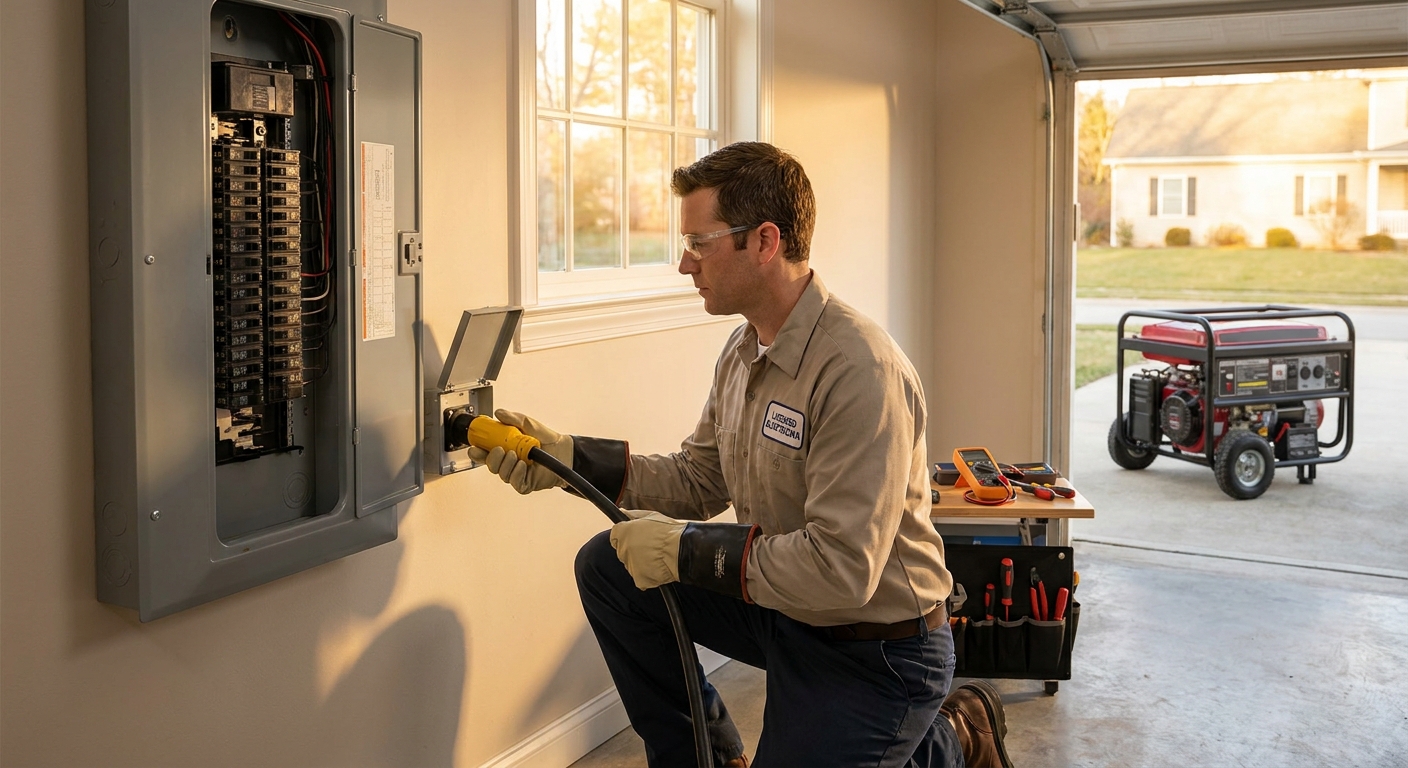
The switch installs adjacent to your electrical panel, typically within a few feet, and gets wired to the specific circuits you selected in step one. This is where code violations happen most - improper wire gauge, missing grounding, or a switch rated below your generator's output. A licensed electrician pulls the permit and schedules the inspection here.
4. Run the transfer switch to the generator connection point
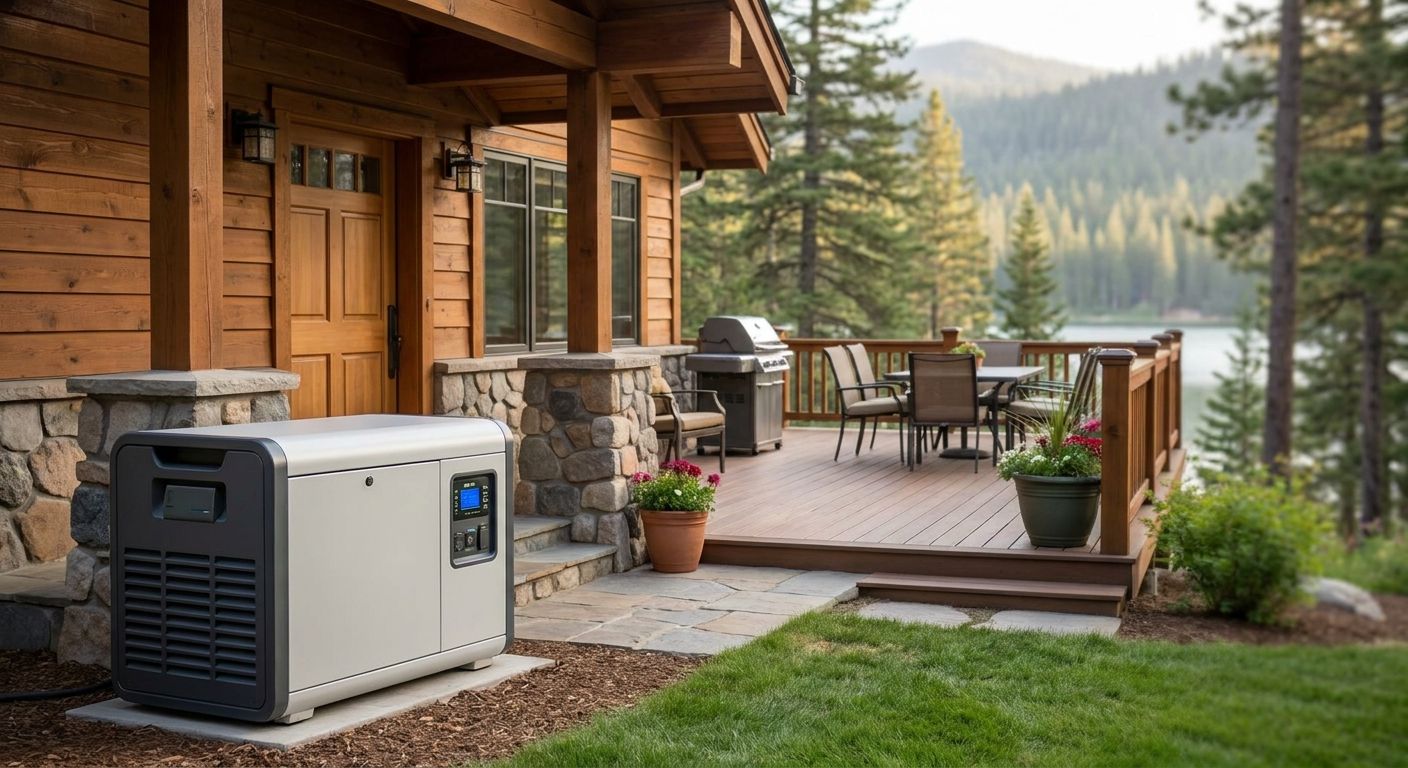
For portable setups, this means a weatherproof inlet box mounted on the exterior of the house, wired back to the transfer switch. For standby systems, it's a hardwired connection to an outdoor pad-mounted generator, usually 10–20 feet from the house per manufacturer clearance requirements. Expected outcome: a single locked connection point, no exposed wiring, no extension cords through a window.
5. Test the transfer under load
The electrician runs the generator, triggers the transfer switch, and confirms every selected circuit picks up power cleanly - no flickering, no breaker trips. This is also when they verify the generator shuts the utility connection out completely; that isolation is the entire point of the switch.
6. Schedule the county inspection
Baldwin County requires a permit and inspection for standby generator installs before the system is signed off. Skipping this step means you're running an uninspected electrical connection - which matters the day you file an insurance claim after storm damage and the adjuster asks for permit records.
7. Set the maintenance schedule
Once connected, most standby systems run a self-test every week or two and need an oil and filter service annually, similar to a small engine. Common mistake: homeowners forget the self-test is normal and think the generator is malfunctioning when it cycles on for 12 minutes on a Tuesday afternoon.
Troubleshooting
- Generator runs but house has no power - the transfer switch likely isn't fully engaged, or a selected circuit was wired to the wrong breaker slot. Call the installer back rather than opening the panel yourself.
- Automatic transfer switch won't engage during an outage - check the battery on the generator's controller first; a dead start battery is the most common cause, not the switch itself.
- Breakers trip immediately after transfer - the load calculation from step one was likely underestimated, or a large appliance (AC compressor, well pump) is drawing more startup amperage than the generator can handle.
- Generator runs, but only some rooms have power - confirm which circuits were wired into the transfer switch during install; not every outlet in the house gets connected, only the ones selected as critical loads.
- Inspection fails - usually wire gauge, missing bonding, or a permit filed for the wrong equipment size. A licensed electrician corrects this before re-scheduling, which is faster than a homeowner disputing it with the inspector directly.
- Generator connection point looks fine but smells hot - shut it down immediately and call a professional; a loose lug connection at the inlet box is a fire risk, not a cosmetic issue.
Tools and resources
- A clamp meter to verify actual load draw during testing (electricians carry this - don't buy one for a single install)
- Manufacturer install manual for your specific generator (Kohler, Generac, Honeywell, or Briggs & Stratton - spec sheets differ)
- Baldwin County's electrical permit portal for standby generator installs
- A licensed, insured electrical contractor familiar with coastal Alabama code requirements - Baldwin County Generators covers Daphne, Fairhope, Foley, and Gulf Shores
FAQ
Can I connect a generator to my panel myself? No - connecting a generator to a home's electrical panel requires a permit and a licensed electrician in Alabama, and backfeeding through an outlet is both illegal and dangerous to utility line workers.
What's the difference between a manual and automatic transfer switch? A manual transfer switch requires you to flip breakers by hand during an outage, while an automatic transfer switch starts the generator and switches power over within 10–20 seconds without anyone home.
How much does it cost to connect a generator to an electrical panel in 2026? A manual transfer switch installed runs roughly $500–$1,500, while a whole-home automatic transfer switch paired with a standby generator costs more depending on the generator's kW size and panel amperage.
Do I need a permit to install a transfer switch in Baldwin County? Yes - Baldwin County requires an electrical permit and inspection for standby generator and transfer switch installs before the system is legally in service.
Can a portable generator power my whole house? Usually not - a portable generator connected through a manual transfer switch typically powers a handful of critical circuits (fridge, well pump, some lights), not the entire panel, unless it's sized well above 7,500 watts.
Is it dangerous to skip the transfer switch? Yes - backfeeding a generator into a panel without a transfer switch can send lethal voltage back through utility lines, which is why it's against code and why insurers deny claims tied to it.
How long does a transfer switch installation take? A manual transfer switch install typically takes 4–8 hours; a full standby system with an automatic transfer switch and outdoor pad often takes a full day or more depending on panel access and permit timing.
Does connecting a generator void my home warranty? An improperly connected generator - one installed without a permit or licensed electrician - can void both home warranties and insurance coverage tied to electrical damage; a code-compliant install avoids that entirely.
One last thing
The part homeowners miss most in 2026: the transfer switch install often costs less than the generator itself, but it's the piece that actually determines whether your system works when a named storm knocks out power for six days. A $20,000 standby generator wired through a botched or unpermitted switch is worthless the moment an inspector or insurance adjuster asks for paperwork you don't have.