A generator pad isn't an afterthought - it's the foundation that keeps a $6,000-$15,000 standby unit level, dry, and running when Baldwin County loses grid power. This guide breaks down which pad type fits which home, business, and flood zone across Daphne, Fairhope, Foley, and Gulf Shores.
- A 4-inch reinforced concrete slab is the safe pick for most 20-26kW standby units in coastal Alabama in 2026 - Buy.
- Generator pad concrete slab installation must clear NFPA 37 setbacks and sit above local flood elevation near Gulf Shores.
- Composite poly pads work for smaller 7-14kW Kohler and Generac units but skip them for 48kW commercial standbys.
- Gravel and paver bases are fine for portable units only - never for a permanently wired standby generator.
Why this matters
A standby generator that sits on the wrong pad shifts, cracks, or floods during the first hard rain - and coastal Alabama gets plenty of those. Soil in Baldwin County drains slower than inland Alabama, and homes near Mobile Bay or the Gulf sit in flood zones that dictate how high a pad has to sit before an inspector signs off. Get the pad wrong and you're re-pouring concrete mid-hurricane season, not running a generator.
Baldwin County Generators handles pad installation as part of full standby generator jobs, which matters because a pad poured to the wrong dimensions is the single most common reason a Generac, Kohler, or Briggs & Stratton unit fails a permit inspection on the first try.
Who this is for
This is for homeowners and business owners in Daphne, Fairhope, Foley, and Gulf Shores who already picked a standby generator size - or are close to it - and need to know what the unit sits on. It's also for anyone who got a quote that included "pad prep" as a line item and wants to know if that line item is doing its job.
What to look for in a generator pad
Slab thickness and reinforcement
A 4-inch poured concrete slab with rebar or wire mesh is the standard for residential standby units in the 14-26kW range. Thinner pours crack under vibration load within a year or two, especially once a unit has run through a few dozen storm-outage cycles.
Flood zone elevation
Properties in Gulf Shores, Orange Beach, and low-lying parts of Fairhope often sit in FEMA-mapped flood zones that require the generator pad to sit above base flood elevation. Skip this step and the unit can end up submerged during a tropical storm surge, which is exactly the scenario a standby generator is supposed to survive.
Manufacturer clearance specs
Generac, Kohler, and Honeywell each publish minimum clearance distances from windows, doors, and combustion air intakes - commonly in the 18-inch range but brand-specific. A pad poured too close to the house voids warranty coverage and fails inspection under NFPA 37.
Soil drainage and compaction
Sandy coastal soil compacts differently than clay, and a pad poured on unprepared ground settles unevenly within a season. Proper base prep - compacted gravel under the slab - keeps the pad level as the ground shifts with Baldwin County's wet-dry cycles.
Size matched to the unit's footprint
A 22kW Generac and a 48kW commercial Kohler have different footprints, and the pad has to extend beyond the unit's mounting feet on all sides. Undersized pads leave the unit's edge hanging over bare soil, which is where cracking starts.
Permit and setback compliance
Baldwin County and its municipalities require permits for permanent generator installations, and the pad location factors into setback rules from property lines. Pouring before permitting is approved risks a forced re-pour.
Top picks: pad types by scenario
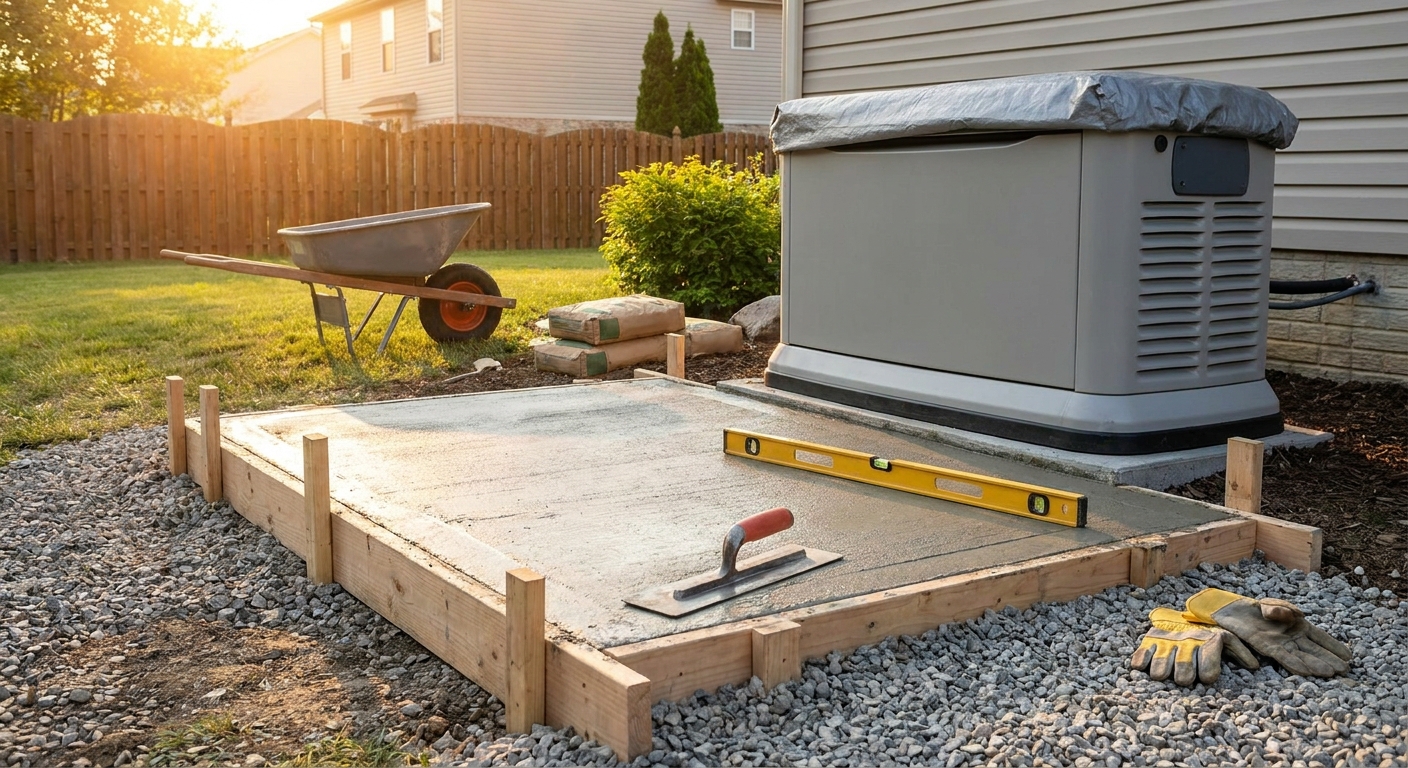
Poured concrete slab, 4-inch reinforced - the safe pick. Rated for 14-26kW Generac and Kohler standby units, this is what most Daphne and Fairhope homeowners end up with. A 3,000 PSI mix with wire mesh holds level for 15-20 years of coastal weather cycles. Buy.
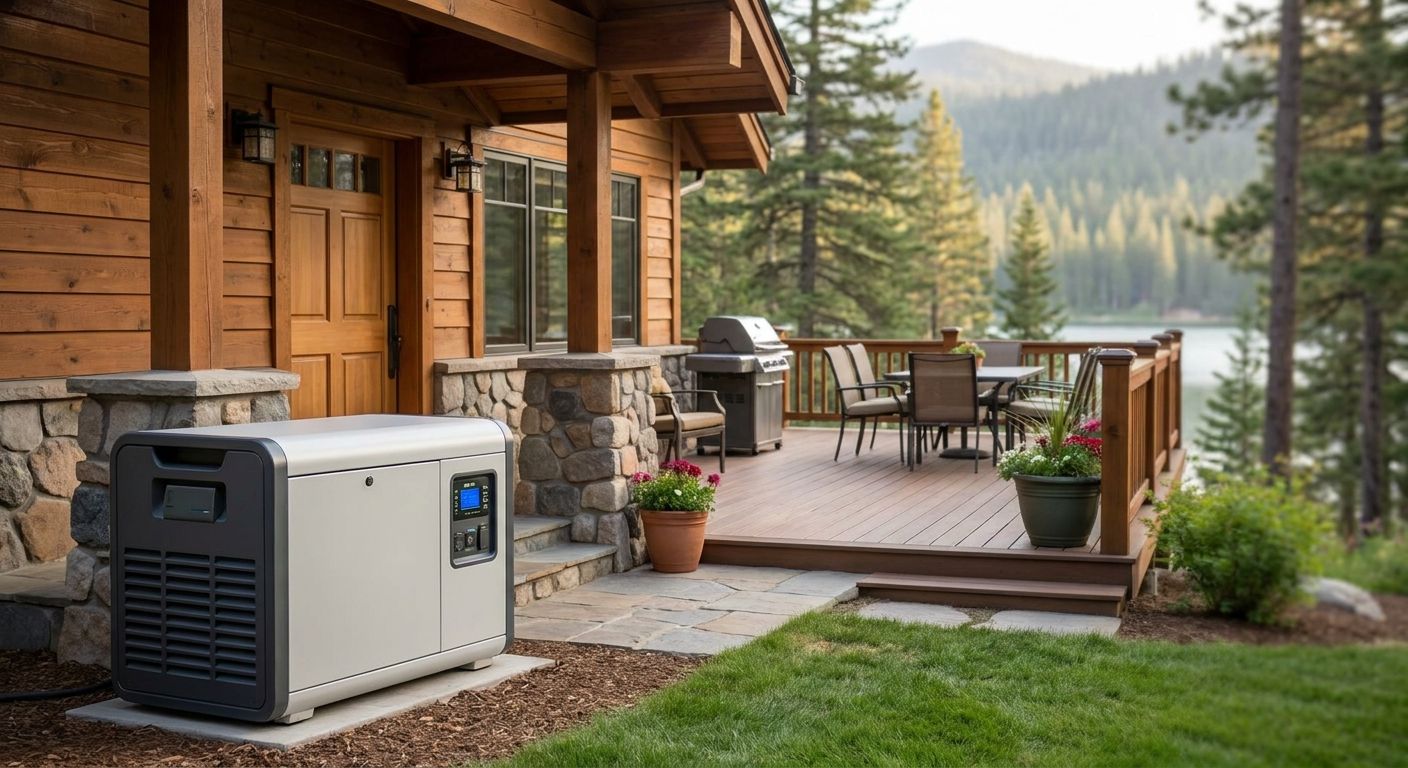
Composite poly pad - the lightweight option. These manufacturer-rated composite pads skip the concrete pour entirely and work for smaller 7-14kW units where a full slab is overkill. They install in under a day versus the 2-3 day cure time a poured slab needs. Consider for smaller residential units only.
Elevated concrete pad with stem wall - the waterfront pick. Built 6-8 inches thick with a raised stem wall, this pad type gets the generator above base flood elevation for properties near Gulf Shores and Orange Beach. It costs more upfront but it's the difference between a working generator and a flooded one during storm surge. Buy for any flood-zone address.
Gravel or paver base - the one that looks cheap and stays cheap for the wrong reasons. Fine for a portable generator you roll out during an outage, but a permanently wired standby unit needs a rigid, level surface that gravel can't guarantee over time. Skip for standby installations.
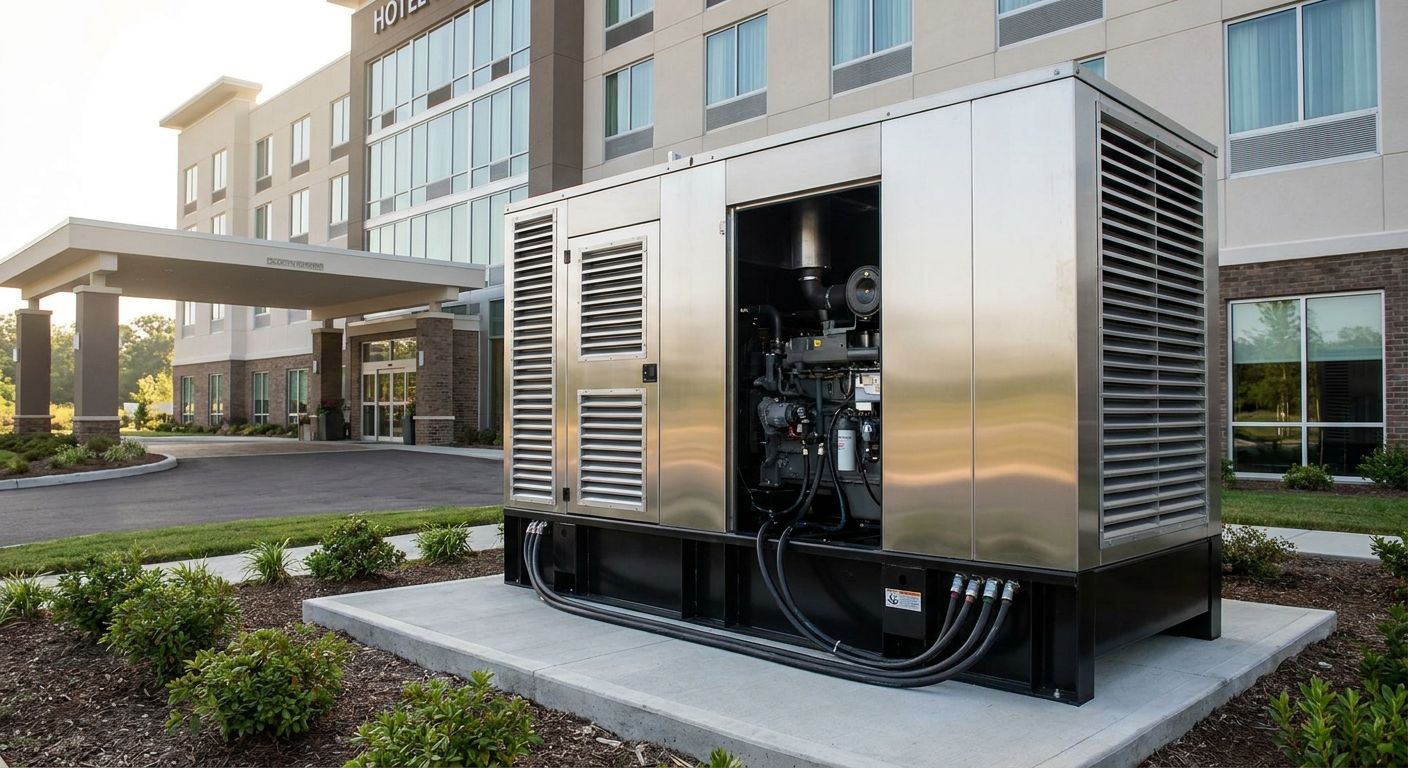
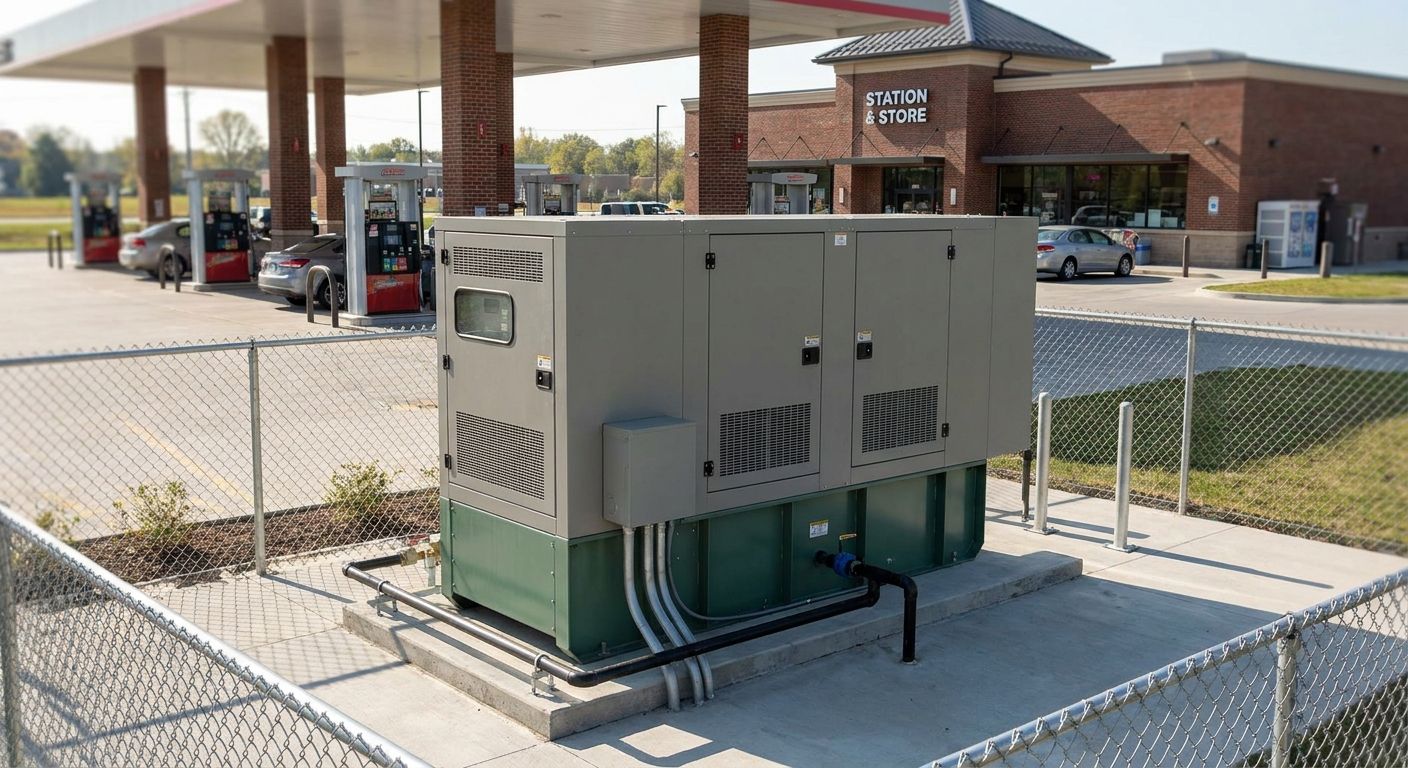
Engineered commercial slab - the heavy-duty pick. Built 6+ inches thick with a full rebar grid, this is what 48kW-and-up commercial standby units need for restaurants, medical offices, and marinas along the coast. Site conditions dictate exact specs, so this one gets engineered per location. Buy for commercial standby installs.
What to avoid
- A pad poured before the permit clears - Baldwin County inspectors can require a re-pour if the location or dimensions don't match the approved plan.
- Gravel bases marketed as "good enough" for standby units - they hold a portable generator fine but shift under the sustained weight and vibration of a permanently mounted unit.
- Undersized pads that save a few dollars on concrete - the unit's feet need to sit fully on the slab, not hanging over bare ground, or settling starts within the first year.
Pad comparison
| Pad Type | Thickness | Best For | Flood-Zone Ready | Verdict |
|---|---|---|---|---|
| Poured concrete slab | 4 in reinforced | 14-26kW Generac/Kohler | With elevation add-on | Buy |
| Composite poly pad | Manufacturer-rated | 7-14kW smaller units | No | Consider |
| Elevated concrete pad | 6-8 in plus stem wall | Waterfront Gulf Shores/Orange Beach homes | Yes | Buy |
| Gravel/paver base | No structural rating | Portable generators only | No | Skip |
| Engineered commercial slab | 6+ in, full rebar grid | 48kW+ commercial standbys | Site-specific | Buy |
FAQ
What's the best pad for a standby generator in coastal Alabama?
A 4-inch reinforced concrete slab is the best pad for most 14-26kW residential standby units in coastal Alabama in 2026. Properties in flood zones near Gulf Shores need an elevated pad with a stem wall instead.
Is a concrete slab required for a Generac or Kohler standby unit?
Most manufacturers require a level, rigid surface, and a poured concrete slab is the standard way to meet that spec. Composite poly pads work as an alternative for smaller units under 14kW.
How thick does a generator pad need to be?
Residential standby generator pads run 4 inches thick with wire mesh or rebar reinforcement. Commercial installs for 48kW-and-up units typically need 6 inches or more.
Can I put a standby generator on gravel?
No - gravel and paver bases work for portable generators but shift under the sustained weight of a permanently wired standby unit. A poured slab or manufacturer-rated composite pad is the correct choice.
How much clearance does a standby generator need from my house?
Clearance from windows, doors, and combustion air intakes typically runs around 18 inches, though the exact figure depends on the manufacturer's published spec sheet. NFPA 37 sets the baseline standard most local inspectors reference.
Do I need a permit for a generator pad in Baldwin County?
Yes, permanent standby generator installations in Baldwin County require a permit that covers both the electrical connection and the pad location. Pouring before approval risks a forced re-pour.
How much does generator pad installation cost in 2026?
A standard 4-inch poured concrete slab typically runs a few hundred dollars in material and labor as part of a full standby generator install in 2026, with elevated flood-zone pads costing more due to added concrete volume. Exact pricing depends on site prep and access.
Does a generator pad need to be elevated near the coast?
Properties in FEMA-mapped flood zones near Gulf Shores and Orange Beach need pads elevated above base flood elevation. Inland properties in Daphne and Fairhope typically don't need the extra elevation.
One last thing
The pad usually isn't what fails first - the setback distance is. Homeowners get a slab poured perfectly level and then find out during inspection that it's 6 inches too close to a bedroom window, which forces a full re-pour instead of a simple adjustment. Measure clearance before the concrete truck shows up, not after.
A pad poured to spec the first time is cheaper than a re-pour during hurricane season.
Working with a licensed electrical contractor that installs Kohler, Generac, Honeywell, and Briggs & Stratton standby units means the pad, the permit, and the electrical hookup get handled as one job instead of three separate headaches. That's the difference between a standby generator that's ready before the next storm and one that's still sitting on a pallet when the power goes out.