Coastal Alabama wineries and craft breweries run on refrigeration, fermentation control, and tasting-room HVAC that cannot tolerate a multi-day outage during hurricane season. Generator installation for wineries in Daphne, Fairhope, Foley, and Gulf Shores means sizing for continuous industrial loads, not just keeping the lights on.
- Generator installation for wineries needs 48kW to 150kW depending on refrigeration, fermentation, and tasting-room loads - undersizing is the most common failure.
- A 10-second automatic transfer switch keeps fermentation tanks and cold storage from drifting out of range during coastal Alabama outages.
- Kohler and Generac commercial-grade units are the Buy picks for continuous-duty wineries and breweries in 2026; residential-grade standbys are a Skip.
- Propane runs longer than diesel for most Baldwin County installs where natural gas isn't available on-site.
- Licensed installation matters: unpermitted generator work on a commercial food and beverage facility risks health-code and insurance problems, not just code violations.
Why this matters
A fermentation tank sitting at 68°F instead of 50°F for six hours can ruin a batch. A walk-in cooler holding case-conditioned beer or bottled wine loses its window fast once compressors stop. Baldwin County Generators sees this pattern every hurricane season: small producers assume a portable generator or an undersized residential unit will get them through, and it doesn't cover the compressor start-up load or run long enough to matter.
Alabama's hurricane season runs June through November, and Baldwin County has taken direct hits in recent years that knocked out grid power for 48 to 72 hours in some zones. For a winery or brewery, that's not an inconvenience - it's lost inventory, spoiled ingredients, and a shut tasting room during peak season. Generator installation for wineries has to be built around continuous-duty ratings, not the intermittent-use specs sold for home backup.
Who this is for
This guide is for winery and craft brewery owners in coastal Alabama running fermentation tanks, glycol chillers, walk-in coolers, pumps, and a tasting room or taproom - operations where a power gap of even a few hours creates measurable product loss, not just an annoyance.
What to look for in generator installation for wineries
Continuous-duty rating, not standby-only
Most fermentation and refrigeration equipment runs around the clock, so the generator needs a continuous power rating that matches sustained draw, not a peak-only standby number. A unit rated for 8 hours of intermittent home backup will overheat or shut down under a winery's 24/7 compressor cycle.
Automatic transfer switch speed
A 10-second automatic transfer switch is the standard for commercial food and beverage installs, and it's the difference between a compressor restart and a compressor failure. Anything slower risks nuisance trips on refrigeration units that don't like abrupt power loss and return.
Fuel type and runtime
Propane generators typically outlast diesel on runtime per tank for mid-size Baldwin County installs, and propane is easier to source locally during a storm when diesel supply gets tight. Natural gas, where available, removes the refueling question entirely - the generator runs as long as the gas utility does.
kW sizing against real loads
A small tasting-room-only operation might get by on 48kW, while a full production winery with glycol chillers, multiple fermenters, and a bottling line can need 100kW to 150kW. Undersizing is the single most common mistake - get a load calculation done against actual equipment nameplates, not guesswork.
Noise and placement near guest areas
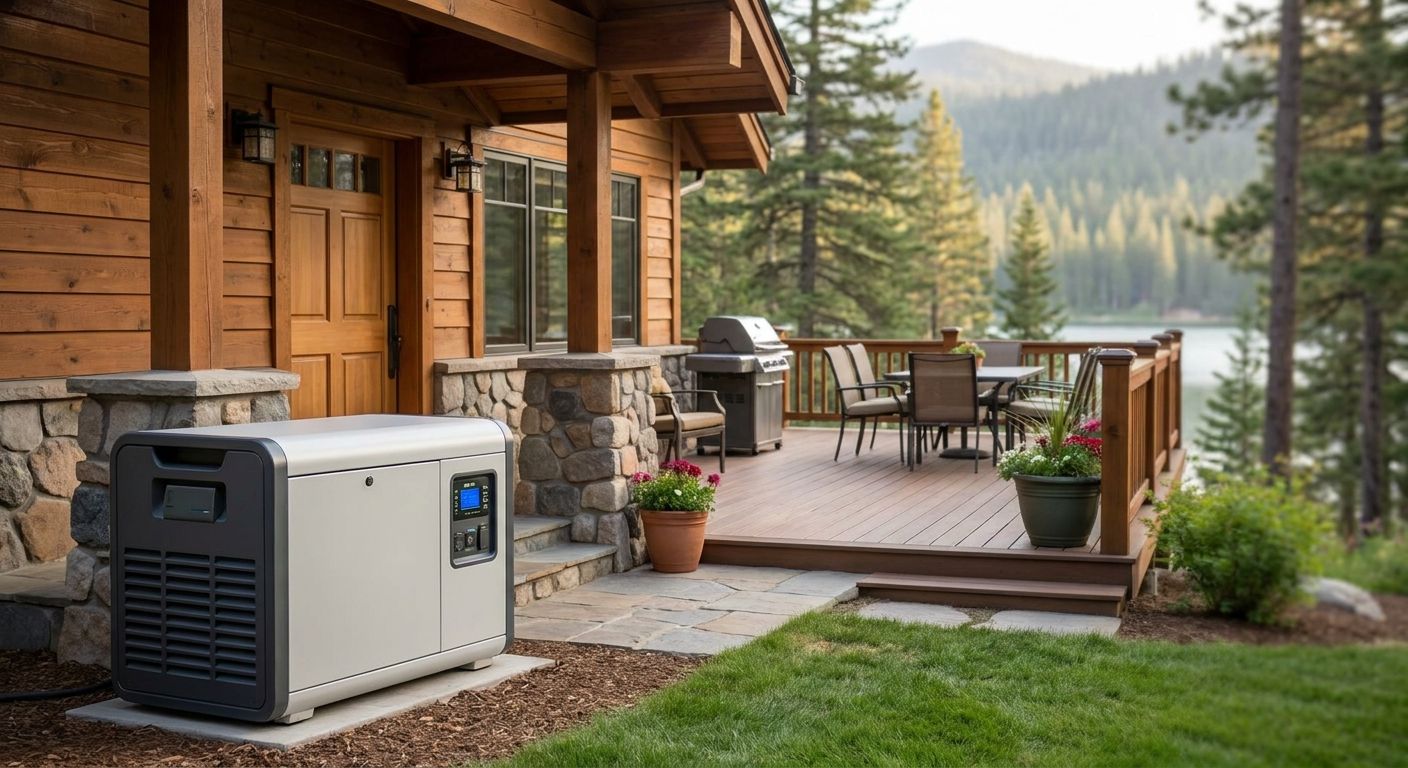
A tasting room depends on ambiance, so generator placement matters as much as capacity. Enclosed, sound-attenuated units placed away from patio seating keep the guest experience intact during an outage instead of turning it into a construction site.
Licensed installation and code compliance
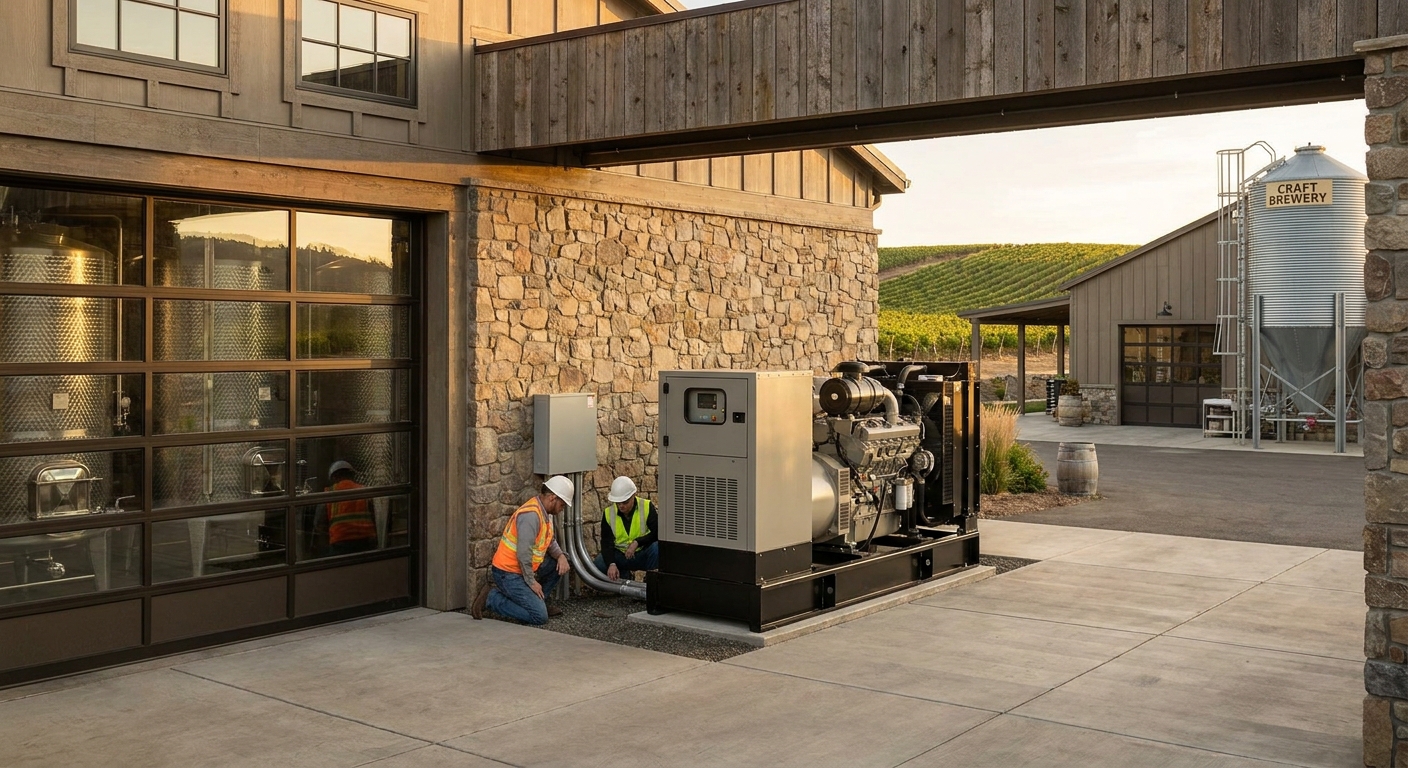
Commercial generator installs on a food and beverage facility trigger permitting, NEC compliance, and often health-department review tied to refrigeration continuity. A licensed electrical contractor handles the inspection and paperwork; an unpermitted install can void insurance coverage if something goes wrong.
Top picks for generator installation for wineries
Kohler commercial series - the safe pick. Continuous-duty rated up to 150kW with a proven track record in food and beverage facilities. Buy for any production winery or brewery running fermentation and cold storage around the clock in 2026.
Generac commercial series - the workhorse pick. Strong availability across Alabama dealers and solid mid-range sizing from 48kW to 100kW for tasting-room-forward operations. Consider if your load calculation lands under 100kW and propane is your fuel source.
Honeywell standby units - the budget pick. Reliable for smaller taprooms with limited refrigeration draw, but continuous-duty ratings top out lower than Kohler or Generac commercial lines. Consider only for a taproom-only setup with no production equipment on-site.
Briggs & Stratton commercial line - the compact pick. Good fit for a small craft brewery with a single walk-in cooler and no fermentation tank load beyond ambient temperature control. Consider for facilities under 500 barrels annual production.
Residential-grade portable or standby units - the tempting shortcut. Rated for intermittent home use, not sustained commercial compressor cycling. Skip - these fail under the continuous draw a winery or brewery puts on them within the first outage.
Get a generator sizing quote
Load calculations for wineries and breweries across coastal Alabama, quoted free.
What to avoid
- Portable gas generators as a primary backup. They can't sustain a walk-in cooler compressor cycle for more than a few hours and require manual fuel refills during a storm when you can't leave the property.
- Undersized units bought on price alone. A generator that starts the load but can't sustain it under full refrigeration and pump draw will trip offline exactly when you need it most.
- Unlicensed or DIY installation on a commercial facility. Health-code inspections and insurance coverage both depend on a permitted, licensed install - a shortcut here costs more than the labor it saved.
Verdict comparison table
| Generator tier | kW range | Fuel options | ATS speed | Verdict |
|---|---|---|---|---|
| Kohler commercial | Up to 150kW | Diesel, propane, natural gas | 10 seconds | Buy for production wineries |
| Generac commercial | 48kW–100kW | Propane, natural gas | 10 seconds | Consider for mid-size operations |
| Honeywell standby | 20kW–48kW | Propane, natural gas | 10–15 seconds | Consider for taproom-only setups |
| Briggs & Stratton commercial | 20kW–48kW | Propane, diesel | 10–15 seconds | Consider for small craft breweries |
| Residential portable/standby | Under 20kW | Gasoline, propane | Manual or 20+ seconds | Skip for any production load |
FAQ
What size generator does a winery need?
Most wineries need 48kW to 150kW depending on refrigeration, fermentation, and bottling line loads. A tasting-room-only operation sits at the low end; a full production facility with glycol chillers needs the high end.
Is propane or diesel better for a brewery generator?
Propane typically runs longer per tank and is easier to source locally during a hurricane, making it the more common choice for coastal Alabama breweries in 2026. Diesel works well where fuel delivery contracts are already in place.
How much does generator installation cost for a winery in Alabama?
Cost depends on kW size, fuel type, and site conditions like trenching and transfer switch placement. Get a load calculation and site visit for an accurate quote rather than relying on a generic estimate.
Can a generator protect fermentation tanks during a hurricane?
Yes, a properly sized continuous-duty generator with a 10-second automatic transfer switch keeps fermentation temperature control running through a multi-day grid outage. Undersized or standby-only units can fail under sustained compressor draw.
How fast does an automatic transfer switch kick in?
Commercial-grade automatic transfer switches typically respond within 10 seconds of a grid outage. Slower switches risk temperature drift in refrigeration and fermentation equipment before backup power engages.
Do craft breweries need a licensed electrician for generator installation?
Yes, commercial generator installs on a food and beverage facility require a licensed electrical contractor for code compliance and often trigger health-department review. Unpermitted work can void insurance coverage.
What happens to wine or beer production during a power outage?
Fermentation temperature can drift out of range within hours, and cold storage compressors lose their cooling window fast once power stops. Coastal Alabama outages during hurricane season commonly run 48 to 72 hours without backup power.
Is Kohler or Generac better for commercial food and beverage facilities?
Kohler's commercial series rates higher for continuous-duty output up to 150kW, making it the stronger pick for full production wineries. Generac's commercial line covers mid-range facilities under 100kW well and is widely available across Alabama dealers.
One last thing
Most winery and brewery owners size their generator around the tasting room and forget the glycol chiller - and the chiller is usually the single largest continuous load on the property. Get the load calculation done against every piece of equipment nameplate before picking a kW size, not just the parts of the operation guests can see.
Hurricane season 2026 runs June through November, and Baldwin County has seen multi-day outages in recent storm seasons. A licensed, properly sized generator install before the season starts is the difference between a production loss and a non-event.