Salons and spas along coastal Alabama lose refrigerated product, sterilization cycles, and a full day of bookings every time a storm knocks out power - a properly sized generator installation for salons and spas keeps treatment rooms running through hurricane season and every ordinary outage after it.
- A 22kW standby generator covers most single-chair salons; day spas running laundry, HVAC, and multiple treatment rooms often need 30kW or more.
- Generator installation for salons and spas requires a licensed electrical contractor and a permitted automatic transfer switch, not a plug-in unit from a hardware store.
- Portable generators can't hold sterilizers, water heaters, and blow dryers on the same circuit at once - Skip them for anything past a single-station backup.
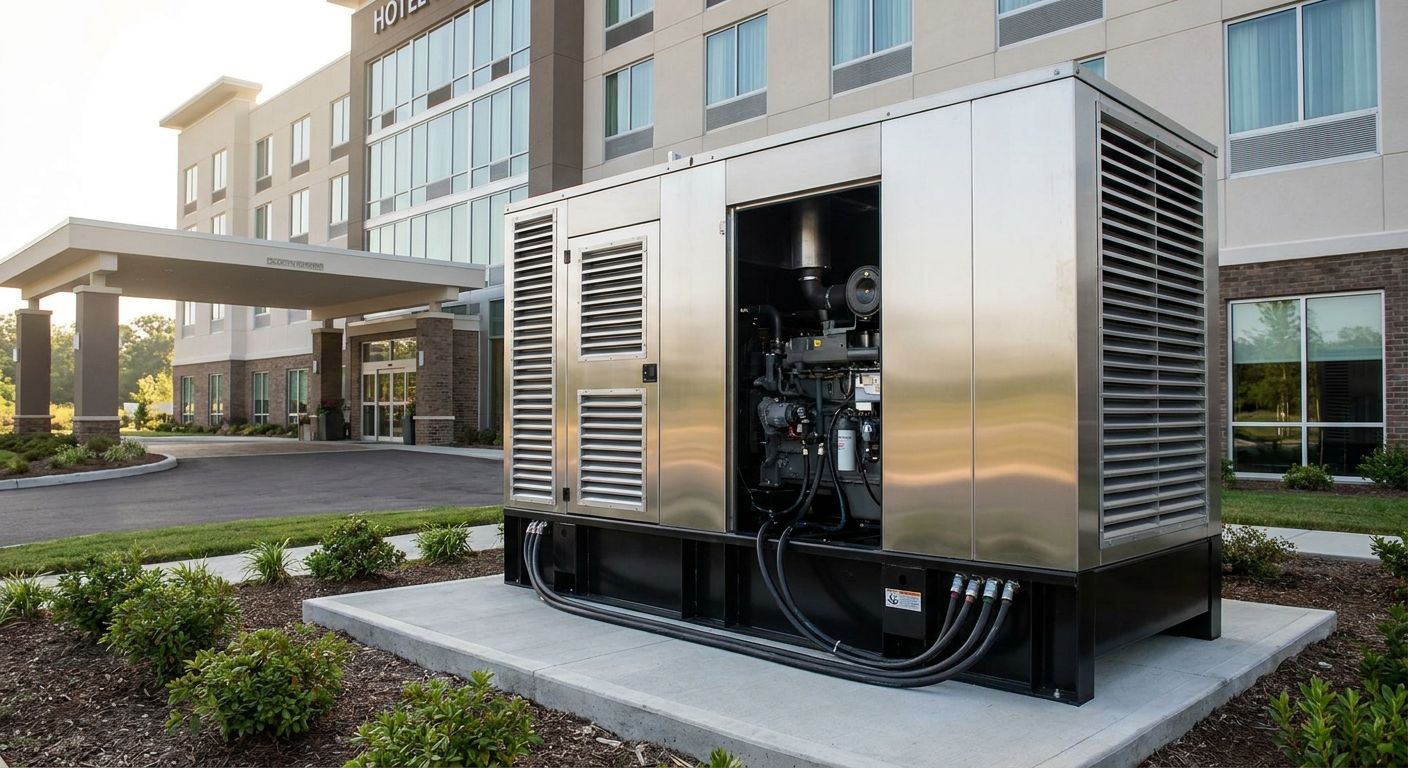
- Kohler and Generac commercial units both handle salon loads reliably in Daphne, Fairhope, Foley, and Gulf Shores - sizing to your panel matters more than brand loyalty.
- Installed cost for a commercial-grade system in 2026 typically runs $10,000 to $25,000 depending on kW size and fuel line work.
Why this matters
A salon or spa doesn't just lose lights in a blackout - it loses the walk-in freezer holding wax and product inventory, the autoclave mid-cycle, and every card-payment terminal at the front desk. Baldwin County Generators has fielded calls from Gulf Shores day spas that lost three days of bookings after a single named storm, and from Fairhope salons whose backbar refrigeration spoiled overnight during a routine grid failure.
Hurricane season on the Gulf Coast runs June through November, and outages of 48 to 72 hours are common after a landfalling storm even without direct damage to the building. A generator installation for salons and spas isn't a luxury add-on in this market - it's the difference between reopening the next morning and closing for a week.
Who this is for
This guide is written for salon and spa owners in Daphne, Fairhope, Foley, and Gulf Shores who run refrigerated retail product, sterilization equipment, HVAC for treatment rooms, and point-of-sale systems that can't tolerate a multi-day outage. It applies whether you're a single-suite lash studio or a multi-room day spa with laundry, sauna, and a full front desk.
What to look for in generator installation for salons and spas
Correct sizing for continuous salon load
A salon's real load isn't just lights and outlets - it's simultaneous blow dryers, UV sterilizers, water heaters, and HVAC compressors cycling at once. Undersizing means the generator trips or the transfer switch shed non-essential circuits mid-service, which is worse than no backup at all. Most single-chair salons run comfortably on a 22kW standby unit; multi-room spas with laundry and full HVAC often need 30kW to 48kW.
Automatic transfer switch, not manual
An automatic transfer switch detects the outage and starts the generator within seconds, so refrigeration and sterilization never lose power long enough to matter. Manual switches require someone on-site to flip a breaker, which doesn't work if the outage hits overnight or during a storm evacuation. For any business with product inventory or medical-grade equipment, automatic transfer isn't optional.
Fuel type built for storm reliability
Propane and natural gas units start automatically and run for days without refueling, which matters when gas stations are closed and diesel delivery is delayed after a hurricane. Diesel units cost less per kW but need on-site fuel storage and manual refilling during extended outages. For coastal Alabama, a propane-fed standby system removes the fuel-supply risk that diesel and gasoline units carry during storm season.
Noise and placement near client-facing space
A generator running 68 to 72 decibels next to a treatment room window undercuts the relaxation experience clients are paying for. Placement needs to account for setback distances from windows and doors, plus sound-dampening enclosures where the unit sits close to a spa entrance or patio. This is a site-specific call - a walkthrough before installation catches problems a spec sheet won't.
Licensed installation and local permitting
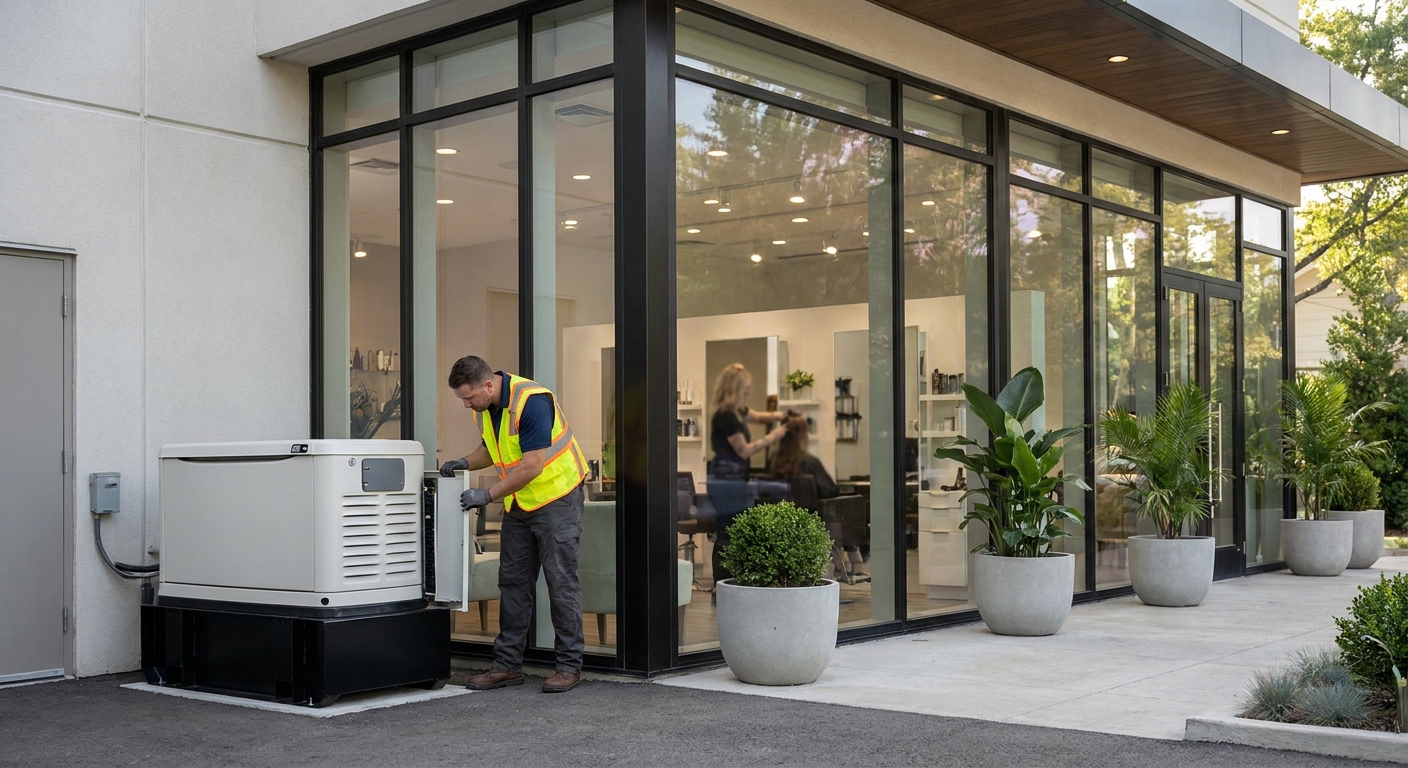
Generator installation for salons and spas in Alabama requires a licensed electrical contractor, a permitted gas or propane line, and inspection sign-off before the transfer switch goes live. Unpermitted work voids manufacturer warranties on Kohler, Generac, Honeywell, and Briggs & Stratton units, and it can complicate a commercial insurance claim if the system fails during an actual storm. This is the single most skipped step by unlicensed installers offering a cheaper quote.
A service and maintenance plan
A standby generator that hasn't been serviced in two years is a coin flip during the exact week you need it most. Annual maintenance covers battery load testing, oil and filter changes, and a live transfer test - not just a visual inspection. Ask what's included before you sign, because "installation" and "installation plus service contract" are two different products.
Get a generator sizing quote
Free on-site load assessment for salons and spas in coastal Alabama.
Top picks by generator class
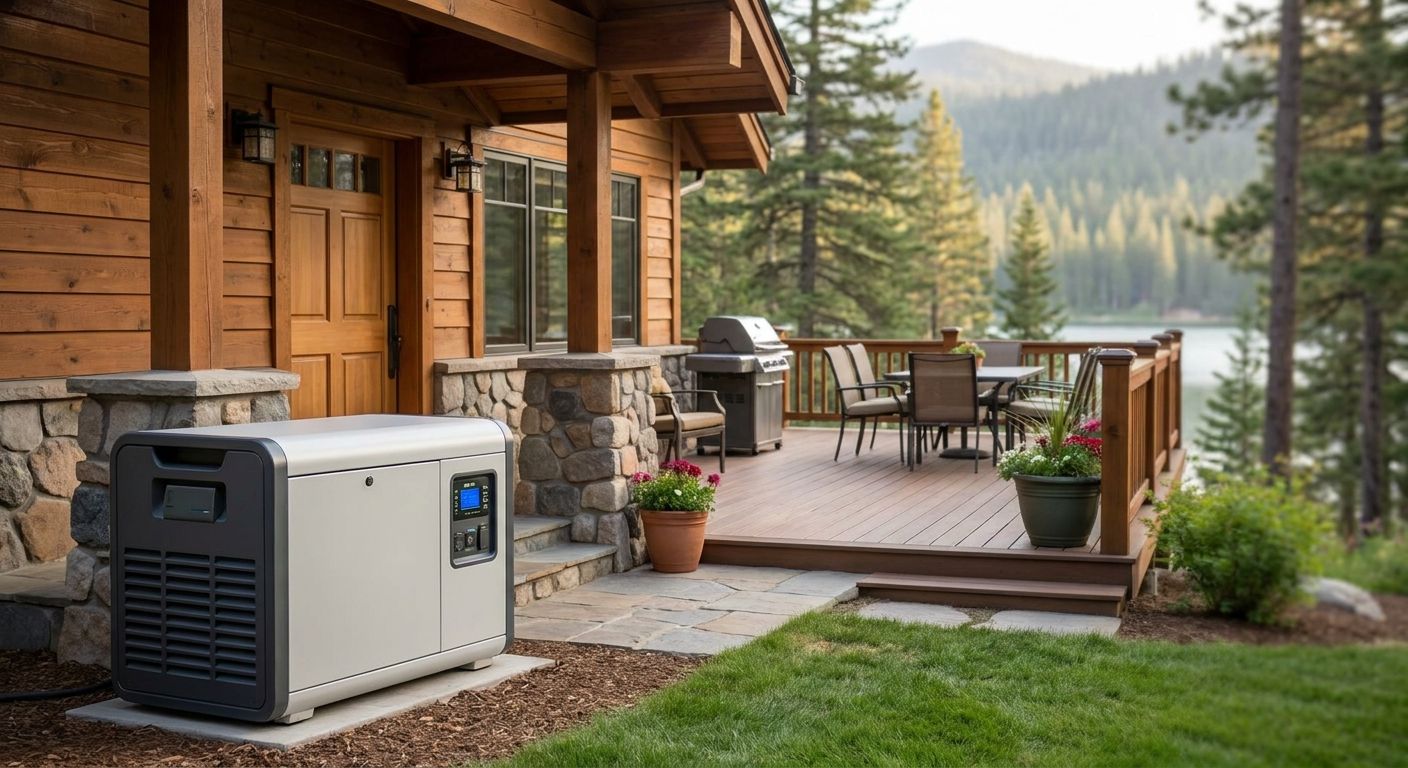
The safe pick - 22kW standby, propane-fed. Covers a single-chair salon or a small day spa with one treatment room, backbar refrigeration, and a front desk POS system. Installed cost typically lands between $10,000 and $16,000 in 2026 including the transfer switch. Buy if your panel load stays under 100 amps.
The workhorse - 30kW to 48kW commercial standby. Built for multi-room day spas running laundry, sauna, full HVAC, and simultaneous treatment rooms. Installed cost runs $18,000 to $25,000 depending on gas line distance and panel upgrades needed. Buy if you operate more than two treatment rooms or hold retail refrigeration inventory.
The budget-conscious pick - Honeywell or Briggs & Stratton mid-tier, 20kW. A reasonable entry point for a single-suite studio with modest HVAC and no walk-in refrigeration. Runs slightly cheaper than Kohler or Generac at comparable kW, though parts availability locally is worth confirming before you commit. Consider it if your load is genuinely light and you've confirmed sizing against your actual panel, not just square footage.
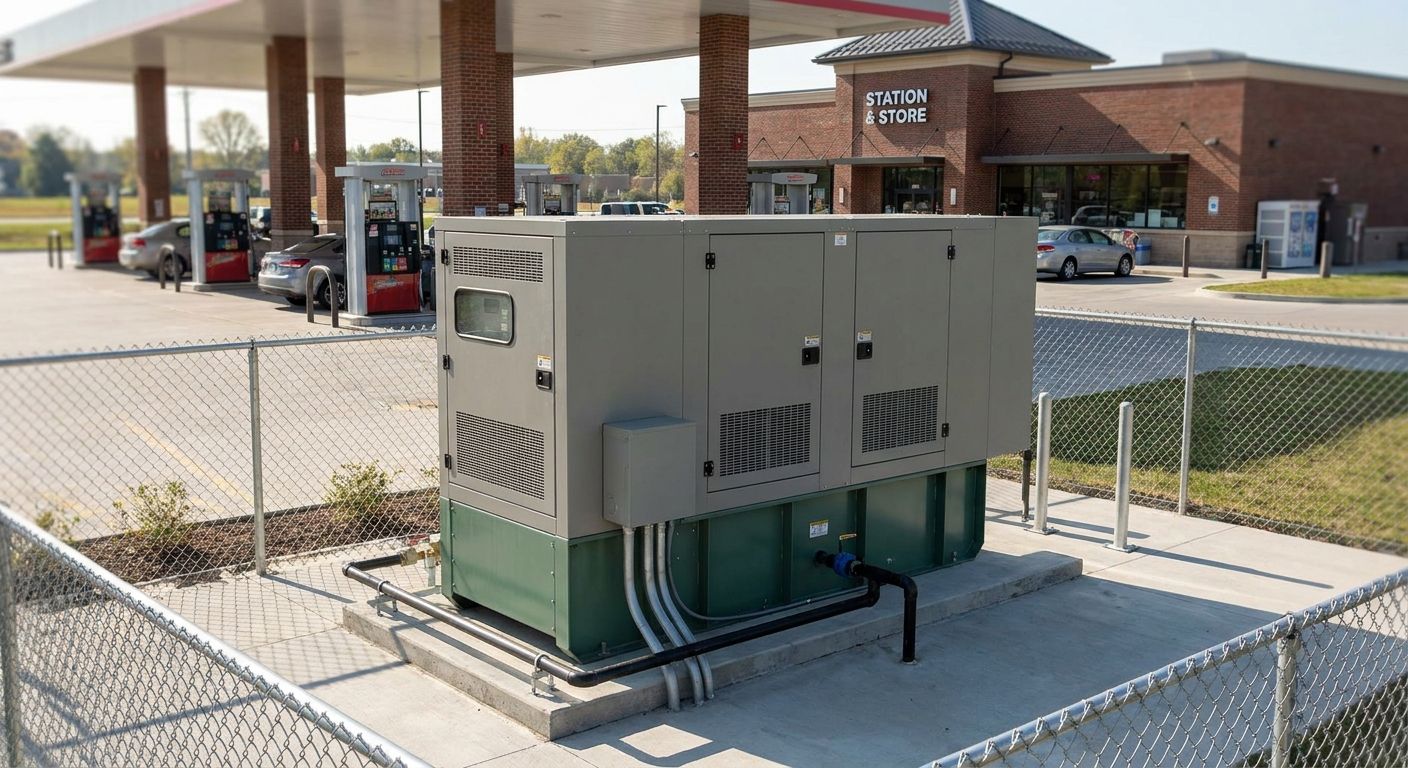
The wildcard - portable gas generator, 7,500 to 10,000 watts. Fine for a home office or a single freezer during a short outage, but it can't run sterilizers, water heaters, and HVAC together, and it needs someone on-site to start and refuel it. Skip it for any salon or spa carrying refrigerated product or medical-grade sterilization equipment.
The oversized trap - 60kW+ industrial unit for a small studio. Vendors sometimes upsell capacity you'll never use, driving installed cost past $30,000 for a single-chair operation. Skip it unless you have documented plans to expand to multiple suites within the next year.
What to avoid
- Sizing by square footage instead of panel load. A 3,000-square-foot spa with light equipment can need less kW than a 1,200-square-foot studio running three sterilizers and a sauna.
- Skipping the permit to save time. An unpermitted install can void the manufacturer warranty and complicate an insurance claim after storm damage.
- Choosing diesel to save upfront cost in a hurricane zone. Fuel delivery gets unreliable in the days after a storm, exactly when you need the generator most.
Verdict comparison table
| Generator class | Best for | Typical installed cost (2026) | Verdict |
|---|---|---|---|
| 22kW propane standby | Single-chair salon | $10,000-$16,000 | Buy |
| 30-48kW commercial standby | Multi-room day spa | $18,000-$25,000 | Buy |
| 20kW mid-tier (Honeywell/Briggs) | Light-load single studio | $9,000-$14,000 | Consider |
| Portable 7.5-10kW | Emergency single-freezer backup only | $600-$1,500 | Skip |
| 60kW+ industrial | Small studio, no expansion plans | $30,000+ | Skip |
FAQ
What size generator does a salon need?
Most single-chair salons run on a 22kW standby generator, while multi-room day spas with laundry and full HVAC often need 30kW to 48kW in 2026. Sizing should be based on actual panel load, not square footage.
How much does generator installation for salons and spas cost?
Installed cost typically runs $10,000 to $25,000 in 2026 depending on kW size and gas line distance. Larger multi-room spa systems can exceed $25,000 with panel upgrades.
Is propane or diesel better for a salon generator in coastal Alabama?
Propane is generally the better choice because it starts automatically and doesn't require manual refueling during extended storm outages. Diesel costs less per kW but carries fuel-supply risk when delivery is delayed after a hurricane.
Can a portable generator run a salon during an outage?
A portable generator can keep a single freezer or a few outlets running but cannot handle sterilizers, water heaters, and HVAC simultaneously. For any salon with refrigerated product or sterilization equipment, a standby system with an automatic transfer switch is the reliable option.
Does generator installation require a permit in Alabama?
Yes, generator installation for salons and spas requires a licensed electrical contractor and a permitted gas or propane line with inspection sign-off. Skipping the permit can void the manufacturer warranty and complicate insurance claims.
How long can a standby generator run during a hurricane outage?
A propane-fed standby unit can run continuously for as long as fuel supply lasts, which typically covers the 48 to 72 hours common after a Gulf Coast storm. Diesel units are limited by on-site tank capacity and need manual refueling for longer outages.
How often does a salon generator need maintenance?
Annual maintenance covering battery load testing, oil and filter changes, and a live transfer test is standard for commercial standby units. Skipping service for two or more years significantly raises the risk of failure during an actual outage.
Which brands are reliable for salon generator installation?
Kohler and Generac commercial units are both proven choices for salon and spa loads, with Honeywell and Briggs & Stratton offering mid-tier options for lighter loads. Brand matters less than correct sizing and a licensed, permitted installation.
One last thing
The detail most salon owners miss isn't kW size - it's the transfer switch's load-shedding sequence. A generator sized correctly on paper can still shut down your sterilizer mid-cycle if the transfer switch is programmed to prioritize HVAC over medical-grade equipment during a partial load event. Ask any installer to walk you through exactly which circuits get priority before you sign, not after the first storm tests it.
“If the transfer switch doesn't prioritize your sterilizer, the generator size on the spec sheet doesn't matter.”