Coastal Alabama seafood processors run on refrigeration, ice, and pumps that cannot sit idle for even a few hours - a grid outage during hurricane season can spoil a full day's catch and shut down a plant for days after. This guide breaks down what oyster houses, shrimp docks, and seafood processing facilities in Daphne, Fairhope, Foley, and Gulf Shores need from a standby generator installation in 2026.
- Generator installation for seafood processing starts at 26kW for a small retail market and scales past 150kW for a full processing plant with cold storage.
- Liquid-cooled Kohler and Generac units win for facilities running walk-in coolers, ice machines, and multiple compressors at once - Buy.
- Portable or towable units under 30kW are fine as a stopgap for pumps and aerators, not a permanent processing floor solution - Consider.
- Skip any setup without a properly sized automatic transfer switch matched to your motor starting load, especially on 3-phase compressors.
Why this matters
A seafood processing facility loses product on a different timeline than a house losing air conditioning. Ice melts in hours. Walk-in coolers climb past safe holding temperature fast once compressors stop cycling. Live tanks and aerator pumps for oysters and shrimp fail even quicker - a dead pump on a holding tank during an August outage can wipe out inventory before the sun sets.
Baldwin County sees named storms and grid-threatening weather every hurricane season, and a facility that goes down for 48 hours during peak season loses more than the generator would have cost. That is the math behind why processors treat backup power as infrastructure, not an accessory. Baldwin County Generators installs and services whole-building standby systems built around exactly this kind of continuous refrigeration and pump load.
Who this is for
This guide is for owners and managers of oyster houses, shrimp docks, crab processing operations, and seafood retail markets across coastal Alabama who run refrigeration, ice production, or water circulation equipment that cannot tolerate an outage longer than a few hours. If your facility holds live product in tanks, runs a blast freezer, or depends on 3-phase compressors, the sizing and transfer switch decisions below apply directly to you.
What to look for in generator installation for seafood processing
Sizing against your real starting load, not your running load
Compressors, ice machines, and pump motors draw two to three times their running wattage the instant they start. A generator sized only for steady-state load will stall or trip the moment a walk-in cooler compressor kicks on mid-cycle. Get a load study that accounts for simultaneous starts, not just a nameplate total.
Fuel type and run-time under continuous load
Processing floors often need power for 24 to 72 hours straight during a storm recovery, not the 8 to 12 hours a typical home outage runs. Natural gas or propane units tied to a utility line or a large tank outlast diesel units limited by onsite fuel storage, unless you have a fuel delivery contract already in place for 2026's hurricane season.
Automatic transfer switch rated for 3-phase equipment
Most residential-grade transfer switches are built for single-phase household panels. A processing facility running 3-phase compressors or ice machines needs a transfer switch rated and wired specifically for that load, installed by a licensed electrical contractor who has done commercial work, not just home standby jobs.
Cooling method for continuous duty cycles
Air-cooled generators work for intermittent residential use but run hotter under the sustained, heavy load a processing plant demands. Liquid-cooled units handle back-to-back days of continuous operation without derating output as temperatures climb.
Placement and code compliance near wet processing areas
Seafood facilities deal with washdown water, salt air, and humidity that corrode standard enclosures faster than a typical residential install site. Placement needs to account for drainage, corrosion-resistant housing, and local permitting specific to commercial coastal installs.
Maintenance access during peak season
A generator that fails during the one week you actually need it defeats the purpose. Facilities running seasonal peak volume - spring oyster season, summer shrimp runs - need a maintenance schedule that lands before, not during, peak demand.
Get a sizing quote for your facility
Licensed electrical contractor serving coastal Alabama processing facilities.
Top picks by facility type
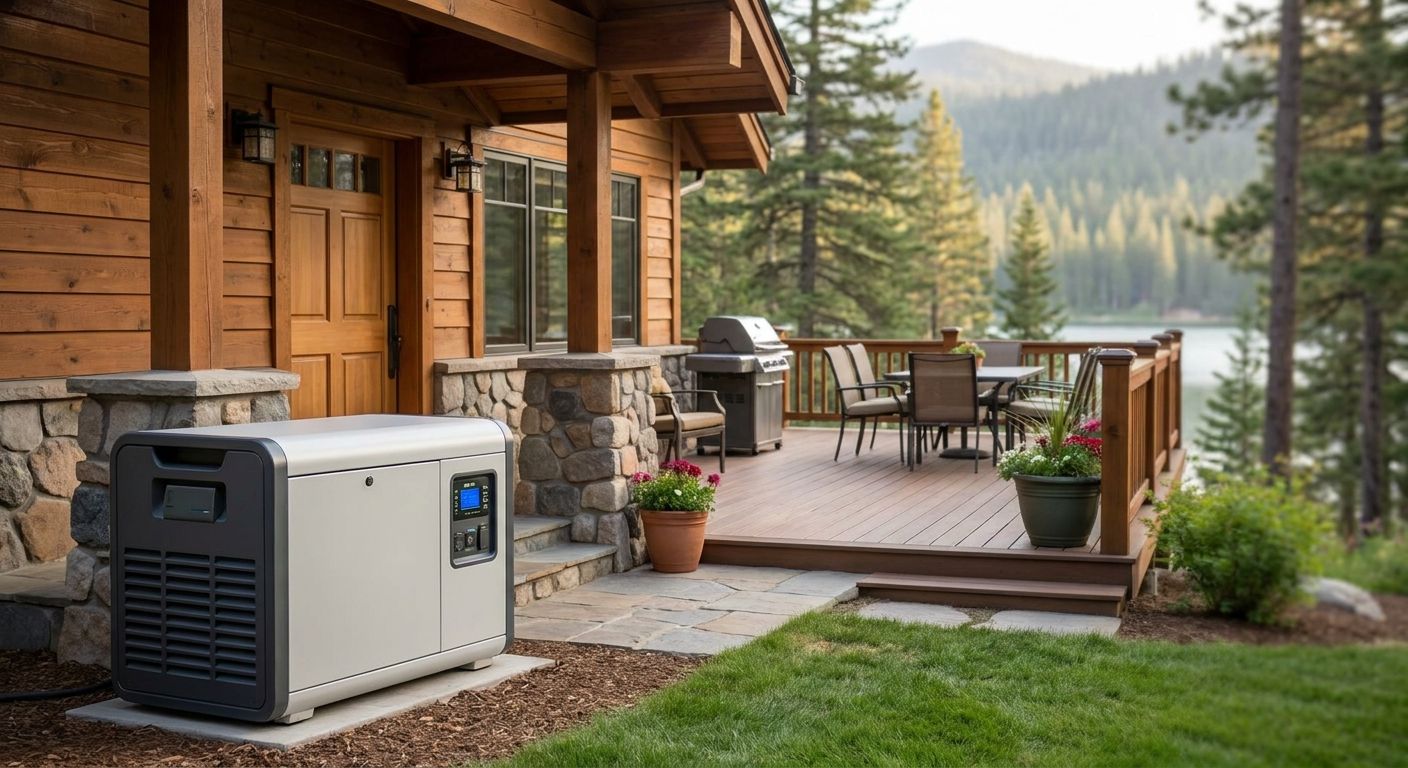
The everyday workhorse - 26kW to 48kW air-cooled, retail seafood markets. This tier covers a single walk-in cooler, a display case, and a small ice machine. It handles roughly 200 amps of combined load, which covers most standalone retail seafood counters. Buy for a small market or dockside retail stand with one refrigeration circuit.
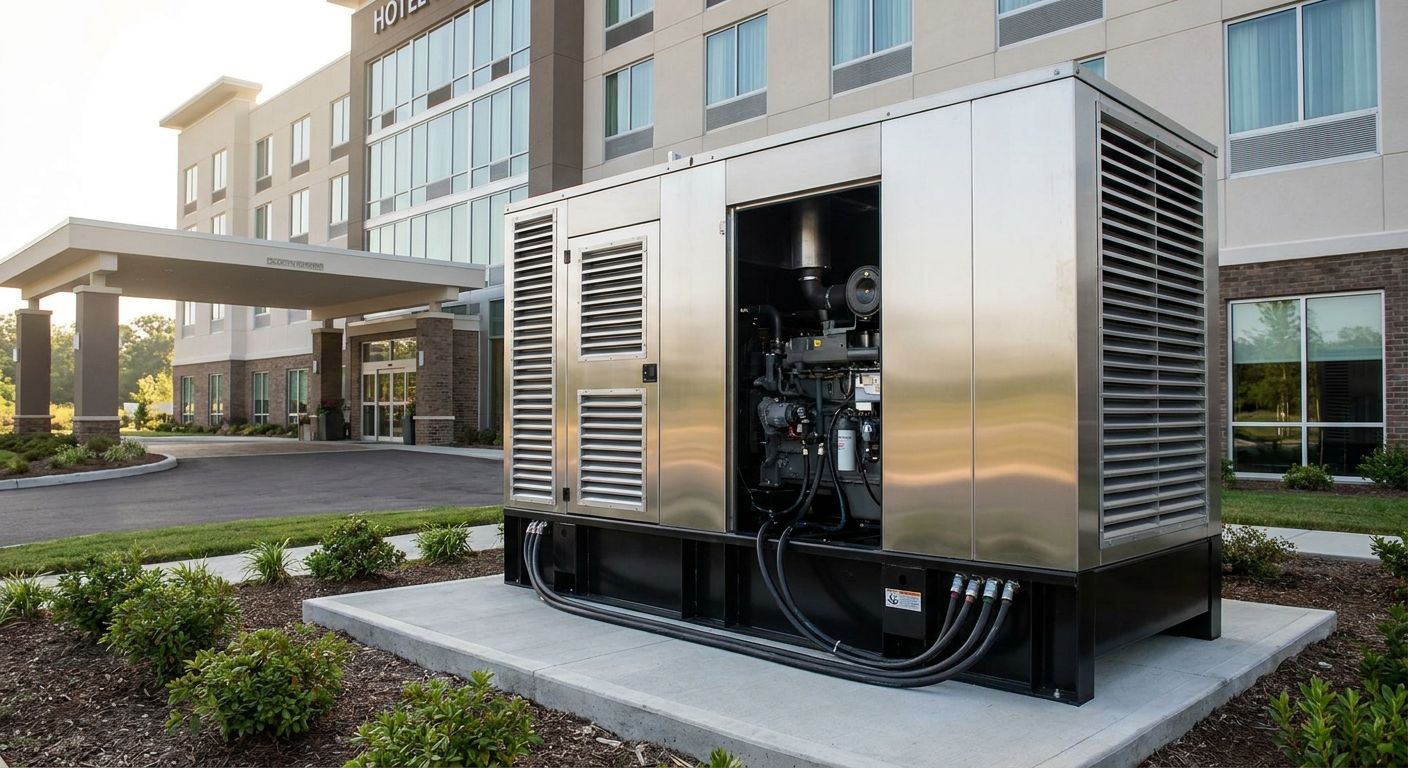
The plant floor backbone - 80kW to 125kW liquid-cooled, mid-size processing. This range covers multiple compressors, an ice machine, and pump motors running at once, which is the typical load profile for a facility processing 5,000 to 15,000 pounds of product a day. Kohler and Generac both build commercial liquid-cooled units in this range designed for continuous duty. Buy if your facility runs cold storage plus active processing lines on the same service.
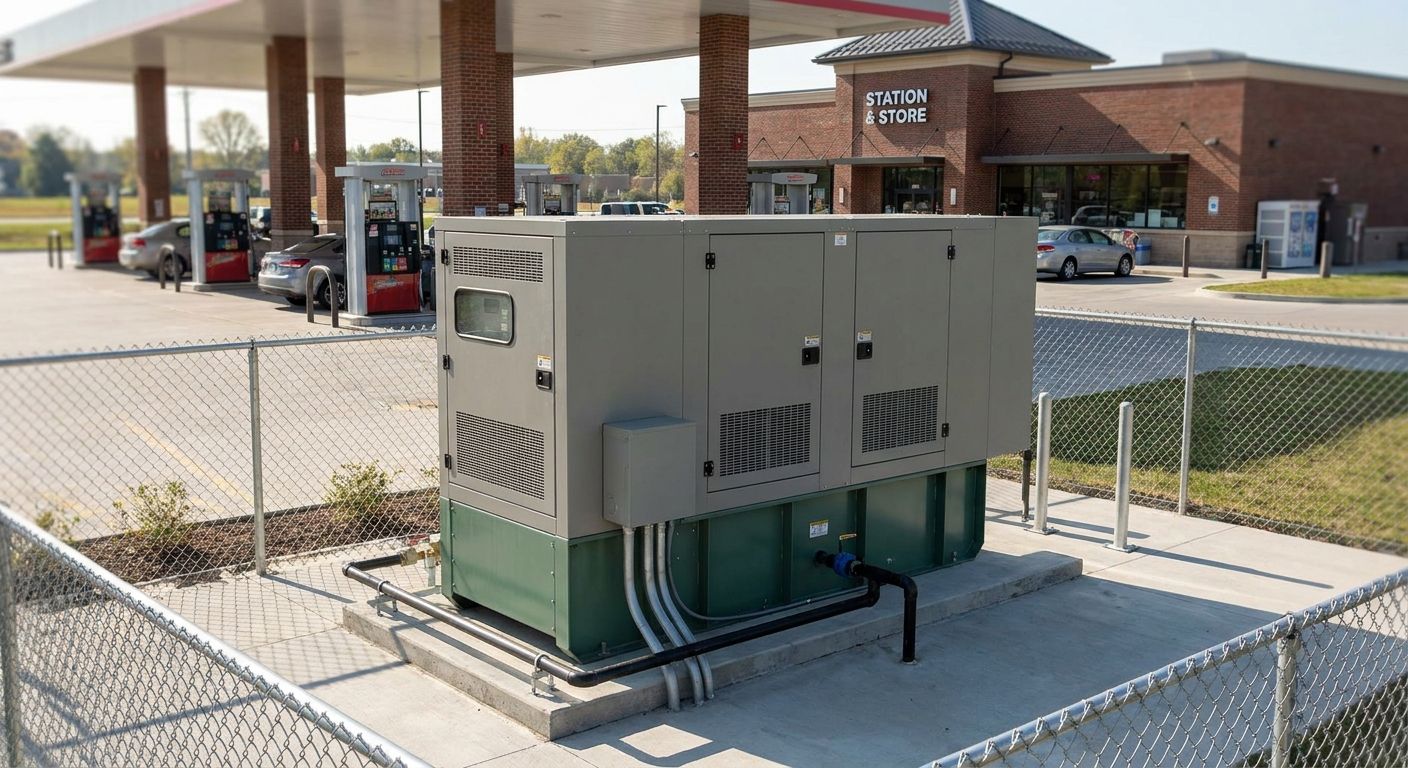
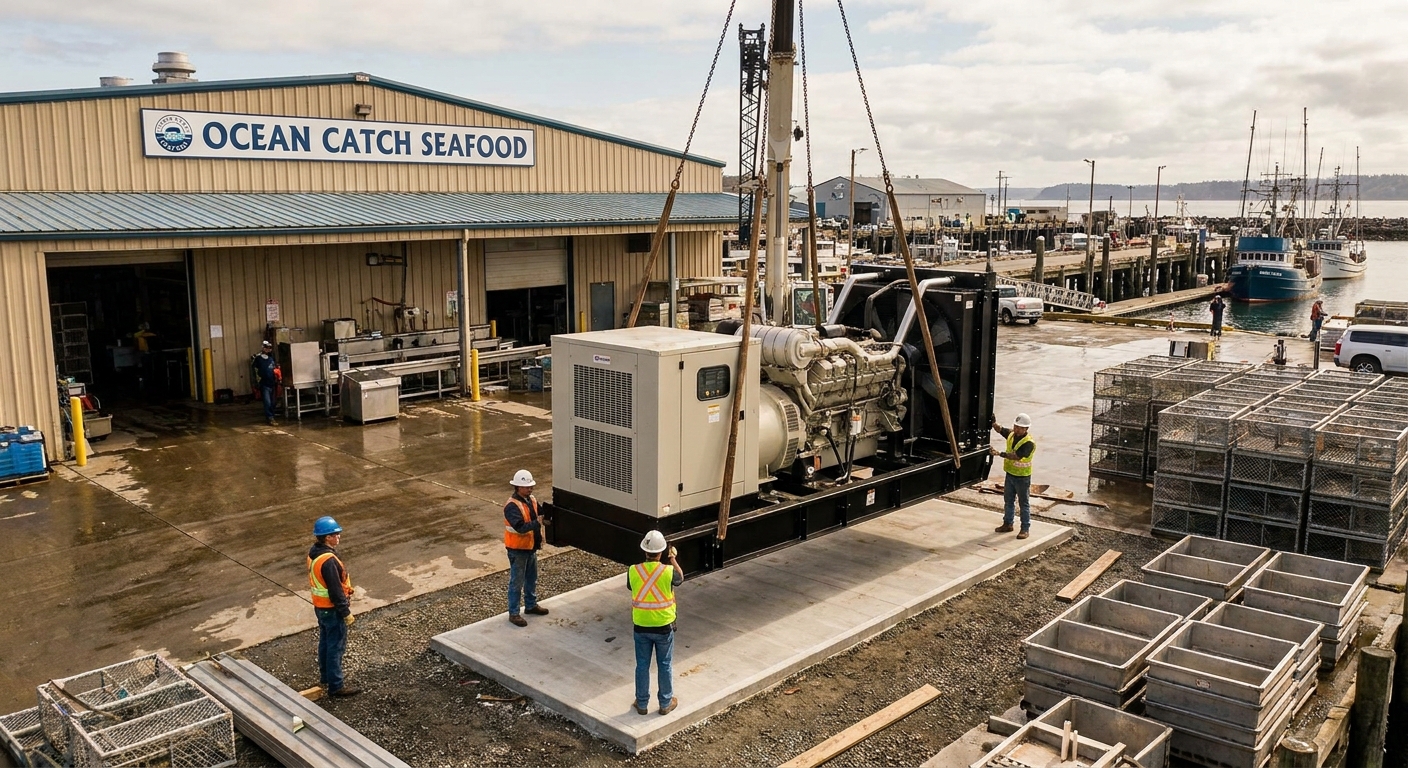
The heavyweight - 150kW and up, full processing plants with cold storage. Facilities running blast freezers alongside multiple compressor banks need this tier, and it requires a full load study before a unit gets specified, not a rule-of-thumb estimate. Consider - get the load study first, because oversizing here wastes fuel and undersizing trips the whole system during the exact hours you need it most.
The stopgap - 20kW to 30kW portable or towable, pumps and aerators only. Smaller hatcheries or holding tank operations that only need to keep water circulating and aerated during an outage can run on a towable unit in this range. Briggs & Stratton and Honeywell both make units suited to this narrower load. Consider for tank aeration only - not a substitute for a permanent installed system on a processing floor.
The wildcard - PTO or trailer-mounted units at dock facilities. These show up as a bridge solution when a permanent pad-mounted install isn't feasible yet, but they lack the automatic transfer switch and continuous-duty rating a processing operation actually needs. Skip as a permanent solution; fine only as a short-term bridge while a proper install gets scheduled.
What to avoid
- Undersized ice machine circuits. An ice machine's compressor start draw is easy to underestimate, and a generator that handles the cooler but stalls on the ice machine leaves you without either.
- Single-phase transfer switches on 3-phase equipment. This looks like a wiring shortcut that saves installation cost upfront and turns into a compressor that never restarts after an outage.
- Skipping the load study to save on the site visit. A quick nameplate-total estimate misses simultaneous starting loads and is the single most common reason a newly installed generator underperforms in its first real outage.
Verdict comparison
| Facility Type | Recommended Size | Cooling | Verdict |
|---|---|---|---|
| Retail seafood market | 26kW–48kW | Air-cooled | Buy |
| Mid-size processing plant | 80kW–125kW | Liquid-cooled | Buy |
| Full plant with cold storage | 150kW+ | Liquid-cooled | Consider (load study first) |
| Hatchery / holding tank aeration | 20kW–30kW | Portable/towable | Consider |
| Dock bridge power | Varies | PTO/trailer-mounted | Skip as permanent solution |
FAQ
What size generator does a seafood processing facility need?
Most mid-size processing facilities need 80kW to 125kW to cover walk-in coolers, ice machines, and pump motors running simultaneously. Retail-only seafood markets can run on 26kW to 48kW, and full plants with cold storage often need 150kW or more.
Is a liquid-cooled generator better than air-cooled for a processing plant?
Yes, for continuous duty cycles liquid-cooled units hold output better than air-cooled units during long, heavy loads. Air-cooled generators are built for intermittent residential use, not 48-hour storm-recovery runs.
How much power does an ice machine draw when it starts?
Ice machine compressors draw two to three times their running wattage on startup, which is the main reason undersized generators stall during peak load. A load study that accounts for simultaneous starts prevents this.
Do I need a 3-phase transfer switch for a seafood processing facility?
If your facility runs 3-phase compressors or ice machines, yes - a standard single-phase residential transfer switch will not carry that load safely. It needs to be rated and wired specifically for 3-phase commercial equipment.
Can a portable generator run a seafood processing facility?
A portable or towable unit in the 20kW to 30kW range can keep pumps and aerators running for holding tanks, but it is not built for continuous processing floor loads. Treat it as a stopgap, not a permanent installation.
How long can a standby generator run during a hurricane outage?
Natural gas and propane units tied to a utility line or large tank can run continuously for 24 to 72 hours or longer, which matters for storm recovery. Diesel units are limited by onsite fuel storage unless a delivery contract is in place.
What brands install standby generators for commercial seafood facilities?
Kohler, Generac, Honeywell, and Briggs & Stratton all make units suited to different tiers of seafood processing load, from portable aeration backup to full plant standby systems. The right brand depends on your kW requirement and duty cycle, not brand preference alone.
When should a processing facility schedule generator maintenance?
Maintenance should land before peak season - spring for oyster operations, early summer for shrimp - not during it. A generator that fails in the one week it is actually needed defeats its purpose.
One last thing
The detail most processors miss until it costs them a batch: salt air and washdown water corrode a standard residential-grade generator enclosure faster than almost any inland application, which means the housing spec matters as much as the kW rating for a coastal Alabama dock or processing floor. Ask specifically about corrosion-resistant housing and drainage placement before signing off on an install, not after the first season of washdown exposure.