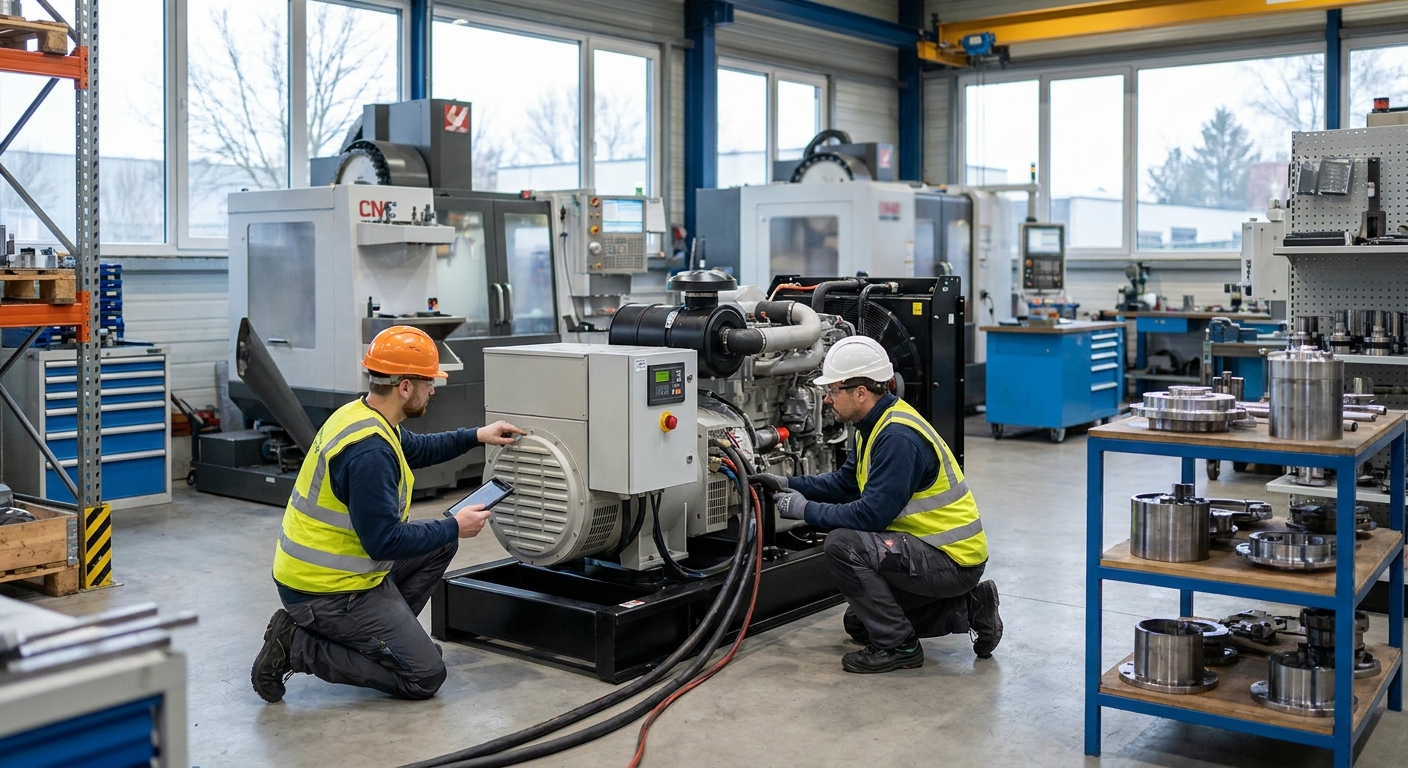
Machine shops don't lose orders when the lights flicker - they lose them when a CNC controller drops mid-cycle, a compressor stalls under load, or a walk-in cooler full of coolant and cutting fluid goes warm during a August outage. Coastal Alabama shops from Daphne to Gulf Shores deal with grid interruptions every hurricane season, and a standby generator sized for actual shop-floor load is the difference between a two-hour blip and a scrapped batch of parts.
- Machine shops need three-phase generator installation sized for motor startup surge, not just running watts - buy 25% above nameplate load.
- Generac and Kohler commercial units in the 48kW-150kW range cover most small shops with CNC mills, welders, and compressors - Buy.
- Briggs & Stratton residential-grade units under 26kW are a Skip for any shop running three-phase equipment.
- Automatic transfer switches rated for your panel's full amperage are non-negotiable for generator installation for machine shops.
Why this matters
A residential power outage costs a homeowner a warm fridge. A power outage at a machine shop costs scrapped stock, missed delivery windows, and idle labor at $25-$45 an hour while nothing gets made. Baldwin County Generators has installed standby systems across Baldwin County long enough to see the pattern: shop owners who wait until after a storm knocks out power for four days pay more, in downtime and in rush installation fees, than shops that plan generator installation before hurricane season.
The sizing math is different for a machine shop than a house. A homeowner needs enough kW to run a fridge, some lights, and maybe an AC unit. A shop needs enough kW to handle the startup surge of a three-phase lathe motor kicking on while a welder and an air compressor are already running. Get that math wrong and the generator trips offline the first time two machines start at once.
Who this is for
This guide is for owners of machine shops, fabrication shops, and small manufacturers in coastal Alabama running CNC equipment, welding rigs, air compressors, or refrigeration loads who need power that survives a grid outage without stopping production. If your shop runs single-phase tools off a home garage, the sizing tier is smaller. If you're running three-phase 208V or 480V equipment on a commercial panel, you're in the range where undersizing a generator is the single most common and most expensive mistake shop owners make in 2026.
What to look for in generator installation for machine shops
Three-phase output, not just total kW
Most CNC mills, lathes, and larger compressors run on three-phase power. A generator rated for single-phase residential loads won't run this equipment correctly even if the kW number looks big enough on paper. Confirm the unit is rated for three-phase output before anything else - this single spec eliminates most of the wrong recommendations you'll get from a generic contractor quote.
Surge capacity above running watts
A motor pulls 2-3x its running amperage for the first second or two on startup. A shop with a lathe, a compressor, and a dust collector that all cycle on and off needs a generator sized for the worst-case moment all three start close together, not just the sum of their running loads. Undersizing here is the number one reason shop generators trip offline under load in year one.
Automatic transfer switch rated for the full panel
The transfer switch has to match your panel's full amperage, not just the generator's output. A transfer switch that's undersized becomes the bottleneck even when the generator itself has capacity to spare. This is a common shortcut on cheap installs and it shows up as tripped breakers during the exact outage you installed the generator to survive.
Fuel type and run-time for multi-day outages
Natural gas gives you unlimited run time as long as the gas line stays pressurized, which is the more common failure point in a hurricane than the generator itself. Diesel and propane units need a fuel tank sized for the outage length you're planning for - 3 days minimum for coastal Alabama shops that have seen post-storm grid recovery stretch past a week.
Noise and placement for commercial zoning
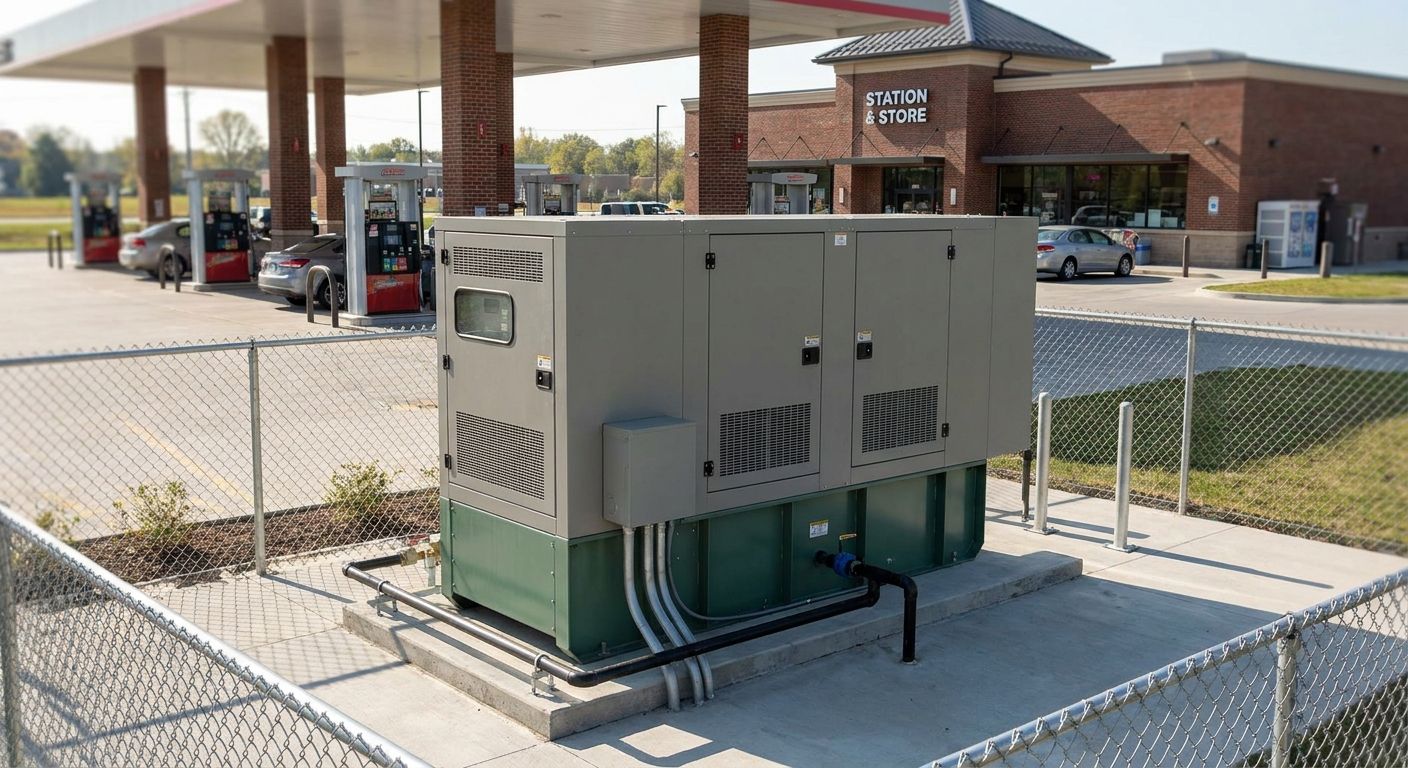
Commercial and light-industrial zones in Foley and Fairhope have different setback and noise ordinances than residential neighborhoods. A generator installer who's done commercial work in your specific municipality avoids a permitting delay that can push installation past the start of hurricane season.
Maintenance contract that matches shop hours
A generator sitting idle for months and then asked to carry a full shop load during a storm needs regular exercise cycles and fuel system checks. Shops running two shifts put more hours on a standby unit than a house does, and the maintenance interval should reflect that.
Top picks for shop-floor standby power
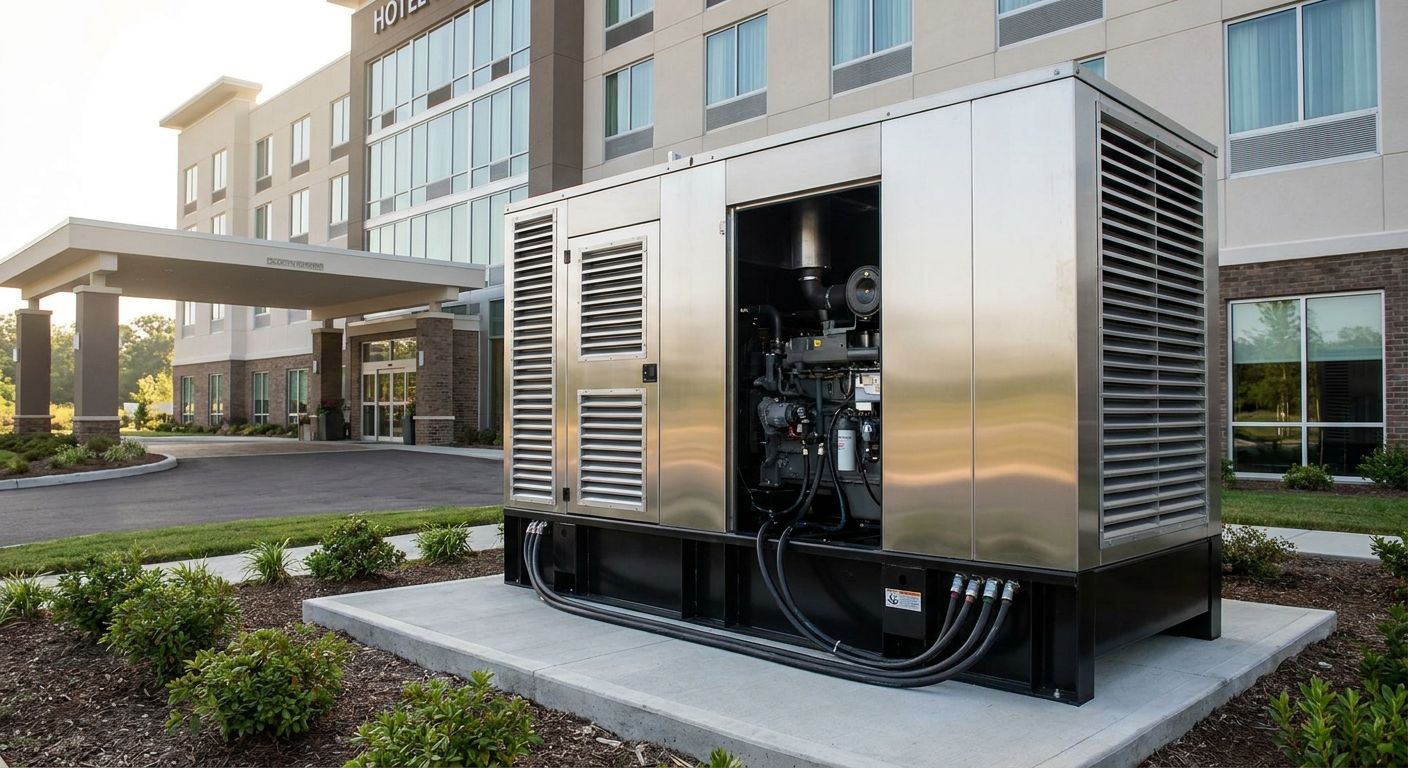
Generac commercial-grade units (48kW-150kW) - the safe pick for most small manufacturers. Three-phase output covers CNC and welding loads, and the 150kW ceiling handles a shop running multiple large machines on one panel. Buy for shops with 3-5 pieces of three-phase equipment.
Kohler commercial standby systems - the pick for shops that need paired sound attenuation for tighter commercial lots. Kohler's commercial line runs comparable kW tiers to Generac with different enclosure options for noise-sensitive zoning. Buy if your shop sits close to neighboring commercial tenants.
Honeywell standby units - a solid mid-tier option for shops transitioning from single-phase to light three-phase load, typically in the 20kW-48kW range. Consider for smaller fabrication shops and startups not yet running heavy CNC equipment.
Briggs & Stratton residential-grade generators (under 26kW) - built for home backup, not shop floors. They're not rated for sustained three-phase industrial load and the surge capacity isn't there for multiple motor starts. Skip for any shop running compressors and CNC equipment together.
Undersized single-phase units marketed as "whole building" backup - the wildcard that looks cheaper on the quote and fails the first time two machines start simultaneously. Skip - this is the most common regret call an installer gets after a storm.
What to avoid
- Generic residential sizing calculators. They don't account for three-phase motor surge, and a shop that trusts a homeowner-grade sizing tool ends up with a generator that runs the lights but trips the moment a compressor kicks on.
- Transfer switches sold as a package deal without checking your panel amperage. A switch rated below your panel's capacity caps your usable power no matter how big the generator is.
- Skipping the load study. A proper load study measures actual running and surge amperage across your specific equipment mix. Guessing based on nameplate wattage alone is how shops end up with a generator two sizes too small.
Get a load study for your shop
Sized-right generator installation for coastal Alabama machine shops.
Verdict comparison
| Brand | Phase output | Typical kW range | Best for | Verdict |
|---|---|---|---|---|
| Generac | Three-phase | 48kW-150kW | Multi-machine shops | Buy |
| Kohler | Three-phase | 48kW-150kW | Noise-sensitive commercial lots | Buy |
| Honeywell | Single/light three-phase | 20kW-48kW | Small fabrication shops | Consider |
| Briggs & Stratton | Single-phase | Under 26kW | Homes, not shops | Skip |
FAQ
How much does generator installation cost for a machine shop?
Commercial-grade generator installation for machine shops typically runs from the high five figures into the low six figures once the unit, transfer switch, and electrical work are included, depending on kW size and panel complexity. Three-phase equipment and larger square footage push costs toward the higher end.
What size generator does a small machine shop need?
Most small machine shops with CNC mills, welders, and compressors need a generator in the 48kW-150kW range with three-phase output. The exact size depends on the surge load when multiple machines start close together, which is why a load study matters more than a rough kW guess.
Is Generac or Kohler better for a machine shop?
Both Generac and Kohler make commercial-grade units in comparable kW tiers with three-phase output suitable for machine shops. Kohler's enclosure options tend to fit noise-sensitive commercial zoning better, while Generac's lineup covers a wider kW range for larger shops.
Can a residential generator run a machine shop?
A residential-grade generator like a Briggs & Stratton unit under 26kW cannot reliably run three-phase machine shop equipment. It lacks the surge capacity for motor startups and typically isn't rated for sustained industrial load.
How long does generator installation take for a commercial shop?
Commercial generator installation, including permitting, panel work, and transfer switch setup, generally takes several weeks from quote to final inspection, longer in peak pre-hurricane season demand across coastal Alabama.
Do machine shops need a load study before installing a generator?
Yes, a load study measuring actual running and surge amperage across your equipment is the only reliable way to size a generator correctly. Skipping it is the top reason shop generators trip offline under real-world load.
What fuel type is best for a machine shop generator?
Natural gas gives unlimited run time as long as the gas line stays pressurized, making it the preferred choice where available. Propane and diesel work well where natural gas isn't an option, provided the fuel tank is sized for at least 3 days of outage coverage.
Does a machine shop generator need an automatic transfer switch?
Yes, an automatic transfer switch rated for the shop's full panel amperage is required to bring backup power online without manual intervention. An undersized switch caps usable power regardless of generator size.
One last thing
The shops that regret their generator install almost never regret the brand - they regret skipping the load study. A unit sized off nameplate wattage alone looks fine on paper and trips the first time a lathe and a compressor start within the same two seconds, which is exactly the moment during a 2026 storm outage when a shop can't afford it to fail.
Baldwin County Generators is a licensed electrical contractor handling generator installation, repair, and maintenance for homes and businesses across Daphne, Fairhope, Foley, and Gulf Shores.