Gas stations and convenience stores lose more money per outage hour than almost any other retail format on the Gulf Coast, because fuel pumps, coolers, and POS systems all fail the instant grid power drops. This guide breaks down what a c-store or fuel retailer in coastal Alabama needs from a standby generator system in 2026, from sizing to fuel type to code compliance.
- A 150kW-200kW diesel or propane unit covers most single-island c-stores with coolers, pumps, and POS running simultaneously.
- NFPA 30A and NFPA 110 both apply to fuel-dispensing sites, and skipping either invites a failed inspection.
- Diesel is the safe pick for 48-hour+ storm runtimes; propane wins on lower maintenance for smaller sites.
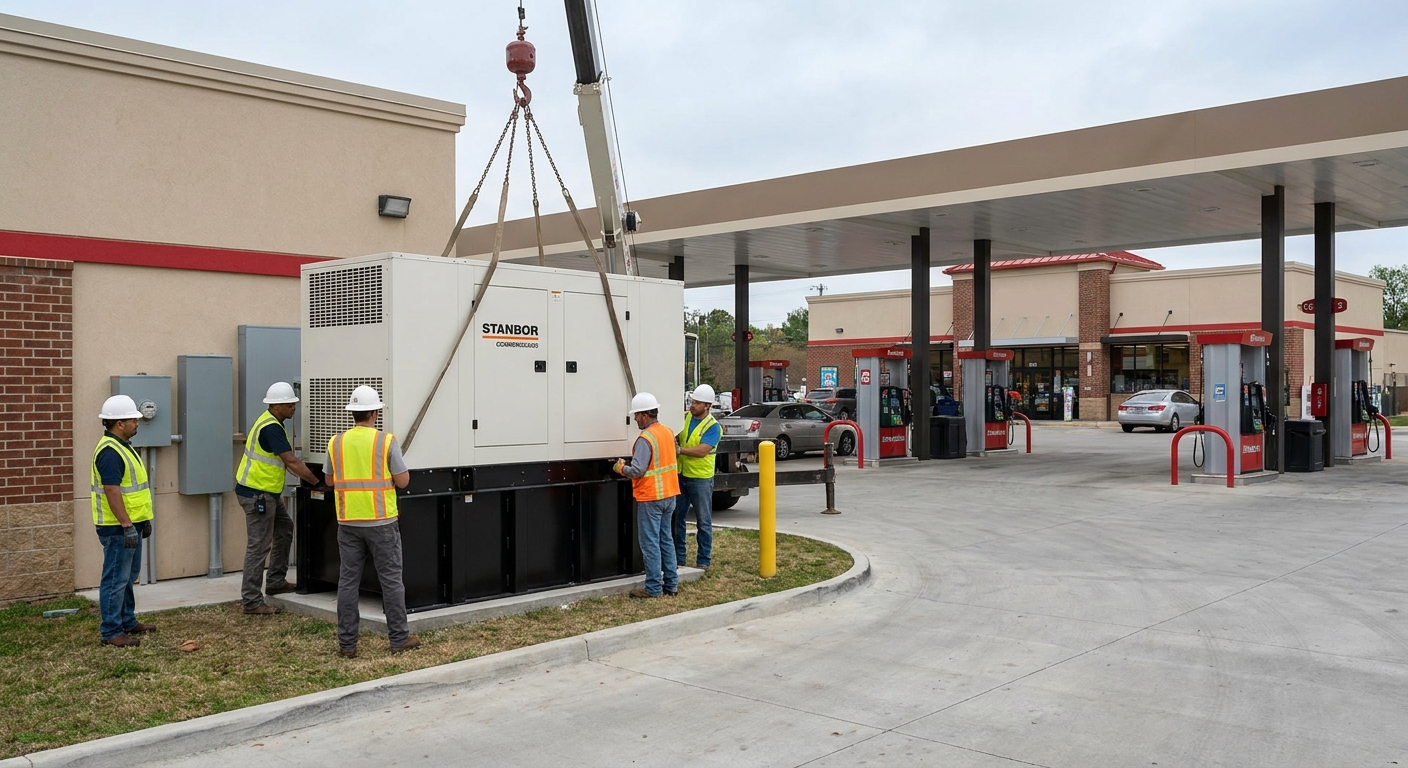
- Baldwin County Generators handles generator installation for gas stations from load calculation through final inspection.
Why this matters
A convenience store without power isn't just dark, it's closed. Fuel pumps need electricity to run, coolers spoil inventory within hours, and card readers stop processing the moment the grid drops. During hurricane season, that's exactly when demand for fuel and ice spikes hardest.
Insurance carriers and franchise agreements increasingly require backup power at fuel-dispensing sites, not just recommend it. Baldwin County Generators' installation team works with owners across Daphne, Fairhope, Foley, and Gulf Shores to size and permit systems that keep pumps, coolers, and registers running through a grid failure, not just the store lights.
The stakes are different for a fuel retailer than a house. You're dealing with Class I hazardous locations, NFPA 30A fuel-dispensing codes, and equipment that has to start automatically within 10 seconds under NFPA 110 Level 1 rules if the site carries life-safety loads like emergency lighting.
Who this is for
This guide is built for gas station owners, convenience store operators, and multi-site fuel retail managers deciding on generator installation for gas stations ahead of the 2026 storm season. It applies whether you run a single-island Shell or Exxon franchise in Foley or a five-pump travel center off I-10 near Loxley.
What to look for in generator installation for gas stations
Load calculation that includes every circuit, not just lights
A c-store's real load includes fuel dispenser pumps, walk-in coolers, freezer cases, POS terminals, card processors, and often a walk-in beer cave running compressors around the clock. Undersizing by even 20kW means the system trips under peak summer cooler load, which is the exact scenario a generator exists to prevent.
NFPA 30A and NFPA 110 compliance
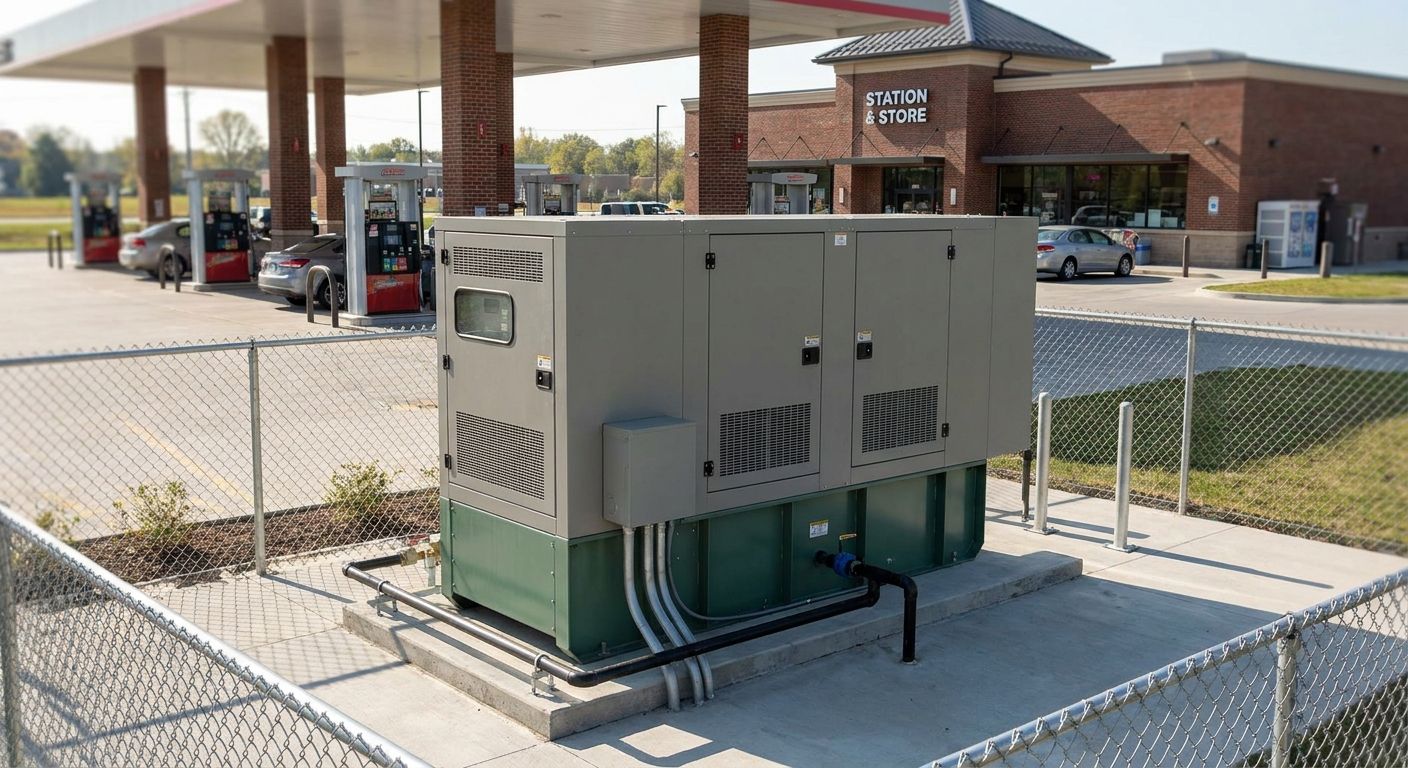
Fuel-dispensing facilities fall under NFPA 30A for hazardous location classification and often NFPA 110 for emergency and standby power systems. A generator placed too close to a dispenser island or vent pipe fails inspection regardless of how well it's sized, so setback distances get checked before equipment ever ships.
Automatic transfer switch rated for the full service size
The transfer switch has to match your building's amperage, typically 200A to 800A for a mid-size c-store, and switch over automatically. A manual switch means someone has to be on-site to flip power during a hurricane evacuation, which defeats the purpose.
Fuel type matched to expected runtime
Diesel units hold enough onboard fuel for 24 to 48 hours at full load without a refill, which matters when storm-related outages in coastal Alabama routinely stretch past 72 hours. Propane and natural gas units run indefinitely if connected to a utility gas line, but a propane tank still needs a refill schedule during extended outages.
Sound and emissions compliance near residential zoning
C-stores near Fairhope or Daphne neighborhoods often sit close to residential parcels, and local noise ordinances can restrict generator dB output during overnight hours. A unit rated at 65-70 dB at 23 feet is the common threshold contractors design around.
Maintenance contract with monthly exercise cycles
A generator that only runs during a real outage is a generator nobody has verified will start. Monthly no-load exercise cycles, typically 12-20 minutes, catch battery and starter issues before a hurricane does.
Top picks by site type
The safe pick for single-island stores: 150kW diesel standby unit. Covers pumps, one walk-in cooler, freezer cases, and POS for a typical 2,400-square-foot c-store with fuel canopy. Runtime on a 48-hour fuel tank keeps the site operational through a full grid outage window without a mid-storm refuel. Buy for any single-island site without natural gas service.
The budget-conscious pick: 80kW natural gas unit. Works where utility gas is already on-site and the store runs a smaller cooler footprint without a beer cave or walk-in freezer. Runs indefinitely as long as gas service stays up, which is common even when electric grid service fails. Consider if your utility gas line survives storms in your area; Skip if gas service history in your zip code is unreliable.
The wildcard: 200kW-250kW diesel for multi-pump travel centers. Handles five or more dispenser islands, a full kitchen or deli operation, and a larger walk-in cooler bank simultaneously. Overkill for a standard c-store but the right call for truck stops and travel centers running food service alongside fuel. Buy for any site with a commercial kitchen component.
The propane option: 100kW-125kW propane standby unit. Lower maintenance than diesel with no fuel degradation concerns for units that sit idle between storms, common for stores that only see a real outage once or twice a year. Tank refill logistics get tighter past 24 hours of continuous run time. Consider for moderate-load sites with predictable, shorter outage history.
Get a generator sizing quote for your site
Load calculations and code review for fuel-dispensing sites across coastal Alabama.
What to avoid
- Residential-grade automatic standby units under 48kW. These are built for home HVAC and lighting loads, not continuous-duty fuel pump motors and commercial refrigeration compressors running simultaneously.
- Generators placed inside NFPA 30A setback zones from dispensers or vent pipes. Looks like a space-saving install decision, fails inspection, and forces a re-permit and relocation.
- Manual transfer switches on any site carrying emergency lighting or life-safety circuits. NFPA 110 Level 1 sites need automatic transfer within 10 seconds, not a manual flip during an evacuation.
Verdict comparison
| Generator type | Best for | Runtime without refuel | Verdict |
|---|---|---|---|
| 150kW diesel | Single-island c-store | 24-48 hours | Buy |
| 80kW natural gas | Site with utility gas | Indefinite (gas dependent) | Consider |
| 200kW-250kW diesel | Multi-pump travel center | 24-48 hours | Buy |
| 100kW-125kW propane | Moderate-load, low-frequency outages | 24 hours | Consider |
FAQ
What size generator does a gas station need?
Most single-island convenience stores need 150kW to 200kW to run fuel pumps, coolers, freezers, and POS systems together in 2026. Multi-pump travel centers with food service typically need 200kW to 250kW.
Is diesel or propane better for gas station generators?
Diesel wins for extended storm outages because onboard tanks hold 24 to 48 hours of fuel without a refill. Propane and natural gas units run indefinitely if the utility gas line stays intact, which makes them a strong fit for sites with reliable gas service.
Do gas stations require standby generators by code?
Requirements vary by franchise agreement, insurance carrier, and local jurisdiction, but NFPA 30A and NFPA 110 govern how any backup generator gets installed at a fuel-dispensing site. Many franchise agreements now require backup power at fuel sites even where local code doesn't mandate it.
How close can a generator be installed to gas pumps?
NFPA 30A sets specific setback distances between generators and dispenser islands or vent pipes, and those distances get verified before equipment installation. A licensed electrical contractor checks these setbacks against your site plan before ordering equipment.
How often does a gas station generator need maintenance?
Standby generators at fuel-dispensing sites need monthly no-load exercise cycles of 12 to 20 minutes to verify starter and battery function. Annual service should include load bank testing to confirm the unit performs under real demand, not just at idle.
Can one generator power fuel pumps and the store building?
Yes, a properly sized system covers dispenser pumps, coolers, freezers, lighting, and POS on one automatic transfer switch rated for the building's full service amperage. Undersizing the load calculation is the most common reason a single unit fails to cover both.
How long can a gas station run on generator power during a hurricane?
A 150kW diesel unit with a full tank typically runs 24 to 48 hours before needing a refuel, which covers most Gulf Coast outage windows. Sites expecting longer outages should plan a fuel delivery contract in advance of storm season.
One last thing
The detail most c-store owners miss isn't the generator size, it's the transfer switch amperage. A perfectly sized 150kW unit paired with an undersized 200A switch on a building that actually draws 400A at peak cooler load will still brown out the site, because the switch, not the generator, becomes the bottleneck. Baldwin County Generators checks service amperage against actual peak draw before quoting any generator installation for gas stations, not just the generator's rated output.