Losing power for six hours during a summer storm costs a mid-size gym in Fairhope or Foley more than a broken treadmill - it costs member trust, spoiled protein shakes in the cooler, and a locked-out access control system. This guide breaks down generator installation for fitness centers along coastal Alabama, from studio-size operations to full-amenity clubs with pools and saunas.
- A 48kW Generac standby unit covers most 5,000-8,000 sq ft gyms in Baldwin County - Buy for HVAC, lighting, and equipment.
- Boutique studios under 3,000 sq ft run fine on a 22kW unit; skip anything larger, it's wasted fuel cost.
- Big-box clubs with pools, saunas, and commercial kitchens need 80kW or higher - Consider a Kohler industrial unit before peak season.
- Generator installation for fitness centers in coastal Alabama should always include an automatic transfer switch rated for the full electrical panel, not a partial-load workaround.
Why this matters
Hurricane season along the Gulf Coast runs June through November, and Baldwin County has logged multiple named-storm power outages every year since 2019. A gym that goes dark doesn't just lose HVAC - it loses refrigerated smoothie inventory, keyless entry systems, security cameras, and every treadmill display mid-session.
Membership-based fitness businesses run on recurring revenue. A three-day outage in peak season (July-August in Gulf Shores) can trigger a wave of cancellations if members can't access the building or the AC fails in a 95-degree studio. Standby power isn't a convenience for a gym - it's a retention tool.
Who this is for
This guide is built for gym owners, fitness franchise operators, and facility managers running commercial spaces in Daphne, Fairhope, Foley, and Gulf Shores - anywhere from a 2,000 sq ft boutique studio to a 15,000 sq ft multi-amenity club with a pool and locker rooms. If you're weighing generator installation against just riding out storms on a portable unit, this is the read that saves you a callback in July.
What to look for in generator installation for fitness centers
Total connected load, not square footage
Gyms draw power unevenly - cardio equipment, HVAC, water heaters for showers, and refrigeration units for smoothie bars all pull at different times. A licensed electrician needs to calculate your actual connected load in kW, not estimate off square footage alone. Undersizing here means breakers trip mid-storm when the AC and every treadmill kick on together.
Fuel type and on-site fuel storage
Natural gas units run indefinitely as long as the gas line stays pressurized, which is common but not guaranteed during a major hurricane. Diesel units need an on-site tank - typically sized for 24-48 hours of runtime - and require refueling logistics if an outage runs past 2026's average coastal restoration window of 3-5 days.
Automatic transfer switch rating
The transfer switch has to match your full panel amperage, not a partial load. A gym running on a switch rated below full capacity will see circuits shed unpredictably - usually the ones members notice first, like locker room lighting or the front desk POS system.
Noise and placement compliance
Commercial zoning in towns like Fairhope and Daphne often restricts generator noise levels and setback distances from property lines. A unit placed too close to a neighboring business or residential zone can trigger a code violation before you ever need it in a storm.
Maintenance contract terms
A standby generator that hasn't run a self-test cycle in six months is a coin flip during an actual outage. Look for a maintenance plan that includes quarterly load-bank testing and oil changes on a set interval, not just an annual drive-by inspection.
Warranty and authorized dealer status
Kohler and Generac both void manufacturer warranties on units installed by non-authorized dealers. Confirm the installer carries current authorized-dealer status for the brand you're buying, not just a general electrical license.
Get a generator sizing quote
Licensed electricians size your gym's load before you buy anything.
Top picks by facility size
The boutique studio pick - 22kW natural gas unit. For a spin, yoga, or CrossFit box under 3,000 sq ft, a 22kW Generac or Kohler unit covers lighting, sound systems, mini-fridges, and one or two AC units. Installed cost typically lands in the $12,000-$16,000 range for coastal Alabama in 2026. Verdict: Buy - this is the right-sized workhorse for a single-studio operation.
The mid-size gym pick - 48kW Generac standby. A 5,000-8,000 sq ft gym with a full cardio floor, free weights, and locker rooms needs closer to 48kW to run HVAC zones, water heaters, and equipment simultaneously without shedding load. Installed pricing runs $22,000-$30,000 depending on panel work. Verdict: Buy - this is the sweet spot for most single-location gyms in Foley and Daphne.
The big-box club pick - 80kW+ Kohler industrial unit. Clubs with a pool, sauna, commercial kitchen, and multiple HVAC zones push past 80kW of connected load fast. These installs run $45,000 and up and often require a dedicated concrete pad and three-phase service upgrade. Verdict: Consider - worth it if you're running a full-amenity club, overkill for a standard weight-room-and-cardio layout.
The diesel backup pick - for facilities with unreliable gas service. If your location sits on the edge of a natural gas line or has had supply interruptions before, a diesel unit with an on-site tank removes that dependency entirely. Fuel storage adds cost and requires periodic tank inspection. Verdict: Consider - only if gas reliability is a known issue at your address.
The portable-unit workaround. Some owners try to bridge outages with a towable or wheeled generator instead of a standby install. These units max out around 10-20kW, can't run automatically, and require someone on-site to start them and manage extension cords through a locked building. Verdict: Skip - this is a stopgap, not a plan, for any facility running member-facing hours.
What to avoid
- Undersized units bought on square footage guesses. A generator sized off floor plan alone, without a load calculation, will trip breakers the first time HVAC and equipment run together.
- Non-authorized-dealer installs to save upfront cost. Saving $2,000-$3,000 on installation isn't worth voiding a Kohler or Generac warranty on a $30,000 unit.
- Skipping the transfer switch upgrade when adding equipment later. Gyms that expand - adding a sauna, a second HVAC zone, a juice bar - often forget the transfer switch needs to scale with the new load.
Verdict comparison
| Facility Size | Recommended kW | Installed Cost (2026) | Fuel Type | Verdict |
|---|---|---|---|---|
| Boutique studio (under 3,000 sq ft) | 22kW | $12,000-$16,000 | Natural gas | Buy |
| Mid-size gym (5,000-8,000 sq ft) | 48kW | $22,000-$30,000 | Natural gas | Buy |
| Big-box club with pool/sauna | 80kW+ | $45,000+ | Natural gas/diesel | Consider |
| Gas-unreliable location | Match load | Varies + tank cost | Diesel | Consider |
| Any staffed facility | N/A | $2,000-$5,000 | Portable | Skip |
FAQ
How much does generator installation for fitness centers cost in 2026?
Installed costs for a coastal Alabama gym in 2026 range from $12,000 for a 22kW unit covering a boutique studio to $45,000+ for an 80kW industrial unit covering a full-amenity club with a pool. Panel upgrades and concrete pad work add to the total.
Is a 48kW generator big enough for a mid-size gym?
A 48kW Generac or Kohler unit covers most 5,000-8,000 sq ft gyms running HVAC, water heaters, and standard equipment simultaneously. Facilities with pools, saunas, or commercial kitchens need to size up past 48kW.
Can a gym run on a portable generator during a storm?
A portable generator can bridge short outages but caps out around 10-20kW and requires manual startup, making it unreliable for member-facing hours. Standby installation with an automatic transfer switch is the only setup that keeps a staffed facility running unattended.
Does gym generator installation need a permit in coastal Alabama?
Yes, commercial standby generator installs in towns like Daphne, Fairhope, and Foley require electrical permits and zoning compliance for noise and setback distance. A licensed electrical contractor handles the permitting as part of the install.
How long does a gym generator installation take?
A standard installation for a mid-size gym typically takes 1-3 days once the unit and permits are in place, though panel upgrades or three-phase service work can extend the timeline. Scheduling before hurricane season avoids the peak-demand backlog.
What brands are best for commercial gym generators?
Kohler and Generac both make commercial-rated standby units suited to gym electrical loads, and both require authorized-dealer installation to keep the manufacturer warranty valid. Briggs & Stratton and Honeywell units cover smaller studio-scale installs.
Do gyms need natural gas or diesel generators?
Natural gas works for most gyms with reliable gas line pressure and runs indefinitely without refueling. Diesel is the better call for locations with unreliable gas service, though it requires on-site fuel storage and tank maintenance.
One last thing
Most gym owners size the generator for the building and forget the transfer switch has to match the panel, not just the unit's output - a $30,000 generator paired with an undersized switch still sheds load unpredictably. Get the load calculation done before you pick a kW number, not after.
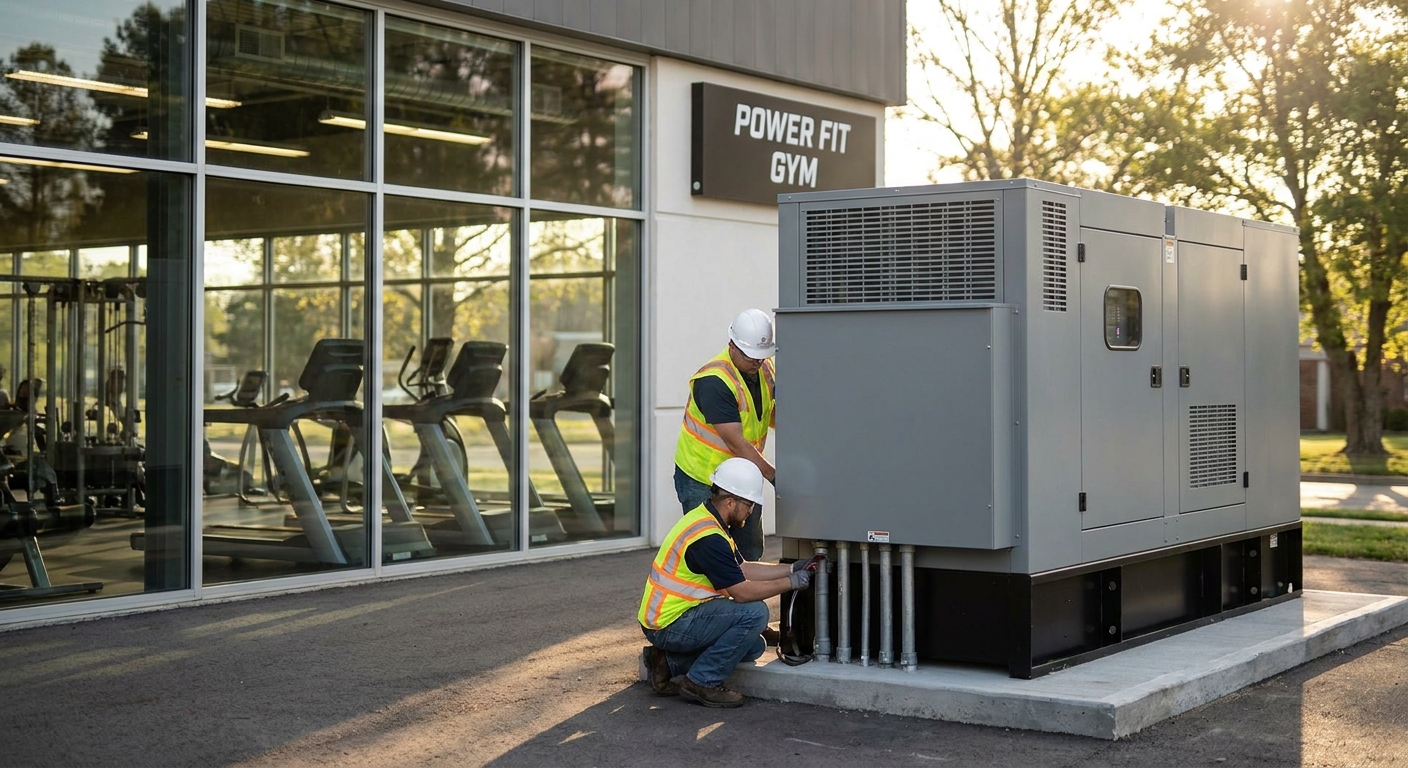
Baldwin County Generators handles licensed generator installation for fitness centers, gyms, and commercial facilities across Daphne, Fairhope, Foley, and Gulf Shores, with authorized-dealer status on Kohler, Generac, Honeywell, and Briggs & Stratton units.