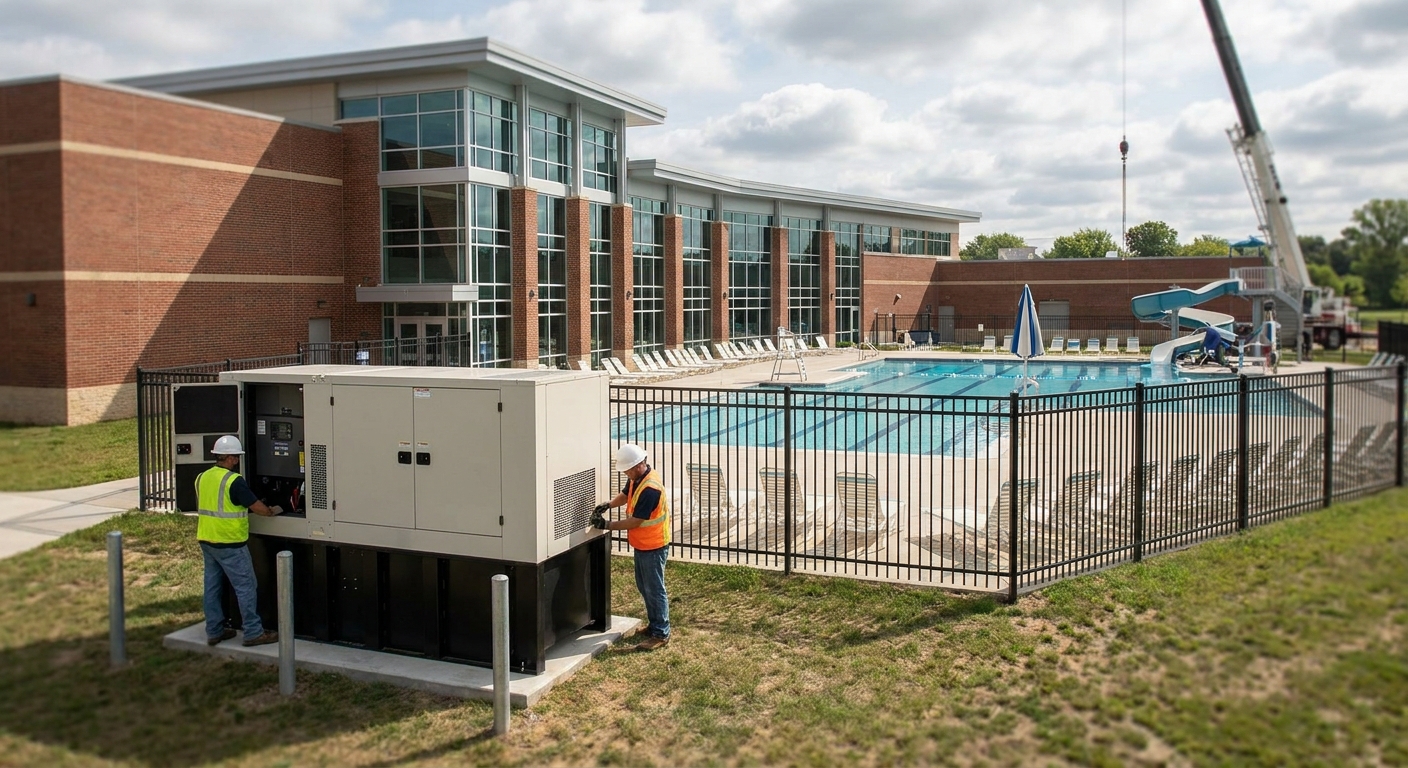
Community pools and recreation centers in coastal Alabama can't afford a dead pump or a dark clubhouse during storm season - this guide breaks down what generator installation for recreation centers actually requires, from load sizing to code compliance.
- Generac Protector series handles pool pump and HVAC loads at recreation centers up to 150kW - Buy for full-facility coverage.
- Kohler commercial standby units run quieter near residential zones bordering rec centers in Fairhope and Daphne - Consider.
- Honeywell commercial units cost less upfront but need closer service monitoring during hurricane season - Consider.
- Undersized residential-grade generators fail under pool pump startup surge - Skip them for any facility over 20,000 square feet.
- Generator installation for recreation centers in 2026 requires a licensed electrical contractor for ATS sizing and NFPA 110 compliance.
Why this matters
A municipal pool or clubhouse loses more than lights when the power drops. Filtration pumps stop cycling, chlorine dosing goes offline, and HVAC systems that keep locker rooms and fitness areas usable shut down within minutes.
Baldwin County sees storm-driven outages every hurricane season, and coastal facilities in Foley and Gulf Shores routinely lose grid power for 24 to 72 hours after a named storm. A recreation center running on standby power keeps membership revenue flowing and keeps insurance and health-department requirements met instead of forcing a closure notice.
Baldwin County Generators installs and services whole-facility standby systems for exactly this kind of load - pool pumps, HVAC, and clubhouse electrical all on one automatic transfer switch.
Who this is for
This guide is for facility managers, HOA boards, and municipal parks departments running community pools, clubhouses, gyms, or multi-building recreation centers across Daphne, Fairhope, Foley, and Gulf Shores who need power that stays on through hurricane season without manual intervention.
What to look for in generator installation for recreation centers
Load capacity sized for startup surge
Pool pumps and chillers draw two to three times their running wattage on startup. A generator sized only for steady-state load will stall or trip the moment the pump kicks on, which is the single most common commercial sizing mistake in 2026 installs.
Fuel type and supply reliability
Natural gas units run indefinitely on a utility line, while propane units need a tank sized for at least 48 to 72 hours of runtime during an extended outage. Facilities without natural gas access - common in parts of unincorporated Baldwin County - need propane tank capacity calculated before installation, not after.
Automatic transfer switch rated for commercial loads
A residential ATS won't handle the three-phase panels typical in a rec center's mechanical room. The switch has to match amperage and phase configuration exactly, or the whole system is a liability, not a backup.
Code compliance and permitting
Commercial standby installs fall under NFPA 110 and local Baldwin County electrical permitting, which residential installs don't. A licensed master electrician needs to pull permits and schedule inspection before the unit goes live - skipping this step voids most manufacturer warranties.
Noise and enclosure near residential zones
Many community pools sit inside or adjacent to neighborhoods in Daphne and Fairhope. Sound-attenuated enclosures matter here in a way they don't for a rural facility, and some municipalities cap generator noise at set decibel limits during testing runs.
Service response during hurricane season
A generator that runs perfectly in June and fails in a September storm is worse than no generator at all. Maintenance contracts with guaranteed response windows during hurricane season should be part of the purchase decision, not an afterthought.
Get a standby power quote for your facility
Sizing and code review for pools, clubhouses, and rec centers across coastal Alabama.
Top picks for recreation center standby power
Generac Protector Series - the workhorse
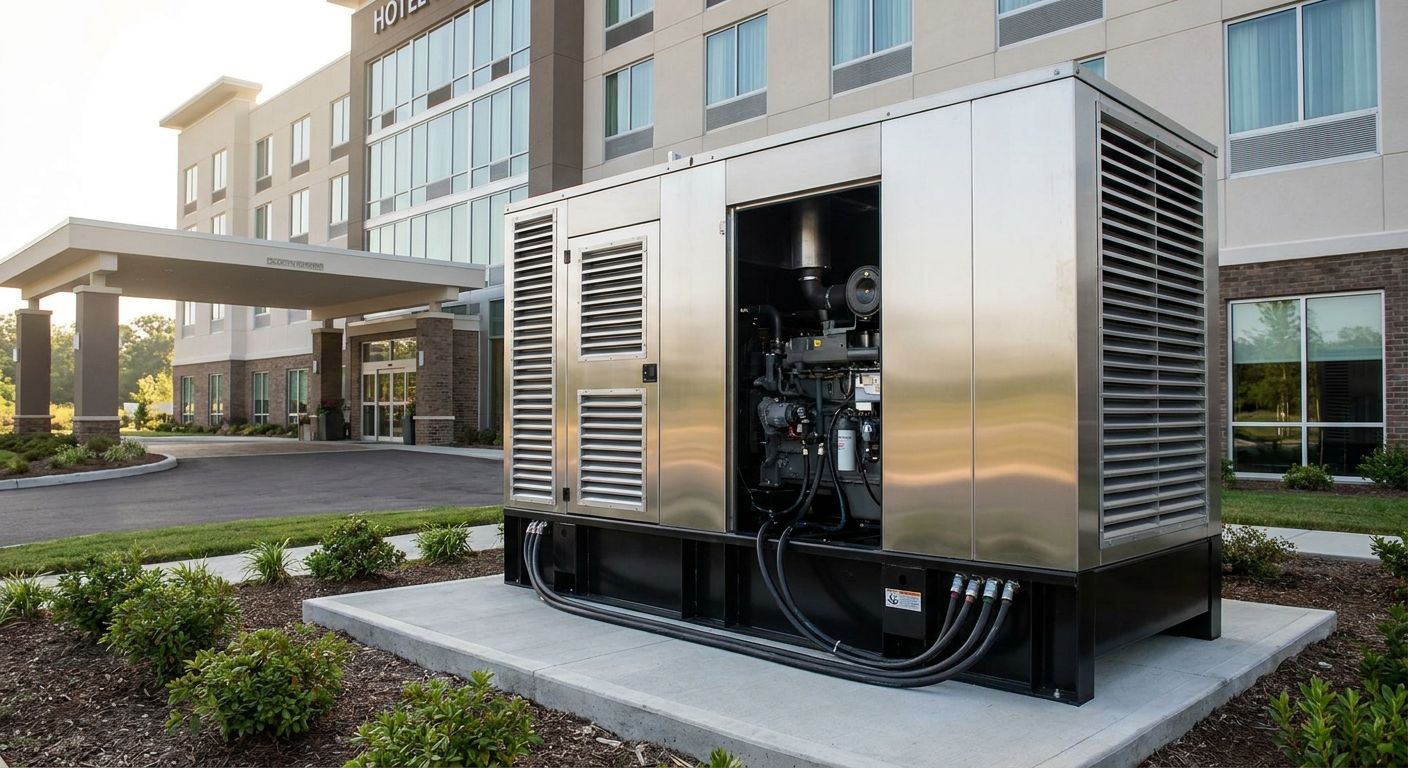
One spec that matters: Generac's commercial Protector line scales from 48kW to over 150kW, which covers everything from a single clubhouse to a full aquatic center with HVAC, lighting, and pump loads on one system. That range makes it the default recommendation for multi-building recreation centers in 2026. Verdict: Buy for any facility running a pool, gym, and clubhouse off one electrical service.
Kohler Commercial Standby - the quiet option
Kohler's commercial units are built with sound-attenuated enclosures as standard, which matters when the generator pad sits 40 feet from a residential fence line in a neighborhood like Fairhope's older subdivisions. Runtime and output match Generac closely, but the noise profile is the deciding factor for tight-lot facilities. Verdict: Consider where noise ordinances or neighbor proximity are a real constraint.
Honeywell Commercial - the budget play
Honeywell units cost less to install upfront but come with a tighter service network in this region, meaning maintenance contracts need to specify response times in writing. For a smaller clubhouse-only rec center without a pool, this is a reasonable way to get standby power without the full commercial budget. Verdict: Consider for single-building facilities under 10,000 square feet.
Briggs & Stratton Commercial - the small-facility fit
Briggs & Stratton's commercial line tops out lower than Generac or Kohler, which makes it a fit for a small neighborhood clubhouse but a poor fit for anything with a full-size pool filtration system. Verdict: Buy for clubhouse-only facilities, Skip for full aquatic centers.
Undersized residential units - the trap
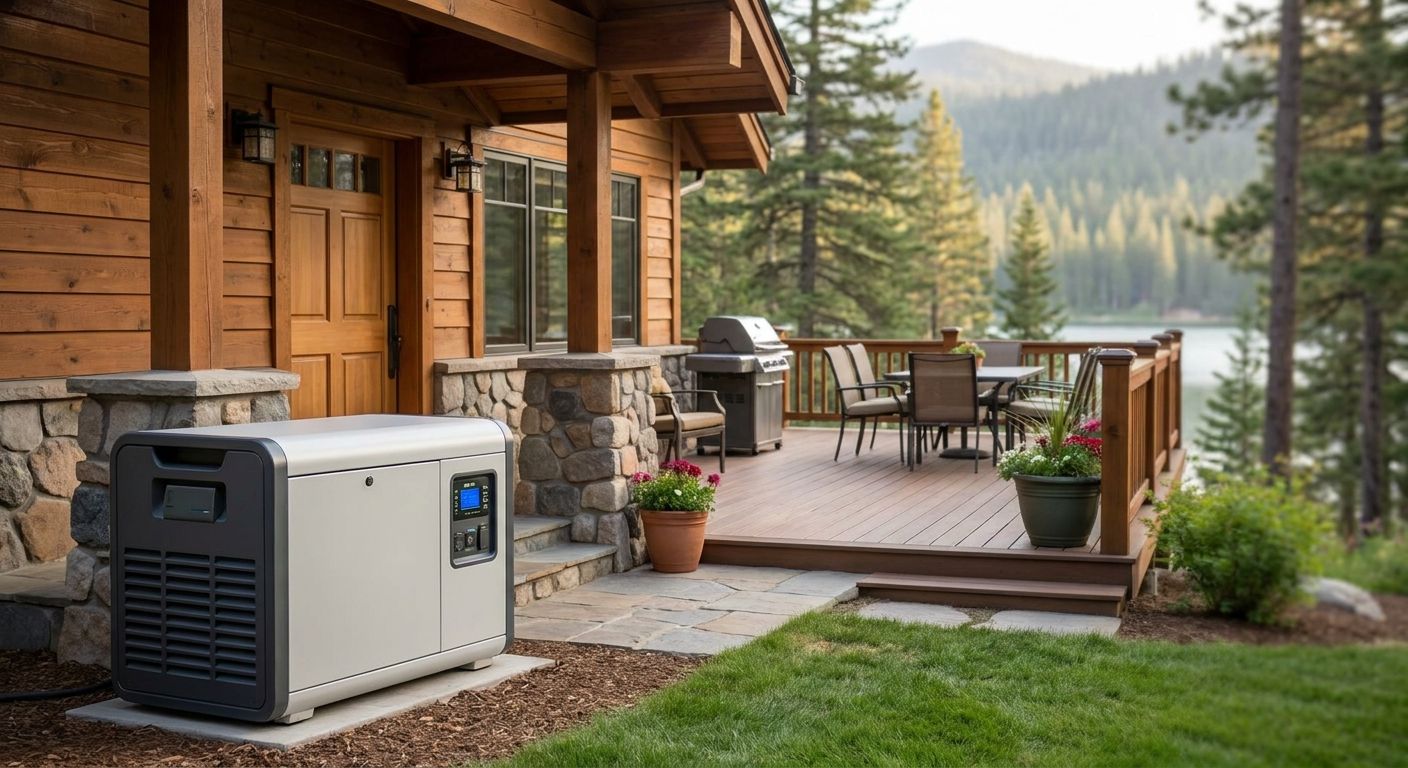
A 20kW residential-grade unit looks like it saves money on paper, but it can't handle the surge from a commercial pool pump or a rooftop HVAC compressor. Facilities that install these end up replacing the unit within two to three years. Verdict: Skip for any facility with commercial-grade mechanical equipment.
What to avoid
- Residential-rated transfer switches on commercial panels. They look compatible on a spec sheet but aren't rated for the phase load, and they fail inspection.
- Propane tanks sized for 24 hours. Storms that knock out grid power in Baldwin County often keep crews from refueling for several days - size for 72 hours minimum.
- Skipping the load bank test at commissioning. A generator that starts fine on a no-load test can still stall under real pool pump draw. Facilities that skip this step find out during the first real outage, not before.
Comparison table
| Brand | kW Range | Fuel Options | Best For | Verdict |
|---|---|---|---|---|
| Generac Protector | 48kW–150kW+ | Natural gas, propane | Full-facility, pool + clubhouse | Buy |
| Kohler Commercial | 40kW–150kW | Natural gas, propane | Noise-sensitive, residential-adjacent | Consider |
| Honeywell Commercial | 20kW–100kW | Natural gas, propane | Clubhouse-only, smaller budget | Consider |
| Briggs & Stratton Commercial | 15kW–80kW | Natural gas, propane | Small clubhouse, no pool | Buy (small) / Skip (large) |
| Residential-grade units | Under 25kW | Natural gas, propane | Not recommended for commercial loads | Skip |
FAQ
What size generator does a community pool need?
Most community pools with a clubhouse and filtration system need between 48kW and 150kW depending on pump count and HVAC load. A licensed electrician needs to calculate startup surge, not just running wattage, before sizing the unit.
Is natural gas or propane better for a recreation center generator?
Natural gas runs indefinitely on a utility line and works well where service is available. Propane is the better option in parts of Baldwin County without natural gas access, but the tank needs to hold at least 48 to 72 hours of fuel.
How much does generator installation for recreation centers cost in 2026?
Commercial standby installation for a mid-size pool and clubhouse facility typically runs into five figures once the unit, transfer switch, pad, and fuel line are included. Exact pricing depends on kW size, fuel type, and site conditions, so a site-specific quote is the only reliable number.
Do recreation centers need a permit for a standby generator?
Yes. Commercial installations fall under local Baldwin County electrical permitting and NFPA 110 code, and inspection is required before the system can legally operate. Skipping this step also voids most manufacturer warranties.
How often should a rec center generator be tested?
Commercial standby units should run a load test at least monthly and a full inspection before hurricane season each year. Facilities that skip regular testing find problems during an actual outage instead of during scheduled maintenance.
Can a residential generator power a community pool?
No, not reliably. Residential-grade units under 25kW stall under the startup surge from commercial pool pumps and HVAC compressors, and they lack the three-phase transfer switch commercial panels require.
Which generator brand is quietest for a facility near homes?
Kohler's commercial standby line uses sound-attenuated enclosures as standard, making it the better fit for pools or clubhouses close to residential property lines in towns like Fairhope and Daphne.
One last thing
The detail most rec center boards miss isn't the generator size - it's the fuel tank. A facility can install a perfectly sized 100kW unit and still go dark on day three of an outage because the propane tank was sized for a weekend, not a week. Size the tank for the storm, not the spec sheet, and 2026 hurricane season won't be the one that shuts the pool down.