Cold storage rooms and meat processing lines in coastal Alabama lose product fast when the power drops - a walk-in freezer can climb above safe temperature in under four hours during a summer outage, and hurricane season 2026 will bring the same grid risk it always does along the Gulf Coast.
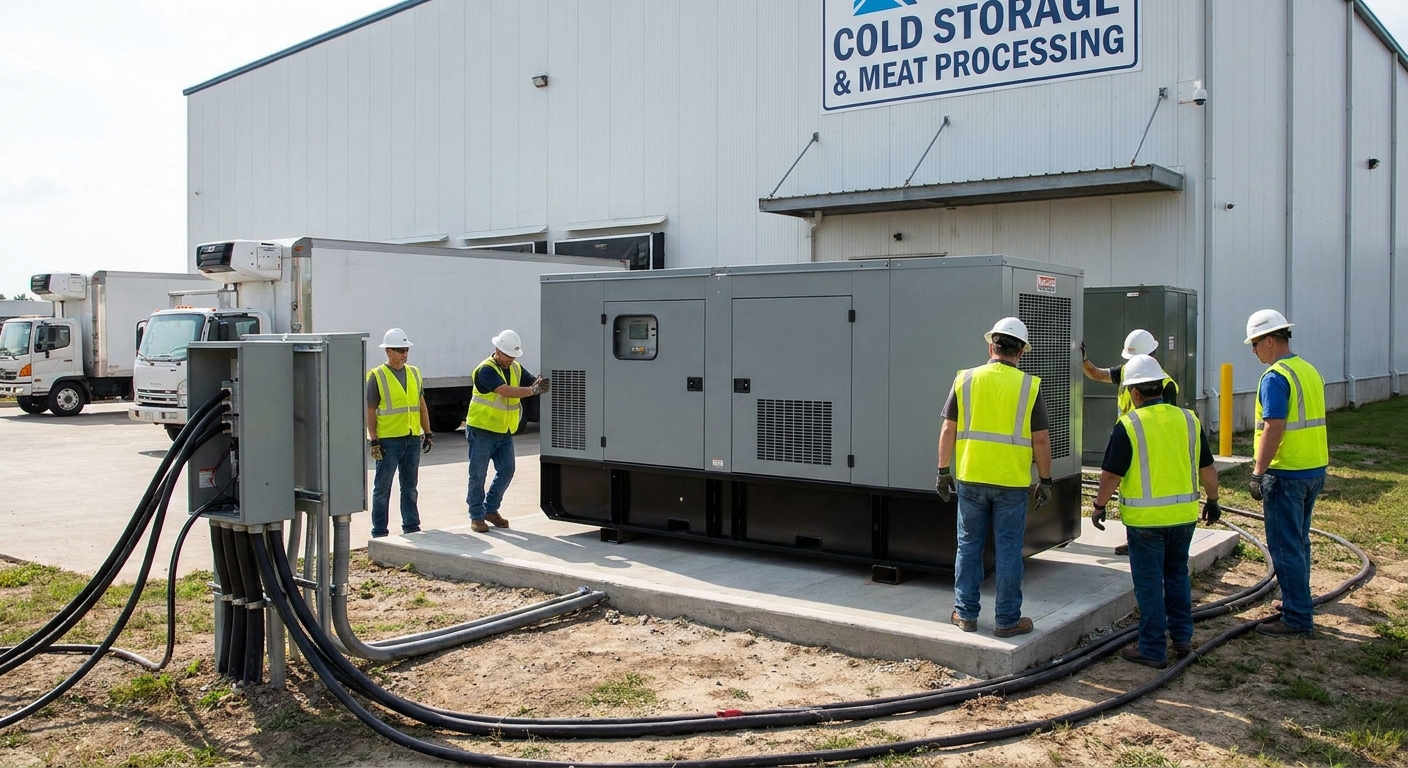
- Generator installation for cold storage in Baldwin County needs 60-125kW depending on compressor count - undersized units trip on startup load.
- Kohler and Generac commercial standby units with a 10-second automatic transfer switch protect USDA-regulated product continuity. Buy for meat processors.
- Portable generators are a Skip for any facility with more than one compressor circuit - they can't carry surge load.
- Propane and diesel both work in Baldwin County; diesel needs a fuel contract, propane needs tank space. Weigh both before 2026 storm season.
Why this matters
A residential 22kW unit will not run a walk-in cooler, a blast freezer, and a meat saw at the same time. Cold storage and meat processing operators need generator installation for cold storage sized around locked-rotor amperage on every compressor, not just the nameplate wattage of the building.
USDA and FDA food-safety rules also treat a prolonged outage as a compliance event, not just an inconvenience. A facility that can't document continuous refrigeration during a 2026 storm event risks a product hold or a failed inspection, on top of the spoilage loss itself.
Who this is for
This guide is built for owners and operators of cold storage warehouses, meat processing plants, seafood docks, and butcher shops across Daphne, Fairhope, Foley, and Gulf Shores who run refrigeration or freezer compressors as a core part of daily operations. If your business loses inventory value within hours of a power cut, this is your buyer profile.
What to look for in generator installation for cold storage
Compressor startup load, not just running watts
Compressor motors draw 3-6 times their running amperage for the first few seconds on startup. A generator sized only for running load will stall or shut down the moment two compressors kick on together, which is the single most common sizing mistake in meat processing generator installation.
Automatic transfer switch speed
A 10-second automatic transfer switch keeps refrigeration compressors from a hard restart cycle that shortens compressor life. Manual switches or delayed transfer beyond 30 seconds let internal temperatures creep before backup power engages, which matters for HACCP documentation.
Fuel type and on-site run time
Propane tanks need footprint but no delivery contract during a storm; diesel needs a standing fuel service agreement but burns more efficiently per kW at continuous load. Natural gas works if the site already has a reliable line, since it never runs out during an extended 2026 outage - but Gulf Coast utility gas lines can also fail in a major storm.
Load management across multiple compressors
Facilities running more than two refrigeration circuits need a load management module that staggers compressor restarts rather than firing them simultaneously. Without staggered start, even a correctly sized generator can trip its main breaker.
Maintenance response time
A generator that won't start when the storm hits is worse than no generator, because it gives false confidence. Ask about guaranteed service response windows before and after named storms, not just routine annual maintenance.
Fuel storage and code compliance
Above-ground propane and diesel tanks near a food processing facility fall under fire code and sometimes local zoning rules in Baldwin County. Confirm tank placement and permitting before installation day, not after.
Top picks for cold storage and meat processing
Kohler commercial standby, 80kW-125kW - the safe pick. A 10-second transfer switch and a track record in commercial refrigeration installs make this the default for multi-compressor cold storage. Get a free quote on generator installation to size the right kW for your compressor count. Buy for facilities with three or more compressor circuits.
Generac commercial standby, 60kW-100kW - the value pick. Slightly lower upfront cost than comparable Kohler units, with load management modules available for staggered compressor starts. Buy for single-building meat processing operations under 100kW total draw.
Briggs & Stratton commercial, 48kW-80kW - the smaller-footprint pick. Fits tighter lots in Foley and Gulf Shores where tank and pad space is limited. Consider if your compressor load stays under 80kW and space is the binding constraint.
Honeywell standby systems - the budget-conscious pick. Competent for single-compressor cold rooms and small butcher shops. Consider for single-unit operations; Skip for multi-line meat processing plants that need load staggering.
Portable towable generator, any brand - the wildcard. Some operators try to bridge with a rental unit during storm season. Portable units cannot handle compressor surge load reliably and have no automatic transfer switch. Skip for any facility with refrigeration as a core operation.
Size your cold storage generator right
Get a quote based on your actual compressor load, not guesswork.
What to avoid
- Undersized single-phase residential units. They look like a lower-cost path but stall the moment a compressor and a freezer both call for power at once.
- Manual transfer switches. They save a few thousand dollars up front but cost hours of unprotected product every outage, since someone has to physically flip the switch.
- Skipping the fuel contract. A propane or diesel tank with no refill agreement in place before hurricane season 2026 is a tank that runs dry mid-storm, when delivery trucks can't reach Baldwin County roads.
Verdict comparison
| Generator | Typical size | Transfer switch speed | Best for | Verdict |
|---|---|---|---|---|
| Kohler commercial | 80-125kW | 10 seconds | Multi-compressor cold storage | Buy |
| Generac commercial | 60-100kW | 10 seconds | Single-building meat processing | Buy |
| Briggs & Stratton commercial | 48-80kW | 10 seconds | Space-limited sites | Consider |
| Honeywell standby | 20-48kW | 10-15 seconds | Single-compressor cold rooms | Consider |
| Portable towable | Varies | Manual, none | Nothing with refrigeration | Skip |
FAQ
What size generator do I need for cold storage?
Most commercial cold storage facilities in Baldwin County need 60kW to 125kW depending on the number of compressors running. A single walk-in cooler can run on 20-48kW, but a multi-compressor meat processing plant needs a load study before sizing.
How much does generator installation for cold storage cost in 2026?
Commercial standby generator installation for cold storage typically runs $15,000 to $45,000 or more installed in 2026, depending on kW size, fuel type, and transfer switch complexity. Larger multi-compressor plants land at the higher end of that range.
Is propane or diesel better for a meat processing generator?
Propane needs on-site tank space but no delivery contract during a storm, while diesel burns more efficiently at continuous load but requires a standing fuel service agreement. Coastal Alabama facilities often choose based on available lot space and existing fuel relationships.
How fast does the power switch over during an outage?
A commercial automatic transfer switch engages in about 10 seconds after utility power drops. That speed matters for compressor cycling and for HACCP documentation showing continuous refrigeration.
Can a portable generator run a meat processing plant?
No, a portable generator cannot reliably run compressor-based refrigeration because it lacks the surge capacity for motor startup load and has no automatic transfer switch. Portable units work only as a short-term bridge for non-critical loads.
Do I need a permit for a commercial standby generator in Baldwin County?
Yes, commercial standby generator installation requires local permitting and inspection, and fuel tank placement falls under fire code review. A licensed electrical contractor handles the permit process as part of installation.
How often does a cold storage generator need maintenance?
Commercial standby generators need service at least twice a year, with an additional pre-storm check before hurricane season each year. Facilities running continuous refrigeration should confirm guaranteed response times with their maintenance provider.
What happens to USDA-regulated product during a power outage without backup?
Product that exceeds safe temperature thresholds during an outage can trigger a USDA hold or disposal requirement, on top of the direct spoilage loss. Documented continuous refrigeration through backup power protects against both outcomes.
One last thing
Most cold storage operators size their generator around square footage instead of compressor startup amperage - that's backwards, and it's the reason units trip during the exact storm they were bought for. Get the compressor nameplate data to whoever installs your system before 2026 hurricane season starts, not after the first named storm is already on the forecast.