A boutique retail store loses sales the moment the register goes dark - a five-hour outage during a Saturday rush costs more in lost transactions than most standby systems cost to install. This guide covers what generator installation for retail stores actually requires in coastal Alabama, from sizing the unit correctly to picking the right fuel type before hurricane season 2026 arrives.
- Generator installation for retail stores starts with sizing to POS load and refrigeration, not square footage alone.
- A 20kW air-cooled standby unit covers a single boutique under 3,000 sq ft - Buy for most small shops.
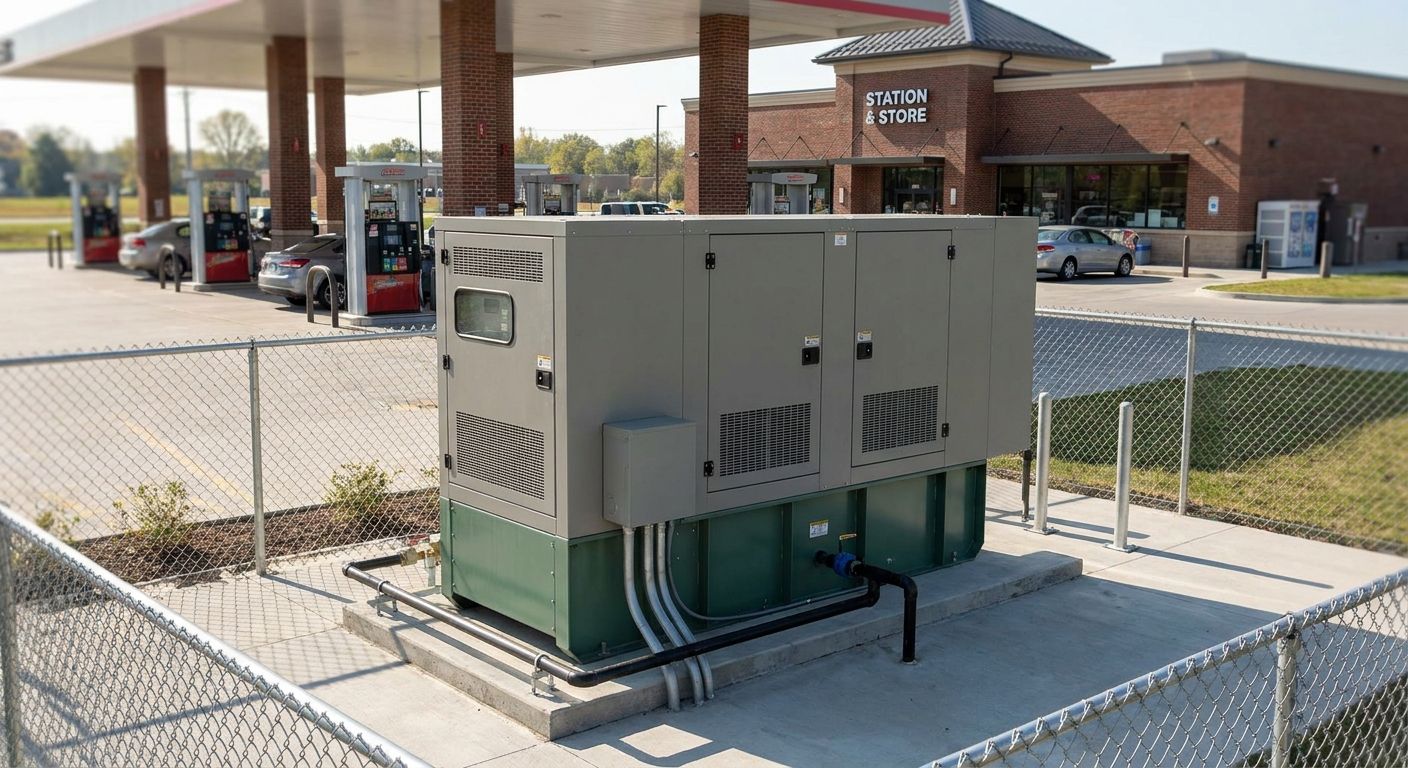
- Liquid-cooled units above 48kW suit strip-center retail with shared meters - Consider for multi-tenant buildings.
- Skip any system sized only for lighting; POS terminals, security systems, and coolers need continuous power.
- Coastal Alabama towns like Fairhope and Gulf Shores see hurricane-driven outages every storm season through 2026.
Why this matters
A boutique that closes for three days after a storm doesn't just lose that weekend's revenue - it loses the customers who found another store open. Retail is different from residential power needs because a store has to keep POS terminals, card readers, security systems, and often a walk-in cooler or wine fridge running continuously, not just lights and a refrigerator.
Generator installation for retail stores is a commercial-grade decision even when the building is small. A licensed electrical contractor sizes the system to actual amperage draw, not to square footage, and that distinction is where most owners get quoted the wrong unit.
Who this is for
This guide is built for owners and operators of single-location boutiques, gift shops, salons, and small specialty retailers in Daphne, Fairhope, Foley, and Gulf Shores - businesses running one or two registers, a small back-office server or router, and sometimes a beverage cooler or display refrigeration unit. If you're evaluating power for a strip-center location with shared common areas, several sections below flag what changes for multi-tenant buildings.
What to look for in generator installation for retail stores
Sizing to actual electrical load
A generator sized to floor area instead of amperage draw is the single most common mistake in retail installs. POS systems, card readers, and alarm panels pull small but continuous loads that a lighting-only calculation misses entirely, and undersizing means brownouts on the exact circuits your transactions depend on.
Automatic transfer switch placement
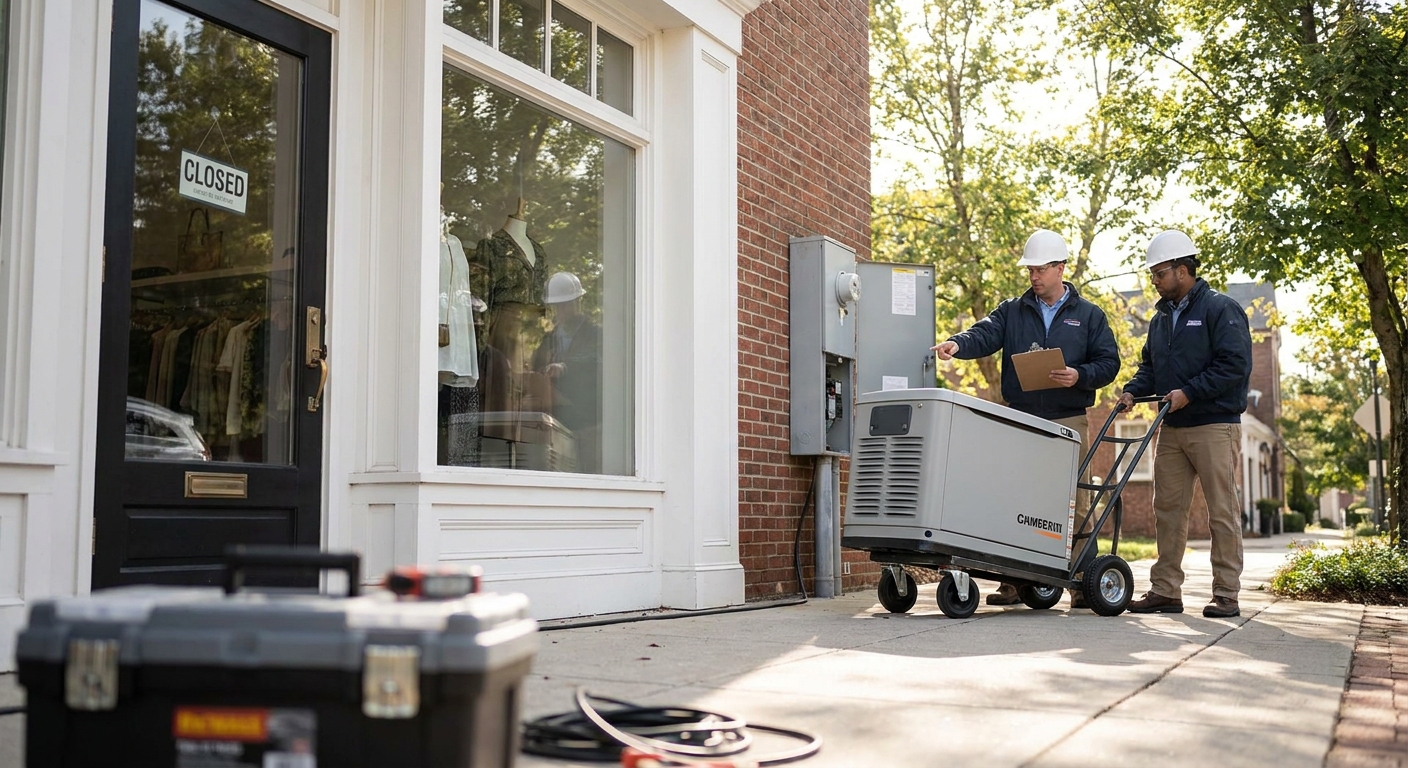
The transfer switch has to sit close to the store's main panel and match the store's amperage service, not a generic residential spec. A switch placed wrong adds labor cost during install and creates delays during the next outage when it matters most.
Fuel type and refill logistics
Natural gas runs indefinitely as long as the line stays intact, which matters when a storm knocks out roads for days. Propane needs a tank sized for the store's runtime expectations - a tank too small forces a mid-storm refill trip that most delivery trucks can't make until roads clear.
Noise and placement in a commercial corridor
A generator installed in a shared alley or loading zone next to other tenants needs sound and clearance planning that a standalone house install never faces. Municipal codes in Baldwin County towns also dictate setback distances from property lines and adjacent structures.
Permitting timeline before storm season
Permitting for a commercial standby unit in coastal Alabama typically involves electrical inspection sign-off, and waiting until June to start the process means the unit likely isn't installed before the first named storm of 2026. Stores that start the quote-to-install process in late winter get ahead of the seasonal backlog.
Maintenance access for continuous uptime
A retail generator sits idle most of the year, then gets asked to run continuously for days. Annual maintenance access - oil, filters, battery - determines whether the unit starts on day one of an outage or fails at the worst moment.
Top picks by store size and load
The safe pick: 20kW air-cooled standby
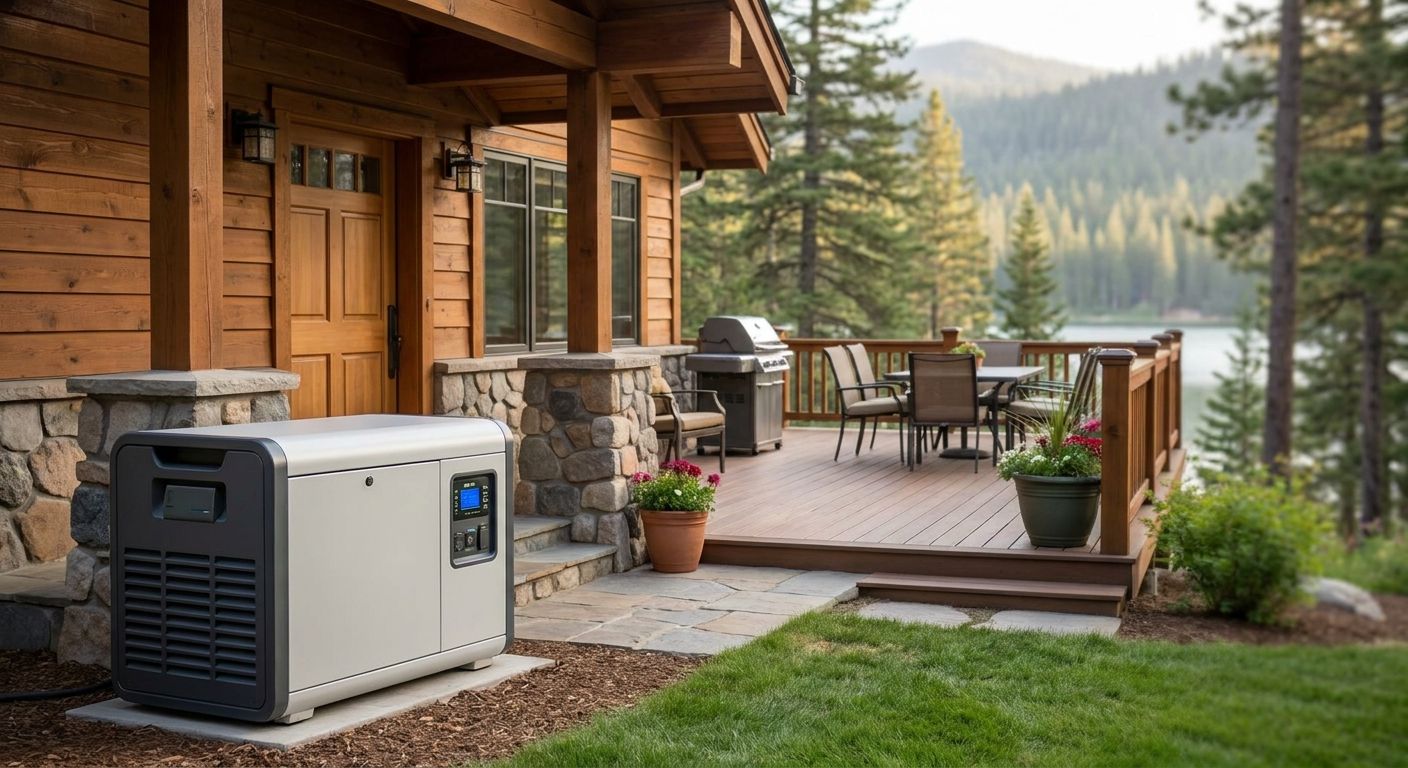
One spec that matters: air-cooled units in the 20kW range handle roughly two HVAC compressor cycles plus continuous POS and lighting load without derating. This is the right call for a boutique under 3,000 square feet running one or two registers, standard lighting, and a small back-office setup. Installation cost stays lower than liquid-cooled options because footprint and cooling requirements are smaller. Verdict: Buy for single-location shops without heavy refrigeration.
Get a generator installation quote from Baldwin County Generators before scheduling - sizing gets confirmed against your store's actual panel before any unit ships.
The refrigeration-dependent pick: 26-32kW air-cooled
One spec that matters: the added kW headroom covers a walk-in cooler or wine refrigeration unit cycling alongside POS load. Gift shops, specialty food retailers, and boutiques with beverage service need this bump over the base 20kW tier - a cooler compressor starting up during an outage draws a surge that an undersized unit can't absorb without dimming lights and dropping card readers. Verdict: Consider if your store runs any refrigerated case or cooler.
The multi-tenant pick: 48kW+ liquid-cooled
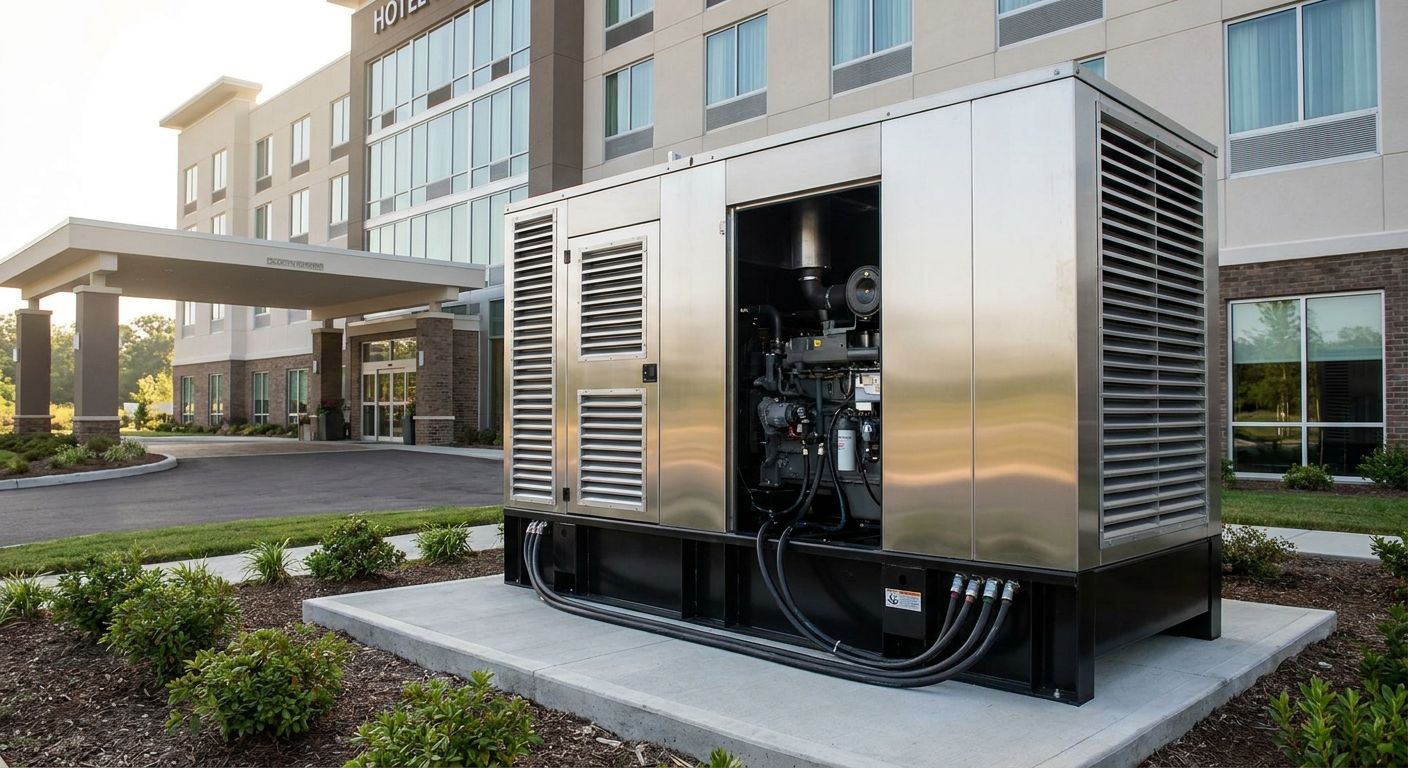
One spec that matters: liquid-cooled units in this range run longer duty cycles without the heat buildup that limits air-cooled models in continuous multi-day use. This tier fits strip-center retail buildings where several storefronts share a meter or where a single boutique anchors a larger commercial space with shared HVAC. Liquid-cooled units also handle Gulf Shores' summer heat load better during extended runtime. Verdict: Buy for shared-building or high-load retail spaces.
The oversized trap: 60kW+ commercial units for a single small store
One spec that matters: a unit this large is built for buildings with three-phase service or multiple tenants, not a single 1,500 square foot boutique. Some owners get quoted this size out of caution, but the fuel consumption and footprint cost outweigh the benefit for a store that doesn't need it. Verdict: Skip unless the building genuinely has multi-tenant or three-phase demand.
What to avoid
- A residential-spec unit quoted for a commercial address. Residential systems aren't sized or rated for the continuous POS and refrigeration load a retail store puts on them.
- A transfer switch sized to the panel's rating instead of actual draw. This looks correct on paper but leaves no headroom for a future register bank or cooler addition.
- Skipping the permit timeline because "it's a small job." Small commercial installs still go through electrical inspection in Baldwin County towns, and skipping that step creates problems at resale or lease renewal.
Verdict comparison
| Generator class | Best for | Fuel option | Verdict |
|---|---|---|---|
| 20kW air-cooled | Single boutique, under 3,000 sq ft | Propane or natural gas | Buy |
| 26-32kW air-cooled | Boutique with cooler/refrigeration | Propane or natural gas | Consider |
| 48kW+ liquid-cooled | Multi-tenant or strip-center retail | Natural gas preferred | Buy |
| 60kW+ commercial | Three-phase or multi-tenant only | Natural gas | Skip for single small store |
Get your store sized correctly
A licensed electrical contractor confirms the right kW before hurricane season 2026 hits.
FAQ
What size generator does a boutique retail store need?
Most boutiques under 3,000 square feet run on a 20kW air-cooled standby unit. Stores with a cooler or refrigerated display case need 26-32kW to cover the added compressor load.
How much does generator installation for retail stores cost?
Cost varies by kW size, fuel type, and transfer switch placement, and pricing is confirmed after a load assessment of the store's actual panel. Contact a licensed electrical contractor for a quote specific to the building.
Is natural gas or propane better for a retail standby generator?
Natural gas runs indefinitely as long as the gas line stays intact, which matters most during multi-day storm outages. Propane works well too but requires a tank sized for expected runtime before refill logistics become an issue.
Do boutique stores need a permit for generator installation?
Yes, commercial standby generator installs in Baldwin County towns require electrical inspection sign-off regardless of store size. Starting the permitting process early in the year avoids the seasonal backlog before hurricane season 2026.
Can one generator power a shared retail strip-center building?
A 48kW or larger liquid-cooled unit typically covers a strip-center building with multiple tenants sharing a meter. Single boutiques in standalone buildings rarely need this tier.
What happens if a retail generator is undersized?
An undersized unit causes brownouts on POS terminals and card readers the moment a cooler or HVAC compressor cycles on. This is the most common complaint from retail owners who sized to square footage instead of actual electrical load.
How often does a retail standby generator need maintenance?
Annual maintenance covering oil, filters, and battery condition keeps the unit ready for the one week a year it actually gets used. Skipping maintenance is the top reason units fail to start during an actual outage.
Should a retail store install a generator before or after a lease renewal?
Installing before renewal gives the landlord and tenant clarity on who owns the equipment and who handles maintenance going forward. It also avoids doing electrical work twice if lease terms change the space's power needs.
One last thing
The detail most owners miss: a generator sized correctly for today's POS and cooler load has almost no headroom for a second register bank or an added display cooler next year. Size one tier up from the bare minimum if any expansion is even a possibility - the incremental cost is smaller than a second install call eighteen months later in 2026.