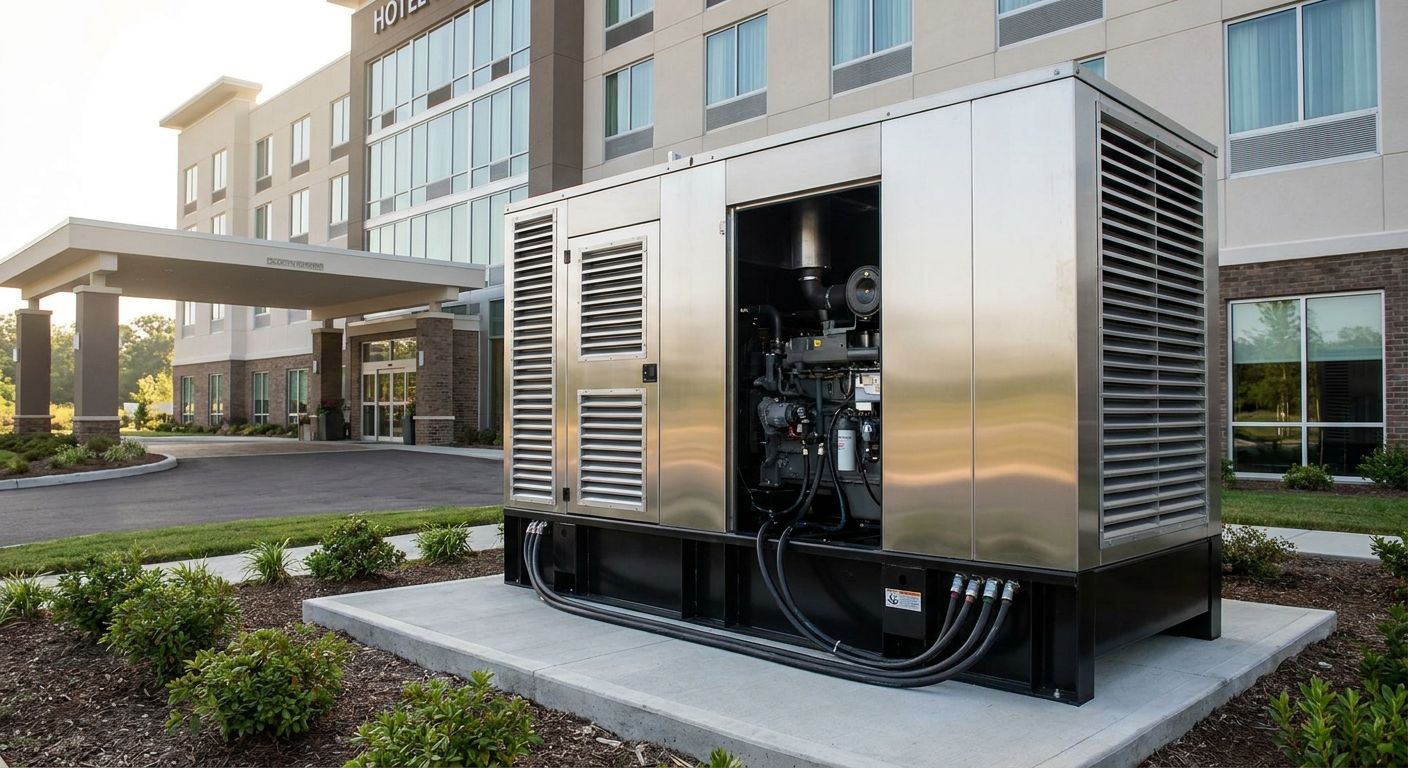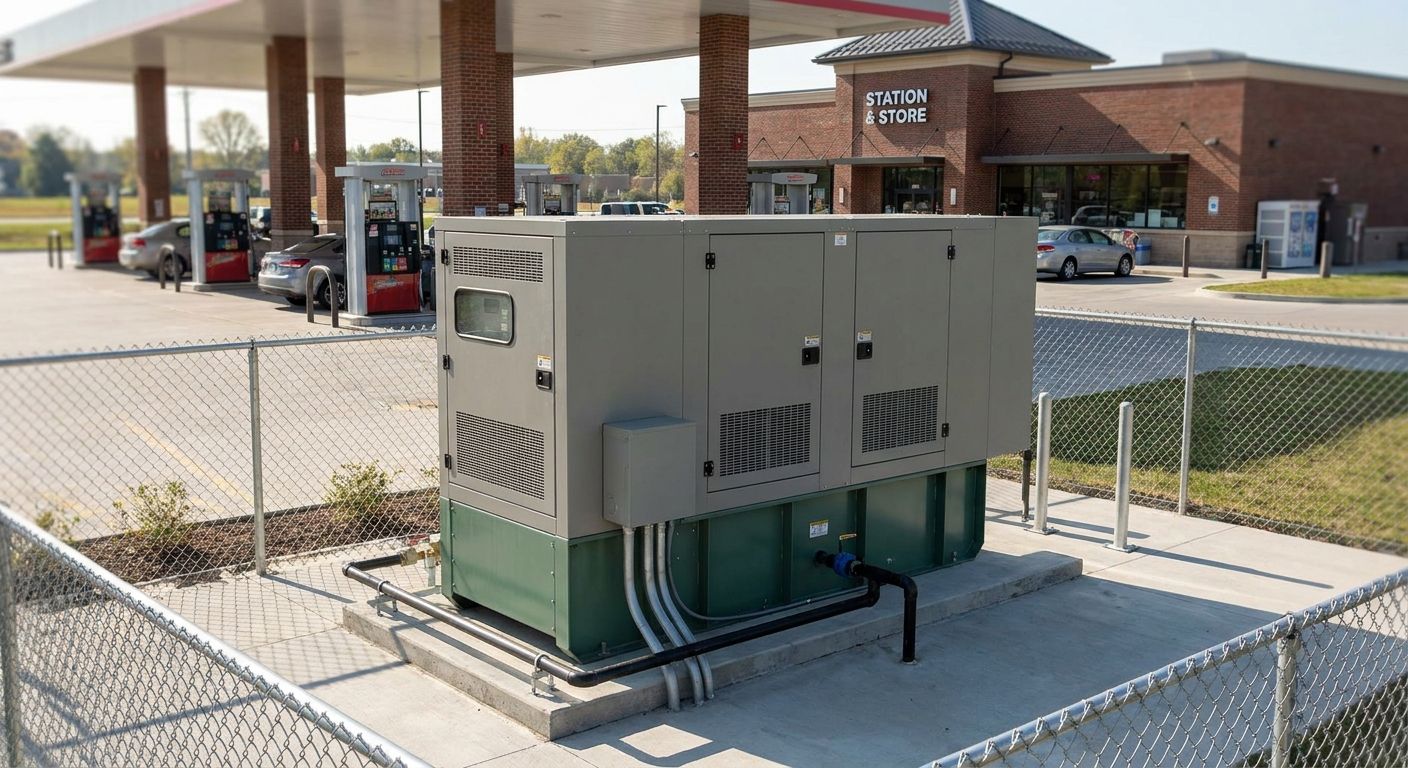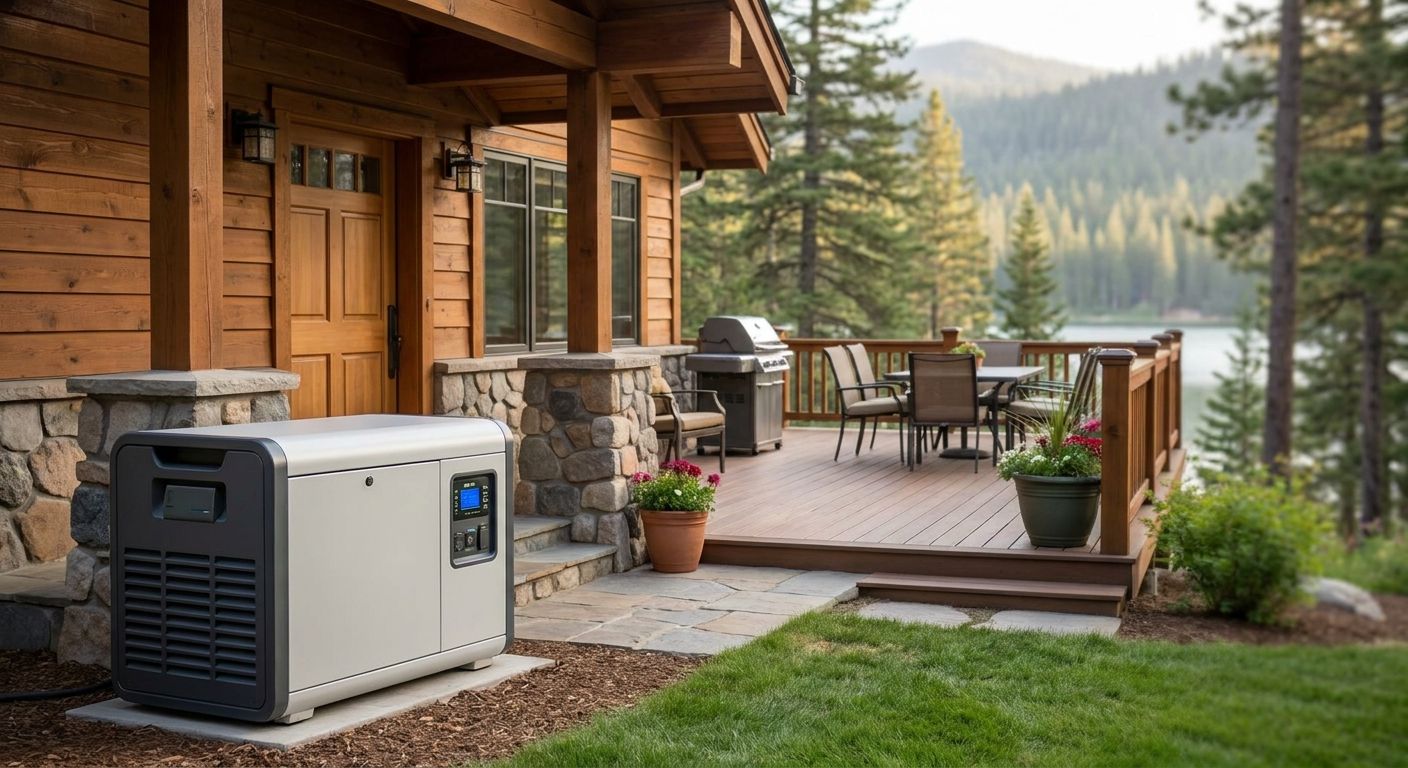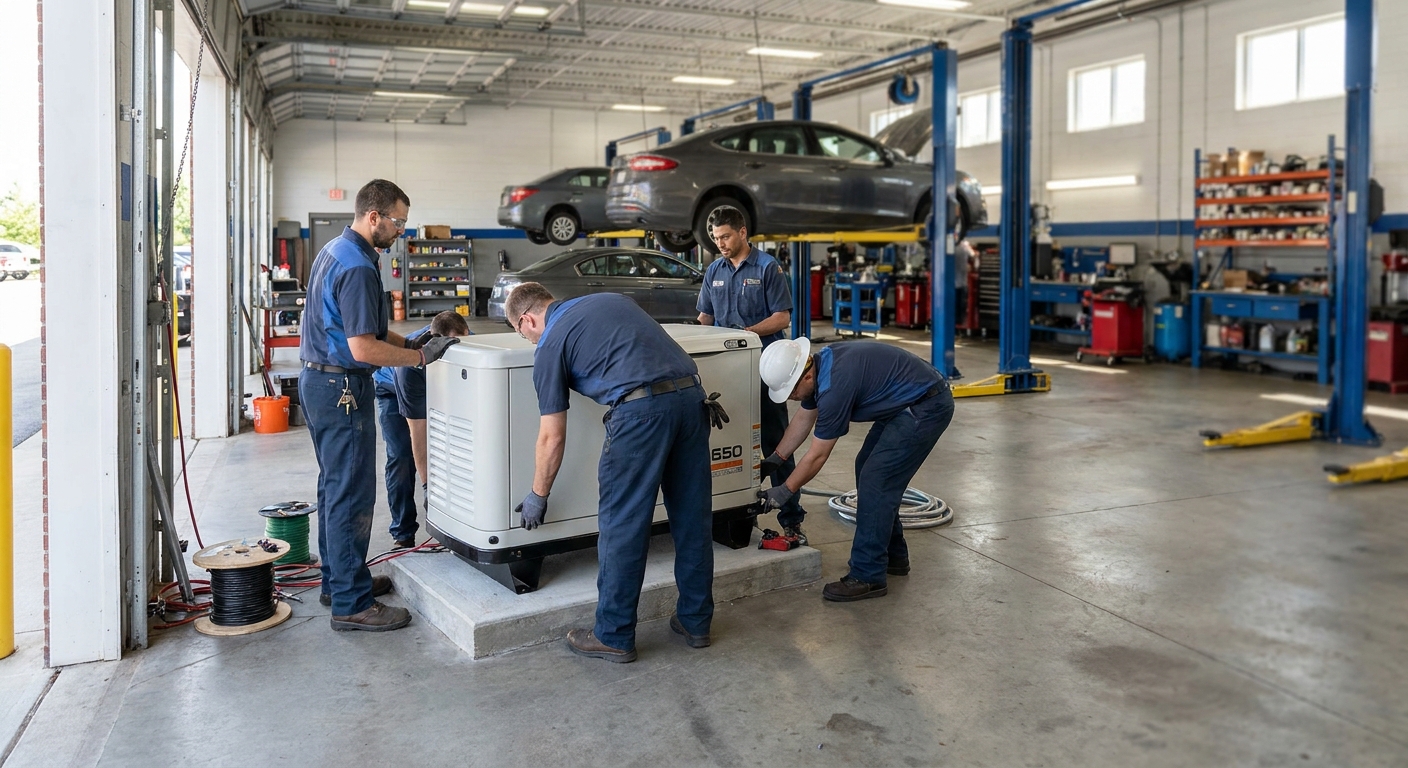
Auto repair shops lose money the second the lift, the compressor, and the diagnostic scanner go dark - and along the Gulf Coast, that happens every hurricane season. This guide breaks down what generator installation for auto repair shops actually requires, from sizing to fuel type, so you can pick a system that keeps bays running instead of guessing.
- Generator installation for auto repair shops typically needs 22kW to 48kW depending on lift count and compressor draw.
- Generac and Kohler commercial units both handle single-phase shop loads; three-phase shops need a dedicated commercial quote.
- A 500-gallon propane tank runs a 30kW unit for roughly 5-7 days at full shop load.
- Skip residential-grade automatic transfer switches - commercial shops need a service-rated switch sized to the panel, not the generator.
Why this matters
A single lift stuck mid-cycle during a power outage isn't an inconvenience - it's a liability and a lost repair ticket. Shops in Daphne, Fairhope, Foley, and Gulf Shores routinely lose grid power for 12 to 48 hours during named storms, and diagnostic equipment that loses power mid-scan can require a full re-flash on some vehicles. Standby power isn't a comfort upgrade for a repair shop in coastal Alabama in 2026 - it's the difference between finishing five cars a day or zero.
Who this is for
This guide is built for independent auto repair shop owners and multi-bay mechanic operations across coastal Alabama who run lifts, air compressors, alignment machines, and OEM diagnostic scanners on a commercial electrical service. If your shop has two or more bays, a 200-amp or larger service panel, or equipment that can't tolerate a hard restart mid-cycle, this applies directly to you.
What to look for in generator installation for auto repair shops
Starting wattage for compressor and lift loads
Air compressors and hydraulic lifts pull a heavy starting surge - often 2 to 3 times their running wattage - the instant they kick on. A generator sized only for running watts will stall or trip under that surge, so sizing has to account for the highest simultaneous startup load in the shop, not just the sum of nameplate ratings.
Automatic transfer switch rated for the panel
The transfer switch has to match your actual service size, not the generator's output. A 30kW generator paired with an undersized transfer switch will still leave circuits dark, and a licensed electrical contractor should size the switch to the full panel, typically 200 to 400 amps for a multi-bay shop.
Fuel type and runtime under load
Propane and natural gas units run cleaner and store longer than diesel for most shop applications, but tank size dictates how long you actually run at full load. A 500-gallon propane tank supports a 30kW unit for roughly 5 to 7 days of continuous shop operation - enough to cover most named storm outages in Baldwin County.
Diagnostic equipment protection
OEM scan tools and alignment computers are sensitive to voltage fluctuation during transfer. A generator with a sub-10-second transfer time and clean sine wave output protects equipment that costs more to replace than the generator itself.
Commercial permitting and code compliance
Commercial installations require electrical permits, gas line inspections, and setback compliance that residential jobs skip. A licensed electrical contractor familiar with Baldwin County and Foley permitting timelines keeps the install from stalling at the inspection stage.
Maintenance contract availability
A generator that isn't serviced twice a year fails when you need it most. Shops running commercial standby power should confirm the installer offers ongoing maintenance, not just a one-time install.
Top picks for auto repair shop standby power
Generac commercial 48kW liquid-cooled - the workhorse pick. Rated for 200-400 amp commercial services and built for continuous run under heavy compressor cycling. Buy for shops running three or more lifts. Learn more about generator installation and sizing on the Baldwin County Generators site before locking in a unit.
Kohler 60kW commercial - the three-phase pick. Kohler's commercial line handles three-phase service common in larger repair operations with paint booths or heavy-duty alignment racks. Buy if your shop runs three-phase equipment; Skip if your service is single-phase, since you're paying for capacity you can't use.
Honeywell 22kW air-cooled - the single-bay pick. Smaller footprint, lower upfront cost, and enough output to run one lift, one compressor, and shop lighting. Consider for a single-bay independent shop; Skip for anything with more than two lifts running simultaneously.
Briggs & Stratton 20kW - the budget entry point. Lower cost than commercial-grade Generac or Kohler units but rated for lighter cycling. Consider only as a bridge solution for a shop planning to expand within 12-18 months, since undersizing now means a second install later.
What to avoid
- Residential-grade automatic transfer switches. They're rated for 100-200 amp home panels, not the 200-400 amp commercial service most repair shops run - undersized switches leave circuits dead even with the generator running fine.
- Portable or towable generators as a permanent solution. They lack automatic transfer and can't legally tie into a commercial panel without manual switching, which means someone has to be on-site during every outage.
- Air-cooled units on shops with three or more bays. Air-cooled generators overheat under sustained heavy load; liquid-cooled commercial units are built for the duty cycle a multi-bay shop actually runs.
Get a shop-sized generator quote
Licensed electrical contractor sizing for coastal Alabama auto repair shops.
Verdict comparison
| Model | Output | Fuel | Best for | Verdict |
|---|---|---|---|---|
| Generac 48kW liquid-cooled | 48kW | Propane/NG | 3+ bay shops | Buy |
| Kohler 60kW commercial | 60kW | Propane/NG | Three-phase service | Buy |
| Honeywell 22kW air-cooled | 22kW | Propane | Single-bay shops | Consider |
| Briggs & Stratton 20kW | 20kW | Propane | Budget/bridge solution | Consider |
FAQ
How much does generator installation for auto repair shops cost in 2026?
Commercial installation for a multi-bay auto repair shop typically runs from the mid-teens to over $30,000 depending on kW size, transfer switch rating, and fuel line work in 2026. Larger three-phase installs with Kohler or Generac commercial units sit at the higher end of that range.
What size generator does a two-bay auto repair shop need?
A two-bay shop with one compressor and standard lighting typically needs 22kW to 30kW of standby capacity. Shops running alignment machines or a paint booth need to size higher to cover the startup surge.
Is Generac or Kohler better for a commercial auto shop?
Both handle commercial shop loads well; Generac's 48kW liquid-cooled line covers most single-phase multi-bay shops, while Kohler's 60kW commercial units are the stronger pick for three-phase service. The right choice depends on your electrical service type, not brand preference.
Do auto repair shops need a permit for generator installation?
Yes, commercial standby generator installation requires an electrical permit and typically a gas line inspection in Baldwin County. A licensed electrical contractor handles permitting as part of the install, which keeps the timeline from stalling.
How long can a standby generator run an auto repair shop during an outage?
A 30kW unit on a 500-gallon propane tank runs a shop at full load for roughly 5 to 7 days. Natural gas units connected to a utility line have no runtime limit as long as gas service stays active.
Can a portable generator power an auto repair shop?
A portable generator can run limited equipment temporarily but can't legally or safely power a full commercial panel without manual transfer switching. Standby systems with automatic transfer switches are the only code-compliant option for continuous shop operation.
How often does a shop generator need maintenance?
Commercial standby generators need service twice a year, including oil changes, battery checks, and a load test. Shops that skip maintenance see the highest failure rate during actual outages, not during testing.
What happens to diagnostic equipment during a power outage without a generator?
A hard power loss mid-scan can corrupt data on OEM diagnostic tools and, on some vehicles, require a full module re-flash. A generator with a transfer time under 10 seconds prevents that interruption entirely.
One last thing
The surge from a two-post lift and an air compressor kicking on at the same moment is the single most common reason shops end up with an undersized generator - sizing for running watts alone misses it every time. Get the startup surge measured before you buy, not after the unit trips during the first storm of hurricane season 2026.
Related guides
- Baldwin County Generators - request a shop sizing quote and installation timeline for coastal Alabama auto repair shops.