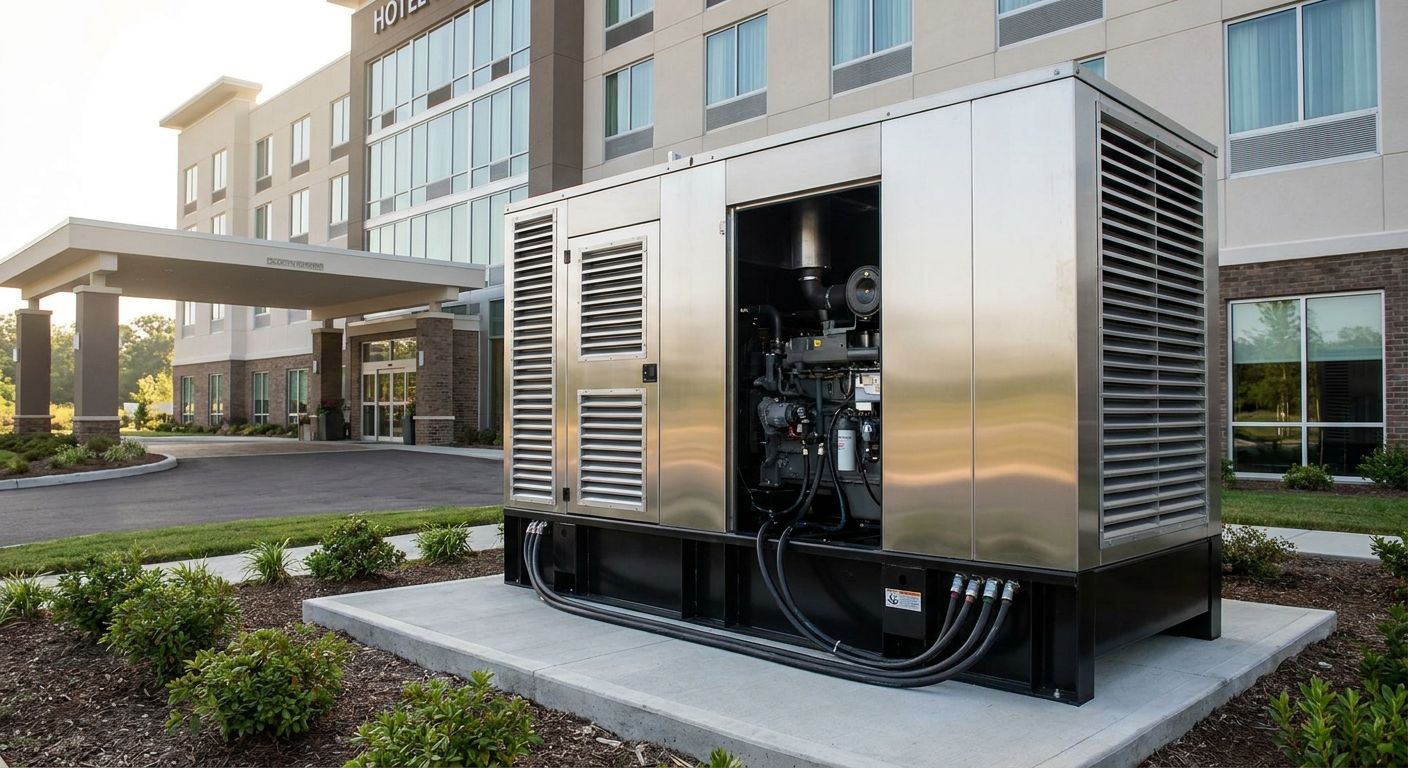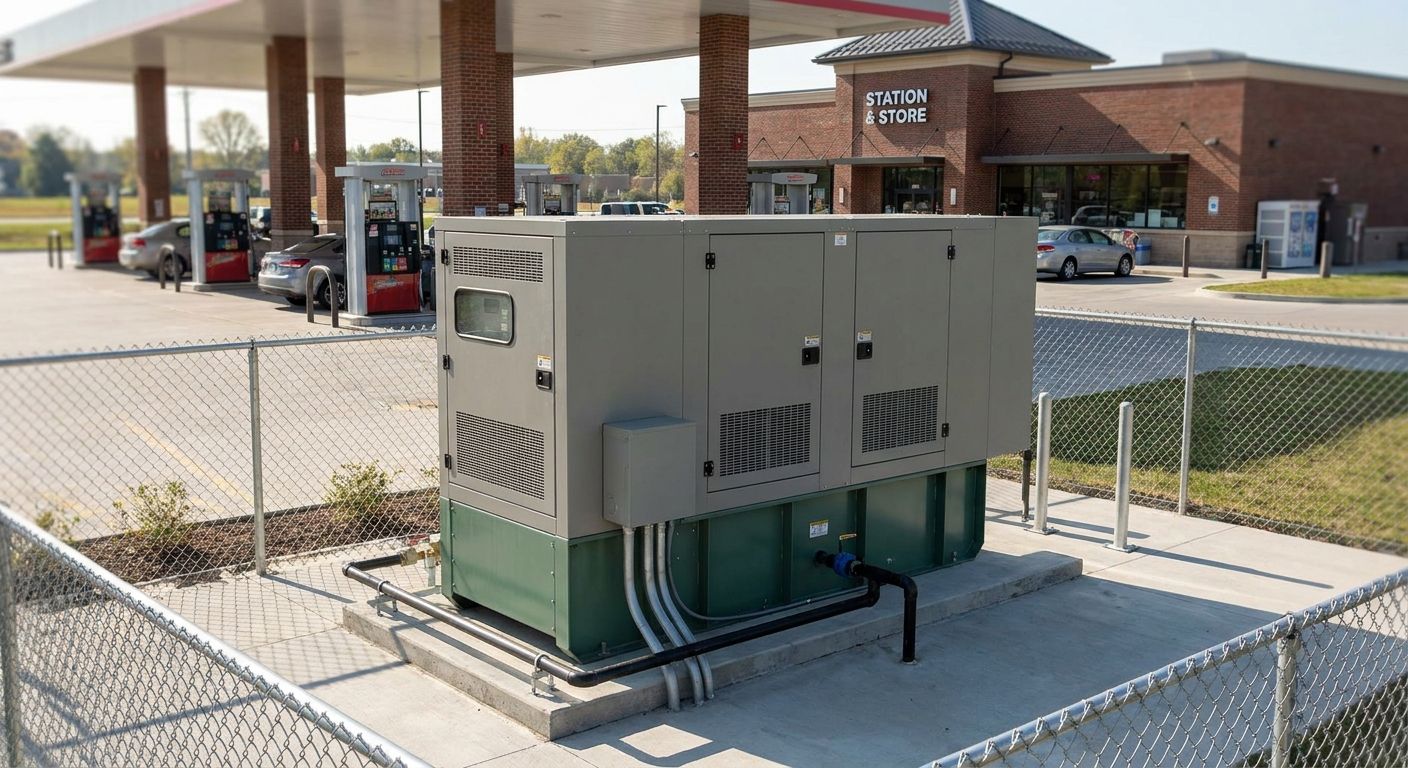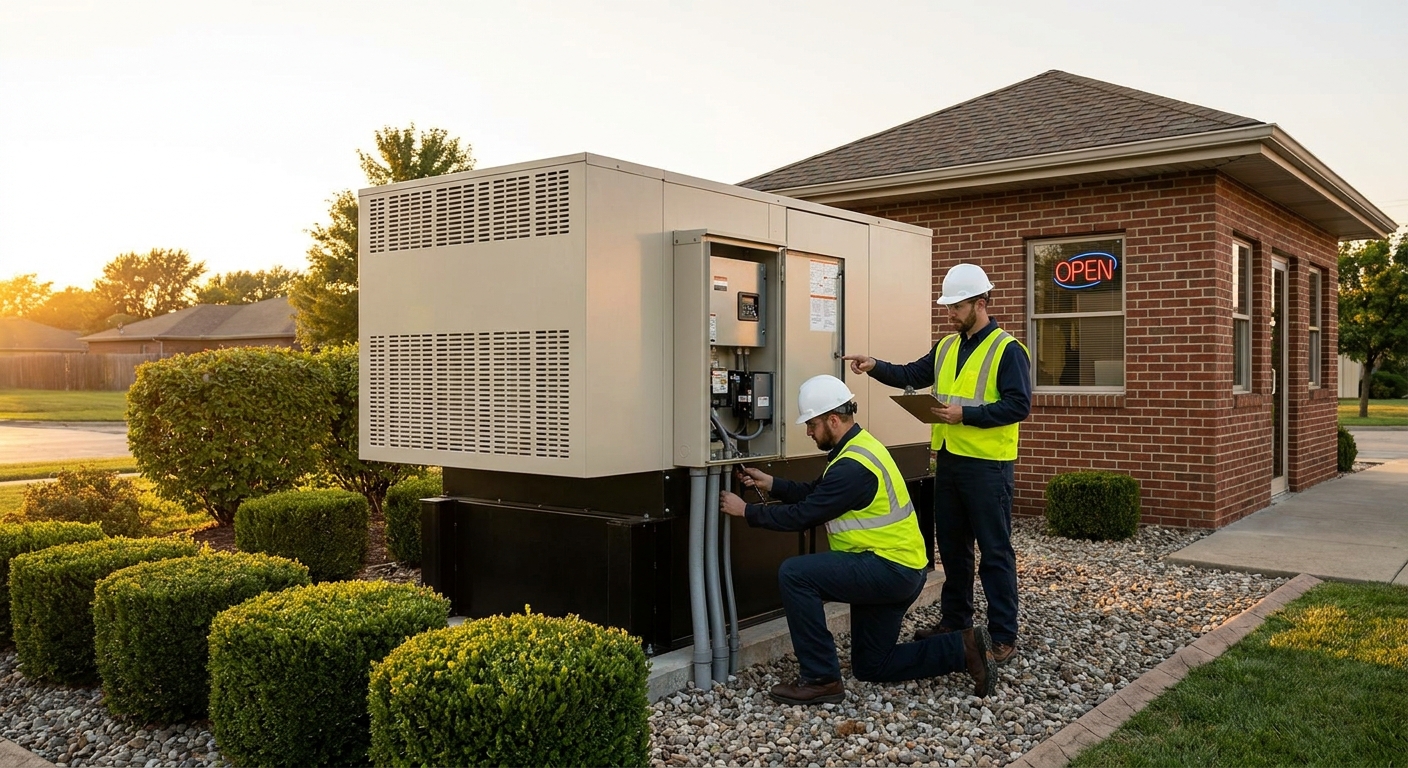
Small businesses across coastal Alabama lose power for different reasons than homeowners do - a walk-in cooler thaws, a POS system drops, a dental office cancels a full day of appointments. Commercial standby generator installation for small businesses in Daphne, Fairhope, Foley, and Gulf Shores means matching the right kW size, fuel source, and transfer switch to a building that can't afford downtime, and Baldwin County Generators handles that sizing and install as a licensed electrical contractor.
- Commercial standby generator installation for small businesses needs 20kW-150kW depending on load - undersizing is the most common 2026 mistake.
- Kohler and Generac commercial units cover most retail and office buildings; Buy for continuous-duty loads.
- A 200A automatic transfer switch is the practical minimum for any building with HVAC and refrigeration.
- Skip portable or residential-grade units for any business open during hurricane season.
Why this matters
A residential generator sized for a house rarely survives a commercial duty cycle. Walk-in coolers, HVAC compressors, and card processing equipment pull startup surges that a homeowner-grade unit stalls on, and a stalled generator during a 2026 storm outage is worse than no generator at all - you paid for backup power and still lost the freezer.
Coastal Alabama's exposure to tropical systems from June through November makes this a planning problem, not an emergency one. Businesses that wait until a storm is forecast get put on a waitlist behind everyone else who waited too.
Who this is for
This guide is for owners and operators of small commercial buildings - retail storefronts, restaurants, medical and dental offices, salons, auto shops, and light industrial spaces under roughly 10,000 square feet - who need continuous power for refrigeration, HVAC, security systems, or point-of-sale equipment during grid outages.
What to look for in commercial standby generator installation for small businesses
Correct kW sizing for your actual load
Undersizing is the single most expensive mistake in commercial standby generator installation for small businesses. A load calculation has to account for HVAC compressor startup, refrigeration, lighting, and any equipment with an electric motor - not just the nameplate wattage added up on a spreadsheet. Most small retail and office spaces land between 20kW and 48kW; restaurants and medical offices with heavier refrigeration or medical equipment often need 60kW to 150kW.
Fuel source availability
Natural gas gives you unlimited runtime as long as the gas line stays pressurized, which matters for outages lasting several days. Propane and diesel units need a tank sized for your expected runtime, and diesel commercial units typically scale better above 100kW. Pick the fuel your building already has access to before picking a brand.
Automatic transfer switch rating
The transfer switch has to match your building's electrical service amperage, not just the generator's output. A 200A switch is the practical floor for any small commercial building running HVAC and refrigeration simultaneously; anything smaller creates a bottleneck even if the generator itself is sized correctly.
Local permitting and code compliance
Commercial installs in Baldwin County and surrounding municipalities require electrical permits, and many commercial buildings also need fire marshal sign-off depending on occupancy type. A licensed electrical contractor pulls these permits as part of the install; a handyman or unlicensed installer usually doesn't, which becomes your problem at resale or insurance renewal.
Maintenance and response time
A generator that hasn't been serviced in two years often fails exactly when you need it - during an actual outage. Ask any installer what their service response time looks like during active storm events, not just during a normal Tuesday.
Placement and noise/setback rules
Commercial units are larger and louder than residential models, and many municipalities have setback requirements from property lines and adjacent buildings. Get the placement confirmed before the unit ships, not after it's sitting in the parking lot.
Top picks for small business standby power in 2026
Kohler commercial standby - the safe pick. Kohler's commercial line covers 20kW through 150kW+ configurations built for continuous-duty commercial loads, not intermittent residential cycling. For a retail storefront or office running HVAC and standard lighting loads, this is the pick that installers default to when they don't want a callback. Verdict: Buy for retail, office, and light medical use.
Generac commercial series - the value pick. Generac's commercial units scale from 20kW up into the hundreds of kW and are widely stocked, which shortens lead times compared to less common brands. For restaurants and auto shops with variable load profiles, Generac's commercial line handles the surge demands of compressors and lifts. Verdict: Buy for restaurants, auto shops, and mixed-load buildings.
Honeywell - the budget-conscious pick. Honeywell commercial-adjacent units work for smaller footprint operations - single-tenant retail under 3,000 square feet with modest HVAC and no heavy refrigeration. It's not the pick for a restaurant with three walk-in coolers. Verdict: Consider for small single-tenant retail only.
Briggs & Stratton - the small footprint pick. Briggs & Stratton's commercial-rated units fit smaller lots where setback space is tight, and they're a reasonable fit for professional offices (dental, legal, salons) with predictable, lower-surge loads. Verdict: Consider for offices without heavy motor loads.
Oversized 150kW+ multi-tenant units - the wildcard. For strip malls or multi-tenant buildings sharing one electrical service, a single large unit can serve multiple businesses if the transfer switch and panel work is engineered correctly upfront. This only works with proper load calculations across every tenant - done wrong, one tenant's compressor cycling browns out the rest. Verdict: Consider, and only with a full commercial load study first.
What to avoid
- Portable or residential-duty generators for continuous commercial use. They're built for intermittent cycling, not running a walk-in cooler for three straight days.
- Undersized automatic transfer switches paired with an oversized generator. The switch becomes the bottleneck, and you paid for capacity you can't actually deliver to the panel.
- Unlicensed or out-of-area installers during storm season. Anyone who shows up in a truck during an active hurricane watch and skips the permit conversation is a liability, not a deal.
Verdict comparison
| Pick | Best for | kW range | Verdict |
|---|---|---|---|
| Kohler commercial | Retail, office, light medical | 20kW-150kW+ | Buy |
| Generac commercial | Restaurants, auto shops | 20kW-150kW+ | Buy |
| Honeywell | Small single-tenant retail | Under 25kW | Consider |
| Briggs & Stratton | Professional offices | Under 30kW | Consider |
| 150kW+ multi-tenant | Strip malls, shared service | 150kW+ | Consider with load study |
FAQ
What size generator does a small business need?
Most small retail and office buildings need 20kW to 48kW; restaurants and medical offices with heavier refrigeration often need 60kW to 150kW. The exact number depends on a load calculation covering HVAC compressor startup, refrigeration, and equipment motors.
How much does commercial standby generator installation cost for a small business?
Cost varies by kW size, fuel type, transfer switch amperage, and site-specific electrical work. Get a site-specific quote rather than relying on a flat number, since commercial installs differ building to building.
Is Kohler or Generac better for a commercial building?
Both are rated for continuous-duty commercial loads and cover the 20kW to 150kW+ range most small businesses need. The better fit depends on your fuel source availability and local dealer stock rather than one brand being universally superior.
Can a portable generator power a small business during an outage?
No, not for continuous operation. Portable units are built for intermittent cycling and will not reliably run refrigeration or HVAC compressors for extended outage periods common during hurricane season.
Do I need a permit for commercial generator installation in coastal Alabama?
Yes, commercial installs require electrical permits and often fire marshal sign-off depending on occupancy type. A licensed electrical contractor handles this as part of the install process.
What size transfer switch does a commercial building need?
200A is the practical minimum for a small commercial building running HVAC and refrigeration together. The switch has to match your building's electrical service amperage, not just the generator's rated output.
How long does commercial generator installation take?
Timelines depend on permitting, site electrical work, and equipment availability, which vary by municipality and building. Getting on an installer's schedule before hurricane season starts avoids the seasonal backlog.
Can one generator power multiple tenants in a strip mall?
Yes, but only with a full commercial load study across every tenant and correctly engineered transfer switch and panel work. Without that upfront engineering, one tenant's equipment cycling can brown out the rest of the building.
One last thing
The detail most small business owners miss: the transfer switch amperage, not the generator's kW rating, is usually what determines whether your building actually gets full power during an outage. A 100kW generator paired with an undersized switch still leaves circuits dark. Confirm the switch spec matches your panel before you sign off on any 2026 commercial install quote.