Assisted living facilities in coastal Alabama can't treat backup power as optional in 2026 - residents on oxygen concentrators, refrigerated medications, and HVAC-dependent care plans need generator solutions rated for continuous, code-compliant operation, not a residential unit stretched past its limits.
- Kohler's commercial line wins for NFPA 110 Level 1 compliance in assisted living facilities - Buy for licensed care campuses.
- Generac Industrial Power Systems handle 100kW-600kW loads for larger memory care and assisted living campuses - Buy.
- Honeywell and Briggs & Stratton commercial units fit smaller memory care wings under 60 residents - Consider, not primary.
- Diesel standby systems deliver 72-plus hour fuel autonomy for hurricane season - Buy where natural gas isn't reliable.
- Skip single residential-grade generators for licensed assisted living facilities - inspectors flag undersized units regardless of price.
Why This Matters
Alabama fire marshals and state licensing surveyors inspect assisted living facilities for backup power compliance every year, and a failed generator during a named storm isn't a maintenance ticket - it's a resident-safety violation. NFPA 99 and NFPA 110 govern healthcare-adjacent facilities: life safety branch circuits (egress lighting, fire alarms, exit signs) must transfer within 10 seconds on a Level 1 system, and equipment branch circuits (nurse call, medical air, refrigeration) follow close behind.
Gulf Shores, Foley, Fairhope, and Daphne all sit inside hurricane evacuation zones where grid outages regularly stretch past 72 hours after landfall. A facility running a 22kW residential unit sized for a single-family home trips on overload the moment HVAC, kitchen refrigeration, and medical equipment draw at once. Baldwin County Generators sizes commercial standby systems against the facility's actual connected load in kW, not a rough guess, which is the difference between passing a 2026 licensing inspection and getting cited.
How We Ranked
Rankings below weigh five factors that matter for licensed assisted living facilities, not homeowners: code compliance (NFPA 110/99 transfer-time classification), kW capacity relative to typical 40-100 bed campus loads, fuel type reliability during extended coastal outages, automatic transfer switch response time, and local service network depth across Daphne, Fairhope, Foley, and Gulf Shores. The comparisons pull from published manufacturer specifications for Kohler, Generac, Honeywell, and Briggs & Stratton commercial lines rather than residential model numbers, because a facility administrator sizing a generator solution for 2026 needs numbers that hold up under a state inspection.
The Ranked List
Kohler Commercial Standby Series - the code-compliance specialist
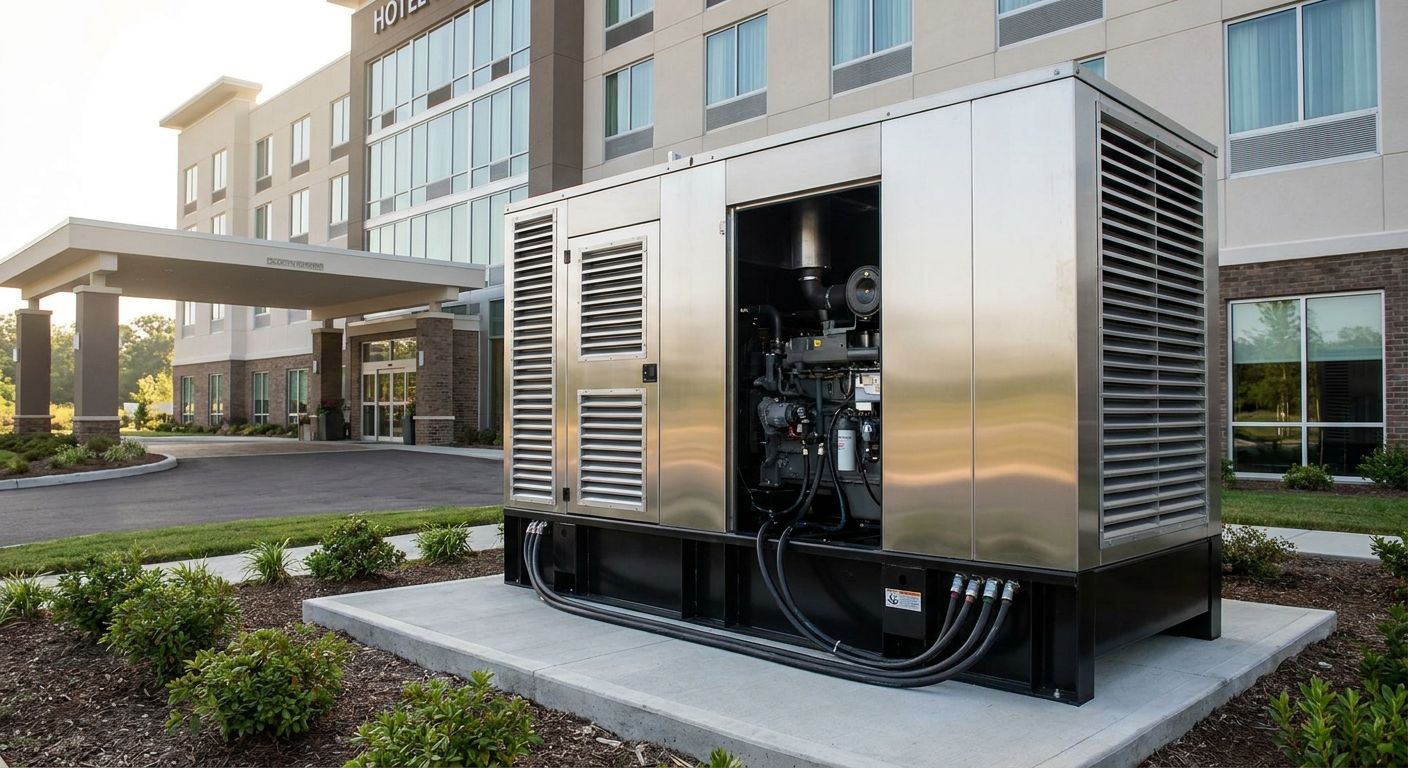
Kohler's commercial line runs from 60kW to 450kW with paralleling switchgear options that scale to 4000A for larger campuses. Transfer time on Level 1 configurations hits the 10-second NFPA 110 mark that assisted living facilities need for life safety circuits. Buy for any licensed care campus that has to pass a state inspection.
Generac Industrial Power Systems - the workhorse pick
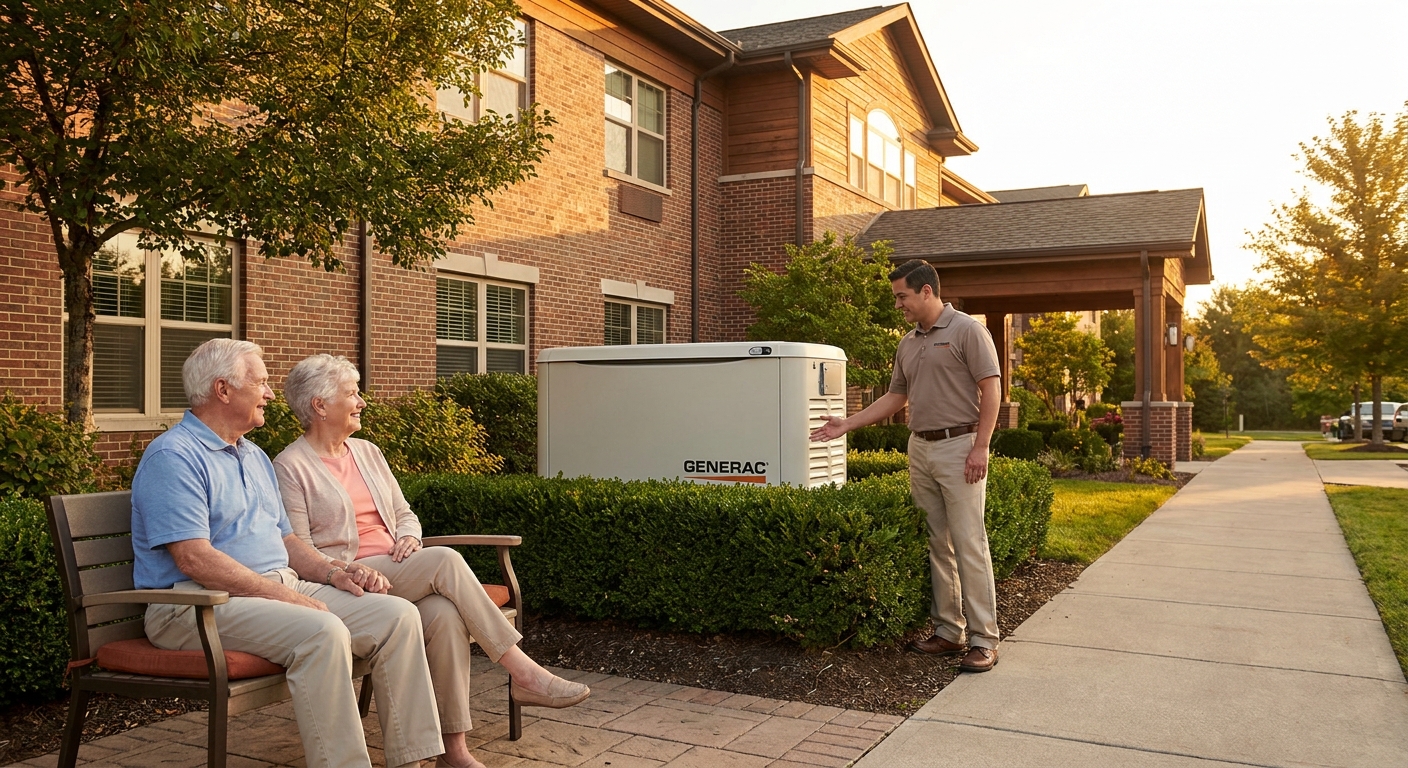
Generac's modular architecture scales from 100kW to over 600kW, and a 150kW unit is typical for a 60-bed assisted living facility running full HVAC, kitchen, and medical loads. The modular design lets a facility add capacity as bed count grows without replacing the whole system. Buy for mid-size to large campuses.
Honeywell Commercial Standby - the compact wing pick
Honeywell's commercial-rated units cover the 50kW to 150kW band, which fits a memory care wing or smaller assisted living building under 60 residents. It's not built for a full campus with a commercial kitchen and central plant. Consider for a standalone smaller building, not the primary system for a large facility.
Briggs & Stratton Commercial Series - the value alternative
The liquid-cooled commercial line runs 48kW to 150kW at a lower upfront cost than Kohler or Generac's larger frames. It covers facilities under 100 beds without paralleling hardware. Consider for smaller campuses; Hold if bed count is trending past 100 in the next few years.
Diesel standby systems - the hurricane-season pick
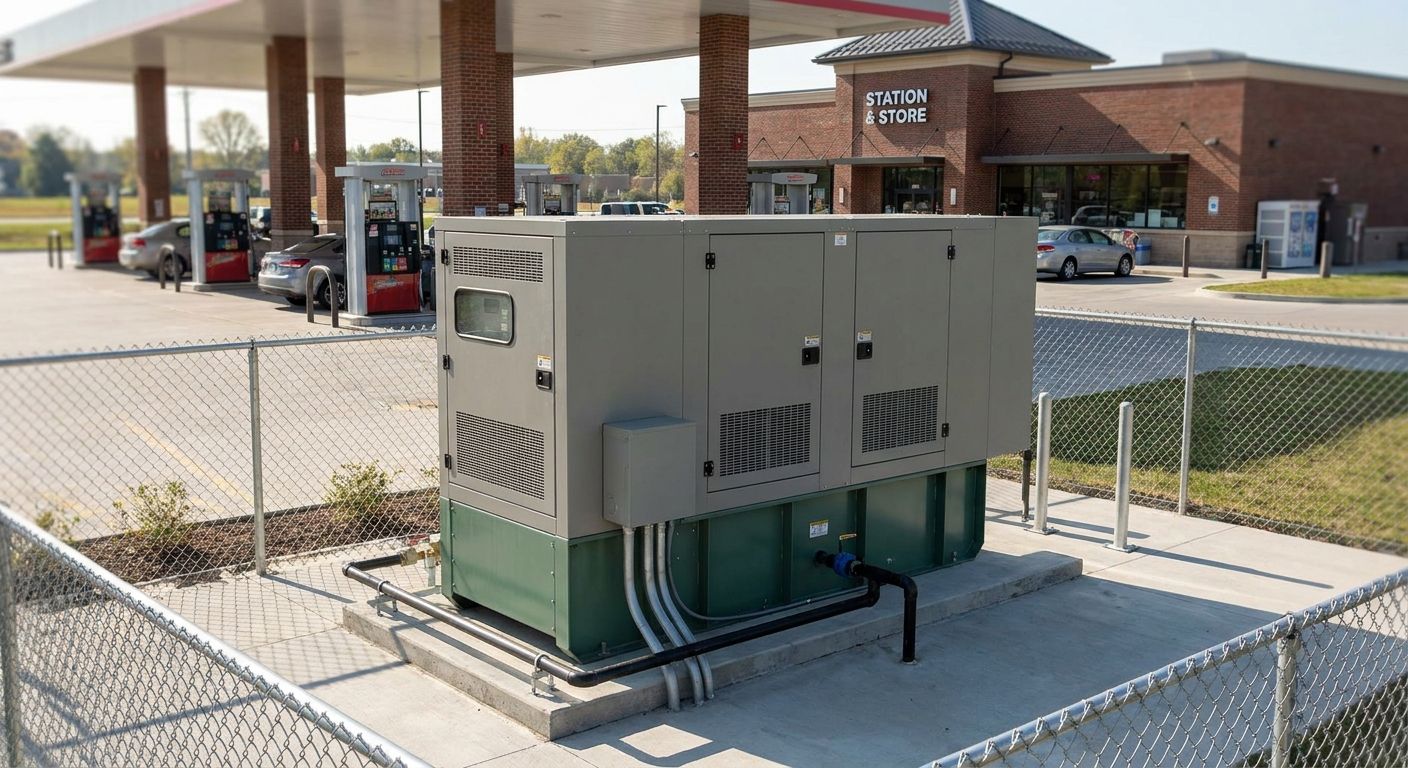
An onsite diesel system sized with a 500 to 1,000-gallon tank gives a facility 72-plus hours of run time without a refuel truck showing up. That matters when a storm knocks out both grid power and natural gas service to a barrier-island or low-lying site. Buy for any facility without dependable natural gas access.
Paralleled N+1 systems - the redundancy pick for large campuses
Two or more generators sharing load through switchgear mean one unit can fail or go down for service without cutting power to residents. This only pencils out for campuses over 100 beds where downtime risk outweighs the added switchgear cost. Buy for large campuses. Skip for facilities under 60 beds - a single properly sized unit covers the load for less money.
Comparison Table
| Solution | Best For | Fuel Type | kW Range | Transfer Time | Verdict |
|---|---|---|---|---|---|
| Kohler Commercial | NFPA 110 Level 1 compliance | Diesel / natural gas | 60-450 kW | 10 sec | Buy |
| Generac Industrial | 60+ bed campuses | Diesel / natural gas | 100-600+ kW | 10 sec | Buy |
| Honeywell Commercial | Memory care wings under 60 residents | Natural gas | 50-150 kW | 10-15 sec | Consider |
| Briggs & Stratton Commercial | Budget-conscious, under 100 beds | Natural gas | 48-150 kW | 10-15 sec | Consider |
| Diesel standby (any brand) | No reliable natural gas access | Diesel | Site-specific | 10 sec | Buy |
| Paralleled N+1 | Campuses over 100 beds | Diesel / natural gas | 200 kW+ combined | 10 sec | Buy (large) / Skip (small) |
Where to Source Your Assisted Living Generator
- Use a licensed electrical contractor for installation, not just a generator dealer. Alabama requires licensed electrical work for any transfer switch tied into a facility's life safety branch, and Baldwin County Generators handles that install work directly rather than subcontracting it out.
- Confirm authorized-dealer status before signing for Kohler, Generac, Honeywell, or Briggs & Stratton commercial units - factory warranty coverage on a 100kW-plus system depends on it.
- Get annual load-bank testing in writing. NFPA 110 requires documented monthly no-load exercise plus an annual test at full rated capacity for Level 1 systems, and a facility without that paperwork fails inspection no matter how new the generator is.
FAQ
What size generator does an assisted living facility need?
Sizing depends on bed count and connected load; a typical 40-60 bed facility runs on a 100kW to 200kW commercial standby unit in 2026. Get a licensed load calculation before buying rather than estimating off square footage.
Is a natural gas or diesel generator better for assisted living facilities?
Diesel gives a facility 72-plus hours of fuel autonomy without a refuel, which matters when both grid and gas service go down in a storm. Natural gas needs no onsite fuel storage but depends on utility gas staying online through the outage.
Does NFPA 110 apply to assisted living facilities?
Yes, if the facility is licensed as a healthcare-adjacent care setting, NFPA 110 requires a 10-second transfer time for the Level 1 life safety branch. Equipment branch circuits like nurse call and medical air follow on a slightly longer timeline.
How much does a commercial standby generator cost installed in 2026?
Installed cost for a 60kW to 450kW commercial unit varies by fuel type, switchgear, and site electrical work. Get a site-specific quote rather than relying on a national average, since campus size and existing electrical service change the number significantly.
Can one generator run an entire assisted living facility?
Yes, if it's sized correctly to the full connected load, a single commercial unit covers most facilities under 100 beds. Campuses over 100 beds typically run paralleled N+1 systems so one unit failing doesn't cut power to residents.
How often does an assisted living facility generator need testing?
NFPA 110 requires a monthly no-load exercise test plus an annual load-bank test at 100% rated capacity, not just a start-up check. Skipping the annual full-load test is one of the most common citations during state inspections.
What happens if an assisted living facility's generator fails during a hurricane?
The facility risks a licensing violation and, more urgently, a resident safety event. Fire marshals across coastal Alabama cite failed life safety power during post-storm inspections almost every hurricane season.
Which generator brand is best for assisted living facilities?
Kohler and Generac commercial lines lead 2026 rankings for NFPA 110 compliance and kW range flexibility on larger campuses. Honeywell and Briggs & Stratton commercial units fit smaller memory care wings under 60 residents better than a full campus system.
One Last Thing
Most facility administrators know their generator needs monthly testing, but fewer know the annual test has to run at full rated load, not idle - a Level 1 system that starts fine but never gets load-tested at 100% capacity is treated the same as having no generator at all during a 2026 inspection. That single overlooked requirement causes more citations than undersized kW capacity does.
A generator solution for an assisted living facility isn't a single purchase - it's a code-compliance system with a testing schedule attached, and the unit that passes inspection in year one has to keep passing every year after.