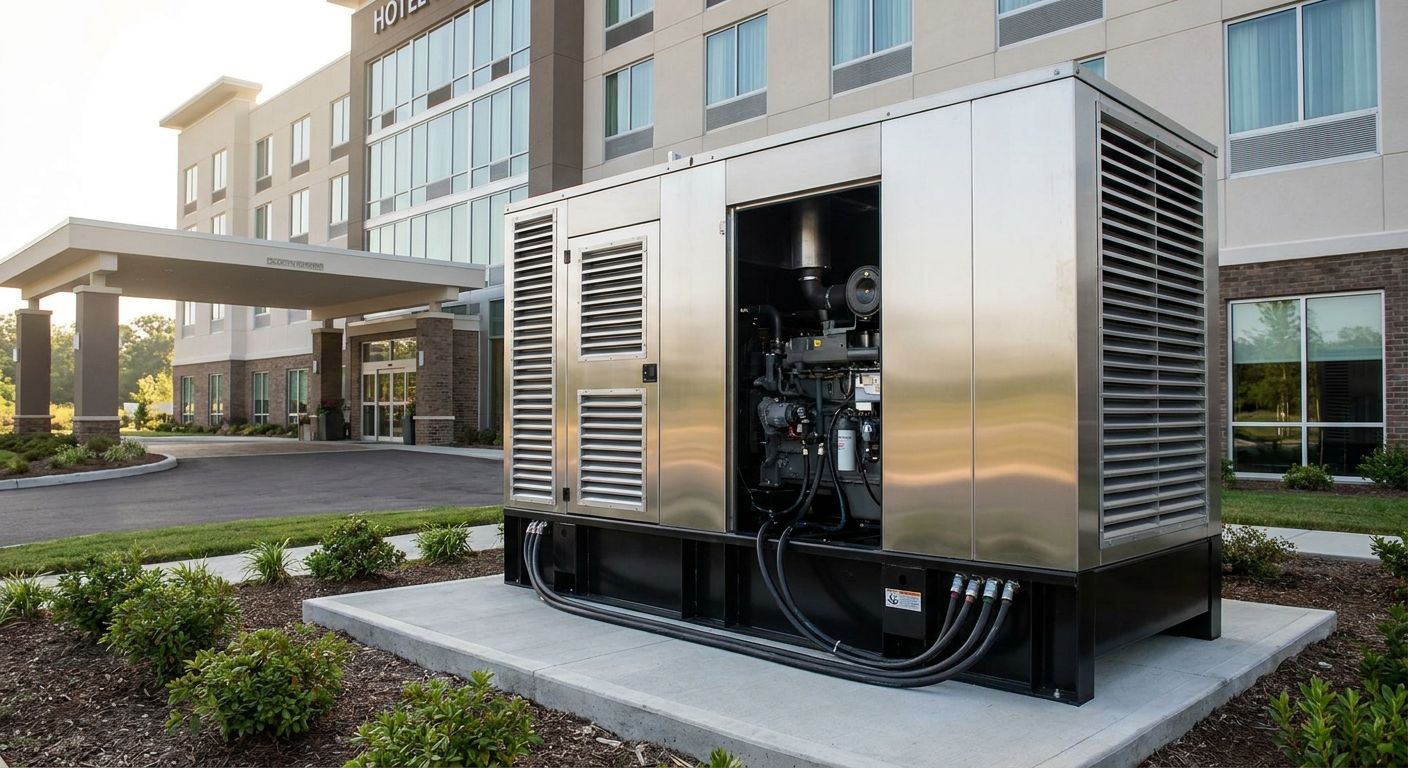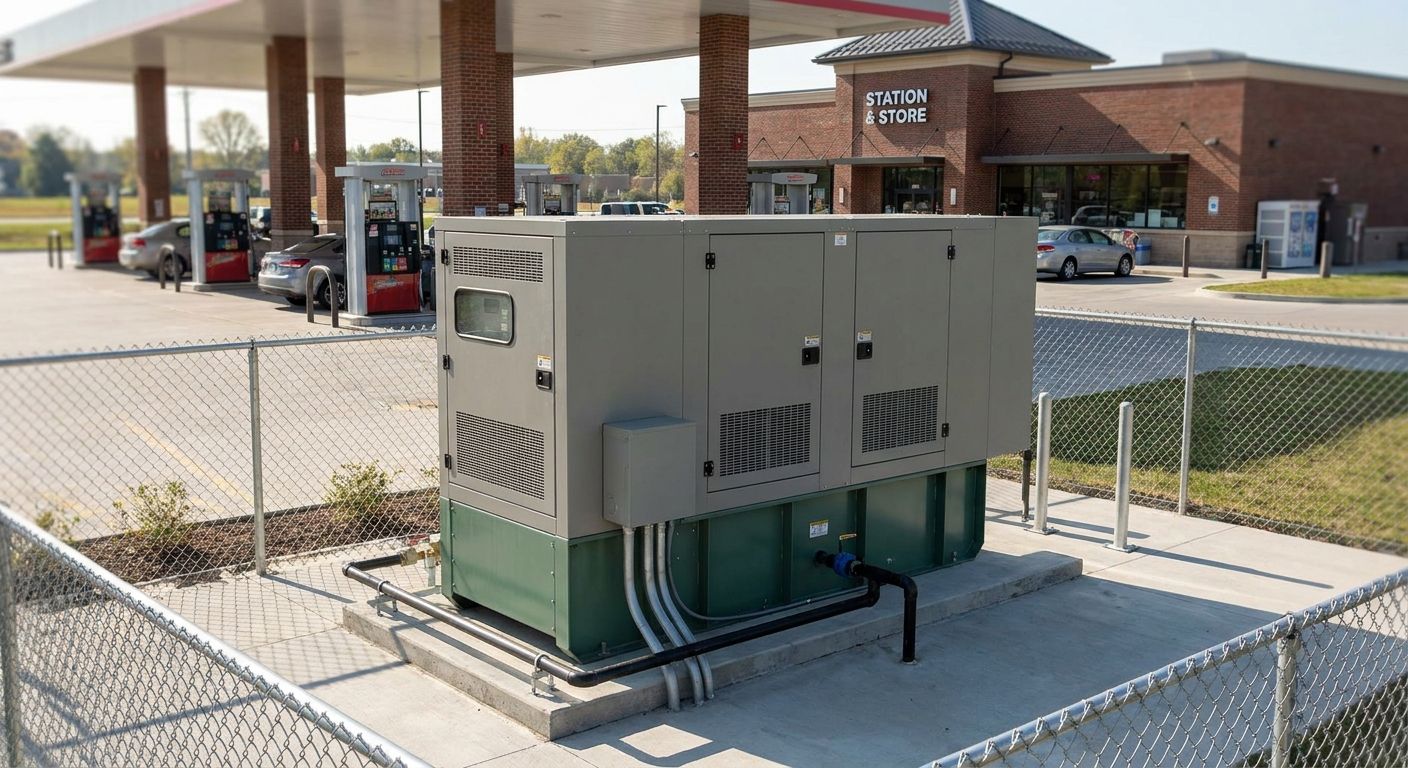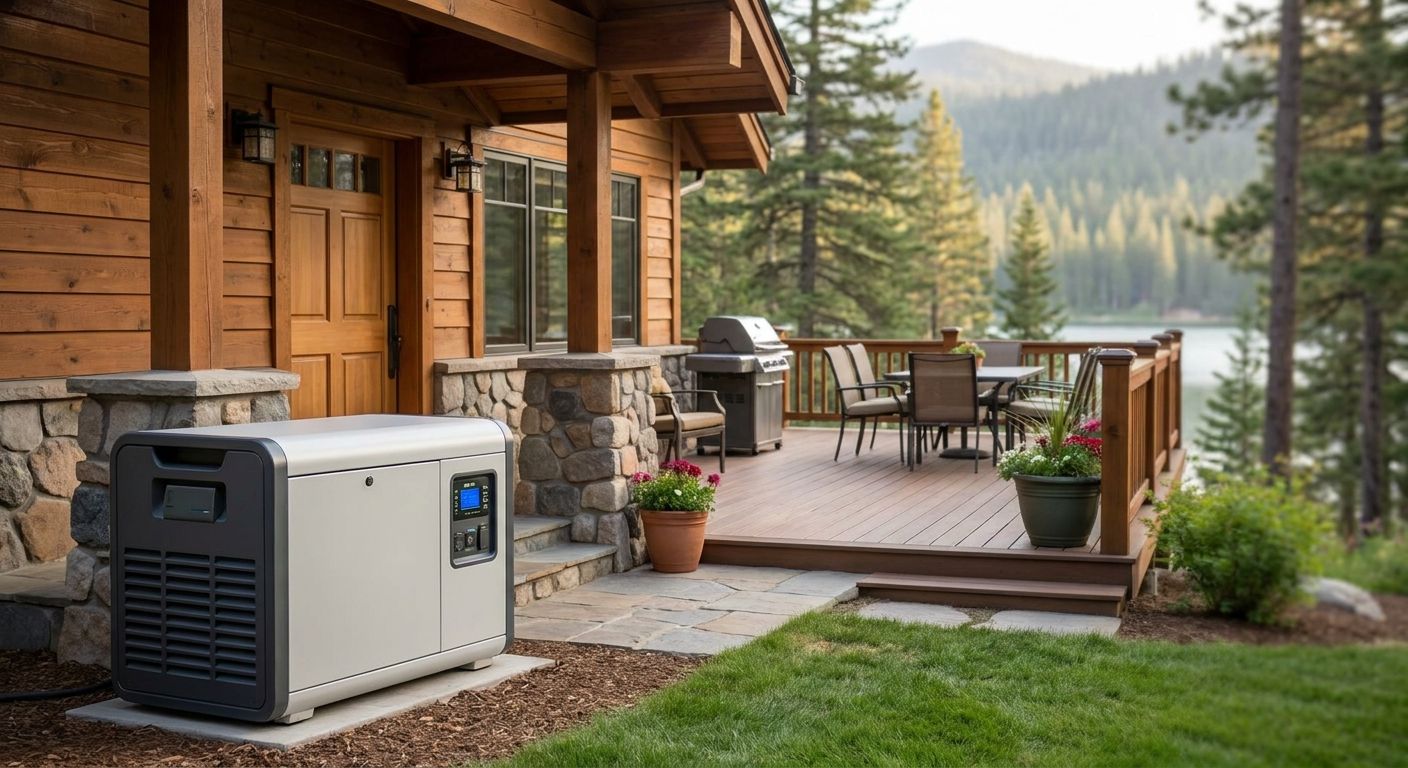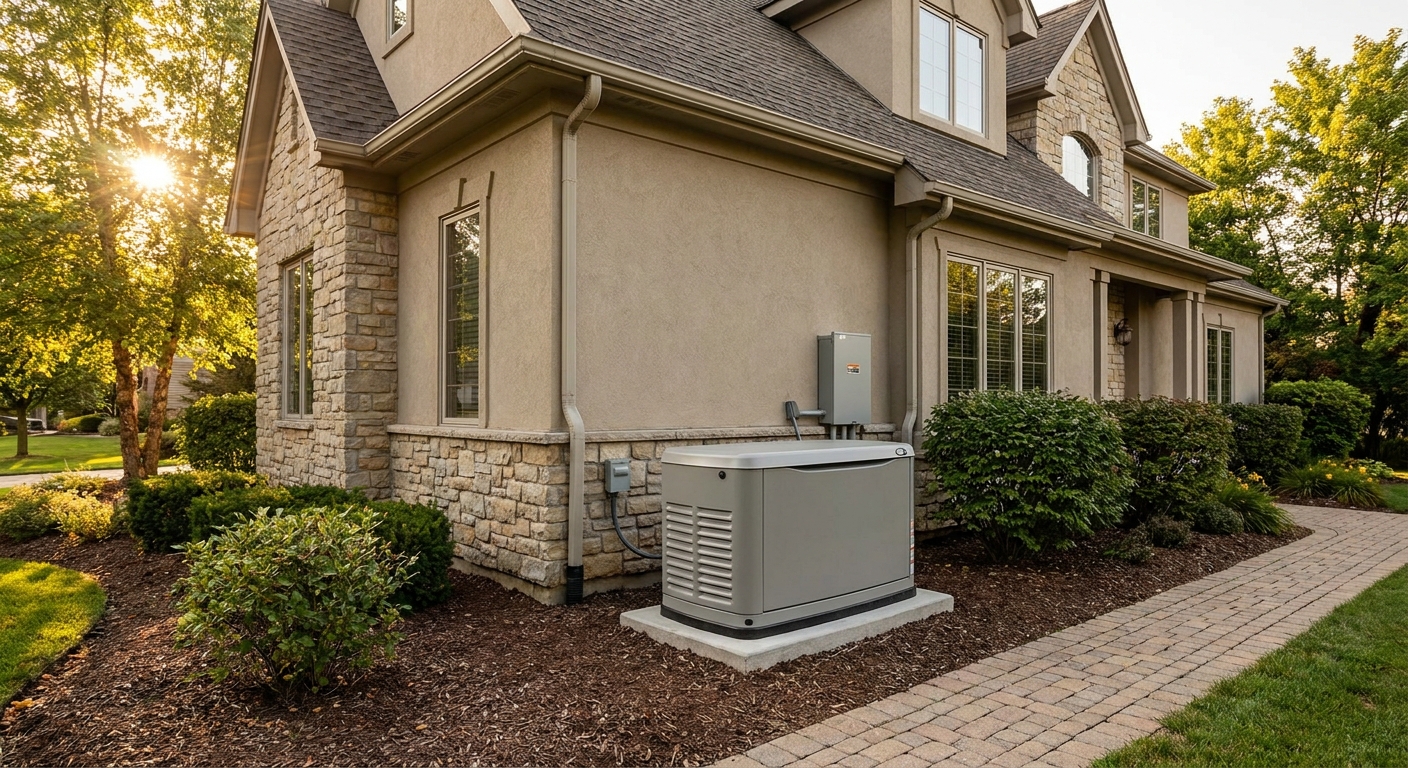
Square footage tells you almost nothing about generator size - amperage, HVAC tonnage, and well pump load do. For a 3,500 sq ft home in coastal Alabama, the right standby generator sits between 20 kW and 26 kW depending on how many air conditioning systems, pumps, and electric appliances need to stay running through a 2026 hurricane season outage.
- The best generator size for a 3500 sq ft home with one 4-ton HVAC system is 22 kW - Buy.
- Homes with two AC systems or a pool pump need 24-26 kW - Consider before downsizing to save money.
- A 14-17 kW unit only covers essential circuits in a 3500 sq ft home, not whole-house load - Skip if you want full-house backup.
- Portable generators under 10 kW can't carry whole-house amperage at this square footage - Skip.
- 20 kW works as a budget whole-home option only if the home has one central AC and no well pump - Consider.
Why this matters
Undersizing a generator is the most common mistake homeowners make after a storm knocks out power for the third time in a season. A unit that's too small trips its own breaker the moment the AC compressor and the electric range kick on at the same time, and you're back to running extension cords.
Oversizing wastes money on installation and fuel consumption without adding real backup capacity for a 3,500 sq ft footprint. The right call comes from a load calculation, not a square-footage chart - but square footage is still the fastest way to narrow the field before that calculation happens. Baldwin County Generators runs that load calculation on-site before recommending a kW size, because two 3,500 sq ft homes on the same street can need different generators entirely.
How this ranking works
Each size tier below is ranked by how well it covers a 3,500 sq ft home's typical electrical load: one to two HVAC systems, a well pump or sump pump where applicable, kitchen appliances, and lighting circuits across roughly 15-20 branch circuits. The ranking weighs three factors - whether the unit runs the whole panel or just essential circuits, whether it handles the surge from AC compressor startup without cycling other loads, and how it holds up against Gulf Coast humidity and heat load in July and August.
Sizing figures reflect standard NEC-based load calculation practice used by licensed electricians, not a single brand's marketing numbers. A generator rated for 3,500 sq ft on a spec sheet with electric everything and a pool will underperform in the field - that's why every tier below lists what it actually covers, not just a square footage label.
Generator sizes ranked for a 3,500 sq ft home
1. 22 kW whole-home standby - the safe pick
This is the size that covers a 3,500 sq ft home with one 4-ton central AC system, an electric range, and a well pump without load-shedding any circuits. A 22 kW unit handles roughly 91-92 running amps at 240V, enough headroom for the AC compressor's startup surge plus kitchen and laundry circuits running at the same time.
Most homes in this square footage range with standard single-zone HVAC land here. Verdict: Buy - this is the default recommendation for a 3,500 sq ft home with one AC system in 2026.
2. 24 kW whole-home standby - the two-AC pick
Homes with a split-level layout or a bonus room addition often run two separate HVAC systems, and that's where 22 kW starts to feel tight. A 24 kW unit adds roughly 8-10 amps of headroom, enough to run both compressors without staggering their start cycles through a delay module.
If the home has a pool pump on top of dual HVAC, this tier is worth the upgrade over 22 kW. Verdict: Buy for 3,500 sq ft homes with two AC zones.
3. 20 kW whole-home standby - the budget whole-home pick
A 20 kW unit runs a full panel on a 3,500 sq ft home, but only if the home has one AC system, no well pump, and no electric water heater competing for the same startup window. It's roughly 83 running amps at 240V - workable, but with less margin than the 22 kW tier above it.
The risk here is a homeowner who adds a hot tub or an EV charger later and finds the generator maxed out. Verdict: Consider - fine for simpler electrical loads, but confirm the panel schedule first.
4. 26-30 kW whole-home standby - the all-electric pick
Homes that are all-electric - no gas furnace or gas range as backup load reduction - or that run a pool heater alongside HVAC need this tier. A 26-30 kW generator covers 108-125 running amps, enough for simultaneous HVAC, pool equipment, and full kitchen load without any circuit shedding.
This is oversized for a standard 3,500 sq ft home with gas appliances, so it's the wildcard pick rather than the default. Verdict: Buy only if the home is all-electric or has pool equipment; otherwise it's paying for capacity you won't use.
5. 14-17 kW standby - the essential-circuits pick
This size covers a managed transfer switch setup: refrigerator, a few lighting circuits, and one AC zone cycling on a load-management module, but not the whole panel. In a 3,500 sq ft home, that means bedrooms upstairs or a second AC zone go without power during an outage.
It's a legitimate option for homeowners prioritizing budget over whole-house coverage. Verdict: Skip if the goal is whole-home backup; Consider only if partial coverage is the actual goal.
6. Portable or inverter generator (under 10 kW) - Skip
A portable unit under 10 kW can't be tied into a 200-amp panel through an automatic transfer switch at this square footage - it simply doesn't have the running amperage for a single AC compressor plus anything else. These units work for camping and job sites, not a 3,500 sq ft home's electrical panel.
Verdict: Skip entirely for whole-home or even essential-circuit backup on a home this size.
Comparison table
| Generator size | Covers | Running amps (240V) | Best for 3,500 sq ft home | Verdict |
|---|---|---|---|---|
| 22 kW | Whole panel, 1 AC zone | ~92A | Single HVAC system | Buy |
| 24 kW | Whole panel, 2 AC zones | ~100A | Dual HVAC or pool pump | Buy |
| 20 kW | Whole panel, simple load | ~83A | 1 AC, no well pump | Consider |
| 26-30 kW | Whole panel, all-electric | 108-125A | All-electric or pool heater | Buy (conditional) |
| 14-17 kW | Essential circuits only | 58-71A | Budget, partial coverage | Consider/Skip |
| Under 10 kW | Portable use only | N/A | Not applicable | Skip |
Where to buy
- Get a licensed load calculation before picking a kW size. A panel schedule and amperage draw tell you more than any square footage chart, and it's the difference between the 20 kW and 22 kW tiers above.
- Buy from an authorized dealer that installs and services the brand. Kohler, Generac, Honeywell, and Briggs & Stratton standby units all need warranty-registered installation by a licensed electrical contractor to keep coverage valid.
- Confirm permit and inspection requirements with Baldwin County before installation. Coastal Alabama municipalities including Daphne, Fairhope, Foley, and Gulf Shores require electrical permits for whole-home standby generator installs, and skipping that step can delay activation after a storm.
FAQ
What is the best generator size for a 3500 sq ft home?
A 22 kW whole-home standby generator is the best fit for a 3,500 sq ft home with one central AC system in 2026. Homes with two HVAC zones or a pool pump should size up to 24-26 kW instead.
Is 20kW enough for a 3500 sq ft house?
A 20 kW generator covers a 3,500 sq ft home only if it has one AC system and no well pump competing for startup amperage. Add a pool, a second HVAC zone, or an electric water heater and 20 kW gets tight fast.
How many kW does a 3500 sq ft home need?
Most 3,500 sq ft homes need 20 kW to 26 kW depending on HVAC tonnage and how many appliances run simultaneously. A licensed load calculation, not square footage alone, confirms the exact number.
Can a portable generator power a 3500 sq ft home?
No - portable generators under 10 kW don't have the running amperage to carry a 200-amp panel or a single AC compressor's startup surge at this square footage. Whole-home standby units start at 14-17 kW for essential circuits only.
Do I need a bigger generator if I have a pool?
Yes, a pool pump or pool heater typically pushes a 3,500 sq ft home from the 22-24 kW tier into the 26-30 kW tier. Pool equipment draws continuous load on top of HVAC and kitchen circuits.
What's the difference between whole-home and essential-circuit generators?
Whole-home generators run every circuit in the panel simultaneously, while essential-circuit setups use a managed transfer switch to cycle loads like refrigeration, lighting, and one AC zone. For a 3,500 sq ft home, essential-circuit coverage means some rooms go without power during an outage.
Does square footage alone determine generator size?
No - amperage draw from HVAC tonnage, well pumps, and appliances matters more than square footage. Two 3,500 sq ft homes can need different kW sizes depending on their electrical load.
How long does a whole-home generator last during a hurricane outage?
A properly sized standby generator connected to a natural gas or propane line runs continuously for as long as fuel supply holds, which is why they're the default choice for extended 2026 hurricane season outages over portable units that need refueling every 8-12 hours.
One last thing
The number that actually decides generator size isn't printed on the home's tax appraisal - it's the HVAC tonnage. A 3,500 sq ft home with a single 4-ton system and a 3,500 sq ft home with two 2.5-ton zones draw different amperage even though the square footage is identical, and that's why a load calculation beats a size chart every time in 2026.