Choosing the right kilowatt size for a 2,000 sq ft home comes down to matching your actual electrical load, not just square footage - and getting it wrong means paying for capacity you'll never use or buying a unit that trips every time the AC and the oven run at once.
TL;DR
For most 2,000 sq ft homes on Alabama's Gulf Coast, a 22kW standby generator is the best generator size to cover central AC, well pump, kitchen appliances, and lighting circuits without overloading the unit. Smaller 14kW-17kW units are a Skip for whole-home coverage in this size range because they can't reliably start a 3-4 ton AC compressor alongside everything else. A 24kW unit is a solid Buy if you're running a second AC zone, an electric range, or a pool pump. Homes with gas heat and lighter loads can get away with 20kW. Anything above 26kW for a 2,000 sq ft house in 2026 is oversized unless you're planning a workshop, EV charger, or major addition.
Why this matters
Hurricane season doesn't wait for you to figure out sizing after the power's already out. Undersized generators overload and shut down mid-storm - usually during the exact window (Category 2 winds, 90-degree heat, no AC) when you need them most. Oversized units cost more upfront and burn more fuel per hour for capacity you never draw. Baldwin County Generators sizes systems based on actual amperage draw across coastal Alabama towns like Daphne, Fairhope, Foley, and Gulf Shores, where humidity and AC load push power demand higher than the national average for a home this size.
A 2,000 sq ft home typically runs a 3-4 ton central AC unit, a well pump or sump pump, a refrigerator, an electric water heater or range, and a mix of lighting and small-appliance circuits. Add those up and you land in the 15,000-22,000 watt range for simultaneous startup and running load - which is exactly why 20kW to 24kW is the range that shows up on almost every legitimate sizing chart for this square footage.
How this list is ranked
This ranking reflects standard load calculations for a 2,000 sq ft home with central AC, electric water heating, and a well or sump pump - the baseline profile for most coastal Alabama properties. Each size class is scored on whether it can start and sustain the home's heaviest single load (usually the AC compressor) while still running everything else. Verdicts assume standard code-compliant load management (transfer switch with load shedding), not manual circuit juggling during an outage.
1. 14kW standby generator - the undersized trap
A 14kW unit sounds like enough on paper, but it's built for a 1,200-1,400 sq ft home with a single AC zone and no electric water heater. Starting a 3-4 ton compressor eats most of a 14kW unit's surge capacity, leaving almost nothing for the refrigerator, well pump, and lights to run at the same time.
Homeowners who install 14kW units on 2,000 sq ft homes almost always end up calling for an upgrade within the first storm season. Skip - this size is a mismatch for anything over 1,600 sq ft with central air.
2. 17kW standby generator - the marginal fit
17kW covers a 2,000 sq ft home with a smaller 2.5-3 ton AC unit and gas water heating, but it leaves thin margin if you add a second refrigerator, a chest freezer, or a well pump with a high startup draw. This size works if your home skews toward gas appliances rather than electric.
It's the size that performs fine 80% of the time and fails on the hottest day of the year, when AC load peaks and everything else is running too. Hold - only acceptable if your home has gas heat and gas water heating and you've confirmed actual amp draw with a licensed electrician.
3. 20kW standby generator - the baseline pick
20kW is the entry point for reliable whole-home coverage on a 2,000 sq ft house with a single 3-4 ton AC system, electric water heater, and standard kitchen load. It handles the AC startup surge with headroom to spare for the well pump and lighting circuits.
This is the size most licensed electricians quote first for homes in this range, and it's a fair middle ground between cost and capacity. Buy if your home has one AC zone and no major additional electric loads like a pool pump or workshop.
4. 22kW standby generator - the best generator size for most 2,000 sq ft homes
22kW is the sweet spot: enough surge capacity to start a 4-ton AC compressor without shedding load, plus enough continuous output to run the water heater, well pump, refrigerator, and kitchen circuits at the same time. Kohler and Generac both build their most popular whole-home units in this range for exactly this reason - it's the size that matches actual measured load data for homes between 1,800 and 2,400 sq ft.
For a coastal Alabama home running AC nearly year-round, this is the size that avoids the mid-storm shutdowns that plague 14kW and 17kW installs. Buy - this is the best generator size for a 2,000 sq ft home with standard electric appliances and one AC zone, and the size to request when getting a quote in 2026.
5. 24kW standby generator - the upgrade pick
24kW adds real margin for homes with a second AC zone, an electric range plus an electric water heater, or a pool pump running alongside everything else. It costs more to run per hour than a 22kW unit but removes the need to manage load priorities during extended outages.
This size makes sense if you've added square footage, a sunroom, or a detached workshop with its own circuit since the home was built. Consider if your electrical panel shows more than one major electric-heavy appliance category running simultaneously.
6. 26kW+ standby generator - overkill for this size home
Above 26kW, you're paying for commercial-grade capacity that a 2,000 sq ft home rarely draws, even during peak summer AC load. This range makes sense for larger homes, homes with EV charging, or properties combining residential and workshop/business use - not a standard 2,000 sq ft footprint.
The fuel consumption difference between a 22kW and a 28kW unit adds up fast over a multi-day outage, which matters during Gulf Coast hurricane season when generators can run for a week or more. Skip unless you have a documented load calculation that justifies it.
Comparison table
| Size | Best for | Startup margin | 2026 verdict |
|---|---|---|---|
| 14kW | Homes under 1,600 sq ft, single AC zone | Thin | Skip |
| 17kW | Gas heat/water heater homes, light electric load | Marginal | Hold |
| 20kW | Single AC zone, standard electric appliances | Adequate | Buy (baseline) |
| 22kW | 2,000 sq ft homes, 3-4 ton AC, electric water heater | Comfortable | Buy (best fit) |
| 24kW | Two AC zones, pool pump, electric range | Strong | Consider |
| 26kW+ | Homes over 2,500 sq ft or business/workshop combo | Excess | Skip |
Where to buy
- Get a professional load calculation before you buy a size. Square footage is a starting point, not a spec - actual amperage draw from your panel determines the real number, and a licensed electrician should confirm it before you commit to a kW size.
- Buy from an authorized dealer that also handles installation and service. Kohler, Generac, Honeywell, and Briggs & Stratton units all need a transfer switch installed by a licensed electrician, and warranty coverage on standby units typically depends on professional installation.
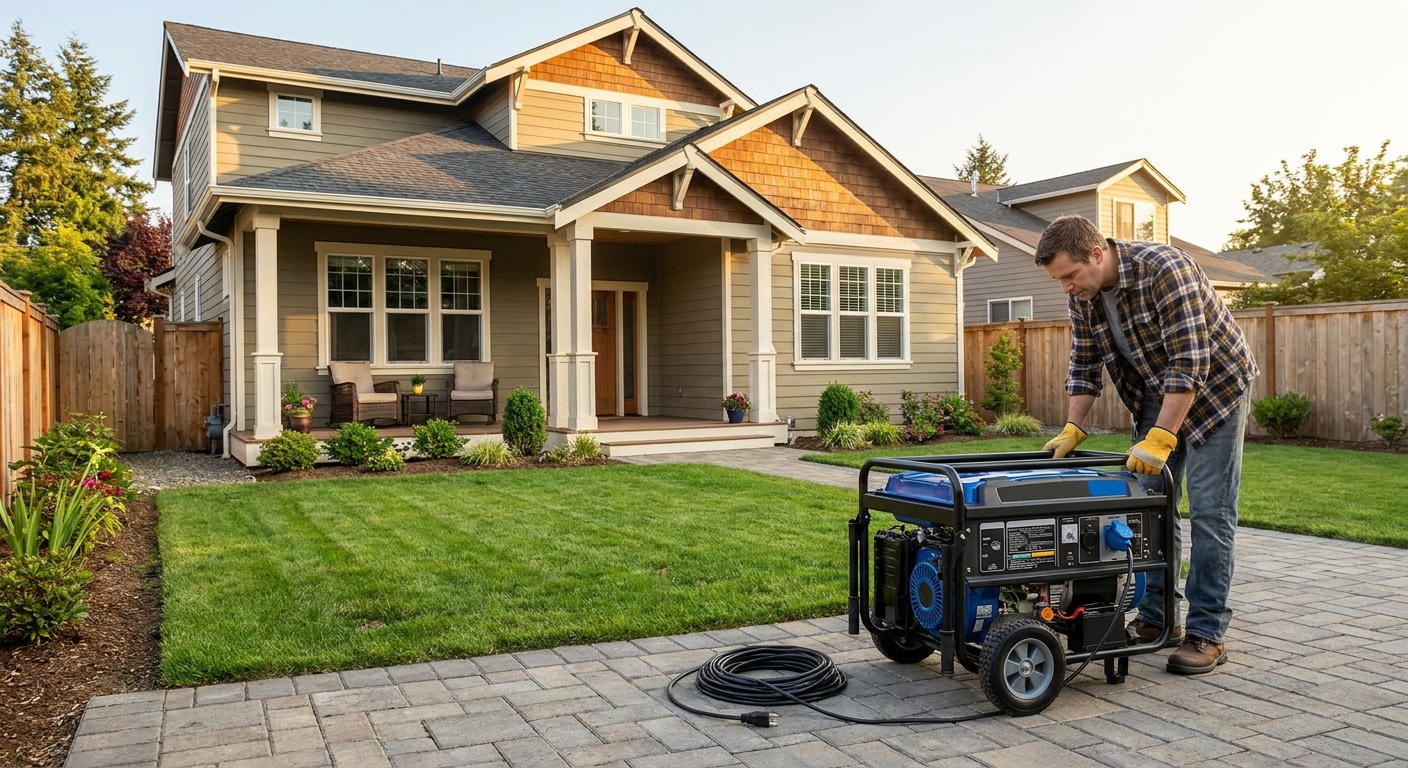
- Avoid big-box portable generators as a substitute for whole-home sizing. Portable units in the 5,000-10,000 watt range don't compare to a 20-24kW standby system and can't run central AC and well pump loads simultaneously without manual circuit management.
FAQ
What size generator do I need for a 2,000 sq ft home? Most 2,000 sq ft homes with central AC and electric water heating need a 20kW to 22kW standby generator, with 22kW being the best generator size for homes with a single 3-4 ton AC zone.
Is a 22kW generator big enough for a house with central air? Yes - 22kW covers the startup surge for a 3-4 ton AC compressor plus continuous load for a well pump, water heater, and kitchen circuits in a 2,000 sq ft home.
How much does a standby generator cost for a 2,000 sq ft home in 2026? Cost varies by brand, install complexity, and local permitting, so get a quote based on your specific panel and load calculation rather than a flat number.
Can a 14kW generator run a whole 2,000 sq ft house? 14kW is undersized for most 2,000 sq ft homes with central AC - it lacks the surge capacity to start a 3-4 ton compressor while running other major circuits at the same time.
Do I need a bigger generator if I have an electric range and electric water heater? Yes - homes with both electric heavy appliances running alongside AC typically need 24kW rather than 20kW to avoid load shedding during peak demand.
Is it better to oversize a standby generator? Not usually - oversizing past 26kW for a 2,000 sq ft home increases fuel burn per hour without adding practical benefit unless you have documented load beyond standard household use.
Does Kohler or Generac make a better fit for a 2,000 sq ft home? Both brands build 20-24kW units sized for this square footage; the better fit depends on your specific load calculation and available install space, not brand alone.
How long can a 22kW generator run during a hurricane outage? Runtime depends on fuel source and tank size - natural gas units can run continuously as long as gas service holds, while propane units are limited by tank capacity.
One last thing
The number that trips up most homeowners isn't square footage - it's the startup surge of the AC compressor, which can spike 2-3 times higher than its running wattage for a few seconds. That spike is why a 17kW unit that looks fine on a spec sheet still stalls out the first time the AC kicks on during a 2026 August heat wave with the generator already carrying other loads.
Get a load calculation done before hurricane season starts, not after the first outage. Sizing right the first time costs less than replacing an undersized unit mid-storm.