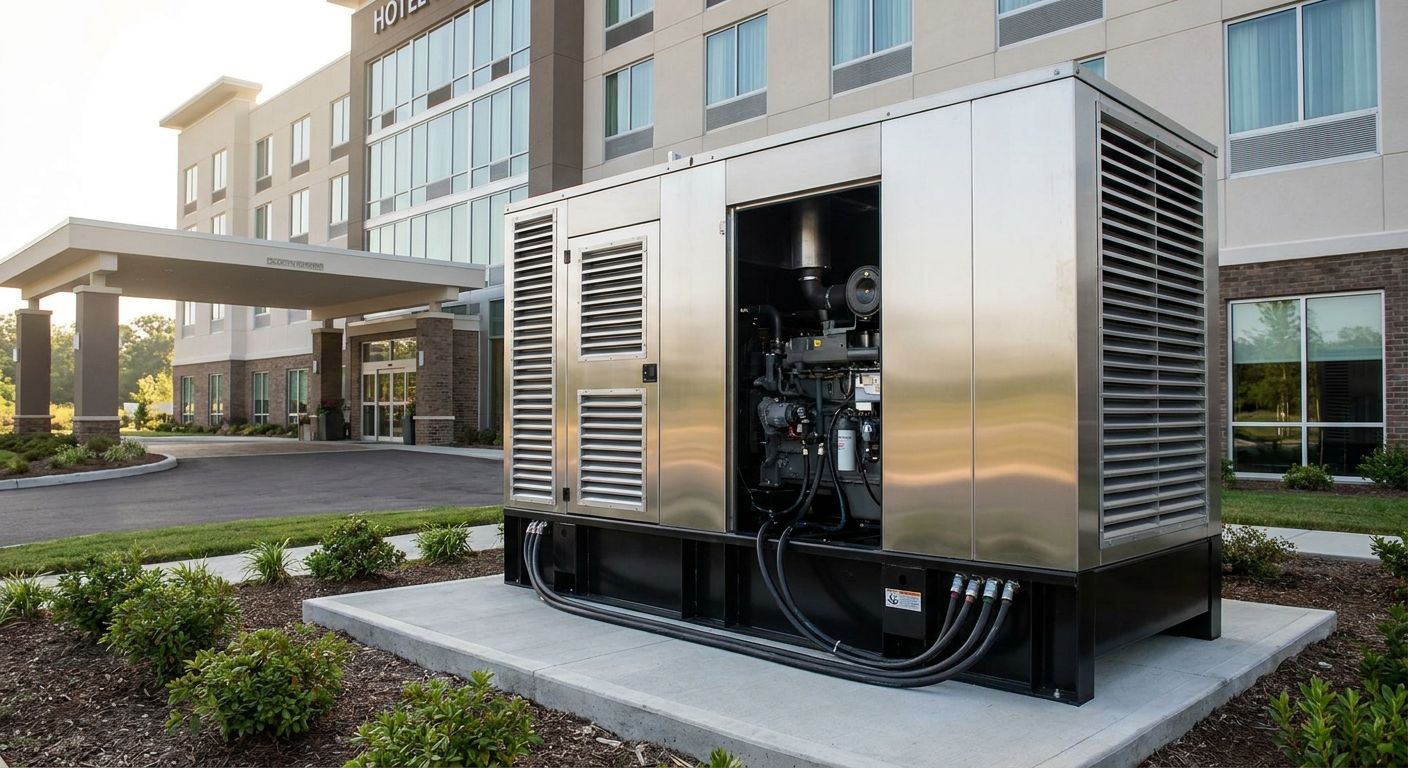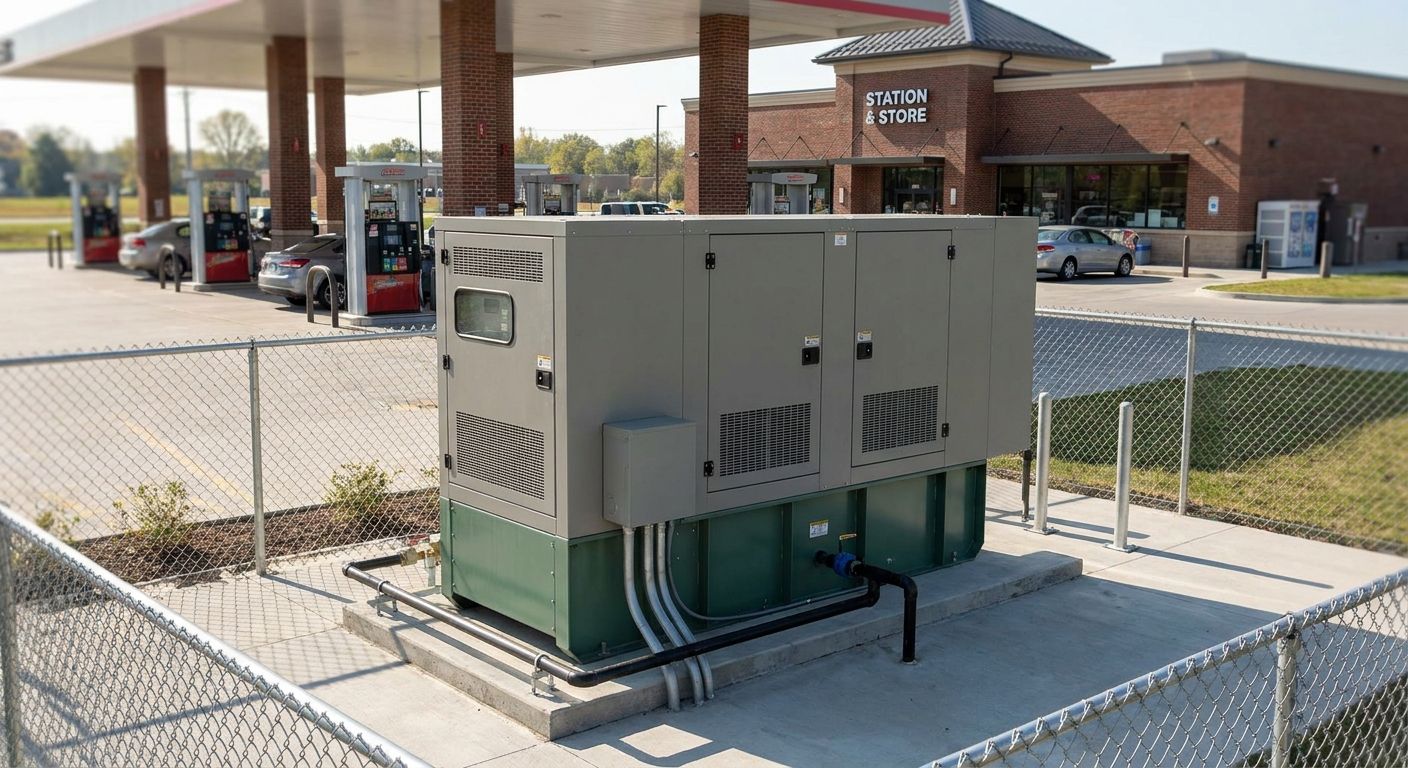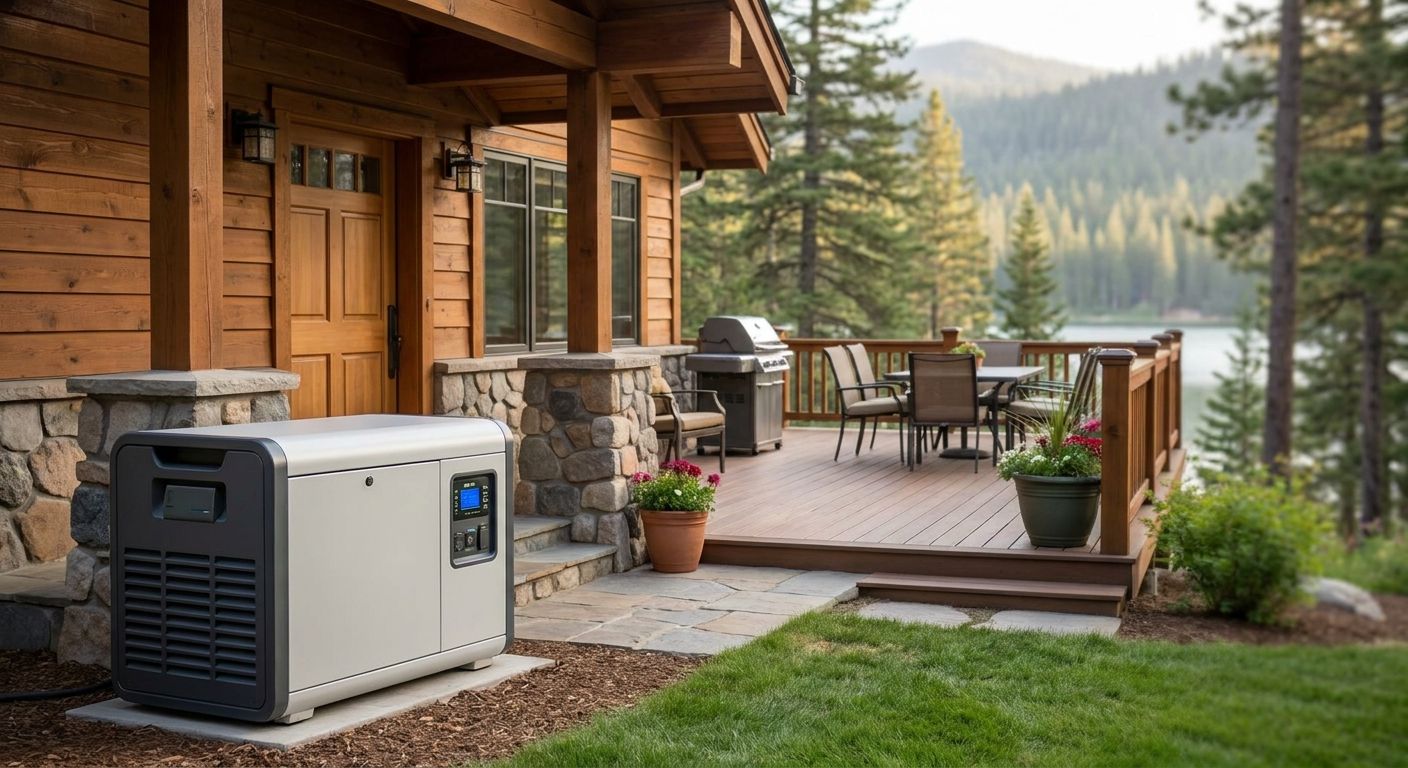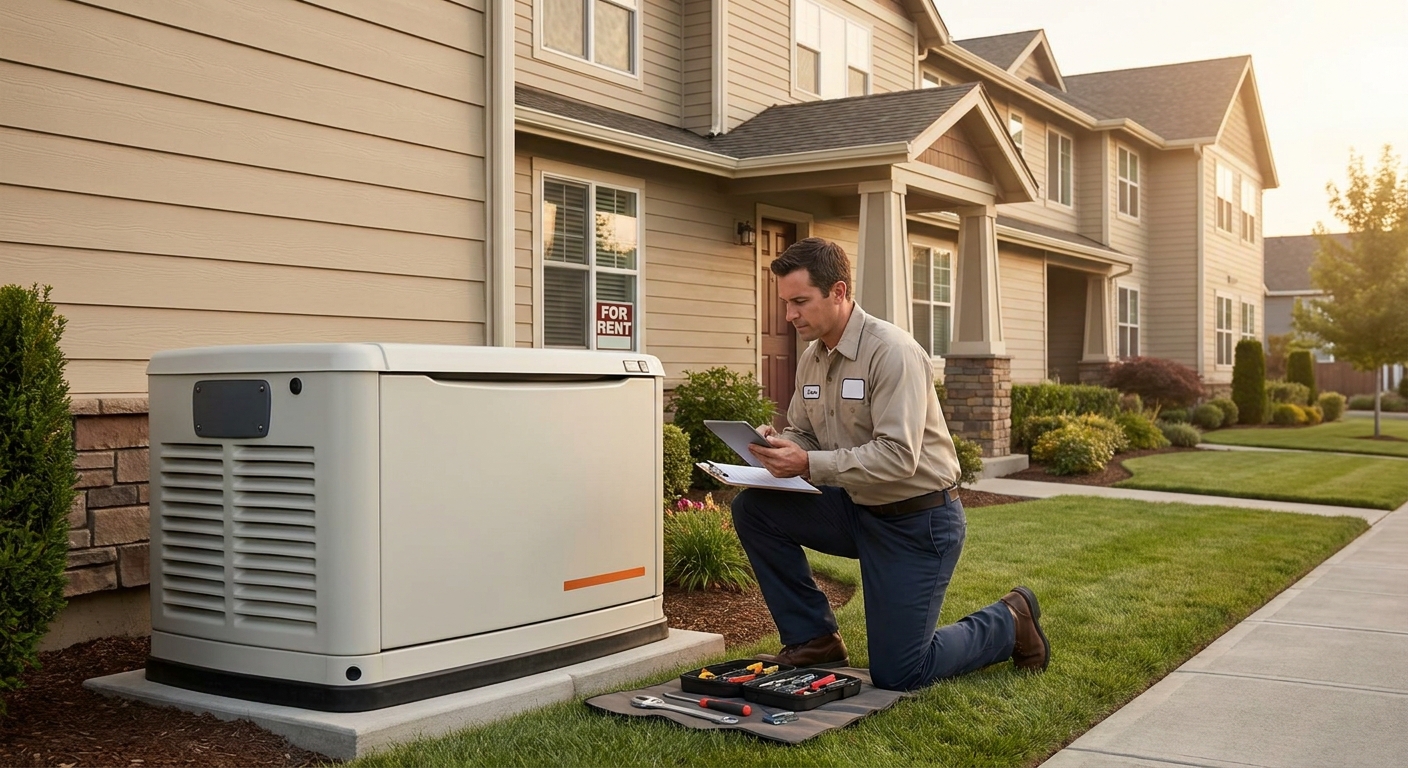
Rental property owners in Daphne, Fairhope, Foley, and Gulf Shores don't get to choose when a generator fails - a tenant does, usually during a power outage, usually at night. The maintenance plan you pick decides whether that standby unit starts on the first crank or leaves a unit dark for days while Baldwin County Generators gets scheduled in.
- Best generator maintenance plans rental property owners: bi-annual coastal service beats a single annual visit for storm-zone units.
- Multi-property portfolio contracts cut per-unit dispatch costs for owners managing 3+ rental generators - buy.
- Reactive-only 'call when broken' service is the weakest plan for rental owners in 2026 - skip it.
- Factory-authorized annual plans from Kohler and Generac dealers keep warranty coverage intact for single-unit owners.
Why this matters
A generator sitting behind a rental property isn't a convenience item - it's the difference between a habitable unit and a tenant demanding a rent credit after three days without air conditioning in July. Salt air and humidity along the Alabama coast corrode battery terminals and control boards faster than inland installations, and a unit that hasn't been load-tested since last year often fails exactly when a storm knocks out utility power.
Owners with one rental treat maintenance differently than owners with a portfolio of five. A single missed service call on one property is an inconvenience. A missed service call across a multi-unit portfolio during the same storm event is a liability problem, and in 2026 tenants increasingly expect working backup power to be part of the lease, not a bonus.
How this list is ranked
Each maintenance plan type below is evaluated against three things that matter specifically to rental property owners: whether it preserves manufacturer warranty coverage, whether it scales across multiple addresses without multiplying paperwork, and whether it holds up through a full Gulf Coast hurricane season. Plans that only make sense for a single owner-occupied home get marked down. Plans built around reactive service - waiting for a failure before calling anyone - rank lowest regardless of price, because a no-start event during an outage is the exact failure a rental owner can't afford.
The ranked list
1. Factory-Authorized Annual Maintenance Plan - the safe pick
This is the standard offering from an authorized Kohler or Generac dealer: one scheduled visit per year covering oil and filter changes, battery testing, and a load-bank test to confirm the unit carries a real load, not just an idle cycle. The specific interval - 100 hours or 12 months, whichever comes first - is the manufacturer's own baseline, and skipping it is the single fastest way to void warranty coverage on a unit that's still under it.
For an owner with one rental property and one generator, this plan covers the basics without extra cost layered on. It doesn't account for coastal wear at the level a twice-yearly plan does, but it satisfies the manufacturer's documentation requirement. Buy - for single-unit owners with an inland property.
2. Bi-Annual Coastal Storm-Season Plan - the hurricane-season pick
This plan splits service into a pre-season visit (April or May) and a post-season visit (December), timed around the June 1 to November 30, 2026 hurricane season. The extra visit catches corrosion on battery terminals and control panels that a single annual check misses, and it confirms the unit is storm-ready before the season starts rather than after a named storm has already tested it.
Coastal properties in Gulf Shores and Fairhope see faster component wear from salt air than properties a few miles inland, which is why the bi-annual cadence exists as a distinct tier rather than a marketing upsell. Buy - for any rental within a few miles of the coastline.
3. Multi-Property Portfolio Contract - the landlord's pick
Built for owners running three or more rental units, this plan bundles service scheduling across every address into a single contract and a single point of contact instead of separate service calls booked property by property. The practical benefit is fewer missed visits - one calendar, one renewal date, one invoice to track instead of four or five scattered ones.
Owners managing a portfolio spread across Daphne, Foley, and Gulf Shores get the most value here because it removes the coordination burden of chasing separate service windows at each address. Buy - for owners with 3 or more rental generators.
4. Priority Emergency Response Add-On - the tenant-retention pick
This add-on layers priority scheduling on top of an existing maintenance plan, moving a rental property ahead of walk-in and non-contract service calls when an outage hits. It doesn't replace scheduled maintenance - it exists specifically for the gap between a routine visit and an actual storm event, when every generator owner in the county is calling the same dealer at once.
For owners renting to long-term tenants who expect working power as part of the lease, this closes the response-time gap that a standard plan doesn't address on its own. Consider - worth adding for higher-value or long-term-tenant properties, not essential for a vacant or seasonal unit.
5. Warranty-Only Reactive Service - no scheduled plan
This is the absence of a plan: no scheduled visits, no load-bank testing, service booked only after the unit fails to start. It's the cheapest option on paper because nothing is billed until something breaks, and it's the worst option in practice for a rental property because the failure always surfaces at the least convenient moment - mid-outage, with a tenant on the phone.
Skipped maintenance is consistently the underlying cause behind no-start events reported after storms, and a generator that hasn't been exercised or load-tested in over a year carries real risk of failing exactly when it's needed. Skip - the cost savings don't offset the outage risk for a rental unit.
6. DIY Self-Maintenance - the risky pick
Some owner-operators handle oil changes and rely on the generator's built-in weekly self-test cycle - a standard feature on most standby units that runs the engine for a short interval, typically 5 to 20 minutes, without applying a real load. That self-test confirms the engine starts; it does not confirm the unit will carry a house or a duplex through an actual outage.
DIY oil changes without a professional load-bank test leave the most important failure point - whether the unit holds up under real load - completely unchecked. Wait - fine as a supplement between professional visits, not a substitute for one.
Comparison table
| Plan | Best for | Visit frequency | Verdict |
|---|---|---|---|
| Factory-Authorized Annual Plan | Single-unit, inland property | 1x/year | Buy |
| Bi-Annual Coastal Storm-Season Plan | Coastal or waterfront rentals | 2x/year | Buy |
| Multi-Property Portfolio Contract | Owners with 3+ units | Scheduled per portfolio | Buy |
| Priority Emergency Response Add-On | Long-term tenant properties | On top of existing plan | Consider |
| Warranty-Only Reactive Service | No one, really | None | Skip |
| DIY Self-Maintenance | Supplement between visits | Weekly self-test only | Wait |
Where to sign up
- Confirm the provider is a licensed, authorized dealer for the generator's brand - Kohler, Generac, Honeywell, or Briggs & Stratton - not a general HVAC company adding generators as a side service.
- Get the maintenance schedule in writing, tied to the unit's actual kW size and manufacturer specs, not a generic one-size template applied across every property.
- Ask about bundled scheduling across multiple addresses before signing separate contracts per property - a portfolio contract is almost always the more efficient route once you're past two units.
“Skipped maintenance is consistently the underlying cause behind no-start events reported after storms.”
FAQ
What's the best generator maintenance plan for rental property owners in 2026?
For coastal rentals, a bi-annual storm-season plan timed to the June through November hurricane season outperforms a single annual visit. Owners with 3 or more units generally get more value from a bundled portfolio contract that consolidates scheduling and billing.
How often should a rental property generator be serviced?
Most standby generators need service every 100 hours or 12 months, whichever comes first, per manufacturer specs. Coastal properties benefit from twice-yearly visits because salt air and humidity accelerate wear on batteries and control boards.
Is a bi-annual plan better than annual for coastal Alabama rentals?
Yes, for any rental near the Gulf Coast. The extra visit catches corrosion and battery wear that a single annual check misses, and it times a pre-season inspection before hurricane season starts each June.
Does skipping maintenance void the Kohler or Generac warranty?
Yes, most manufacturer warranties require documented annual service to stay valid. A missed service interval is one of the most common reasons a warranty claim gets denied.
How much does generator maintenance cost for multiple rental units?
Cost depends on generator size, unit count, and plan tier, so get a quote scoped to your specific portfolio rather than a per-unit estimate. Bundled portfolio contracts typically reduce the total dispatch cost compared to booking each property separately.
Can tenants request emergency generator service directly?
That depends on the lease terms an owner sets, but most owners route emergency calls through themselves or a property manager rather than giving tenants direct access to the service contract. A priority response add-on speeds up that process once the owner initiates the call.
What happens to a standby generator during hurricane season if it's not maintained?
An unmaintained unit is far more likely to fail to start or fail under load exactly when an outage hits. Corroded battery terminals, dirty oil, and an untested load capacity are the most common causes of no-start events after a storm.
Should each rental property have its own maintenance contract or one bundled plan?
Once an owner has 3 or more properties, a single bundled portfolio contract is almost always more efficient than separate contracts per address. It consolidates scheduling, reduces missed visits, and simplifies invoicing at tax time.
One last thing
The generator that fails during a hurricane almost never fails because of the storm itself - it fails because the last scheduled service got pushed back a season and nobody caught it until the load-bank test never happened. A calendar reminder tied to hurricane season dates, not a vague "sometime this year" plan, is the cheapest fix available to any rental property owner in 2026.