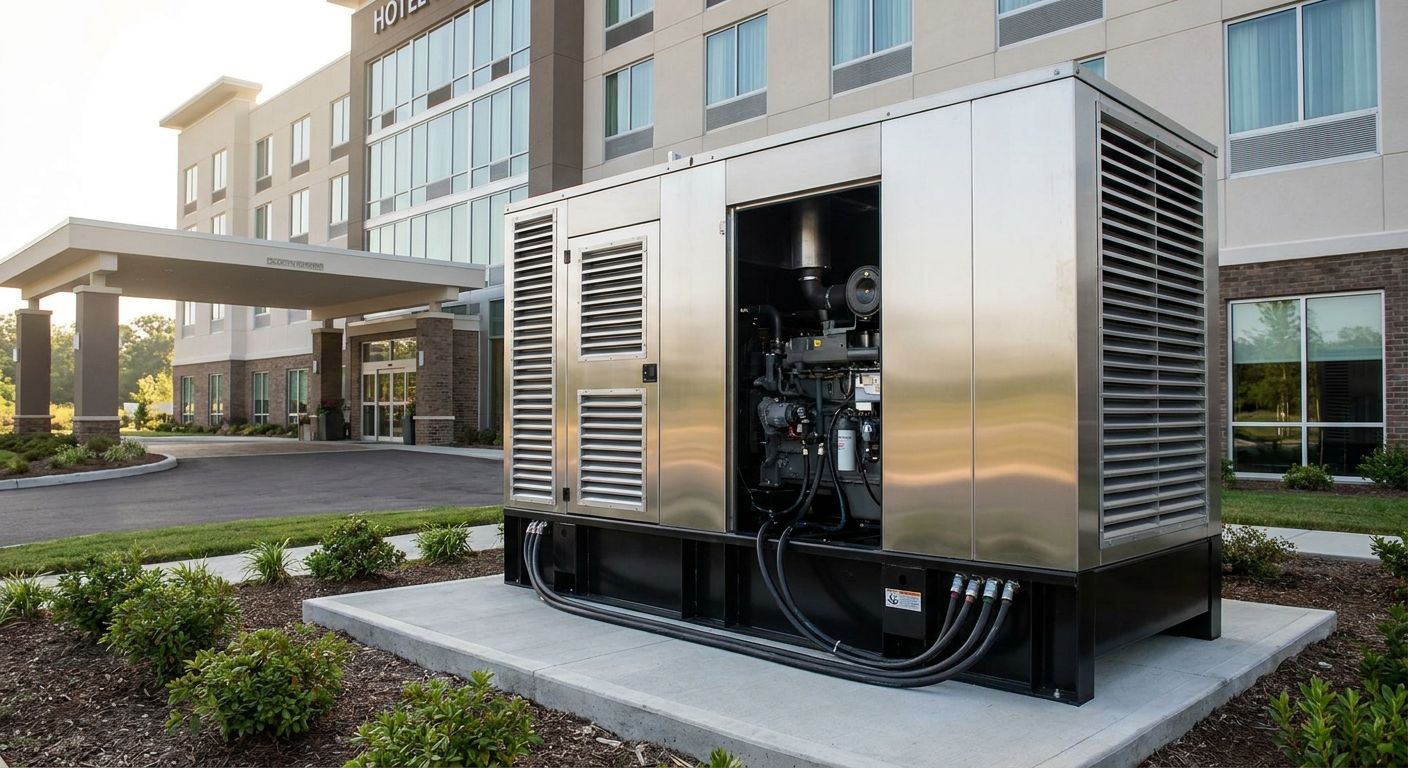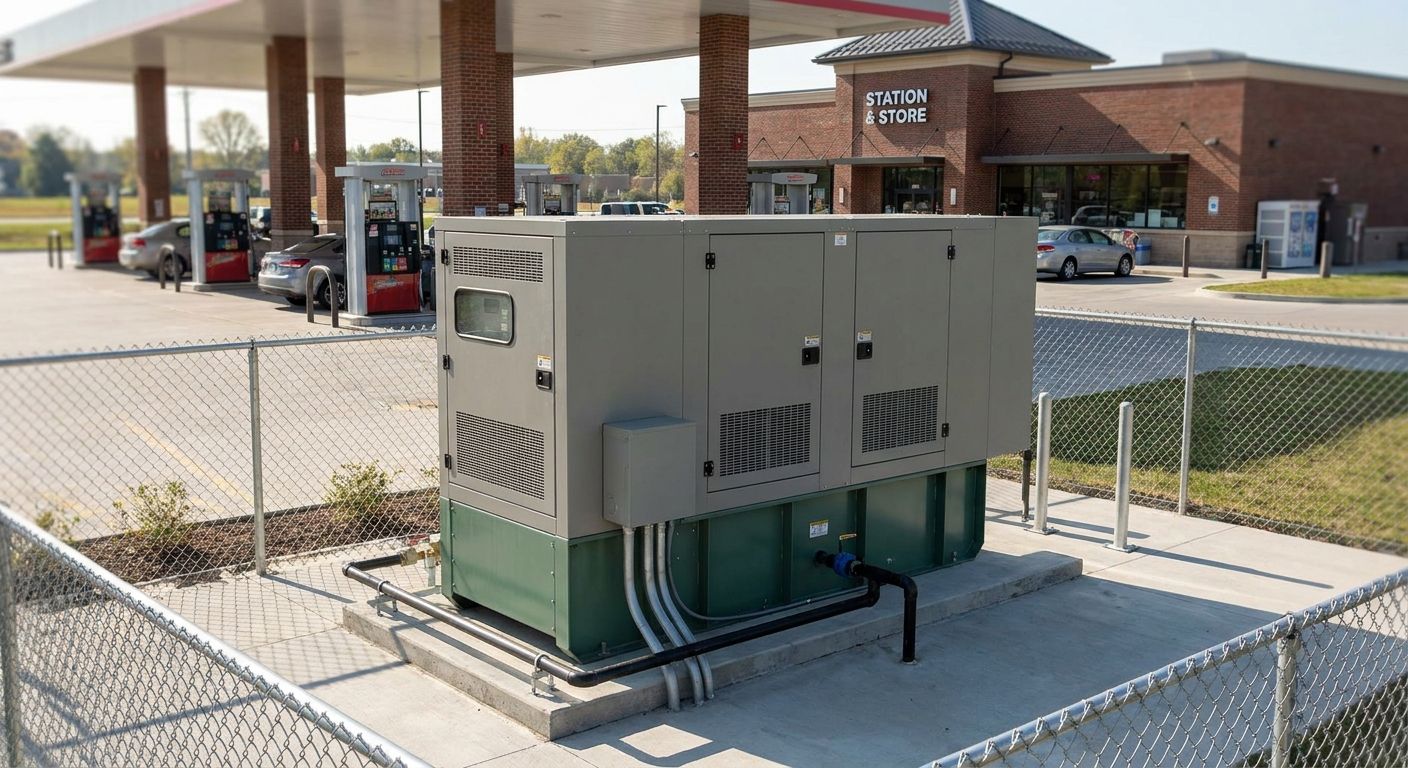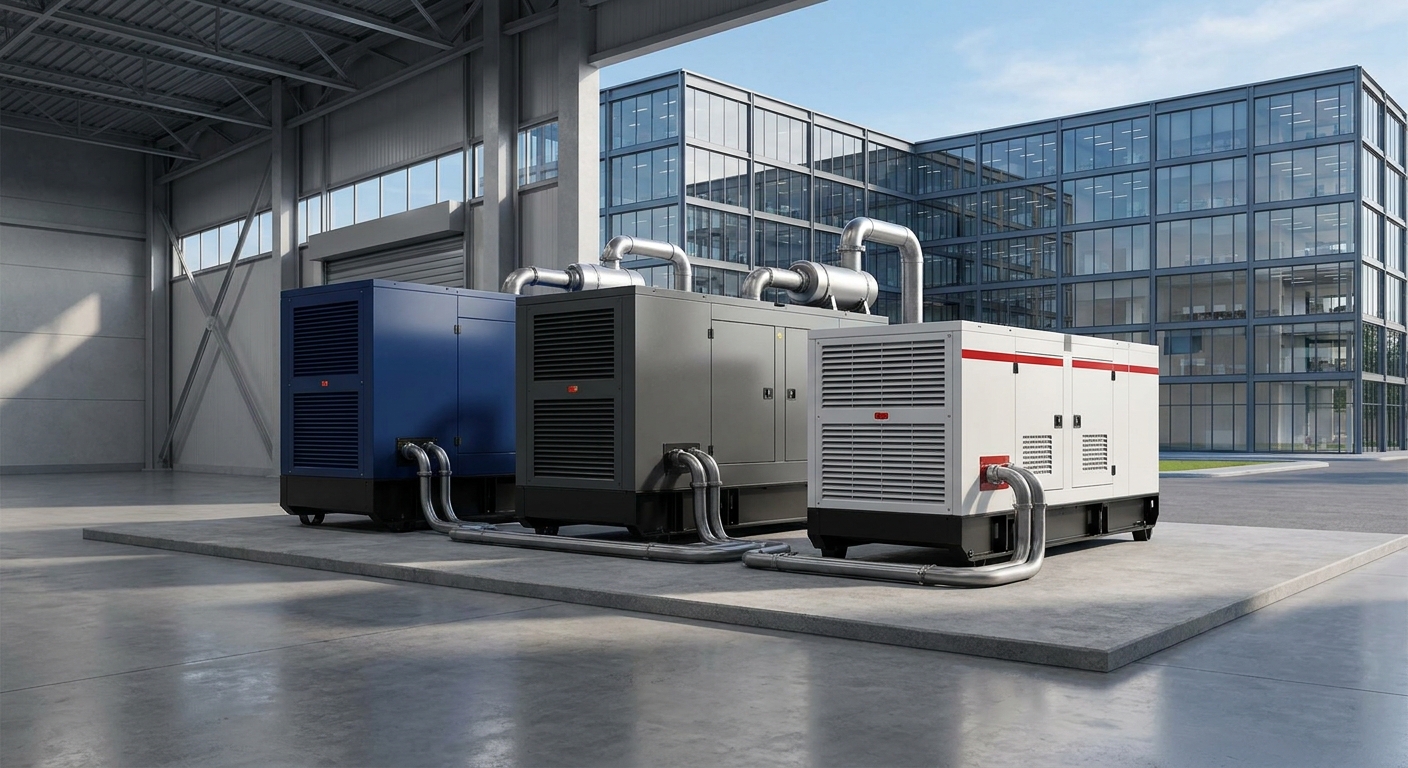
Commercial power outages cost more than lost sales - they cost inventory, payroll hours, and customers who don't come back. This guide ranks the generator brands that actually hold up under business-critical loads in 2026, from big-box industrial diesel to standby propane and natural gas units sized for a strip mall or a marina.
- Generac's industrial line (22kW-150kW) wins for most Gulf Coast businesses on cost-per-kW and dealer support - Buy.
- Kohler's KD series is the pick for hospitals, marinas, and any load that can't blink - Buy.
- Cummins C Series makes sense above 150kW but overshoots most small-business needs - Consider.
- Champion and consumer-grade Honda units are not built for continuous commercial duty cycles - Skip for standby power.
- Briggs & Stratton fits light commercial (small offices, retail) but has a thinner dealer bench in coastal Alabama - Consider.
Why this matters
A residential portable generator running a walk-in cooler or a server rack for three days during a named storm will fail - undersized alternators overheat, and consumer engines aren't rated for continuous duty. Commercial-grade standby units are built around a different spec sheet: sustained kW output, automatic transfer switches, and duty cycles measured in hundreds of hours, not a weekend.
Baldwin County Generators installs and services standby generators for homes and businesses across Daphne, Fairhope, Foley, and Gulf Shores, and the brand question comes up on nearly every commercial quote: Generac or Kohler, diesel or natural gas, and whether a bargain brand is worth the risk when hurricane season hits. The answer depends on load size, fuel access, and how long you can afford to be dark.
How this list is ranked
Rankings weigh four factors that matter for commercial buyers: sustained kW output relative to price, parts and service network depth, fuel flexibility (diesel, natural gas, LP), and duty-cycle rating for continuous or prime power versus standby-only use. Manufacturer spec sheets and published warranty terms for 2026 model years anchor the numbers below - not lab testing, but the same documents any licensed installer pulls before writing a quote. Brands built primarily for recreational or backup-only residential use are scored down even when the engine displacement looks competitive on paper, because commercial duty cycles expose weak alternators and thin cooling systems fast.
The ranked list
1. Generac - the volume leader
Generac's industrial and commercial line spans 22kW to 150kW on a single unit, with modular paralleling above that for larger facilities. The 2026 lineup includes natural gas and LP options that matter when diesel delivery gets unreliable during a storm surge. Parts availability and dealer density are the strongest of any brand covered here, which shortens repair turnaround when a business can't wait a week for a part. Verdict: Buy for restaurants, retail, medical offices, and light industrial up to 150kW.
2. Kohler - the reliability pick
Kohler's KD and KG series scale from small commercial units up into the multi-megawatt range used by hospitals and data centers. The brand's closed-crankcase ventilation and 2-year standard commercial warranty reflect an engineering approach built around zero-tolerance uptime, not just backup convenience. It costs more per kW than Generac on comparable units, but for a marina, a medical clinic, or a cold-storage facility where a failed transfer switch means spoiled inventory, the premium is the point. Verdict: Buy for critical-load businesses that cannot tolerate downtime.
3. Cummins - the big-building option
Cummins C Series diesel gensets start where most commercial buyers stop needing them - 150kW and up, running into the megawatt range for large facilities and campuses. Fuel efficiency at high load factors beats gas alternatives, and diesel storage on-site removes dependence on utility gas lines during a storm. Overkill and overpriced for a single-location retail store or small office. Verdict: Consider only above 150kW or for multi-building commercial campuses.
4. Caterpillar - the industrial standard
Caterpillar's diesel generator sets carry the same reputation in commercial power that the brand carries in heavy equipment: built for punishment, priced accordingly. Service intervals and parts run through a dealer network that's thinner in coastal Alabama than Generac's or Kohler's, which matters when a part needs to ship in during hurricane season. Right choice for large manufacturing or logistics operations already running Cat equipment. Verdict: Consider for large industrial buyers with an existing Cat service relationship.
5. Briggs & Stratton - the light-commercial fit
Briggs & Stratton's commercial standby units cover the smaller end of the business market - single-tenant offices, small retail, light commercial buildings under roughly 20kW. Pricing undercuts Generac at the low end, and the engine platforms share DNA with the company's decades of small-engine manufacturing. Dealer and warranty service coverage across Baldwin County is thinner than the two market leaders. Verdict: Consider for small offices and single-tenant retail under 20kW.
6. Honeywell - the branded budget play
Honeywell-badged standby generators are built on licensed platforms rather than a proprietary Honeywell engine line, which keeps pricing competitive but ties long-term parts availability to the underlying manufacturer. Fine for a single small business with modest backup needs and a tight budget. Not the first call for a business running refrigeration, servers, or medical equipment. Verdict: Consider for budget-driven, low-criticality backup only.
7. Champion - the consumer crossover
Champion built its name on portable and residential backup units, and the commercial-labeled models still lean on residential-grade alternators and shorter duty-cycle ratings. Price looks attractive next to Generac and Kohler until you factor in a shorter service life under continuous commercial load. Fine for a job-site trailer, wrong for a restaurant walk-in or a retail HVAC load during a multi-day outage. Verdict: Skip for standby commercial power; fine for construction-site portable use.
8. Honda - the portable specialist
Honda's inverter and industrial portable generators earn their reputation on job sites and for event power, not as whole-building standby systems. Fuel efficiency and quiet operation are real advantages for a food truck or a mobile vendor. There's no automatic transfer switch ecosystem built around Honda for permanent commercial standby installs the way there is with Generac or Kohler. Verdict: Skip for fixed commercial standby; Buy for portable job-site or event power.
Comparison table
| Brand | Commercial kW range | Fuel options | Best for | Verdict |
|---|---|---|---|---|
| Generac | 22-150kW+ | NG, LP, diesel | Restaurants, retail, medical offices | Buy |
| Kohler | Small commercial-multi-MW | Diesel, NG | Hospitals, marinas, critical load | Buy |
| Cummins | 150kW+ | Diesel | Large campuses, big buildings | Consider |
| Caterpillar | Industrial-scale | Diesel | Manufacturing, logistics | Consider |
| Briggs & Stratton | Under 20kW | NG, LP | Small offices, single-tenant retail | Consider |
| Honeywell | Small commercial | NG, LP | Low-criticality budget backup | Consider |
| Champion | Portable-light commercial | Gas | Job sites, not standby loads | Skip |
| Honda | Portable | Gas | Job sites, event power | Skip |
Where to buy
- Buy from a licensed, insured installer, not a big-box retailer. Commercial standby installs require electrical permitting, gas or diesel fuel line work, and a properly sized automatic transfer switch - work that has to be signed off by a master electrician, not just delivered on a pallet.
- Confirm authorized dealer status before you sign. Manufacturer warranties on commercial units are frequently voided if installation and startup service weren't performed by an authorized dealer for that brand.
- Match the quote to your actual peak load, not your square footage. A load calculation from a licensed contractor catches HVAC startup surge and refrigeration compressor loads that a generic sizing chart misses, which is the single most common reason commercial units fail on day one.
“A generator that isn't sized to your actual peak load isn't backup power, it's a bigger problem waiting for the next storm.”
FAQ
What is the best generator brand for commercial business use in 2026?
Generac and Kohler lead for most commercial buyers in 2026 on cost-per-kW, dealer network depth, and parts availability. Generac wins on value up to 150kW; Kohler wins where zero downtime is non-negotiable.
Is Kohler better than Generac for commercial generators?
Kohler generally outperforms Generac on build quality and reliability for critical-load facilities like hospitals and cold storage, but it costs more per kW. Generac wins on value and dealer network size for standard commercial loads.
How much does a commercial standby generator cost installed?
Commercial standby generators typically run from the low tens of thousands of dollars for a small business unit up to six figures for large industrial installations, depending on kW size and fuel type. Get a load-based quote from a licensed installer rather than pricing off kW alone.
What size generator does a small business need?
Most small businesses under 5,000 square feet need somewhere between 20kW and 60kW depending on HVAC and refrigeration load. A licensed electrician should run a load calculation before sizing, since undersizing is the most common commercial generator failure.
Can a portable generator run a business during a power outage?
A portable generator can run limited equipment short-term but is not built for the continuous duty cycles commercial buildings need during multi-day outages. Standby units from Generac, Kohler, or Cummins are rated for sustained commercial loads that portables from Honda or Champion are not.
Is diesel or natural gas better for a commercial generator?
Natural gas offers unlimited runtime as long as utility gas lines stay intact, while diesel gives you an on-site fuel reserve independent of utility infrastructure. Coastal businesses facing hurricane-season outages often prefer diesel or LP for that independence.
How often does a commercial generator need maintenance?
Manufacturers generally recommend service every 200 hours of run time or annually, whichever comes first, to keep the warranty valid. Skipping scheduled maintenance is the leading cause of a commercial unit failing to start when a storm actually hits.
Do commercial generators need a permit in Alabama?
Yes, commercial standby generator installs in coastal Alabama require electrical permitting and inspection, plus gas or fuel line permitting depending on fuel type. A licensed contractor pulls these permits as part of the install, not as an add-on.
One last thing
The brand name on the housing matters less than the transfer switch and the load calculation behind it - a correctly sized Briggs & Stratton unit will outperform an oversized, poorly installed Kohler every time the power actually goes out. Before comparing kW numbers on a spec sheet, get an actual peak-load reading from your electrical panel; it's the number that decides whether your generator carries the building through the next named storm or trips offline an hour in.