Picking the wrong generator for your storefront, restaurant, or medical office in Baldwin County means one bad storm away from spoiled inventory and lost revenue. This guide ranks the commercial standby options that actually make sense for small operations in Daphne, Fairhope, Foley, and Gulf Shores.
- Generac Protector 48kW is the best commercial generators small business Baldwin County pick for retail and office spaces under 5,000 sq ft - Buy.
- Kohler KG100 diesel suits restaurants and medical offices running walk-in coolers and HVAC simultaneously - Buy.
- Honeywell 20kW commercial units fit single-tenant storefronts on a tighter budget - Consider.
- Skip undersized portable towables for any business needing continuous refrigeration through a multi-day outage.
Why this matters
Baldwin County loses grid power every hurricane season, and 2026 is shaping up like the last several - long outages after tropical systems move through Mobile Bay and up through Baldwin County. A small business without backup power doesn't just lose a day of sales; it loses walk-in cooler inventory, HVAC-dependent equipment, and customer trust when the doors stay dark for a week.
Commercial generator sizing for a small business is different from a residential job. You're not just keeping lights on - you're carrying three-phase HVAC compressors, point-of-sale systems, walk-in refrigeration, and sometimes medical equipment on one circuit. Get the sizing wrong and the unit trips under load the first time it matters. Start with a free generator sizing quote before committing to a kW size based on guesswork.
How we ranked these
The list below weighs four factors that matter for small commercial operations: continuous kW output relative to typical small-business electrical loads, fuel type availability in coastal Alabama (natural gas vs. propane vs. diesel), transfer switch compatibility with commercial panels, and manufacturer support network depth for parts and service in the region. Kohler, Generac, Honeywell, and Briggs & Stratton all manufacture units in the commercial-capable range small operators actually need - 20kW to 150kW - and each has tradeoffs worth knowing before you sign a contract in 2026.
The ranked list
1. Generac Protector Series 48kW - the workhorse pick
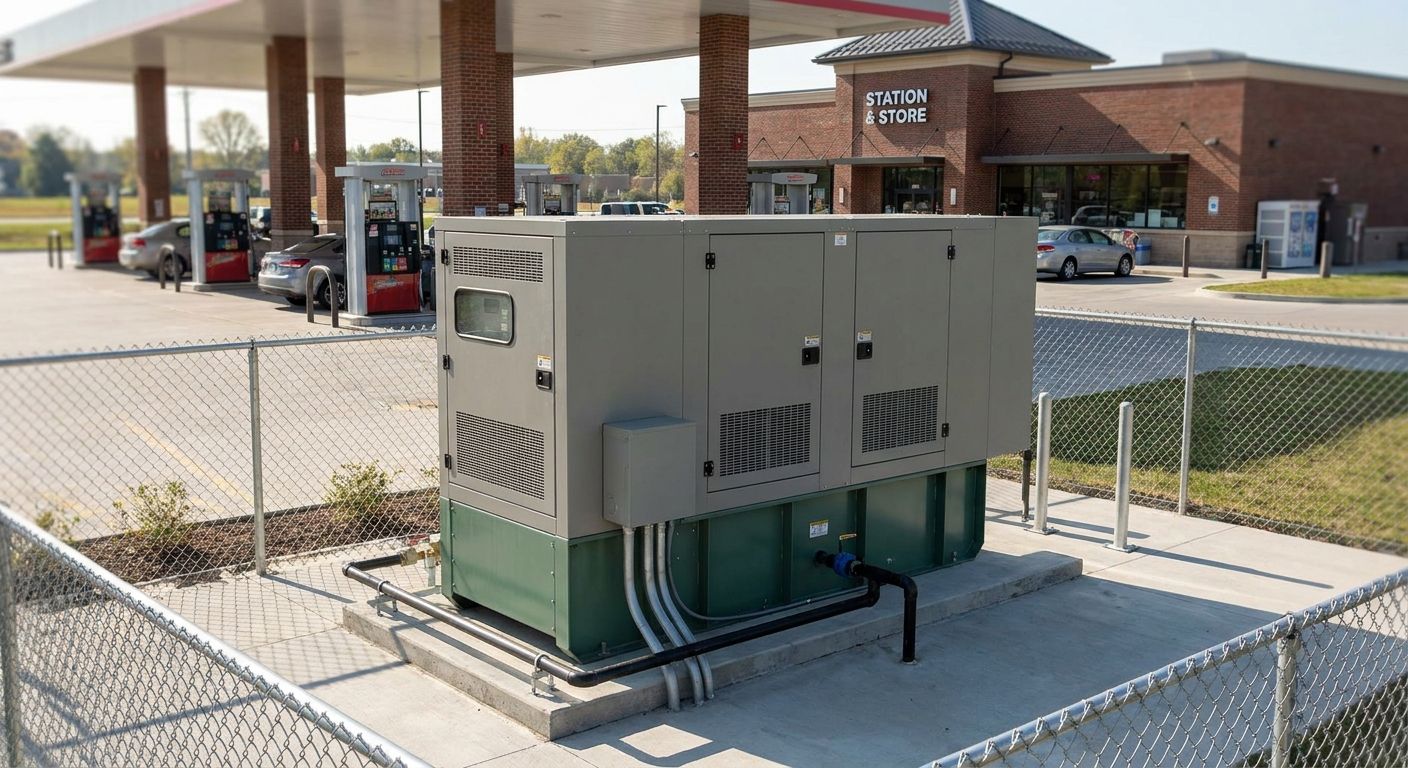
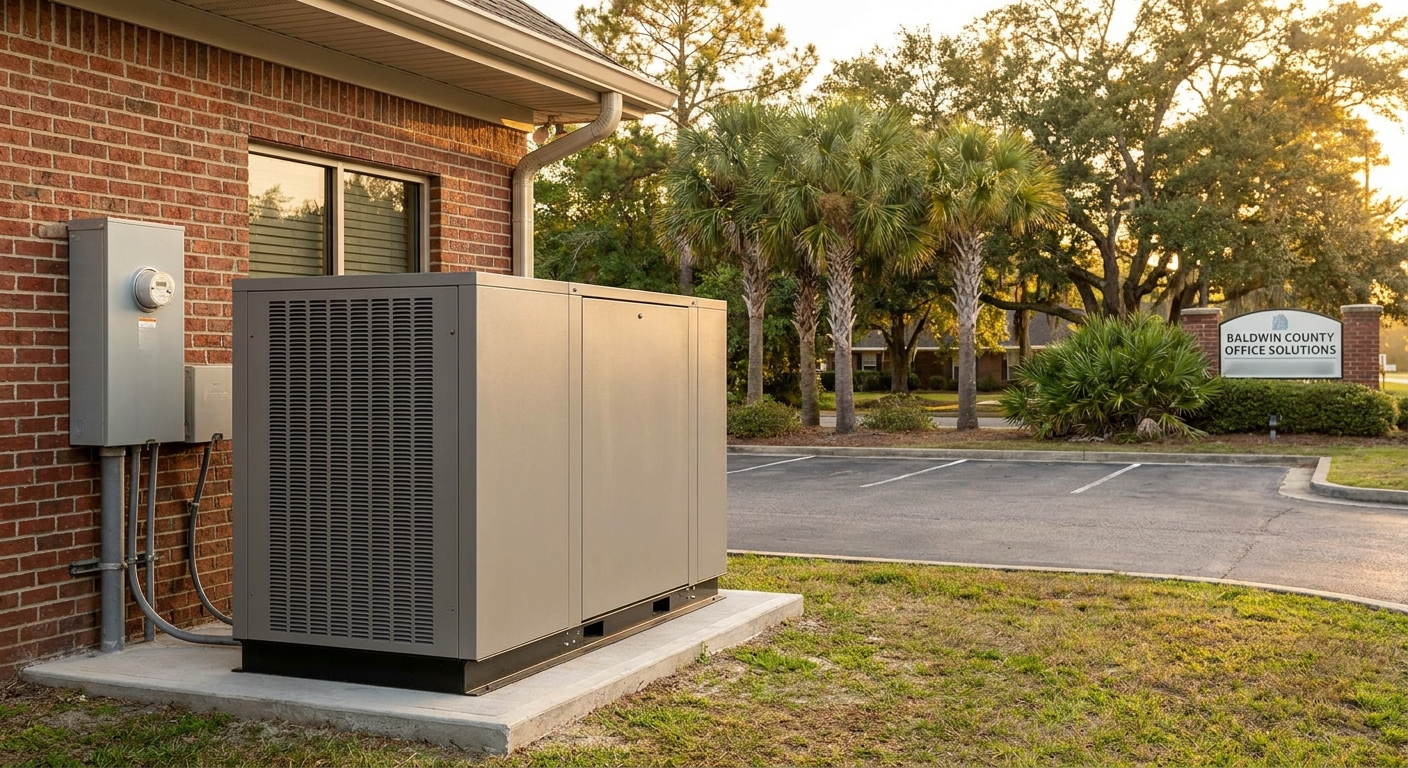
This is the size that shows up most often on small retail and office jobs across Baldwin County because it carries a full commercial HVAC unit, lighting, POS systems, and a walk-in cooler without derating. The 48kW Protector runs on natural gas or LP and pairs with a commercial-rated automatic transfer switch, so the changeover happens in seconds once utility power drops.
For a strip-mall storefront or a small professional office in Fairhope or Daphne, this size covers the electrical load without the fuel-storage headache of diesel. Verdict: Buy for any single-tenant commercial space under 5,000 square feet.
2. Kohler KG100 diesel - the heavy-load pick
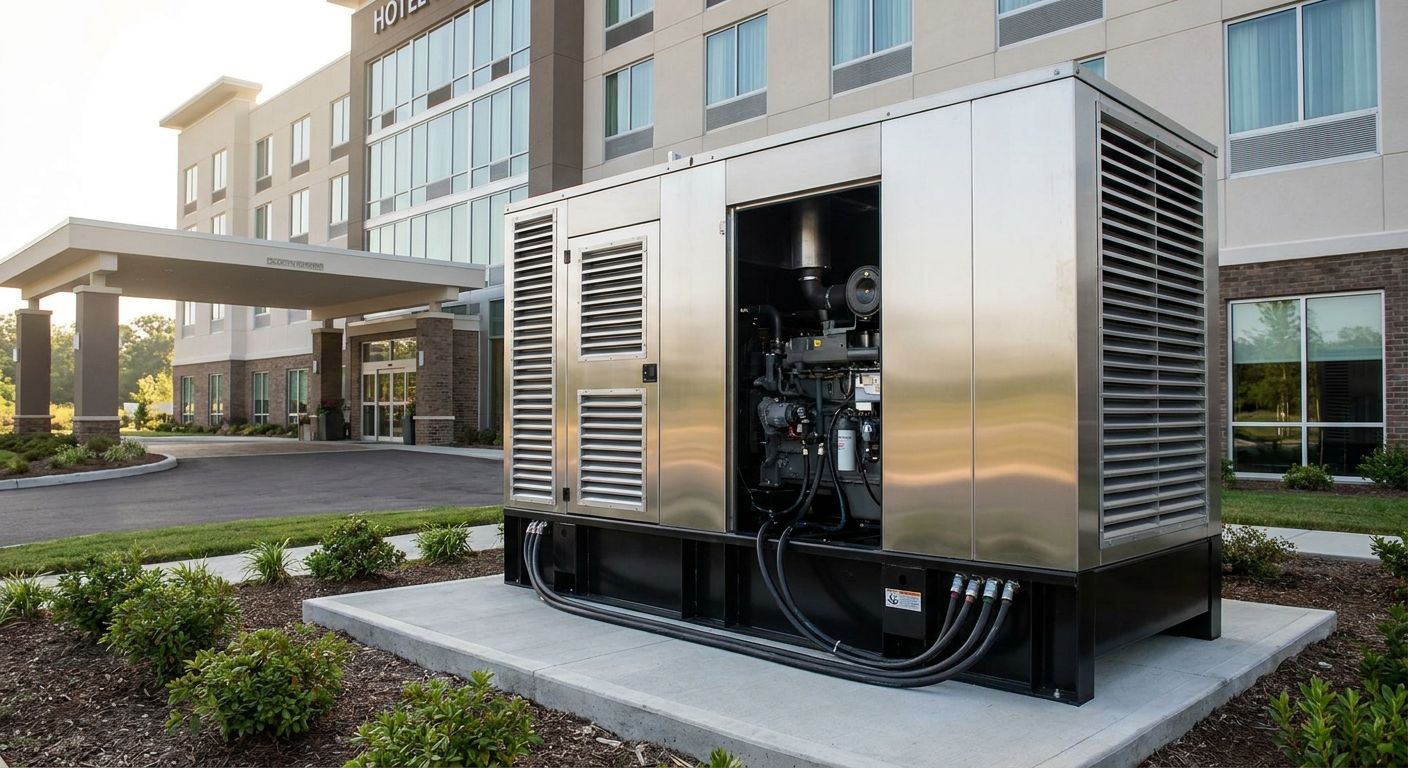
Restaurants and medical offices in Gulf Shores and Foley that run walk-in coolers, kitchen equipment, and HVAC simultaneously need more headroom than a 48kW unit gives. The Kohler KG100 delivers 100kW continuous output on diesel, which also means fuel is stored on-site rather than depending on a natural gas line that could be disrupted.
Diesel units cost more to install and need a larger footprint, but they're the standard for restaurant kitchens with heavy simultaneous loads. Verdict: Buy for food service and medical operations with multiple high-draw circuits.
3. Honeywell 20kW commercial standby - the budget-conscious pick
A small single-office setup - think a real estate office, insurance agency, or salon - doesn't need 48kW of capacity. Honeywell's 20kW commercial unit covers lighting, a few workstations, and a small split-system HVAC unit without the install cost of a larger frame.
The tradeoff is headroom: add a second HVAC zone or a small kitchen later and this unit runs out of capacity fast. Verdict: Consider for single-tenant offices under 2,000 square feet with modest electrical loads.
4. Briggs & Stratton commercial 48kW - the value alternative
Briggs & Stratton's commercial 48kW competes directly with the Generac Protector on paper - same output class, natural gas or LP fuel options, automatic transfer switch compatibility. Where it differs is parts availability and dealer density in coastal Alabama, which matters when a part fails during hurricane season and you need same-week service.
It's a solid unit mechanically, but the support network in Baldwin County leans more heavily toward Generac and Kohler dealers. Verdict: Consider if pricing tips the decision and you've confirmed local service support first.
5. Kohler KG150 diesel - the multi-tenant or high-draw pick
A strip center with three or four small tenants sharing one generator, or a business running commercial refrigeration plus full HVAC plus heavy equipment, outgrows 100kW fast. The KG150 gives 150kW of continuous output, enough to carry a small shopping center or a business with industrial-grade equipment through a multi-day outage.
This is a bigger investment and a bigger footprint, and it's overkill for a standalone storefront. Verdict: Buy only if you're sizing for a multi-tenant building or heavy equipment loads - otherwise Skip.
6. Portable towable generators - the stopgap that isn't a solution
Towable diesel units show up as a cheaper alternative for businesses trying to avoid a permanent install. They work for short-term job-site power, but they require someone on-site to start them, refuel them, and manually transfer the load - none of which happens automatically when a storm hits overnight.
For any business with refrigeration or server equipment that can't tolerate a gap in power, this is the wrong tool. Verdict: Skip for any small business needing unattended, automatic backup.
“If your generator can't carry the walk-in cooler and the register system at the same time, it's the wrong size.”
Comparison table
| Model | Output | Fuel | Best for | Verdict |
|---|---|---|---|---|
| Generac Protector 48kW | 48kW | Natural gas / LP | Single-tenant retail or office | Buy |
| Kohler KG100 | 100kW | Diesel | Restaurants, medical offices | Buy |
| Honeywell 20kW commercial | 20kW | Natural gas / LP | Small single office | Consider |
| Briggs & Stratton 48kW | 48kW | Natural gas / LP | Value-focused install | Consider |
| Kohler KG150 | 150kW | Diesel | Multi-tenant or heavy equipment | Situational Buy |
| Portable towable diesel | Varies | Diesel | Short-term job-site only | Skip |
Where to buy
- Confirm authorized dealer status before signing anything. A licensed, insured dealer with a master electrician on staff handles both the electrical permit work and the generator install - two separate trades that need to line up correctly on a commercial panel.
- Match the installer to the fuel type you're committing to. Natural gas installs need a line-capacity check with the utility; diesel installs need a fuel storage plan that meets local code. Get both confirmed before ordering equipment.
- Ask about service response time during hurricane season. A generator that's been sitting unused for months needs a load test and service check before storm season, not during it - schedule that in the spring, not in September.
FAQ
What size commercial generator does a small business need in Baldwin County?
Most single-tenant retail or office spaces under 5,000 square feet run well on a 48kW unit like the Generac Protector Series. Restaurants and medical offices with walk-in coolers and heavier simultaneous loads typically need 100kW or more.
Is diesel or natural gas better for a commercial generator?
Diesel stores fuel on-site and doesn't depend on utility gas lines staying intact during a storm, making it the stronger choice for restaurants and medical offices. Natural gas installs cost less upfront and work well for offices and retail spaces with lighter loads.
How much does a commercial standby generator cost to install in 2026?
Installed cost depends on unit size, fuel type, and the electrical panel work required for a commercial transfer switch. Get a site-specific quote rather than relying on a general estimate, since panel upgrades and permitting vary by property.
Can a residential generator work for a small business?
Residential units aren't built for commercial-rated transfer switches or the simultaneous HVAC and refrigeration loads most small businesses run. A commercial-rated generator and transfer switch are required for most business installs in Baldwin County.
How long does a commercial generator installation take?
A straightforward single-unit install with an existing gas line typically takes a few days once permitting clears, though diesel installs with fuel storage take longer. Scheduling before hurricane season avoids the seasonal backlog.
Do commercial generators need maintenance in coastal Alabama?
Yes - salt air and humidity accelerate wear on enclosures and electrical connections faster than inland installs. Annual service checks before storm season catch corrosion and battery issues before they cause a failure during an outage.
What's the best commercial generator for a restaurant in Baldwin County?
The Kohler KG100 diesel handles the combined load of kitchen equipment, walk-in refrigeration, and HVAC that restaurants run simultaneously. A 48kW natural gas unit often falls short once kitchen equipment is added to the circuit.
Are multi-tenant buildings sized differently for generators?
Yes - a strip center with several small tenants sharing one system needs a larger unit like the Kohler KG150 at 150kW rather than a single-tenant 48kW size. Load calculations should account for every tenant's HVAC and equipment draw, not just one unit's needs.
One last thing
The detail most small business owners miss: a generator sized correctly for today's equipment often falls short two years later once a second HVAC zone, a new walk-in cooler, or added POS terminals get added to the circuit. Size a notch above current load if there's any expansion planned in the next two to three years - it's cheaper to buy the headroom now than to replace the unit in 2028.