A power outage during a Saturday night reception does more damage than a soggy cake - it costs venues bookings, reviews, and insurance headaches. This guide ranks the backup power options worth buying for wedding and event venues in 2026, from whole-home standby units to commercial diesel systems built for banquet halls and outdoor tents.
- Generac Protector 48kW is the top pick for reception halls over 4,000 sq ft - buy for full-load reliability.
- Kohler 20kW standby wins for chapels and small venues under 3,000 sq ft on price-to-runtime value.
- Best backup power for event venues depends on kitchen load - walk-in coolers push most venues past 26kW.
- Portable towable diesel units work for tented outdoor weddings but need 48 hours lead time to rent right.
Why this matters
Coastal Alabama's hurricane season runs June 1 through November 30, and Baldwin County venues in Daphne, Fairhope, Foley, and Gulf Shores see grid outages tied to tropical storms nearly every summer. A venue booked for a 6 p.m. ceremony doesn't get a rain date for power.
Beyond storms, event venues carry loads most homes never touch: walk-in coolers, commercial kitchen equipment, HVAC for 150+ guests, string lighting, and sound systems that all need to stay live simultaneously. Undersizing backup power for an event venue means a generator that starts fine but trips under real reception load at 8 p.m. when the band, the bar fridges, and the AC all draw at once.
Baldwin County Generators sizes standby systems against actual kitchen and HVAC load, not just square footage, which is the gap that trips up most venue owners shopping on spec sheets alone.
How we ranked
Rankings below weigh four factors venue owners actually deal with: continuous kW output under full kitchen and HVAC load, fuel logistics (propane vs. diesel vs. natural gas), noise output in dBA for venues near residential zoning, and installation timeline ahead of 2026's peak wedding season. Data comes from published 2026 model specs from Kohler, Generac, Honeywell, and Briggs & Stratton, cross-checked against typical event-venue electrical loads.
No single generator wins every category - a 20kW chapel doesn't need what a 300-guest reception barn needs, and pretending otherwise gets venues an oversized system they overpaid for or an undersized one that fails during the toast.
The ranked list
1. Generac Protector 48kW Standby - the workhorse
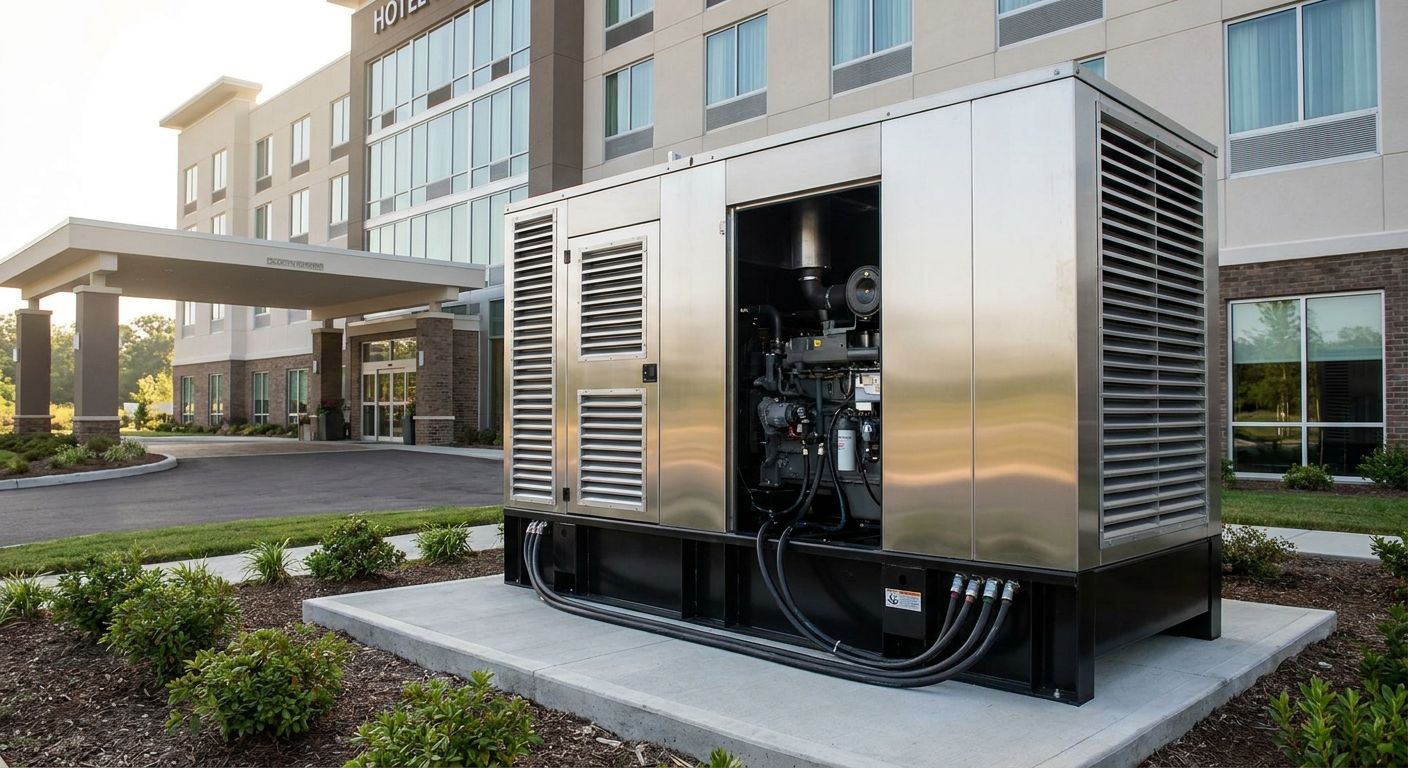
One memorable detail: the 48kW Protector series runs on natural gas or LP and handles a full commercial kitchen plus HVAC for venues up to 8,000 sq ft without shedding load. For a reception hall running walk-in coolers, a 10-ton HVAC system, and full event lighting at once, 48kW is the point where nothing trips off mid-event.
It does what smaller units can't: carry a continuous commercial load for 8+ hours during a multi-day power outage, which matters when a named storm knocks out Baldwin County's grid for a weekend. Verdict: Buy for any venue over 4,000 sq ft with a working kitchen.
2. Kohler 20kW Standby - the safe pick
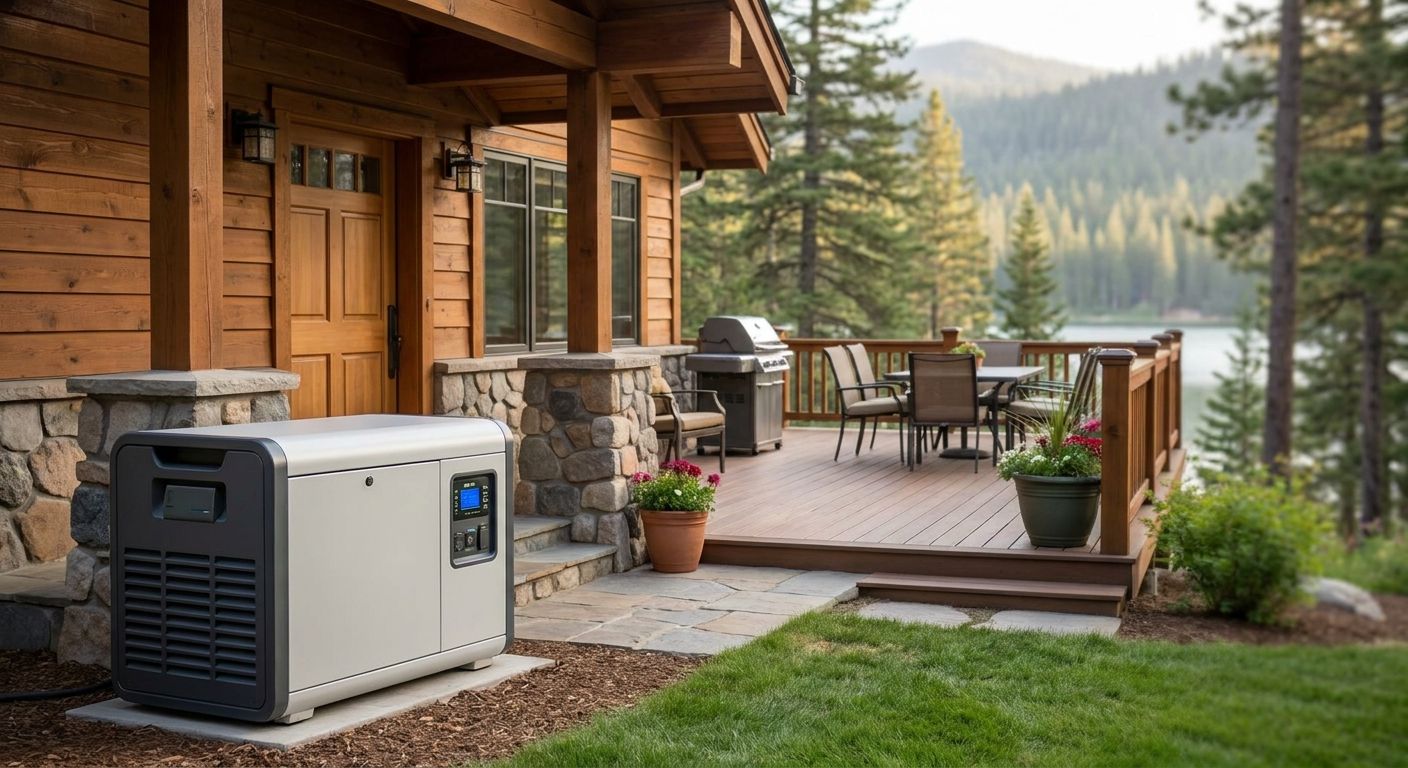
The Kohler 20kW is sized for chapels, small event barns, and venues under 3,000 sq ft that run lighting, sound, and light HVAC but not a full commercial kitchen. It automatically transfers power within 10 seconds of an outage, which is fast enough that guests rarely notice the switch.
For smaller Baldwin County venues booking single ceremonies rather than back-to-back receptions, 20kW covers the load without paying for capacity that never gets used. Verdict: Buy for venues without commercial kitchen equipment.
3. Generac Protector 130kW - the commercial anchor
This is the unit for resort ballrooms, large conference centers, and venues running multiple simultaneous events. At 130kW, it carries elevators, full commercial kitchens, and HVAC across 15,000+ sq ft, which single smaller units simply can't do without staging multiple generators.
The tradeoff is installation complexity - a 130kW commercial system needs a larger fuel tank, dedicated pad, and coordinated electrical work that takes longer to schedule than a residential-scale unit. Verdict: Buy only for venues over 10,000 sq ft or multi-event properties.
4. Honeywell 20kW Standby - the budget-friendly option
Honeywell's 20kW standby unit covers the same load range as the Kohler 20kW but typically comes in at a lower equipment cost, making it a fit for smaller chapels and event spaces watching capital spend ahead of the 2026 season. It still automates transfer switching and runs on LP or natural gas.
The catch: parts availability and dealer network density can be thinner than Kohler or Generac in coastal Alabama, which matters if a part fails mid-season. Verdict: Consider for budget-conscious small venues willing to plan service scheduling ahead.
5. Briggs & Stratton 20kW Standby - the quiet runner
Briggs & Stratton's 20kW unit runs at a lower sound output than comparable Generac units at the same kW rating, which matters for venues sited near residential neighborhoods where noise ordinances apply during evening events. Quieter operation means fewer complaints during an outdoor ceremony running on backup power.
It's a strong fit where zoning restricts generator noise after certain hours, but it carries the same 20kW ceiling as the Kohler and Honeywell units - no headroom for a kitchen expansion later. Verdict: Consider for noise-sensitive sites.
6. Portable towable diesel generator - the wildcard
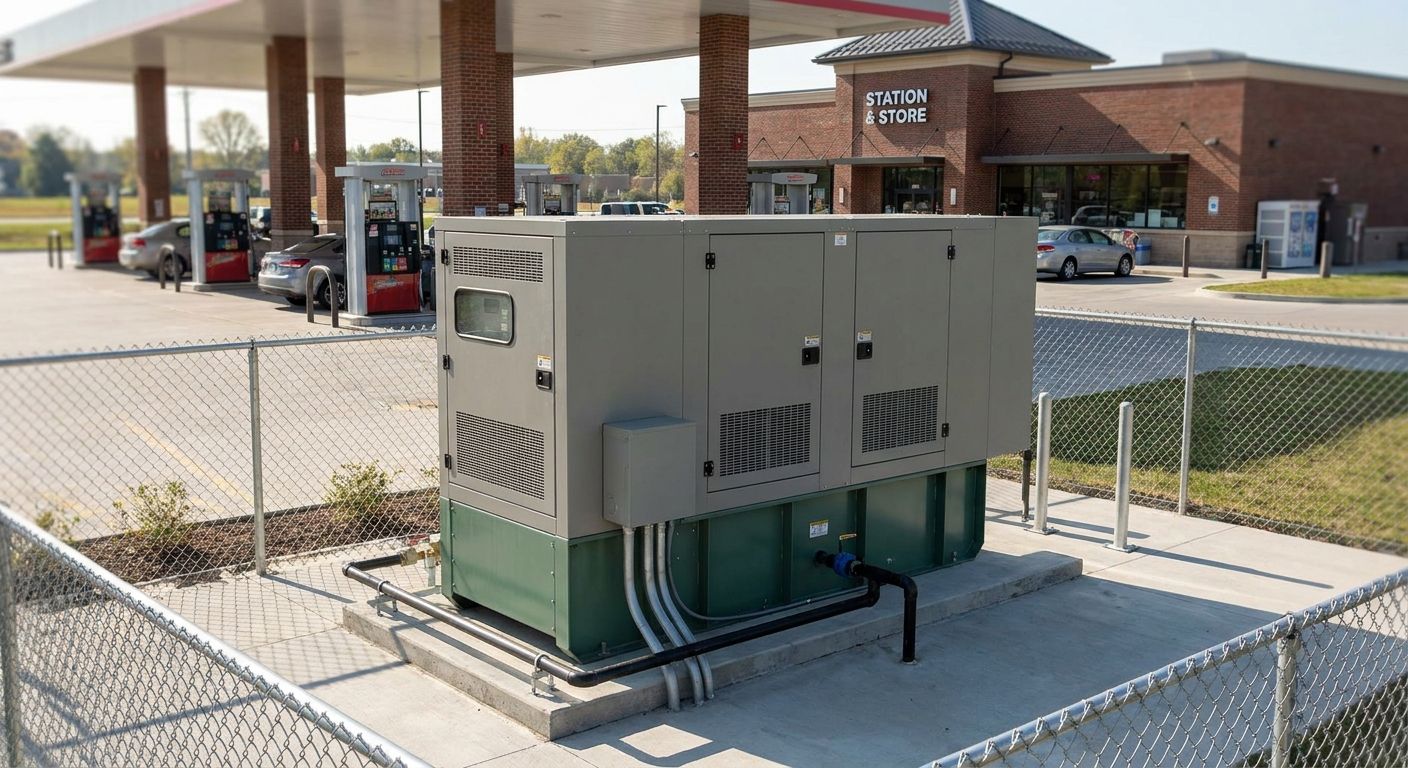
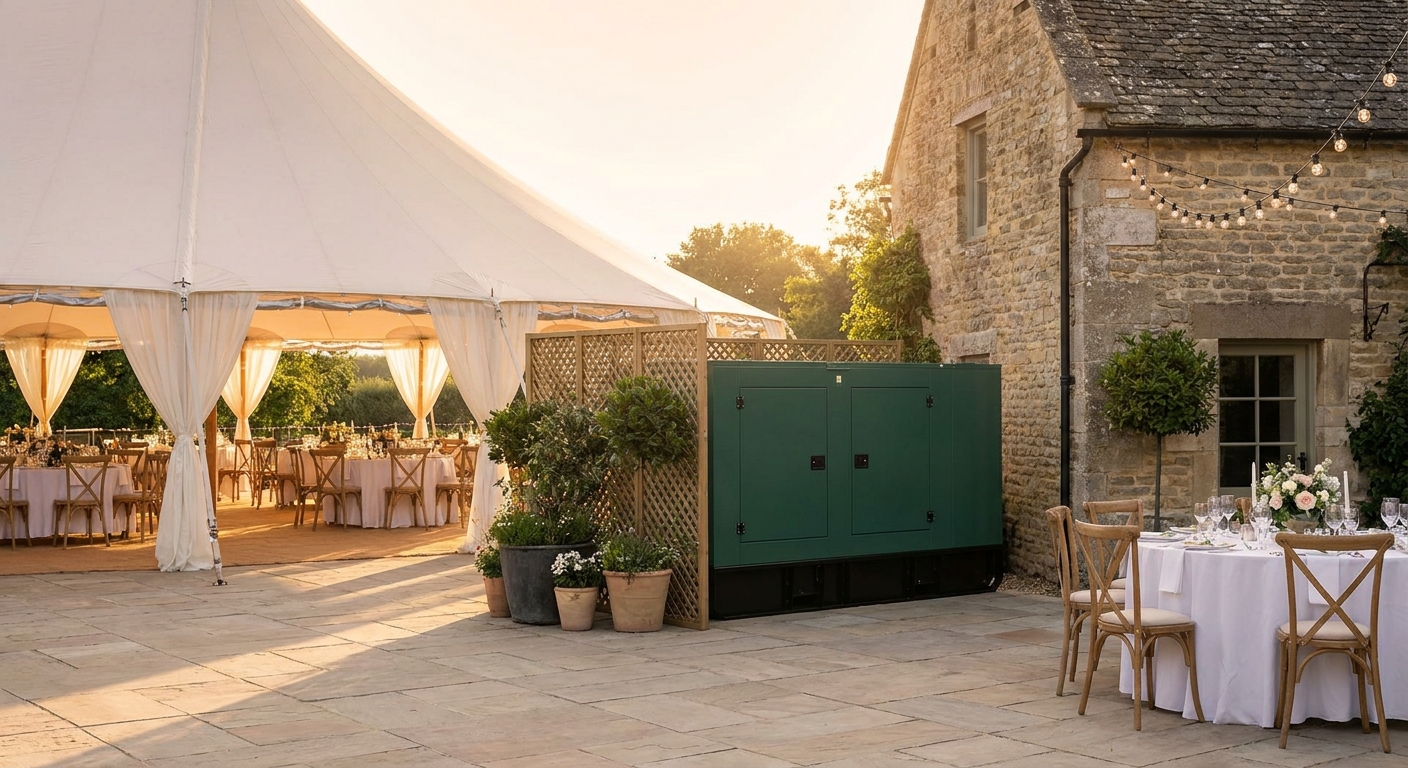
For outdoor tented weddings without permanent electrical infrastructure, a towable diesel unit in the 45kW to 100kW range covers string lighting, a mobile bar, and a small catering setup for a single-day event. It's rented, not owned, which means no standing capital cost for a one-off outdoor booking.
The downside: towable units need 48 hours of lead time to reserve during peak 2026 wedding season (April through October), and fuel logistics fall on the renter, not a fixed propane line. Verdict: Wait unless the event date and rental are locked in advance.
Comparison table
| System | Best for | Fuel | kW range | Verdict |
|---|---|---|---|---|
| Generac Protector 48kW | Reception halls with kitchens | Natural gas/LP | 48kW | Buy |
| Kohler 20kW Standby | Chapels, small venues | Natural gas/LP | 20kW | Buy |
| Generac Protector 130kW | Resorts, ballrooms | Diesel/natural gas | 130kW+ | Buy |
| Honeywell 20kW Standby | Budget small venues | Natural gas/LP | 20kW | Consider |
| Briggs & Stratton 20kW | Noise-restricted sites | Natural gas/LP | 20kW | Consider |
| Towable diesel generator | Outdoor tented events | Diesel | 45-100kW | Wait |
Where to buy
- Go through a licensed electrical contractor for install, not a big-box retailer. Standby generator hookups require permitted electrical and gas work that a licensed installer signs off on - a mis-wired transfer switch voids warranties and fails inspection.
- Confirm authorized dealer status before buying Kohler, Generac, Honeywell, or Briggs & Stratton units. Authorized dealer coverage protects the manufacturer warranty; gray-market units bought online often don't qualify for service under warranty terms.
- Check permit requirements with the local Baldwin County building department before installation. Fuel tank placement, setback distances from property lines, and gas line permits all need sign-off before a unit goes live, and skipping that step delays a venue's readiness ahead of 2026 booking season.
Get your venue storm-ready for 2026
Request a load assessment and generator sizing quote for your event space.
FAQ
What's the best backup power for event venues in 2026?
For venues over 4,000 sq ft with a working kitchen, the Generac Protector 48kW is the top pick because it carries full kitchen and HVAC load without shedding power. Smaller chapels under 3,000 sq ft do fine with a 20kW Kohler or Honeywell unit.
How many kW does a wedding venue need for backup power?
Most small venues need 20kW to cover lighting, sound, and HVAC, while venues with a commercial kitchen or walk-in cooler need 48kW or more. Resort ballrooms and multi-event properties often require 130kW or higher.
Is a portable generator better than a standby unit for a wedding venue?
A standby unit is better for any venue running events regularly, since it starts automatically within seconds of an outage. Portable towable units work for one-off outdoor tented events but need 48 hours of lead time to rent during peak 2026 wedding season.
How much power does a venue with a walk-in cooler need?
A walk-in cooler alone typically pushes total venue load past what a 20kW unit can carry alongside HVAC and lighting. Most venues with commercial refrigeration need at least 48kW of continuous backup power.
Do event venues in coastal Alabama need backup power for hurricane season?
Yes - hurricane season runs June 1 through November 30, and Baldwin County venues in Daphne, Fairhope, Foley, and Gulf Shores see grid outages tied to tropical storms most summers. A standby system with automatic transfer keeps a booked event running through a grid outage.
What fuel type is best for a venue standby generator?
Natural gas or LP works for most 20kW to 48kW standby units and ties into a fixed line rather than requiring refueling. Larger 130kW commercial systems often run diesel for extended runtime during multi-day outages.
Are quieter generators available for venues near residential neighborhoods?
Yes - Briggs & Stratton's 20kW standby unit runs at a lower sound output than comparable Generac models at the same kW rating. That matters for venues under noise ordinances that restrict generator sound after certain evening hours.
How long does standby generator installation take before an event season?
Standard 20kW to 48kW residential-scale installs typically take a few weeks once permits clear, while 130kW commercial systems take longer due to pad and fuel tank work. Scheduling installation before the April through October 2026 wedding season avoids a last-minute crunch.
One last thing
Most venue owners size backup power off square footage and forget the walk-in cooler, and that single oversight is what turns a properly-installed 20kW system into a unit that trips the moment the kitchen and the band both draw power at once. Size the generator to the kitchen load first, then add lighting and HVAC on top - not the other way around.