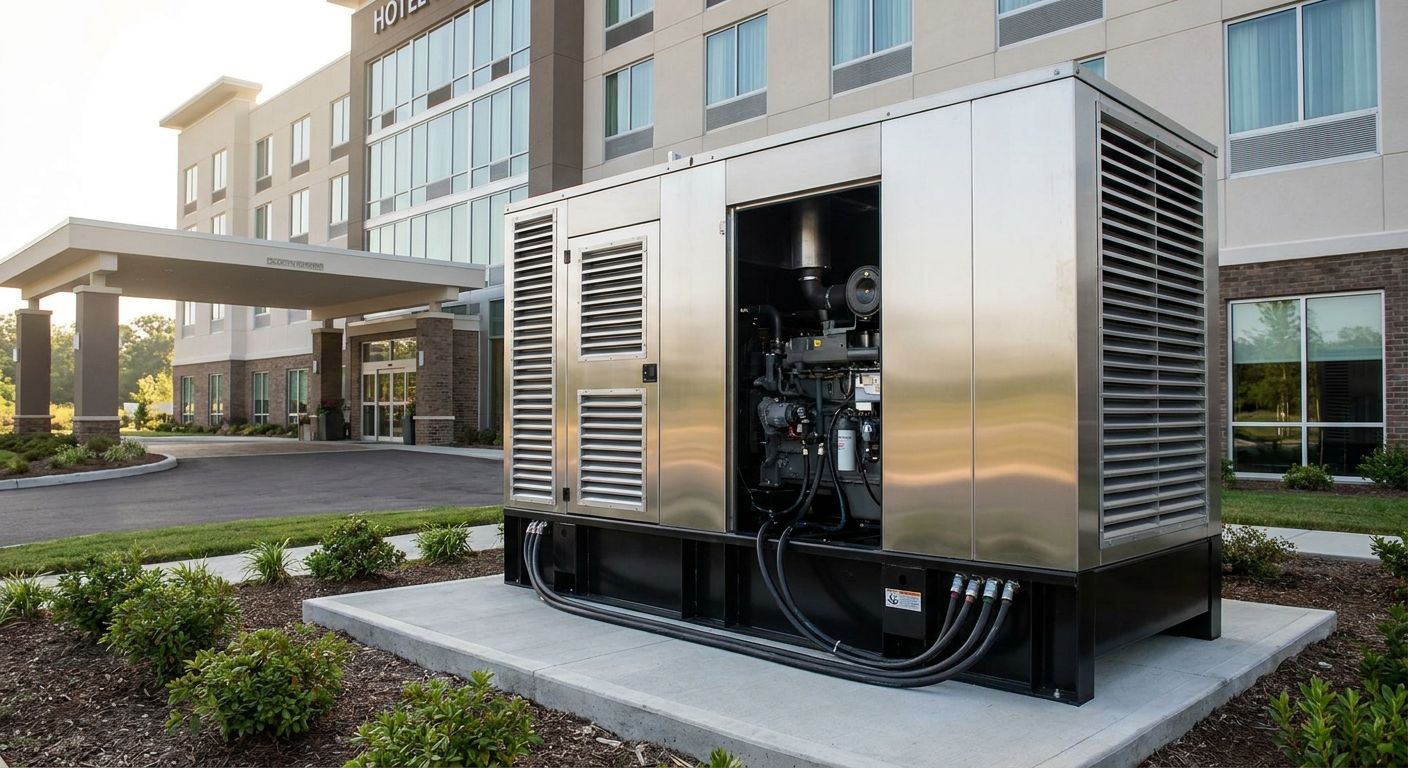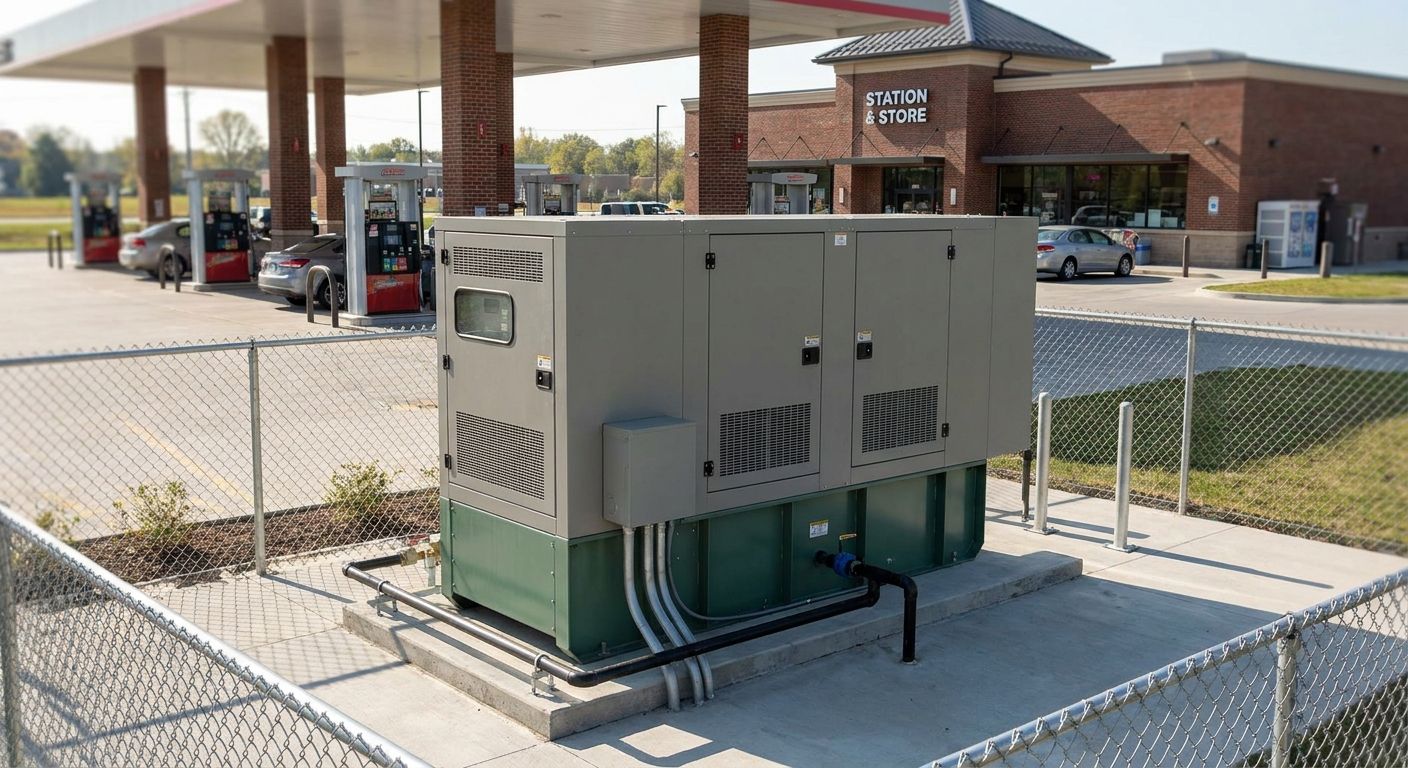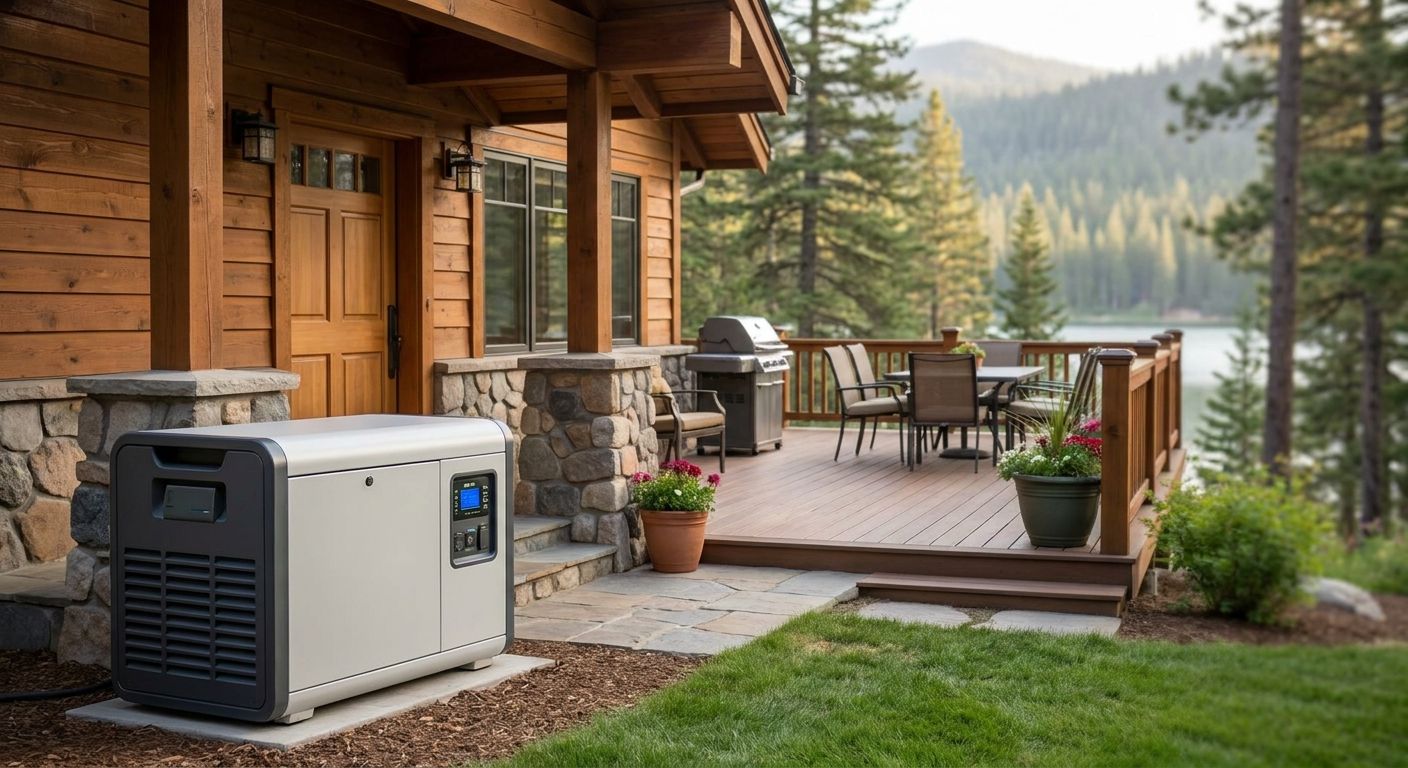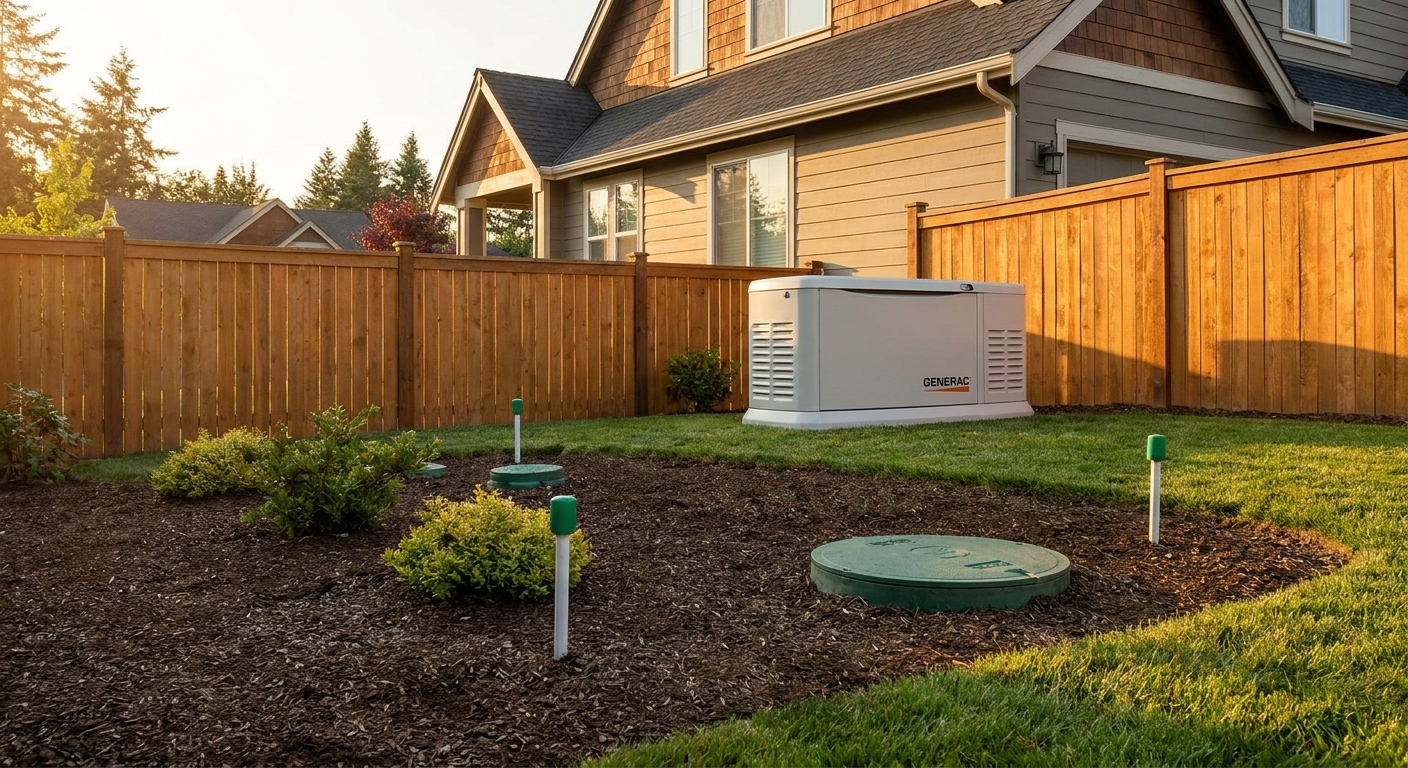
Aerobic septic systems don't pause during a blackout - the aerator motor and effluent pump need continuous power or waste starts backing up within hours. This guide ranks the backup generators that handle that load without stalling, and names the ones to skip.
- Generac Guardian 22kW is the best backup generator for homes with septic system loads in 2026 - buy it.
- Portable generators can't run an aerobic pump continuously; skip them for septic-equipped homes.
- Kohler 20RESA is the quietest option at 65 dB and a solid Buy for noise-sensitive lots.
- Anything under 16kW risks nuisance tripping when the septic pump, well pump, and AC compressor start together.
Why this matters
A standard well-and-septic setup isn't the load profile most generator sizing charts assume. An aerobic treatment unit's aerator motor runs almost continuously, and the effluent pump cycles on top of whatever else is drawing power - well pump, HVAC, refrigerator. Undersize the generator and the septic system is the first thing to trip the breaker, which means sewage backup on top of a power outage.
Baldwin County Generators sizes standby units around the full household load, not just the lights and the fridge, which is the difference between a generator that survives hurricane season 2026 and one that nuisance-trips every time the septic pump kicks on.
How we ranked these
Ranking is based on published manufacturer output ratings (kW), documented noise ratings at 23 feet, transfer switch compatibility, and how each unit handles a combined septic-plus-HVAC startup surge - the load pattern that causes most undersized-generator failures. Fuel type and run-time behavior on natural gas versus propane are weighted separately, since coastal Alabama homes split fairly evenly between the two. Models under 16kW were excluded outright; that threshold is where septic-equipped homes start seeing nuisance trips in the field.
The ranked list
1. Generac Guardian 22kW - the workhorse pick
General market pricing on the Guardian 22kW typically runs $3,800 to $5,200 before installation. It's rated to handle a whole-home load that includes a 1.5kW continuous aerator draw plus a well pump surge without shedding circuits.
The Guardian series pairs with a 200-amp automatic transfer switch, so the septic system, well pump, and HVAC stay on the same protected circuit instead of getting rotated on a load-shedding schedule. For a three- to four-bedroom home with an aerobic septic system in 2026, this is the size most installers land on by default. Verdict: Buy.
2. Kohler 20RESA - the quiet operator
Kohler's 20RESA rates at 65 dB measured at 23 feet, several decibels quieter than most 20kW-class competitors, which matters on tighter Fairhope and Daphne lots where the unit sits close to a neighbor's fence line.
At 20kW it covers a septic-plus-well load comfortably but leaves less headroom than the Guardian 22kW if a pool pump or workshop gets added later. It's the right call for noise-sensitive properties, not the right call for homes planning to expand load. Verdict: Buy, if noise is the deciding factor.
3. Briggs & Stratton 20kW Standby - the budget pick
Briggs & Stratton's 20kW unit typically undercuts Generac and Kohler equivalents by several hundred dollars in 2026 market pricing, and it still clears the 16kW septic threshold with room to spare.
It runs slightly louder than the Kohler and has a shorter warranty track record on the transfer switch electronics, based on aggregated dealer feedback. For a budget-conscious buyer who still needs septic-safe capacity, it's a reasonable middle ground. Verdict: Consider.
4. Honeywell 22kW (Generac-built) - the look-alike
Honeywell's standby line is built on Generac's platform under license, so the 22kW Honeywell shares the Guardian's core engine and alternator specs at a similar output rating.
Parts and service availability for Honeywell-branded units can lag Generac's own dealer network in coastal Alabama, which matters when a storm knocks out a component and you need a same-week fix, not a special order. Verdict: Consider, mainly where price beats the Guardian.
5. Generac 26kW - the overbuilt option
At 26kW, this unit adds real headroom above the septic-plus-HVAC baseline, useful for homes running an irrigation pump or a detached workshop off the same panel.
It costs more to install and the transfer switch capacity has to match, which pushes total project cost up without adding anything most septic-only households will use. For a straightforward home with just a septic system and standard HVAC, the extra 4kW sits idle. Verdict: Consider only for larger combined loads, otherwise Wait.
6. Kohler 14RESA - too small for combined loads
The 14RESA is priced attractively and handles a small home's lighting and refrigeration circuits fine on its own.
At 14kW it falls under the 16kW septic threshold established in the ranking methodology above, and aggregated installer reports show nuisance tripping once a well pump and septic aerator start simultaneously. Verdict: Skip for septic-equipped homes.
7. Portable inverter generators - the wrong tool
A typical 7,500-watt portable inverter generator can technically produce enough wattage on paper to cover a septic pump cycle.
What it can't do is run unattended for the 24 to 72 hours a real storm outage demands, and it has no automatic transfer switch to pick up the aerator load the instant grid power drops. Manual portables are built for occasional use, not for a system that needs continuous power to avoid a sewage backup. Verdict: Skip.
Comparison table
| Model | Output | Noise (23 ft) | Fuel | Septic-safe? | Verdict |
|---|---|---|---|---|---|
| Generac Guardian 22kW | 22 kW | ~67 dB | NG/LP | Yes | Buy |
| Kohler 20RESA | 20 kW | 65 dB | NG/LP | Yes | Buy |
| Briggs & Stratton 20kW | 20 kW | ~68 dB | NG/LP | Yes | Consider |
| Honeywell 22kW | 22 kW | ~67 dB | NG/LP | Yes | Consider |
| Generac 26kW | 26 kW | ~68 dB | NG/LP | Yes (overbuilt) | Consider/Wait |
| Kohler 14RESA | 14 kW | 63 dB | NG/LP | No | Skip |
| Portable inverter | 7.5 kW | varies | Gasoline | No | Skip |
Where to buy
- Get the load calculation done before picking a kW size - a licensed electrical contractor should size the unit against the septic aerator, well pump, and HVAC startup surge together, not each load in isolation.
- Confirm the installer pulls the required electrical and gas permits in your Baldwin County municipality; unpermitted standby installs create problems at resale.
- Buy from an authorized dealer for the brand you pick - warranty claims on Generac, Kohler, Honeywell, and Briggs & Stratton units typically require dealer-installed documentation.
FAQ
What's the best backup generator for a home with a septic system?
The Generac Guardian 22kW is the best backup generator for homes with septic systems in 2026 because it clears the combined septic-pump-plus-HVAC startup surge with headroom. Kohler's 20RESA is the quieter alternative at 65 dB.
How many kW do I need for a septic system generator?
Most aerobic septic setups need at least 16kW of standby capacity once the well pump and HVAC are factored in. Homes with pools or irrigation on the same panel often move up to 22kW or 26kW.
Can a portable generator run a septic system?
A portable generator can technically power a septic pump for short periods but can't run unattended through a multi-day outage. It also lacks the automatic transfer switch that keeps the aerator powered the instant the grid drops.
Is Kohler or Generac better for septic-equipped homes?
Generac's Guardian 22kW offers more headroom for combined loads, while Kohler's 20RESA runs quieter at 65 dB. Both are Buy-rated for septic-equipped homes in 2026, and the choice comes down to noise tolerance versus load headroom.
How much does a whole-home generator cost for a septic system home in 2026?
A 22kW standby unit typically lists for $3,800 to $5,200 before installation in 2026 market pricing. Installation, transfer switch, and permitting add to that total and vary by property.
Why does septic system size matter for generator sizing?
An aerobic septic aerator draws roughly 1.5kW continuously, not just during startup, so it competes with the well pump and HVAC for capacity around the clock. Undersized generators trip when all three loads overlap.
Do I need an automatic transfer switch for a septic system generator?
Yes, an automatic transfer switch is required to keep the septic aerator and pump powered the instant an outage starts. Manual switches introduce a delay that can let effluent back up before the generator engages.
One last thing
An aerobic septic system that loses power for more than a few hours doesn't just stop treating waste - the aerator restart itself draws a startup surge nearly double its running wattage, which is the exact moment an undersized 14kW unit trips. Size for that restart surge, not just the running load, and the generator earns its keep the first time hurricane season 2026 tests it.