Photography sets and recording studios can't tolerate a power sag mid-take - a strobe that misfires or an audio interface that reboots ruins the shot and the take. This guide ranks the generator types coastal Alabama studios actually need in 2026, based on installation patterns across Daphne, Fairhope, Foley, and Gulf Shores.
- Kohler 20kW standby wins for full-day shoot reliability - Buy for working studios.
- Generac Guardian 22kW is the best value pick for mixed photo/audio spaces - Buy.
- Honeywell 20kW works as a budget standby option - Consider if space allows.
- Briggs & Stratton portable inverter units suit mobile shoots only - Hold for studio use.
- Best generators for photography studios all share one trait: total harmonic distortion under 5%.
Why this matters
A photography studio running strobes, modeling lamps, a computer tethered for capture, and HVAC to keep talent comfortable draws more than most homeowners assume. A recording studio adds preamps, monitors, and often a server rack that can't lose sync mid-session.
Most portable generators sold at big-box stores put out a dirty sine wave - fine for a shop light, risky for a $3,000 audio interface or a strobe pack with sensitive capacitors. Baldwin County Generators installs standby units built around total harmonic distortion under 5%, the number that actually protects studio gear during Gulf Coast storm season.
Coastal Alabama loses grid power multiple times a year during named storms and summer thunderstorm rollthrough. A studio that books clients on a schedule can't tell a bride or a band "reschedule" because Foley lost power for six hours.
How we ranked these picks
The list below is built from generator sizing standards used across Kohler, Generac, Honeywell, and Briggs & Stratton dealer networks, cross-checked against real studio load profiles: strobe packs, HVAC, tethered capture stations, mixing boards, and monitor amps. Every pick is evaluated on clean power output, run time under load, noise level, and installed cost range as of 2026.
Units that only handle a refrigerator and a few lights get filtered out - a working studio needs full-panel coverage, not partial backup.
The ranked list
1. Kohler 20kW standby - the reliability pick
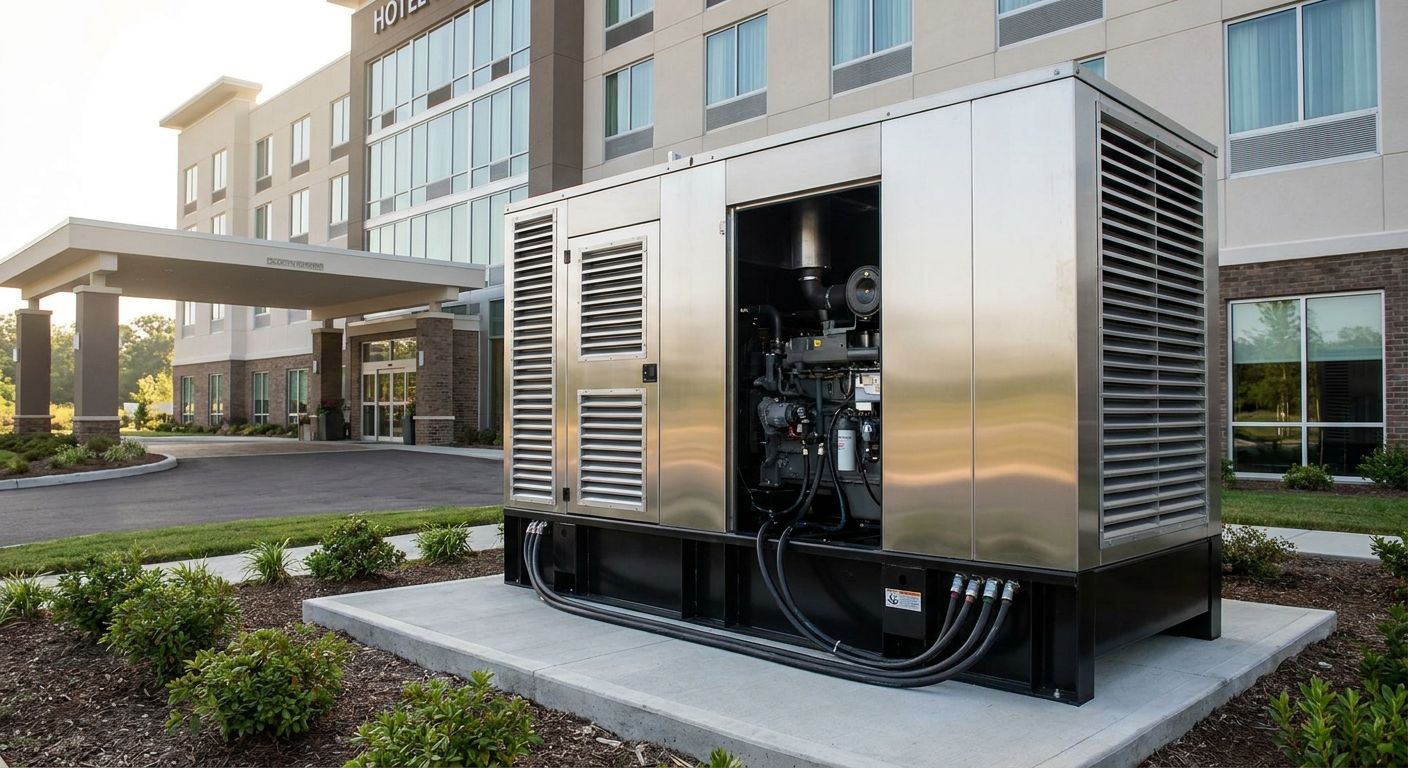
Kohler's 20kW residential-commercial standby line runs on natural gas or propane and covers a full studio panel, not just critical circuits. Verdict: Buy for any studio booking paid sessions where a blackout means a lost client.
The 20kW size handles strobe packs, HVAC, and a tethered capture rig simultaneously without the voltage dip that trips sensitive electronics. Install cost for whole-panel coverage in coastal Alabama typically lands in the mid-to-high four figures depending on panel size and fuel line work, and the unit runs automatically within seconds of a grid drop.
2. Generac Guardian 22kW - the value pick
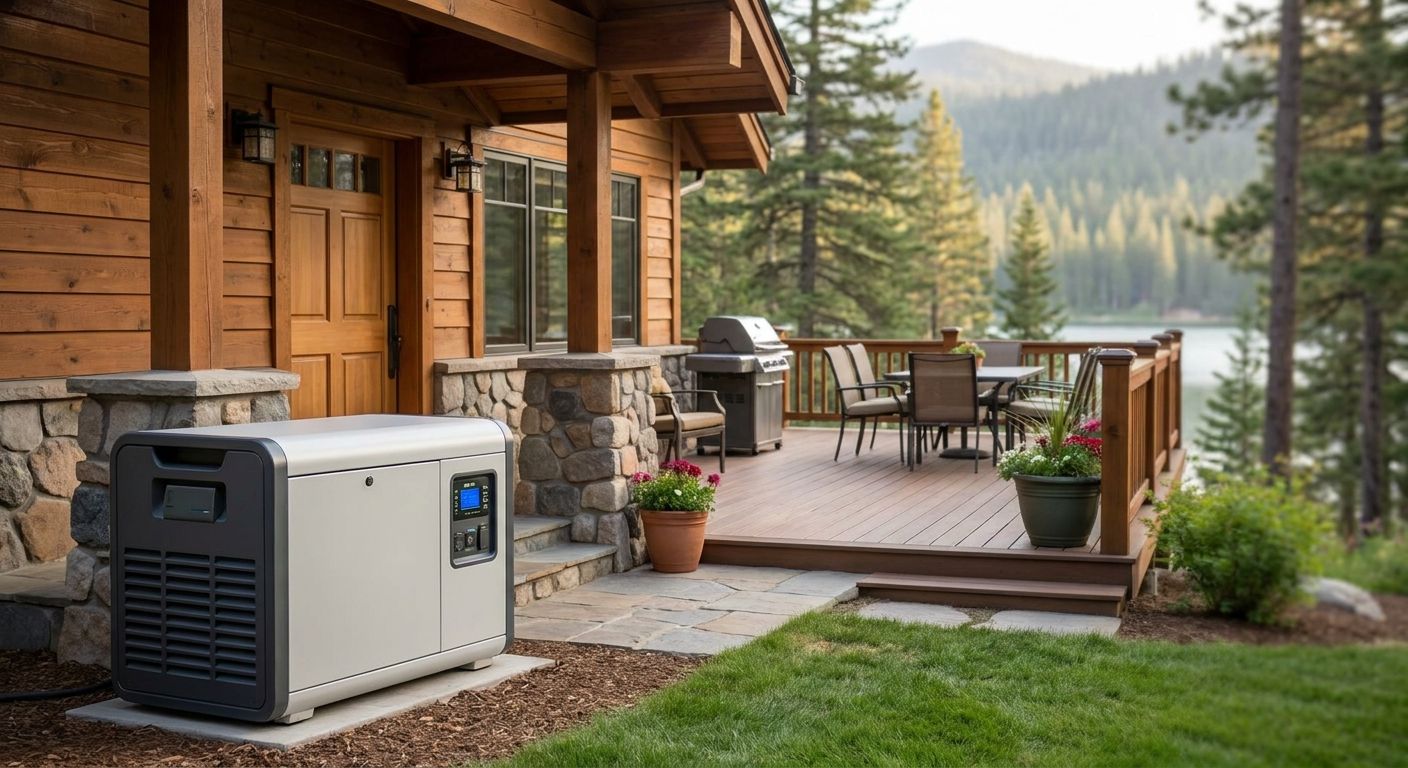
The Generac Guardian 22kW sits just above the Kohler in output and is priced competitively for studios that need headroom for future gear additions like a second control room or a lighting bay. Verdict: Buy for growing studios in Fairhope or Gulf Shores adding staff or a second shooting space in 2026.
Guardian units ship with Wi-Fi monitoring so a studio owner gets a phone alert the moment the transfer switch kicks over, useful for anyone who isn't on-site when a storm rolls through overnight.
3. Honeywell 20kW - the budget standby option
Honeywell's 20kW standby line covers similar wattage to the Kohler at a lower entry price point, making it a fit for a single-room studio without a large equipment load. Verdict: Consider if the studio is a solo operation with one shooting bay or one control room.
The tradeoff is fewer smart-monitoring features than Generac's app ecosystem - fine for an owner-operator who checks the unit manually after storms.
4. Briggs & Stratton portable inverter - the mobile-shoot backup
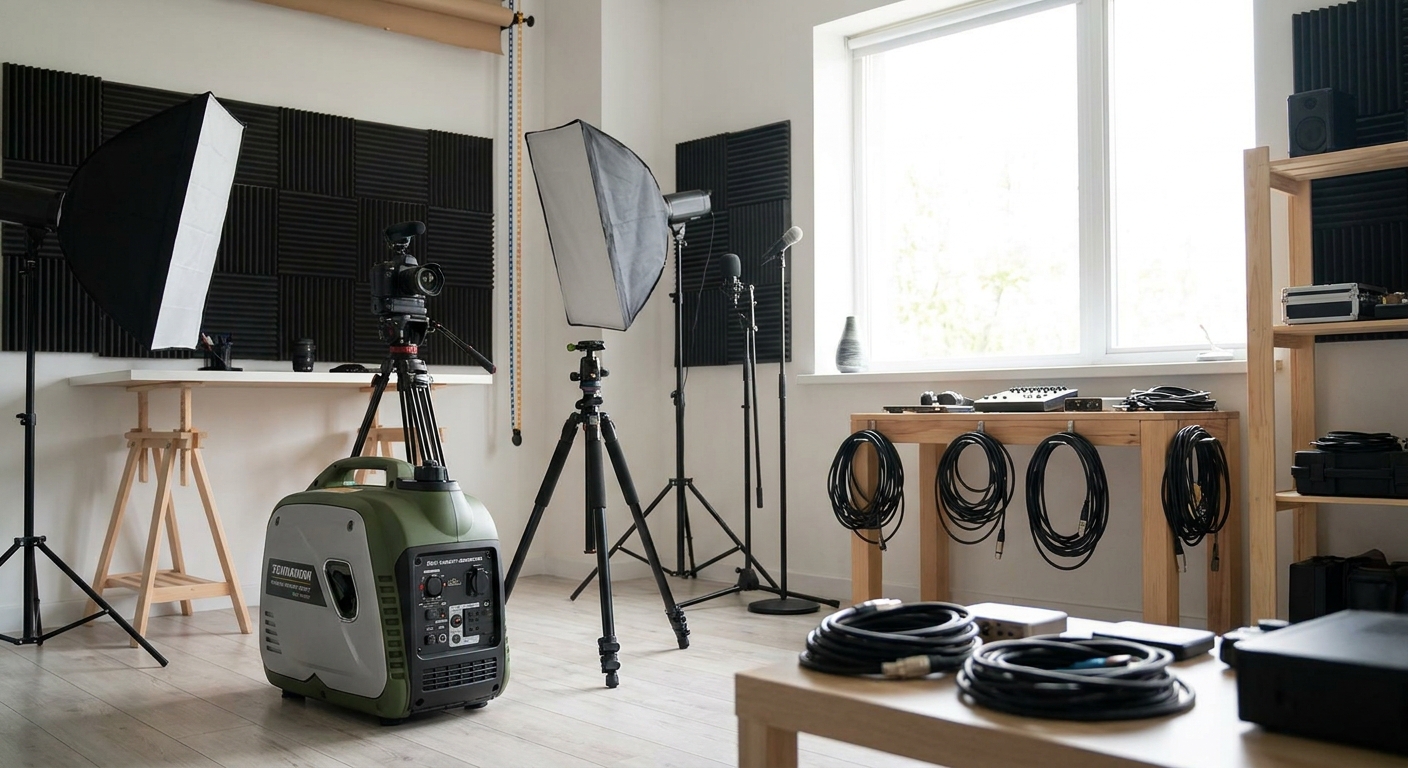
For photographers and audio engineers who shoot on location - beach weddings in Gulf Shores, outdoor concerts, festival audio - a Briggs & Stratton portable inverter generator delivers clean enough power for a single strobe or a small PA rig. Verdict: Hold for permanent studio use; this is a field tool, not a facility backup.
Run time on a full tank typically covers a half-day shoot, and the inverter technology keeps THD low enough for a camera battery charger or a small mixer, but it won't carry a full studio panel.
5. Commercial 48kW standby - for production houses and multi-room facilities
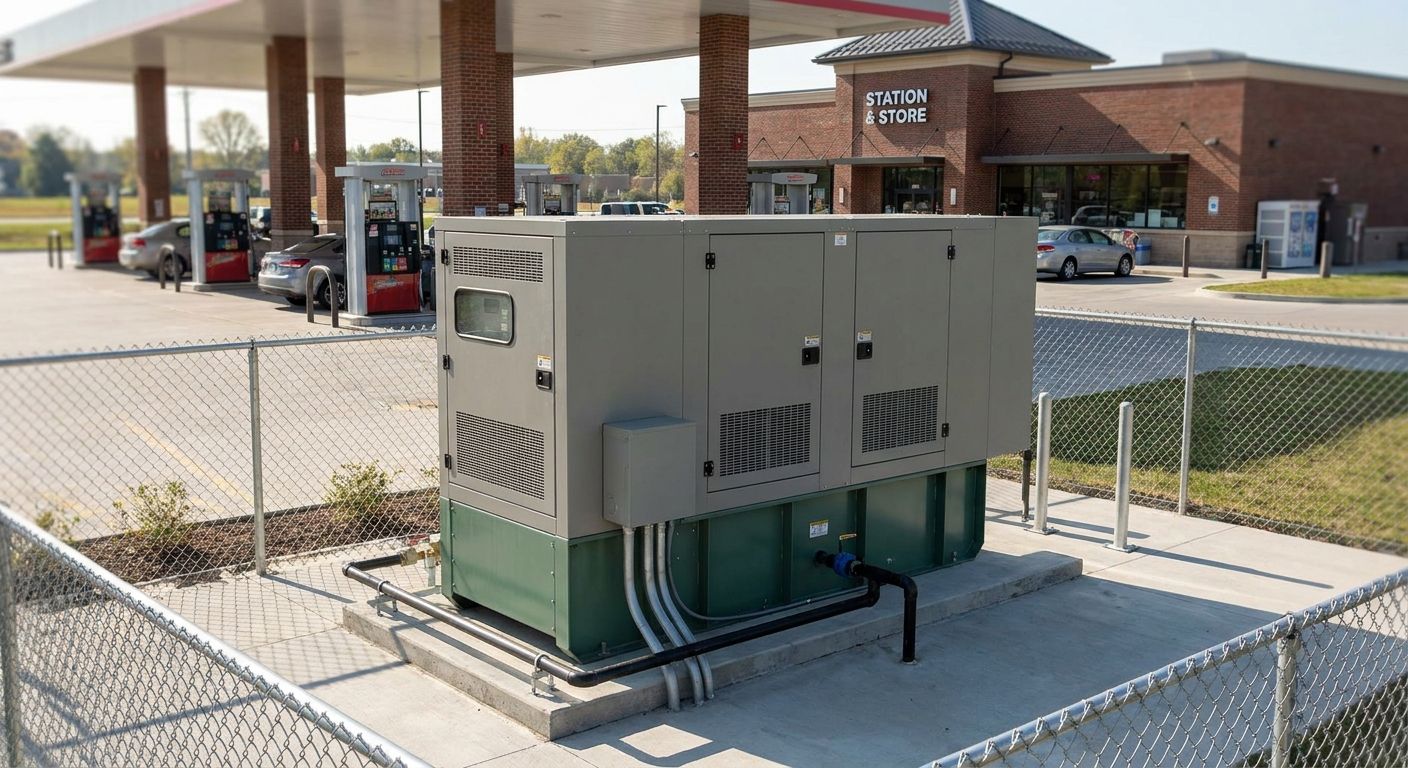
Studios running multiple bays, a server room, and climate control across a larger footprint need commercial-grade sizing. A 48kW standby unit covers a full production house without load-shedding individual circuits. Verdict: Buy for multi-room facilities in 2026; Skip for a single-room studio where it's oversized and overpriced.
Fuel consumption scales with size, so a 48kW unit needs a larger propane tank or a dedicated natural gas line sized by a licensed electrician before install.
Comparison table
| Pick | Output | Clean power (THD) | Best for | Verdict |
|---|---|---|---|---|
| Kohler 20kW | 20kW | Under 5% | Single-bay working studio | Buy |
| Generac Guardian 22kW | 22kW | Under 5% | Growing studio, remote monitoring | Buy |
| Honeywell 20kW | 20kW | Under 5% | Solo owner-operator | Consider |
| Briggs & Stratton inverter | 3-7kW portable | Under 5% (inverter) | On-location shoots | Hold |
| Commercial 48kW | 48kW | Under 5% | Multi-room production house | Buy / Skip |
Where to buy
- Work with a licensed electrical contractor for the panel tie-in and transfer switch - a DIY install voids most manufacturer warranties and risks code violations in Baldwin County.
- Get a load calculation done before picking a kW size. Guessing leads to either an underpowered unit that browns out during a session or an oversized one burning fuel for no reason.
- Confirm authorized dealer status for Kohler, Generac, Honeywell, or Briggs & Stratton before signing - authorized installers carry the warranty coverage that generic electricians can't offer.
Get your studio storm-ready for 2026
Free load assessment and quote for standby generator installation.
FAQ
What are the best generators for photography studios in 2026?
The Kohler 20kW and Generac Guardian 22kW standby units rank highest for photography studios in 2026 because both deliver total harmonic distortion under 5%, the clean power spec that protects strobe packs and tethered capture gear.
Do recording studios need a different generator than photography studios?
Not fundamentally - both need clean sine wave power under 5% THD, but a recording studio with a server rack or extensive monitor setup may need to size up to 22kW or 26kW instead of the base 20kW option.
Is a portable generator enough for a home photography studio?
A portable inverter generator like the Briggs & Stratton line works for a single strobe on location, but it can't cover a full studio panel with HVAC and multiple lighting stations running at once.
How much does a whole-studio standby generator cost installed?
Installed cost for a 20kW to 22kW standby unit typically runs in the mid-to-high four figures in coastal Alabama as of 2026, depending on panel size, fuel line work, and permit fees.
What size generator does a small photography studio need?
A single-bay studio with strobes, HVAC, and a capture station typically needs 20kW of standby output, the size covered by both the Kohler and Honeywell entries on this list.
Why does total harmonic distortion matter for studio equipment?
Total harmonic distortion above 5% can cause strobe capacitors to misfire and audio interfaces to introduce noise or reboot mid-session, which is why every pick on this list stays under that threshold.
Can a generator run a full recording studio during a hurricane?
Yes - a properly sized 20kW to 26kW standby unit on natural gas or propane keeps a full studio panel running through extended outages common during Gulf Coast hurricane season.
Should a growing studio buy a bigger generator than it needs now?
Sizing one step up, like the Generac Guardian 22kW instead of a base 20kW unit, gives a studio adding a second bay or control room headroom without a second install in a year or two.
One last thing
The detail most studio owners miss isn't the generator size - it's the transfer switch response time. A standby unit that takes 20 seconds to kick over still drops a tethered capture session or corrupts an in-progress audio recording, so confirm automatic transfer switch specs before signing, not after the storm hits in 2026.