Pharmacies and urgent care clinics on the Alabama Gulf Coast can't afford a dark building during hurricane season - refrigerated vaccines, insulin, and diagnostic reagents start degrading within hours of a power loss. This guide ranks the standby generators that actually hold up for medical-grade backup power in 2026, based on fuel type, run-time capacity, and transfer switch reliability.
- Generac Protector QS diesel (48-60kW) is the top pick for pharmacies running 24/7 refrigeration in 2026 - Buy.
- Kohler 48RCL suits multi-provider urgent care clinics needing simultaneous HVAC and equipment loads - Buy.
- Generac Guardian 26kW works for single-location independent pharmacies on a tighter budget - Consider.
- Portable or residential-grade units under 20kW should never back a pharmacy cold chain - Skip.
Why this matters
Coastal Alabama loses grid power multiple times a year during named storms, and pharmacies carry inventory that state boards of pharmacy require to stay within a documented temperature range. A four-hour outage without backup can force a full refrigerated inventory write-off. Urgent care clinics face a parallel problem: X-ray units, autoclaves, and exam room lighting all need to stay live for patients already mid-visit when the grid drops.
The generator market in 2026 splits into two tiers for this use case - automatic standby units wired through a transfer switch, and portable or towable units meant for construction sites, not medical inventory. Only the first tier belongs on a pharmacy roof pad or clinic parking pad. A licensed electrician sizing the unit against your actual panel load matters more than the sticker kW number, and Baldwin County Generators handles that load calculation before any install across Daphne, Fairhope, Foley, and Gulf Shores.
How this list is ranked
Each unit here is scored on three things that matter for medical-grade backup: continuous run capacity under real refrigeration and HVAC load, fuel source reliability during extended outages, and transfer switch response time. Diesel and natural gas standby units get priority over propane-only or gasoline portable units because pharmacies need days of unattended runtime, not hours. Rankings reflect manufacturer-published specs for Kohler, Generac, Honeywell, and Briggs & Stratton standby lines as sold and installed across coastal Alabama in 2026, not lab testing claims. A unit only earns a Buy verdict if it can carry a full pharmacy or clinic panel - lighting, refrigeration, HVAC, and diagnostic equipment - without load shedding.
The ranked list
1. Generac Protector QS Diesel (48-60kW) - the workhorse
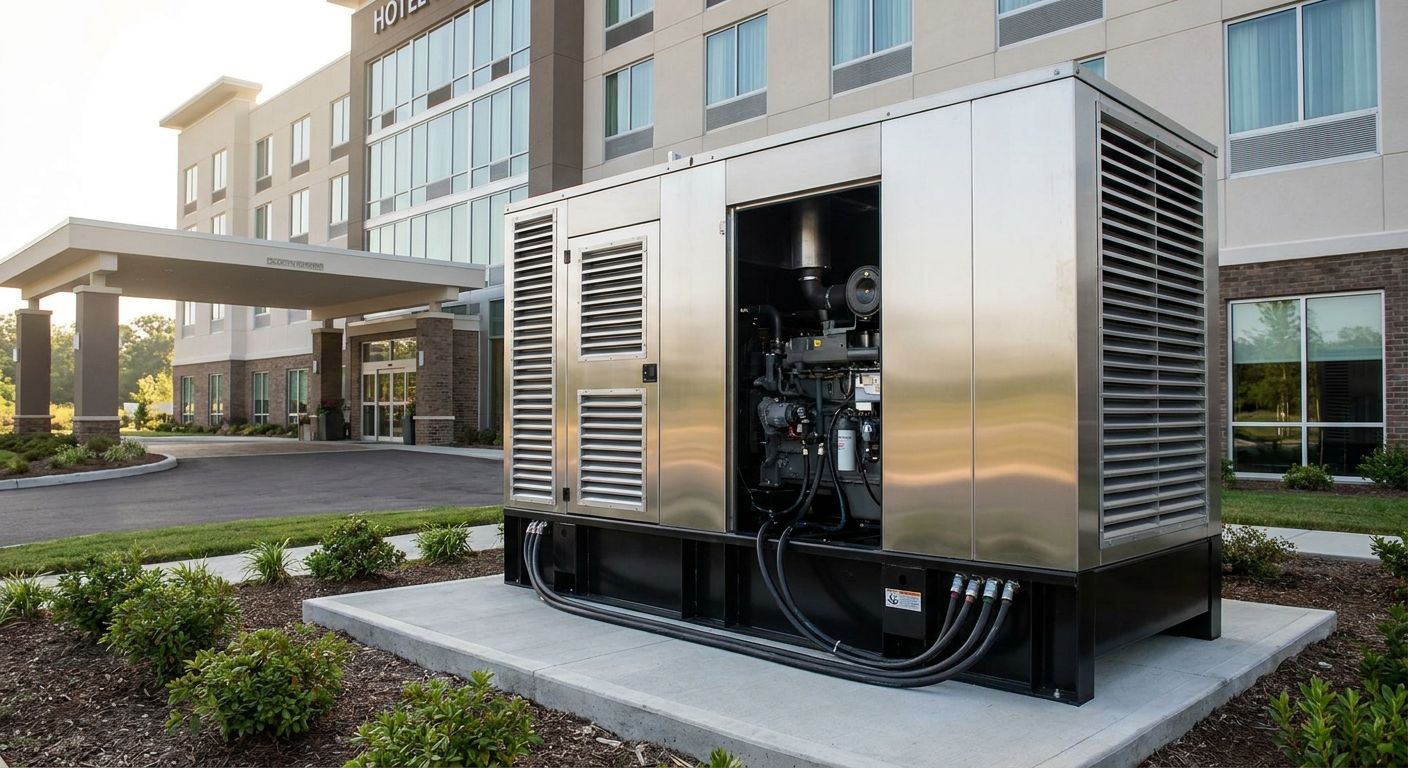
This is the unit most independent pharmacies and multi-bay urgent care clinics land on once they run the numbers. Diesel fuel storage means no dependency on a natural gas line staying pressurized during a hurricane, and the 48-60kW range covers refrigeration, HVAC, and diagnostic equipment running at the same time. Verdict: Buy for any pharmacy with a walk-in cooler or a clinic with imaging equipment.
2. Kohler 48RCL - the safe pick
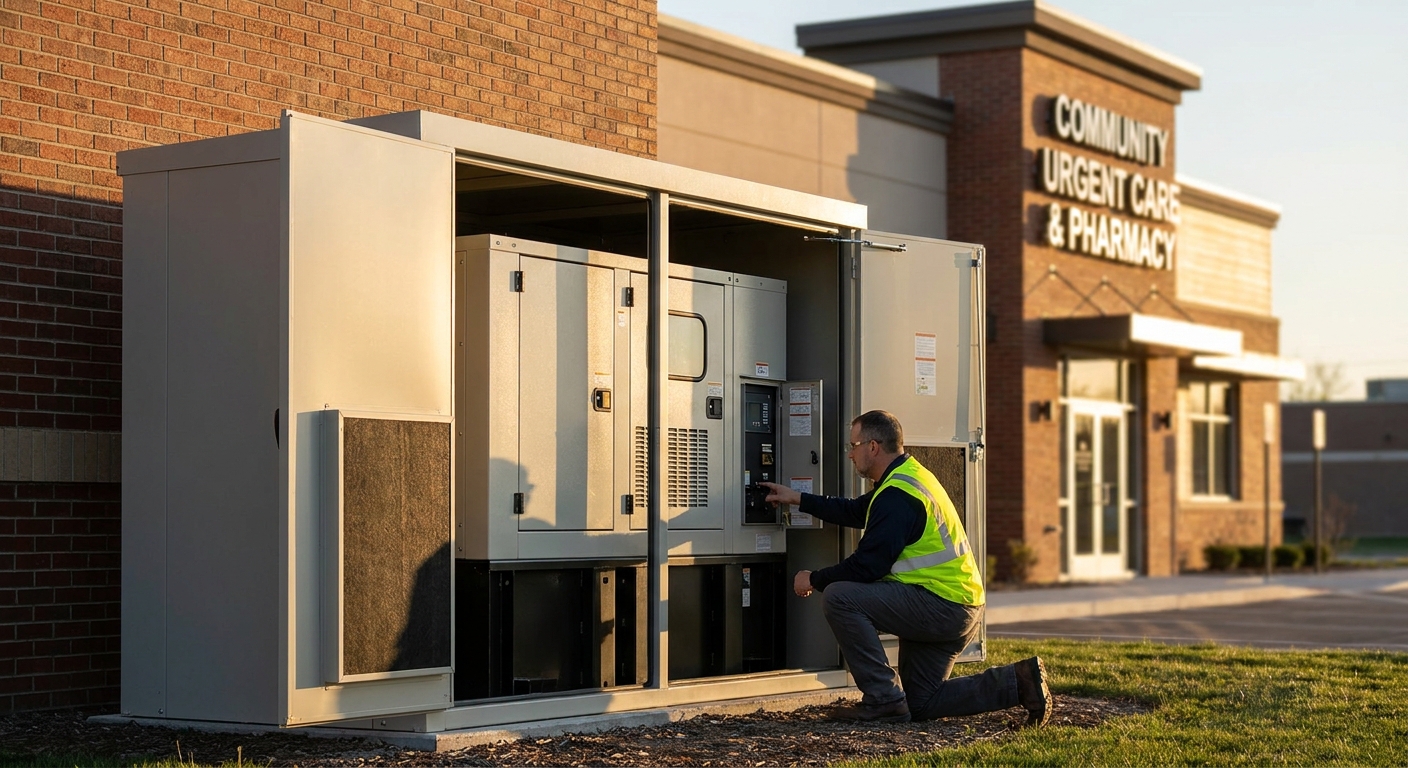
Kohler's 48RCL sits in the same output class as the Protector QS but runs on natural gas or LP, which simplifies fuel logistics if the site already has a gas line. It handles simultaneous exam room, lab, and HVAC loads without cycling, which matters for a clinic that can't afford equipment brownouts mid-procedure. Verdict: Buy for urgent care clinics with an existing gas utility connection.
3. Generac Guardian 26kW - the budget-conscious pick
The Guardian 26kW covers a single-location independent pharmacy with one refrigeration unit, standard lighting, and a small HVAC system, but it has less headroom than the 48kW-class units above. If the pharmacy adds a second cooler or expands square footage, this unit gets maxed out fast. Verdict: Consider for pharmacies under 2,500 square feet with modest refrigeration needs.
4. Honeywell 20kW Standby (Generac-built) - the wildcard
Honeywell's standby line is manufactured under license by Generac, so the internals mirror the Guardian series at a lower headline kW. It's a reasonable fit for a small satellite pharmacy counter inside a larger retail footprint, but 20kW leaves almost no margin once refrigeration and register systems both draw at once. Verdict: Consider only as a secondary or satellite location backup, not a primary pharmacy site.
5. Briggs & Stratton 20kW Standby - the fallback
Briggs & Stratton's standby unit is less common in commercial installs along the Gulf Coast, and parts availability and authorized service coverage lag behind Kohler and Generac in this region. It can technically run a small clinic's lighting and one exam room, but the service network gap is the real risk during peak hurricane season. Verdict: Skip for anything handling refrigerated inventory or life-safety equipment.
Get your pharmacy sized for backup power
A licensed electrician calculates your real panel load before you buy a unit.
Comparison table
| Generator | Output | Fuel | Best for | Verdict |
|---|---|---|---|---|
| Generac Protector QS | 48-60kW | Diesel | Pharmacies with cold storage, clinics with imaging | Buy |
| Kohler 48RCL | 48kW | Natural gas/LP | Multi-bay urgent care clinics | Buy |
| Generac Guardian | 26kW | Natural gas/LP | Small independent pharmacy | Consider |
| Honeywell Standby | 20kW | Natural gas/LP | Satellite pharmacy counters | Consider |
| Briggs & Stratton Standby | 20kW | Natural gas/LP | Low-load, non-medical backup | Skip |
Where to buy
- Buy through an authorized dealer, not a big-box retailer. Warranty claims on a 48kW diesel unit get denied fast if the install wasn't done by a certified installer for that brand.
- Confirm licensed electrical contractor installation before you sign. Alabama code requires a proper transfer switch install tied to your panel, and an unlicensed install voids both the manufacturer warranty and your commercial insurance coverage.
- Get a load calculation on your actual equipment, not the building square footage. A 2,000-square-foot pharmacy with two refrigeration units draws differently than a 2,000-square-foot retail counter, and sizing off square footage alone leads to an undersized unit.
FAQ
What is the best generator for a pharmacy in 2026?
The Generac Protector QS diesel unit in the 48-60kW range is the best generator for a pharmacy in 2026 because it covers refrigeration, lighting, and HVAC without load shedding. Kohler's 48RCL is a close second if the site already has a natural gas connection.
How many kW does an urgent care clinic need?
Most urgent care clinics need 26-48kW depending on how many exam rooms, imaging units, and HVAC zones run simultaneously. A licensed electrician should confirm the number against your actual panel load rather than square footage alone.
Is diesel or natural gas better for pharmacy backup generators?
Diesel is more reliable during extended hurricane outages because it doesn't depend on gas line pressure staying intact. Natural gas units cost less to run day-to-day but carry more risk if the utility line is damaged during a storm.
Can a portable generator power a pharmacy refrigerator?
A portable generator can power a single refrigerator short-term but should never be the primary backup for pharmacy inventory. State pharmacy board temperature logs require continuous, unattended power, which only an automatic standby unit with a transfer switch provides.
How often should a pharmacy generator be serviced?
Standby generators for pharmacies need service checks at least twice a year, timed before and during hurricane season in coastal Alabama. Skipping service checks is the most common reason a unit fails to start during an actual outage.
Does a generator need a transfer switch for a clinic?
Yes, an automatic transfer switch is required for any clinic or pharmacy backup install in 2026 to meet code and to avoid manual switching delays during an outage. Manual-only setups risk minutes of downtime that a refrigerated inventory can't absorb.
What size generator does a small independent pharmacy need?
A small independent pharmacy under 2,500 square feet with one refrigeration unit typically needs 20-26kW. Larger locations with multiple coolers or expanded retail space need to move up to the 48kW class.
How much runtime does a standby generator provide during a hurricane?
A properly sized diesel or natural gas standby unit runs continuously for as long as fuel supply lasts, which for natural gas-connected units means indefinite runtime tied to utility gas pressure. Diesel units run on stored fuel and need a refill plan for outages lasting several days.
One last thing
The detail most pharmacy owners miss in 2026 is that a generator sized correctly on paper still fails if the transfer switch response time is too slow for refrigeration compressors - a compressor that stops mid-cycle and restarts under load can trip the whole unit, which is exactly the failure mode that shows up during a real storm, not during a test run.